Artwork
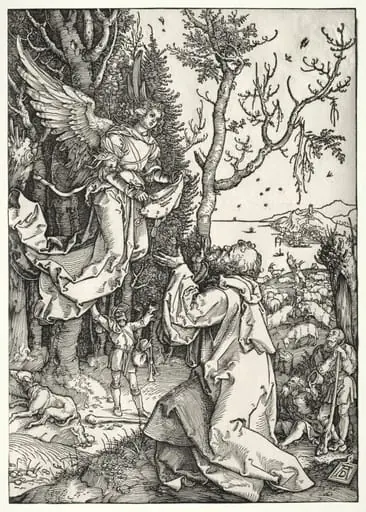
Joachim and the Angel
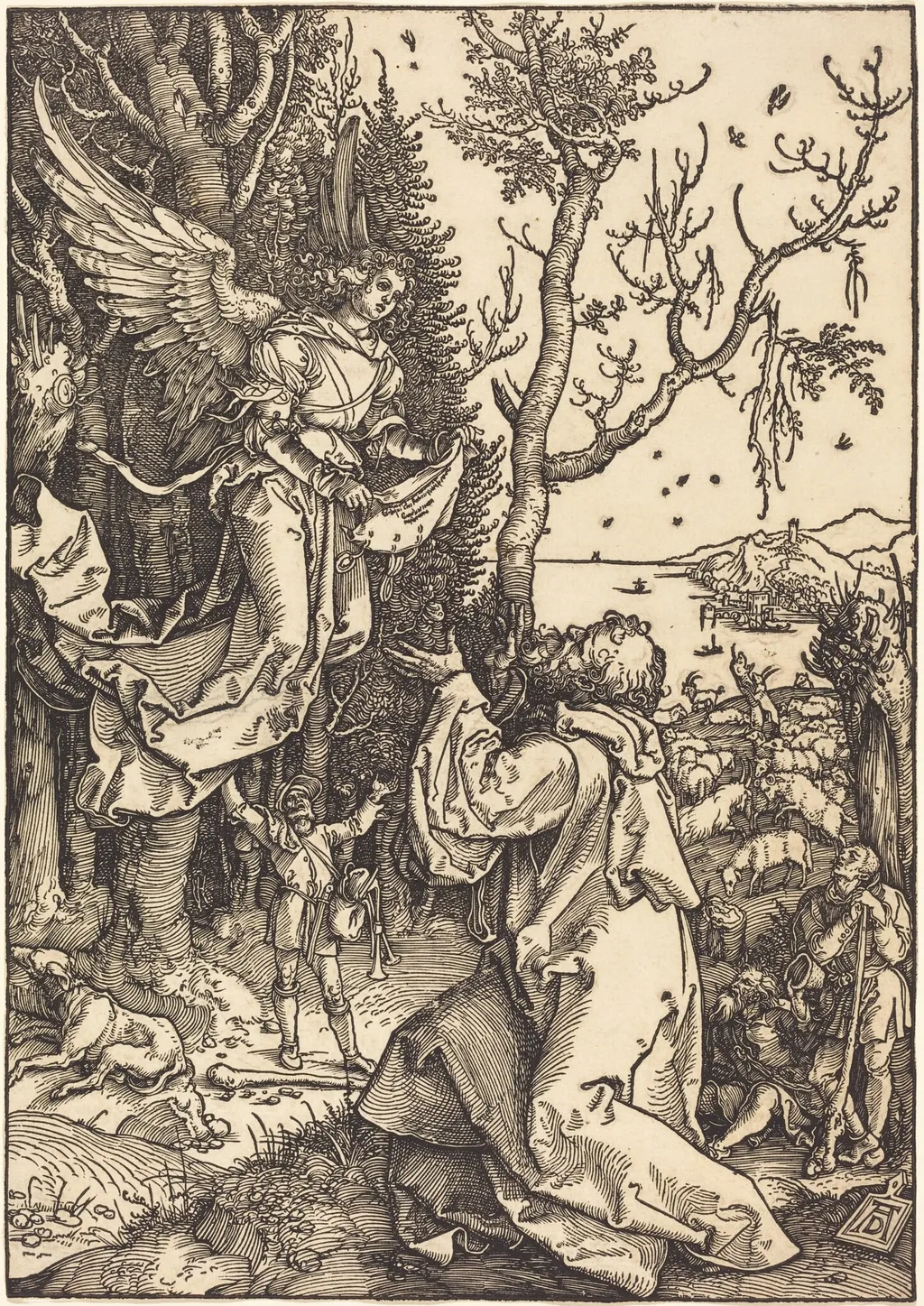
Joachim and the Angel is an ink print by the Northern Renaissance artist Albrecht Dürer. It dates from 1504 and is held in the collection of the Metropolitan Museum of Art.
- Markings
- Marked:recto: none; verso: Vincent Mayer (Lugt 2525); Wilhelm August Ackermann (Lugt 791)
About this work
Subject & Meaning
The image draws its narrative foundation from the New Testament, focusing on the divine message delivered to Joachim regarding the future mother of Jesus.
Created in 1504 as part of the Life of the Virgin series, this woodcut illustrates the annunciation of the birth of Mary to her father, Joachim. The image draws its narrative foundation from the New Testament, focusing on the divine message delivered to Joachim regarding the future mother of Jesus. As a work of German Renaissance religious art, the print serves as a visual interpretation of this specific biblical episode, emphasizing the miraculous nature of Mary's conception through the interaction between the human figure and the angelic messenger.
Technique & Style
Albrecht Dürer executed this woodcut on laid paper in Nuremberg in 1504, employing the woodcut technique characteristic of early German Renaissance printmaking. The work measures 30.5 cm in height and 21.6 cm in width, depicting the moment of the annunciation of Mary’s birth to Joachim, rendered with fine line work and careful tonal contrast on the paper support.
Dürer’s handling of line and composition emphasizes the spiritual gravity of the scene, aligning with the formal stylistic qualities observed in his broader body of work during this period.
History & Provenance
Albrecht Dürer created the woodcut Joachim and the Angel in 1504 in Nuremberg. This work is part of the artist's series Life of the Virgin and depicts the annunciation of the birth of Mary to Joachim. The print was executed on laid paper and measures 30.5 cm in height by 21.6 cm in width.
The piece is currently held in multiple major public collections, including the Metropolitan Museum of Art, the National Gallery of Art in Washington, D.C., the Cleveland Museum of Art, the Staatliche Graphische Sammlung München, and the Musée des Beaux-Arts de la ville de Paris. The National Gallery of Art specifically houses a version from the Rosenwald Collection.
Joachim and the Angel, an 1504 woodcut by Albrecht Dürer, is held in multiple major public collections. The National Gallery of Art in Washington, D.C., and the Cleveland Museum of Art are confirmed to possess examples of this print. Other institutions with holdings include the Metropolitan Museum of Art, the Staatliche Graphische Sammlung München, the Musée des Beaux-Arts de la ville de Paris, and the Rosenwald Collection at the National Gallery of Art.
The work is part of Dürer's Life of the Virgin series. Specific inventory or accession numbers are not provided in the available sources, nor is a detailed exhibition history documented.
Legacy
The woodcut has shaped how later artists approach narrative religious printmaking, particularly in rendering intimate devotional moments. Dürer’s precise line work and subtle tonal gradations established conventions for depicting sacred family scenes that influenced printmakers across Northern Europe. Major institutions continue to feature the work in exhibitions exploring Renaissance print culture, including the National Gallery of Art’s print study room displays and traveling retrospectives on German Renaissance art.
Its status as a cornerstone of the Life of the Virgin series has cemented scholarly focus on Dürer’s role in elevating printmaking to fine art status.
Overview
Created in 1504, 'Joachim and the Angel' is a woodcut by Albrecht Dürer, a defining work of the German Renaissance. The print illustrates the apocryphal narrative from the Protoevangelium of James, depicting the moment an angel appears to Joachim in the wilderness to announce that his wife, Anne, will conceive the Virgin Mary. Dürer composes the scene with dramatic clarity: the angel, draped in voluminous, wind-swept robes, gestures emphatically toward a flock of sheep, signifying Joachim's role as a shepherd and the divine intervention in his childless state.
Joachim kneels in humble prayer, his figure rendered with textured, rough clothing that contrasts with the ethereal quality of the messenger. The background is largely devoid of landscape detail, a compositional choice that isolates the figures and intensifies the spiritual gravity of the encounter. Executed with the master's characteristic precision in line and cross-hatching, the work demonstrates Dürer's ability to convey complex theological themes and human emotion within the constraints of the woodcut medium.
This piece is part of a series of religious prints that solidified Dürer's reputation across Europe, showcasing his synthesis of Northern European detail with Italianate principles of form and space.
Own this work as a print
Artist & collection
Artist
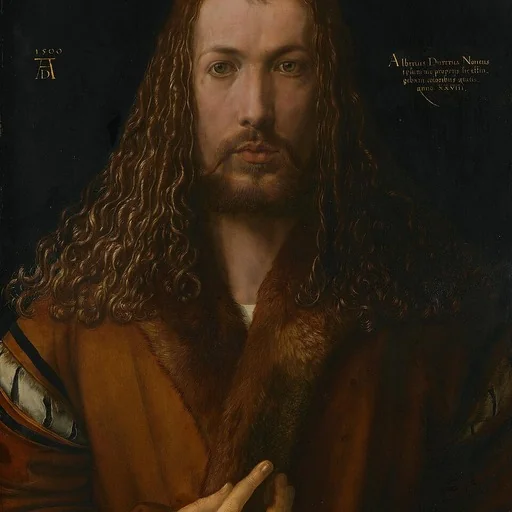
Albrecht Dürer spent his life in Nuremberg, a busy German city where artists traded prints like currency.

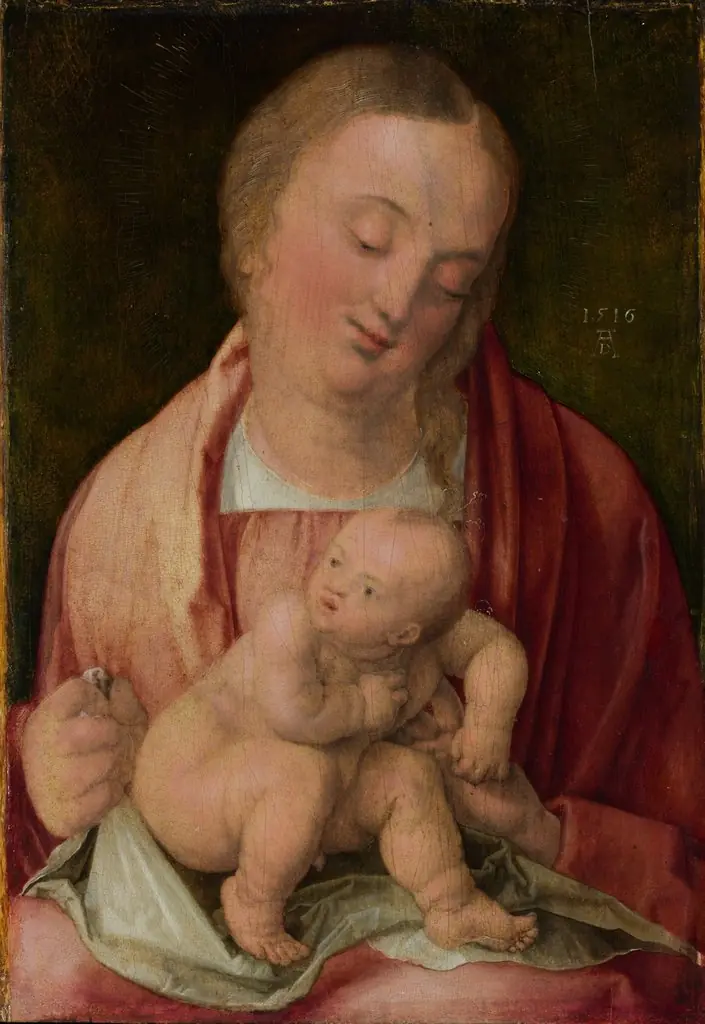
![Madonna and Child [obverse], by Albrecht Dürer](https://artifactworldgallery.com/img/albrecht-durer--madonna-and-child-obverse--d7b8ebf05d22ebe5-w320.webp)
![Lot and His Daughters [reverse], by Albrecht Dürer](https://artifactworldgallery.com/img/albrecht-durer--lot-and-his-daughters-reverse--b4ebf9b282faa17a-w320.webp)