Artwork
The Adoration of the Magi
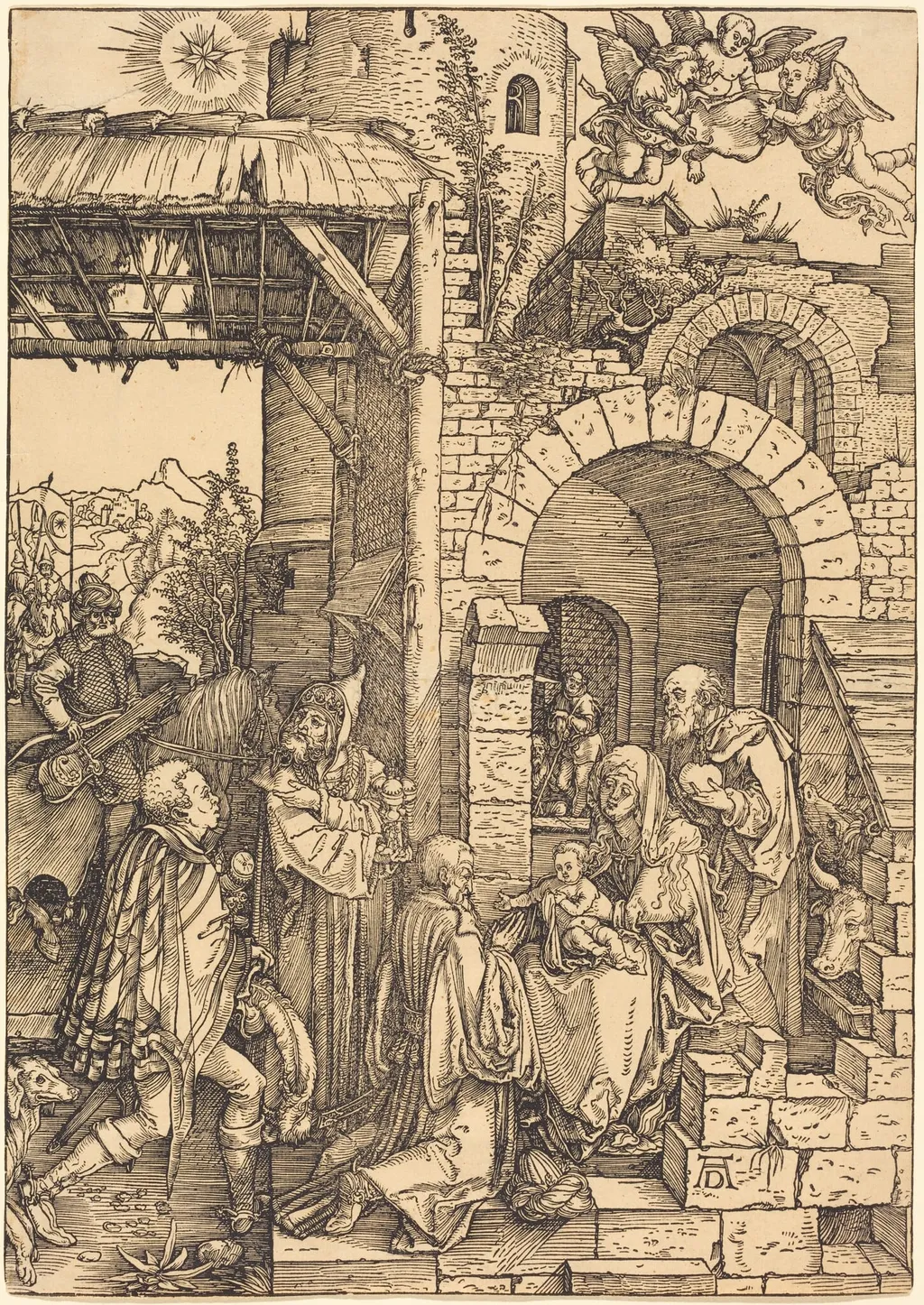
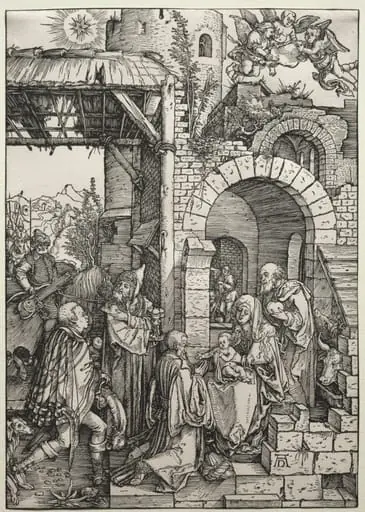
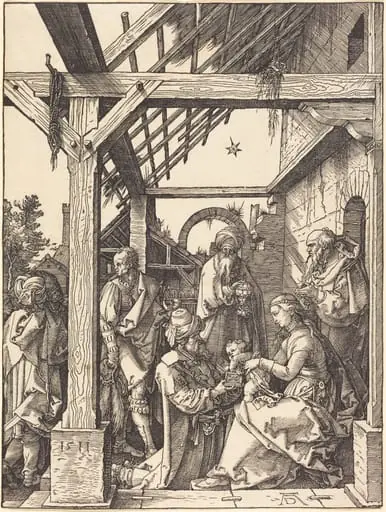
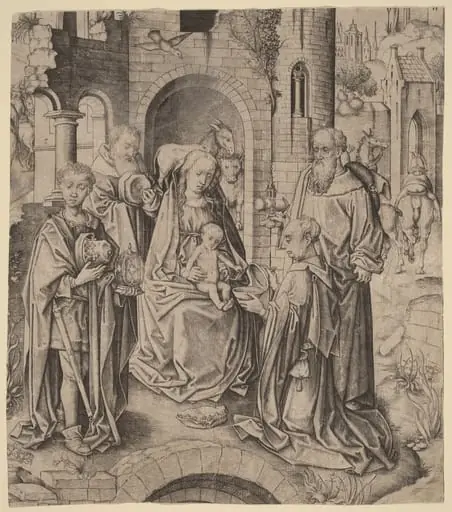
The Adoration of the Magi is an ink print by the Northern Renaissance artist Albrecht Dürer. It dates from 1502 and is held in the collection of the Honolulu Museum of Art.
About this work
Subject & Meaning
The print centers on the intimate encounter between the Magi and the infant Jesus, with Mary serving as a maternal intermediary in the scene.
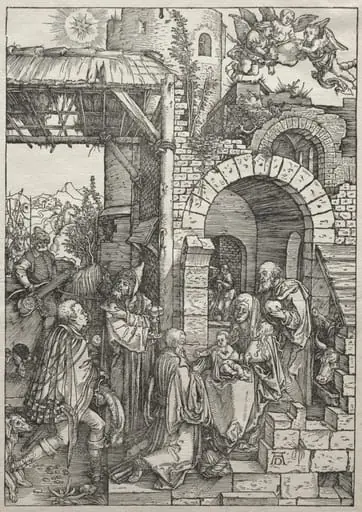
The Adoration of the Magi depicts the biblical episode in which the three Magi present gifts to the newborn Christ Child and his mother Mary, a narrative drawn from the New Testament. The print centers on the intimate encounter between the Magi and the infant Jesus, with Mary serving as a maternal intermediary in the scene.
Rooted in the German Renaissance, the work translates a scriptural event into a moment of devotional recognition: the Magi's homage signifying the acknowledgment of Christ's kingship and divinity. As part of Dürer's Life of the Virgin series, the image situates the Holy Family within a broader cycle of Marian devotion, presenting the adoration as both a historical event and a model of worship.
Technique & Style
This woodcut print was created on paper support during the early phase of German Renaissance printmaking. Dürer employed the woodcut technique to render intricate line work that defines the formal composition of the Adoration of the Magi scene, emphasizing the biblical narrative through precise draftsmanship and balanced spatial arrangement.
The work demonstrates characteristic Renaissance stylistic qualities including naturalistic figure modeling, hierarchical arrangement of the Magi, and integration of sacred subject matter within a documented historical context from 1501.
Technical examination reveals standard printmaking materials and handling methods of the period, with the image produced through careful carving and ink application on paper support.
The composition reflects German Renaissance approaches to religious imagery, combining devotional content with sophisticated graphic execution.
History & Provenance
Albrecht Dürer created the woodcut The Adoration of the Magi in Nuremberg in 1501. This work is part of the artist's Life of the Virgin series and depicts the biblical scene of the Magi adoring the Christ Child. While some records suggest a possible inception date of 1504, the primary attribution places its creation in 1501. The print was executed on paper and measures 29 cm in height by 21 cm in width.
Impressions of Albrecht Dürer's 1501 woodcut The Adoration of the Magi are held in multiple international institutions. Major collections include the Honolulu Museum of Art, the Albertina in Vienna, the Chester Beatty Library, and the Cleveland Museum of Art. In the United States, the work is represented in the holdings of the Metropolitan Museum of Art and the National Gallery of Art in Washington, D.C., where specific examples belong to the Rosenwald Collection.
While the work was created in Nuremberg, available records confirm its presence in these permanent collections rather than detailing a specific chronological exhibition history.
Context
The Adoration of the Magi, a 1501 woodcut by Albrecht Dürer, stands as a pivotal image within his Life of the Virgin series and the broader German Renaissance. Critical reception has long emphasized its compositional innovation and emotional depth, with scholars noting how Dürer elevates the biblical narrative through intricate detail and spatial clarity. This work exemplifies Dürer's engagement with Italian perspective techniques while retaining Northern Gothic traditions, situating it at the intersection of religious reform and artistic experimentation in early 16th-century Europe.
Its enduring scholarly focus reflects its significance as both a technical masterpiece and a window into the devotional practices of the period.
Overview
The Adoration of the Magi is a woodcut print by Albrecht Dürer, dating to around 1502, portraying a key biblical scene.
Own this work as a print
Artist & collection
Artist
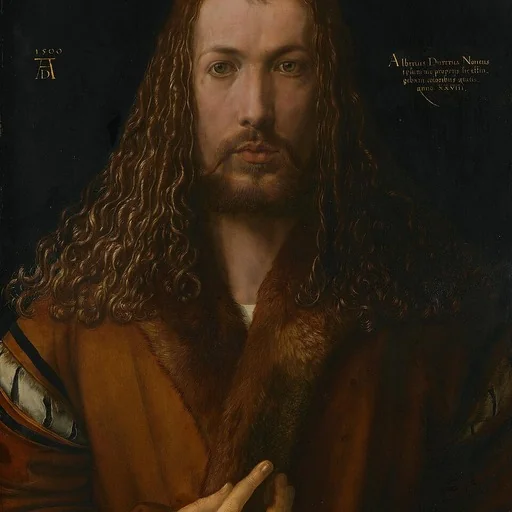
Albrecht Dürer spent his life in Nuremberg, a busy German city where artists traded prints like currency.

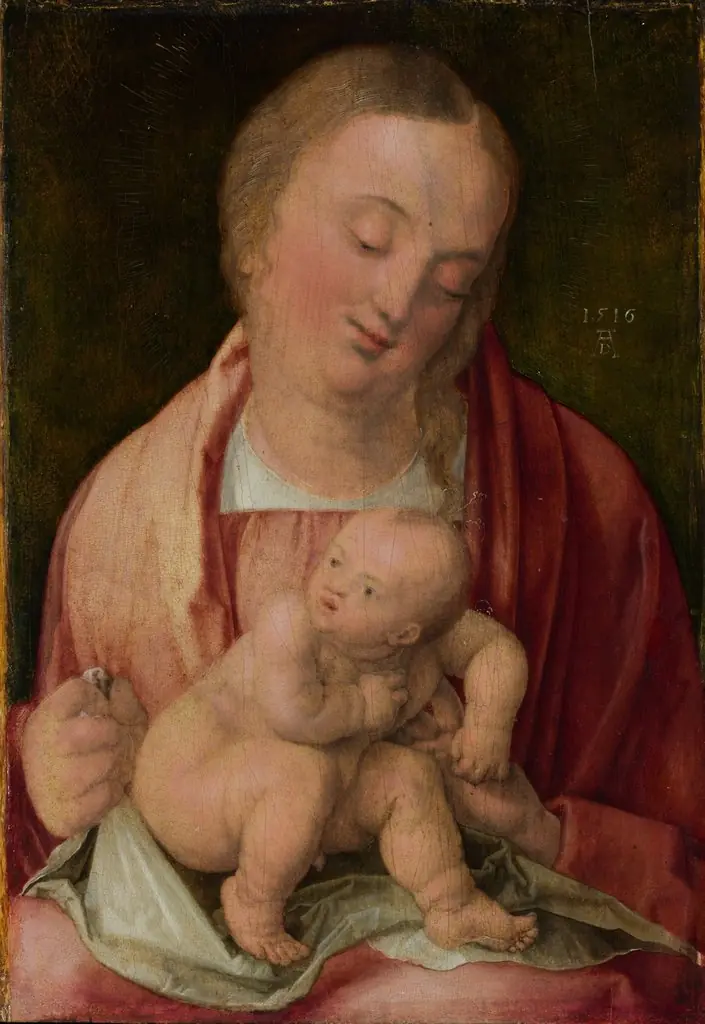
![Madonna and Child [obverse], by Albrecht Dürer](https://artifactworldgallery.com/img/albrecht-durer--madonna-and-child-obverse--d7b8ebf05d22ebe5-w320.webp)
![Lot and His Daughters [reverse], by Albrecht Dürer](https://artifactworldgallery.com/img/albrecht-durer--lot-and-his-daughters-reverse--b4ebf9b282faa17a-w320.webp)