Artwork
The Betrayal of Christ
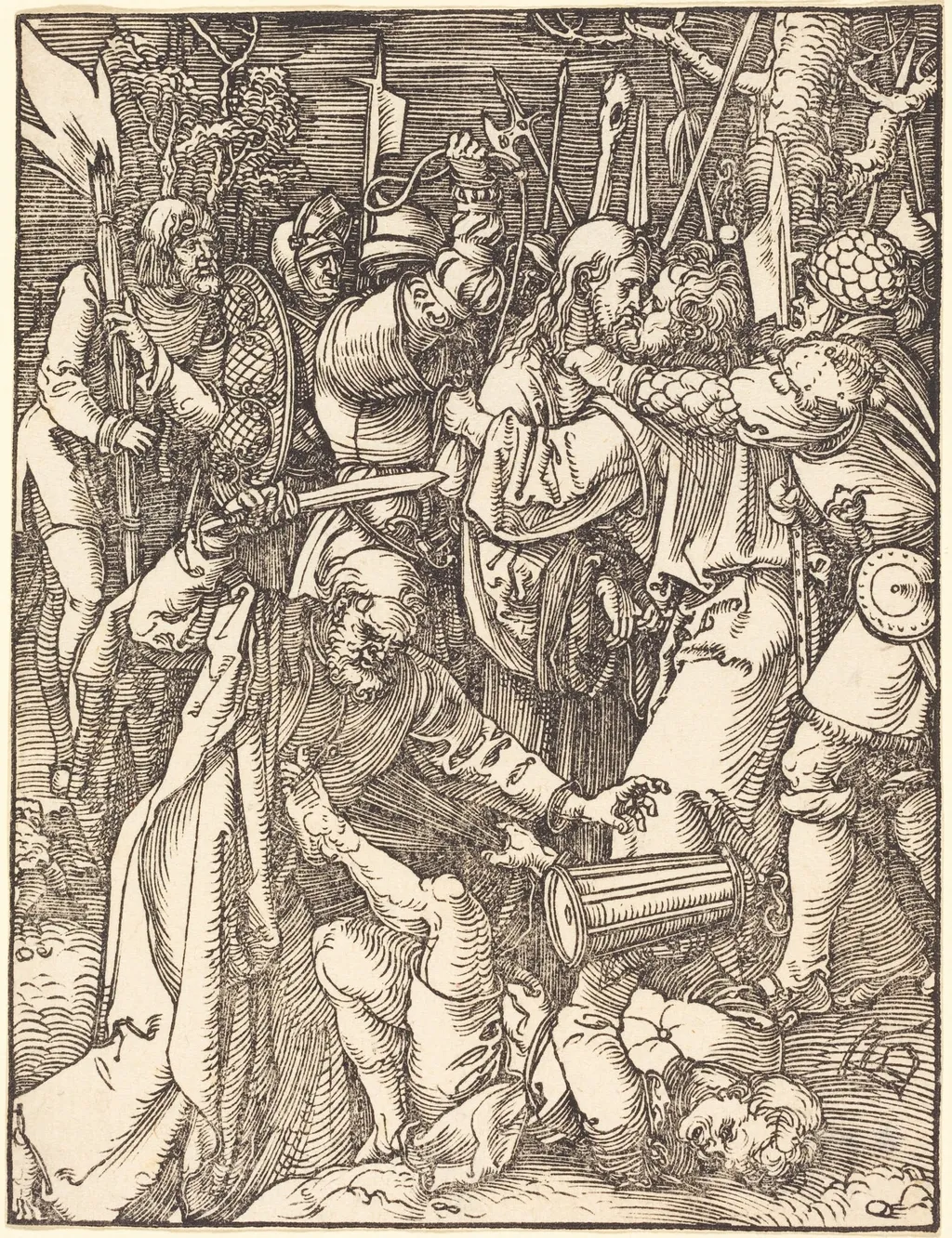
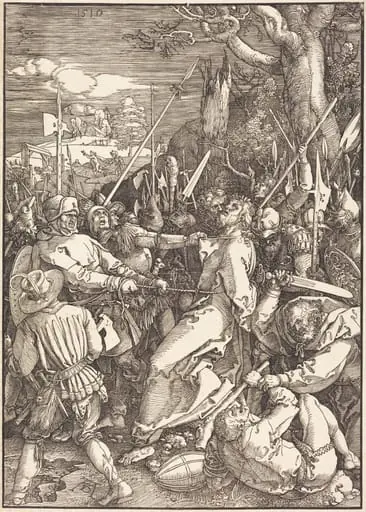
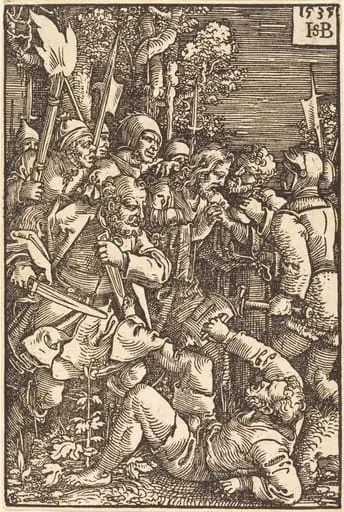
The Betrayal of Christ is an ink print by the Northern Renaissance artist Albrecht Dürer. It dates from 1510 and is held in the collection of the National Gallery of Art.
- Inscription
- Inscribed:in block, bottom right, on ground: AD [artist's monogram]; verso, lower center, in graphite by a later hand: 627; verso, bottom left, in graphite by a later hand: 27; verso, bottom center, in graphite by a later hand: 12
About this work
Subject & Meaning
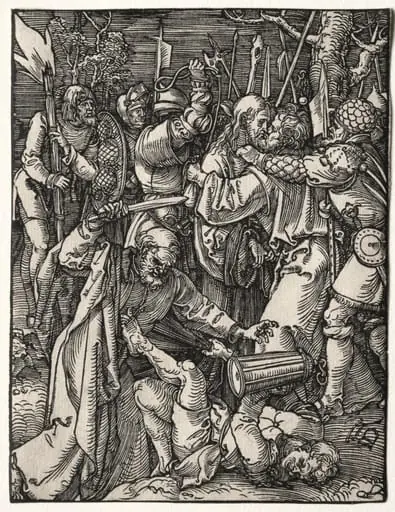
As part of the artist's "Little Passion" series, the work illustrates the specific moment of betrayal where Christ is seized by authorities.
Albrecht Dürer's 1509 woodcut depicts the arrest of Jesus Christ, an event drawn directly from the New Testament narratives. As part of the artist's "Little Passion" series, the work illustrates the specific moment of betrayal where Christ is seized by authorities. The image functions as a visual meditation on this pivotal religious episode, focusing on the central figure of Jesus amidst the surrounding turmoil of his capture.
By rendering this biblical account in print, the work serves to disseminate the story of Christ's suffering to a broader audience within the context of German Renaissance religious art.
Technique & Style
Albrecht Dürer created The Betrayal of Christ as a woodcut printed on laid paper in 1509 during the German Renaissance. The work depicts the arrest of Jesus Christ following the narrative of the New Testament. It is formally characterized by precise line work and dramatic chiaroscuro typical of Dürer's Little Passion series.
The print was produced using traditional woodcut techniques on a wooden block, resulting in a monochrome image with intricate detail and strong compositional structure. The handling of light and shadow emphasizes emotional tension, while the stylized figures reflect the period's emphasis on spiritual narrative. The artwork is part of the Rosenwald Collection and is housed at the National Gallery of Art in Washington, D.C.
History & Provenance
Albrecht Dürer produced The Betrayal of Christ as a woodcut on laid paper in 1509, forming part of his Little Passion series.
The documented ownership chain begins with the Viennese collector Joseph Daniel Böhm (1794–1865), whose mark (Lugt 271) appears on the impression. It subsequently passed to Robert Scholtz (1834–1912) of Budapest, identified by Lugt 2241. The print then entered the New York trade through William Schab before being acquired by the American collector Lessing J. Rosenwald (1891–1979) of Jenkintown, Pennsylvania, in 1940, bearing his marks Lugt 1760b and Lugt 1932d.
Three years later, in 1943, Rosenwald gave the impression to the National Gallery of Art, where it remains held within the Rosenwald Collection.
No commission is recorded; the work was conceived as an independent devotional print edition rather than a paid commission.
The Betrayal of Christ is held in the National Gallery of Art, Washington, D.C., and the Cleveland Museum of Art. Its inventory numbers are Rosenwald Collection, 1943.112.1 and 1943.112.2. The work was previously owned by Joseph Daniel Böhm and Robert Scholtz before being acquired by Lessing J. Rosenwald in 1940 and gifted to the National Gallery of Art in 1943.
Context
Albrecht Dürer created The Betrayal of Christ in 1509 as part of his Little Passion series, a collection of prints depicting scenes from the Passion of Christ rooted in New Testament narratives. The work reflects the theological depth and compositional innovation characteristic of the German Renaissance, particularly Dürer’s mastery of woodcut technique to convey emotional intensity. It has been held by prominent collectors including Joseph Daniel Böhm and Robert Scholtz before being acquired by Lessing J. Rosenwald in 1940 and gifted to the National Gallery of Art in 1943.
The print is part of major institutional collections such as the British Museum, Metropolitan Museum of Art, and Cleveland Museum of Art, underscoring its significance in both private and public holdings.
Legacy
The Betrayal of Christ has been recognized for its pivotal role in shaping the visual narrative of the Passion within the German Renaissance, influencing subsequent printmakers through its dramatic composition and expressive figures. Its presence in major collections such as the National Gallery of Art and Cleveland Museum of Art underscores its enduring reputation as a cornerstone of Dürer's graphic work and a reference point for studies of religious imagery.
Overview
The Betrayal of Christ is a woodcut on laid paper created by Albrecht Dürer around 1510.
Own this work as a print
Artist & collection
Artist
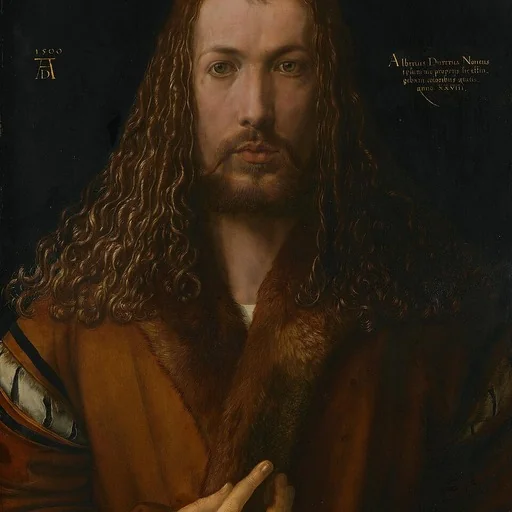
Albrecht Dürer spent his life in Nuremberg, a busy German city where artists traded prints like currency.

![Madonna and Child [obverse], by Albrecht Dürer](https://artifactworldgallery.com/img/albrecht-durer--madonna-and-child-obverse--d7b8ebf05d22ebe5-w320.webp)
![Lot and His Daughters [reverse], by Albrecht Dürer](https://artifactworldgallery.com/img/albrecht-durer--lot-and-his-daughters-reverse--b4ebf9b282faa17a-w320.webp)