Artwork
The Betrayal of Christ
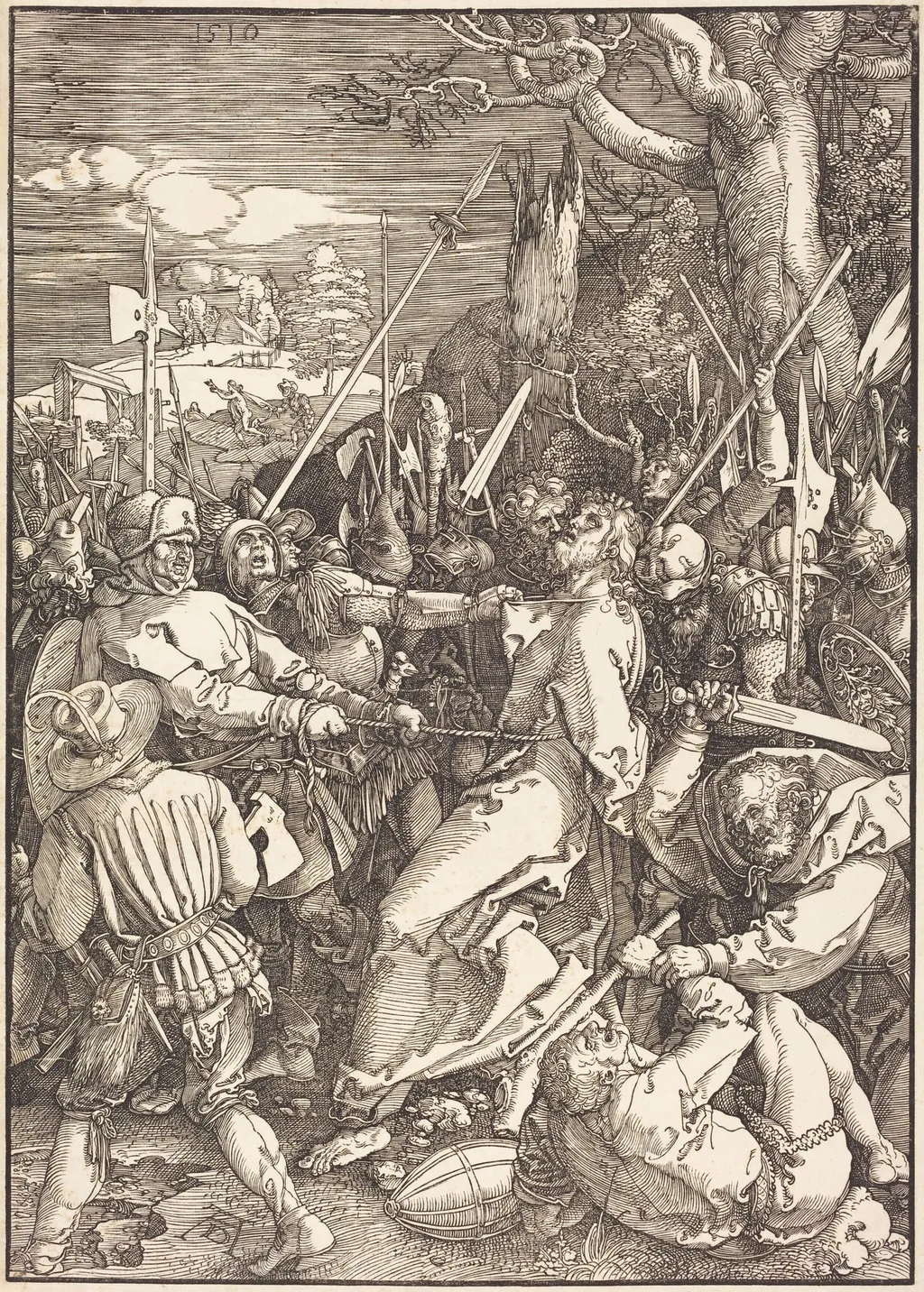
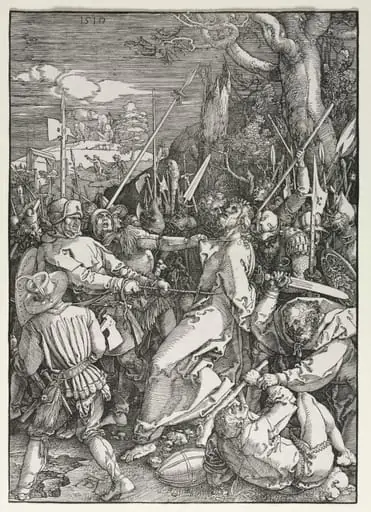
The Betrayal of Christ is an ink print by the Northern Renaissance artist Albrecht Dürer. It dates from 1510 and is held in the collection of the Metropolitan Museum of Art.
- Inscription
- Inscribed:in block, within image at upper left: 1510; in block, within image at lower left: AD [artist's monogram]; verso, lower left, in graphite by a later hand: B-24 [upside down]; verso, lower left, in graphite by a later hand: 17 [upside down]; verso, lower left, in graphite by a later hand: C-3526; verso, lower left, in graphite by a later hand: C.2255; verso, bottom center, in graphite by a later hand: P17782
About this work
Subject & Meaning
The composition centers on the figure of Jesus Christ, capturing the moment of his capture by his betrayer and the surrounding authorities.
Albrecht Dürer's 1510 woodcut The Betrayal of Christ illustrates the arrest of Jesus, a pivotal event drawn from the New Testament. As part of the Great Passion series, the work belongs to the genre of religious art within the German Renaissance movement. The composition centers on the figure of Jesus Christ, capturing the moment of his capture by his betrayer and the surrounding authorities.
This depiction serves as a visual narrative of the Passion, focusing specifically on the transition from Christ's ministry to his suffering and eventual crucifixion.
Technique & Style
Created in 1510, The Betrayal of Christ is a woodcut executed on laid paper by Albrecht Dürer as part of his Great Passion series. The work exemplifies the German Renaissance style, utilizing the woodcut medium to depict the arrest of Jesus with the precise line work characteristic of Dürer's printmaking technique. The sheet measures 39 cm in height and 28 cm in width.
As a religious print, the composition relies on the contrast between ink and paper to define the figures and dramatic narrative of the New Testament scene.
History & Provenance
Albrecht Dürer created this woodcut in 1510 as part of his series The Large Passion, depicting the arrest of Jesus Christ. The print entered the collection of William Goodwin Russell Allen in Boston and was subsequently gifted to the National Gallery of Art in 1941. It is held in multiple institutions, including the National Gallery of Art, the Cleveland Museum of Art, the Albertina, and the Rosenwald Collection, reflecting its widespread provenance across major art repositories.
This 1510 woodcut by Albrecht Dürer is held in the collections of the National Gallery of Art in Washington, D.C., the Metropolitan Museum of Art, the Albertina, the Cleveland Museum of Art, and within the Rosenwald Collection. At the National Gallery of Art, the specific impression cited was part of the Rosenwald Collection and entered the museum's holdings in 1941 as a gift from William Goodwin Russell Allen of Boston.
The work belongs to the artist's Great Passion series. While multiple institutions maintain impressions of this print, the provenance for the Washington example is explicitly documented from Allen to the gallery.
Context
Albrecht Dürer's woodcut The Betrayal of Christ (1510) exemplifies German Renaissance printmaking through its sophisticated composition and emotional intensity, reflecting the era's exploration of narrative depth in religious art. The work's depiction of Jesus Christ's arrest draws directly from New Testament narratives while showcasing Dürer's mastery of chiaroscuro and dynamic figure arrangement within the broader Great Passion series. Its inclusion in major collections including the National Gallery of Art and Albertina underscores its enduring scholarly significance as a cornerstone of early Northern Renaissance print culture.
Overview
Albrecht Dürer’s woodcut entitled The Betrayal of Christ was produced in 1510. Executed on laid paper, the print belongs to the artist’s series of religious works and captures the moment when Judas identifies Jesus to the soldiers. The composition is dense, populated by several figures, yet the design directs attention toward the central figure of Christ.
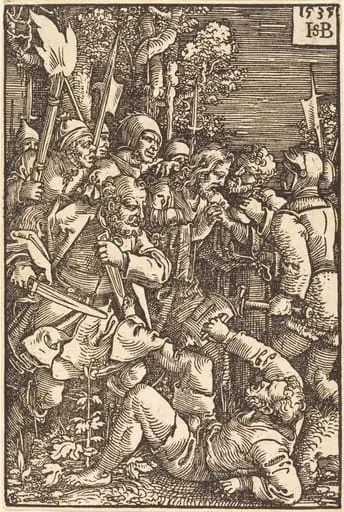
Own this work as a print
Artist & collection
Artist
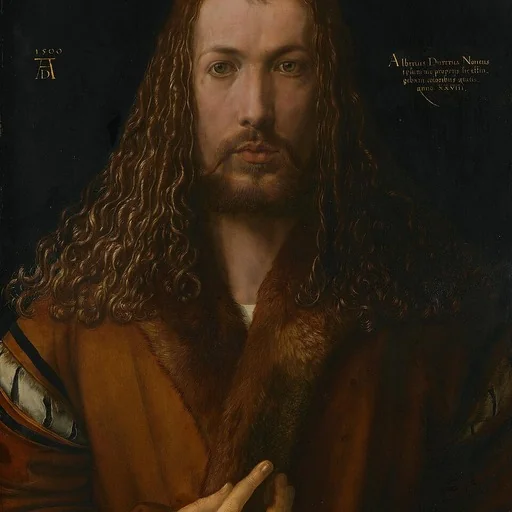
Albrecht Dürer spent his life in Nuremberg, a busy German city where artists traded prints like currency.

![Madonna and Child [obverse], by Albrecht Dürer](https://artifactworldgallery.com/img/albrecht-durer--madonna-and-child-obverse--d7b8ebf05d22ebe5-w320.webp)
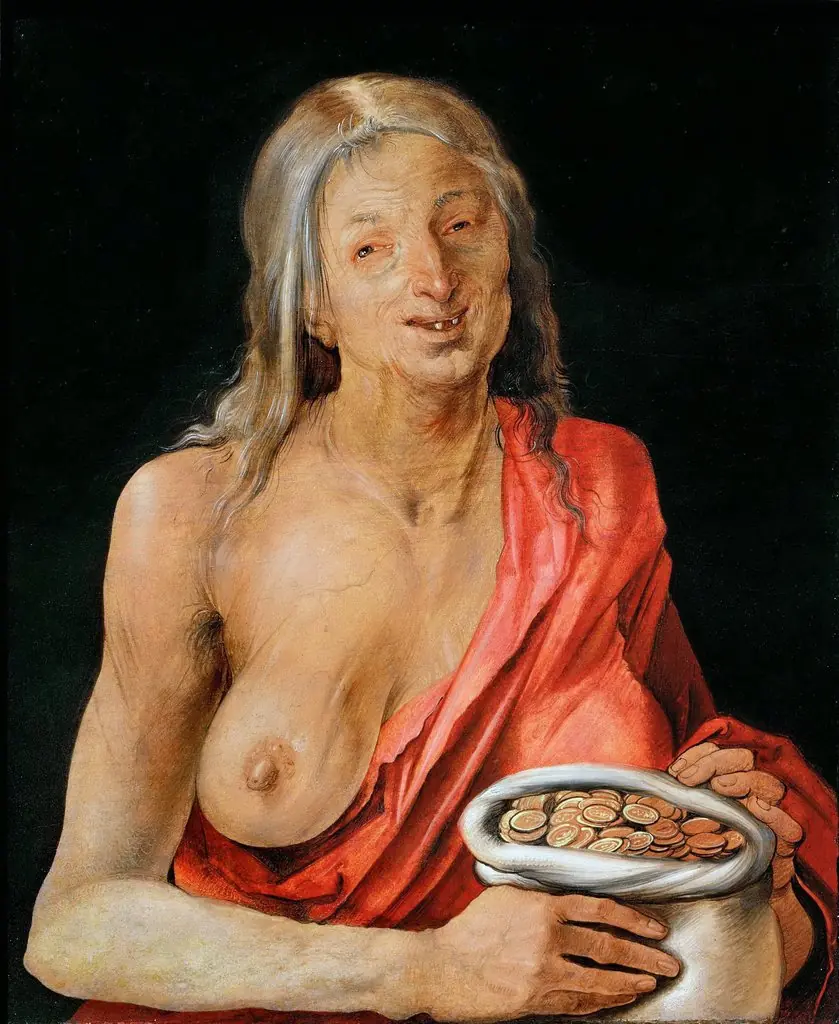
![Lot and His Daughters [reverse], by Albrecht Dürer](https://artifactworldgallery.com/img/albrecht-durer--lot-and-his-daughters-reverse--b4ebf9b282faa17a-w320.webp)
- The Betrayal of Christ
 The Large Passion: The Betrayal of Christ
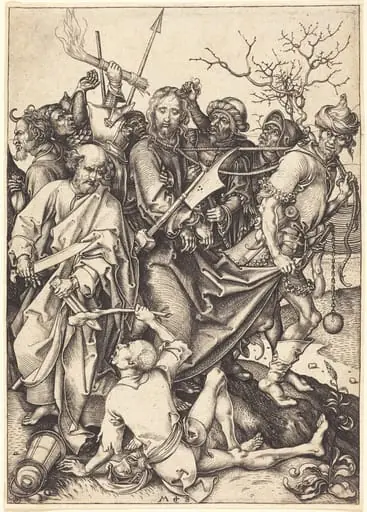 The Betrayal and Capture of Christ
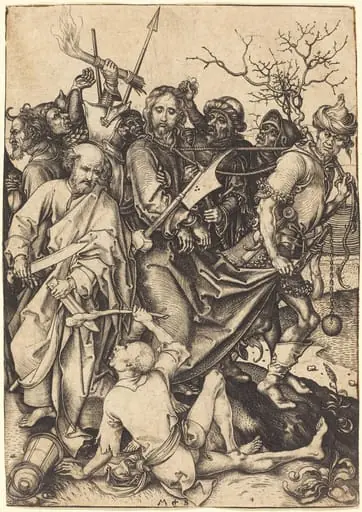 The Betrayal and Capture of Christ
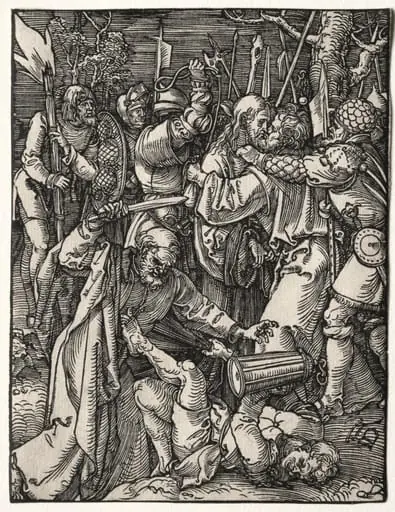 The Small Passion: The Betrayal of Christ
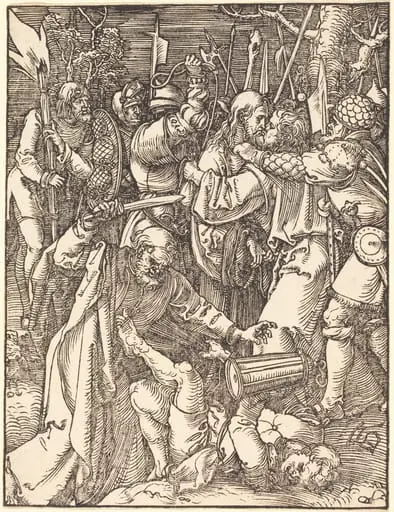 The Betrayal of Christ
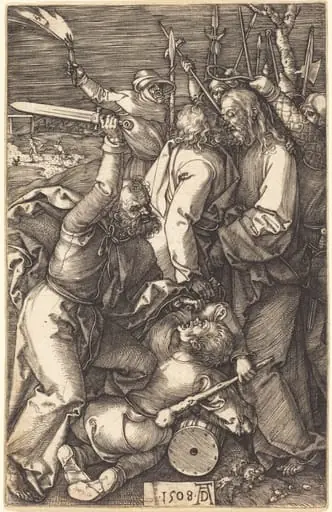 The Betrayal of Christ
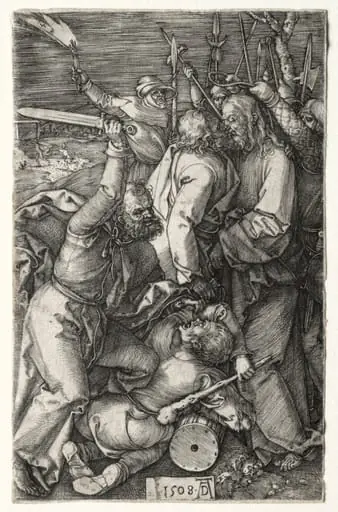 The Betrayal of Christ by Judas
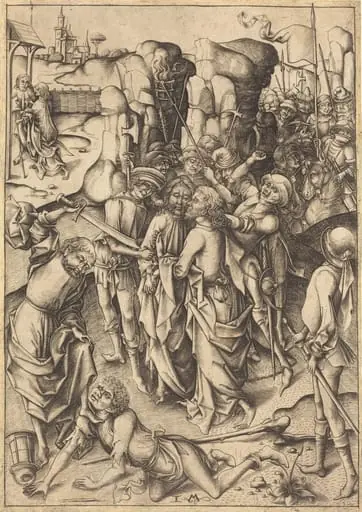 The Betrayal
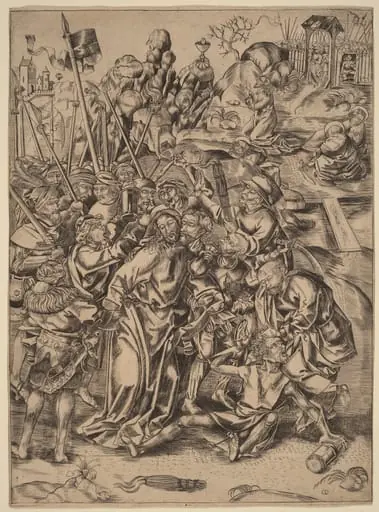 The Betrayal
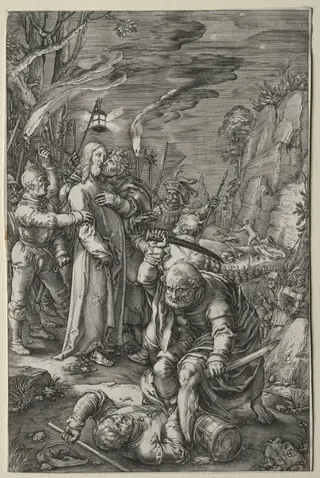 The Passion: The Betrayal of Christ