Artwork
The Crucifixion
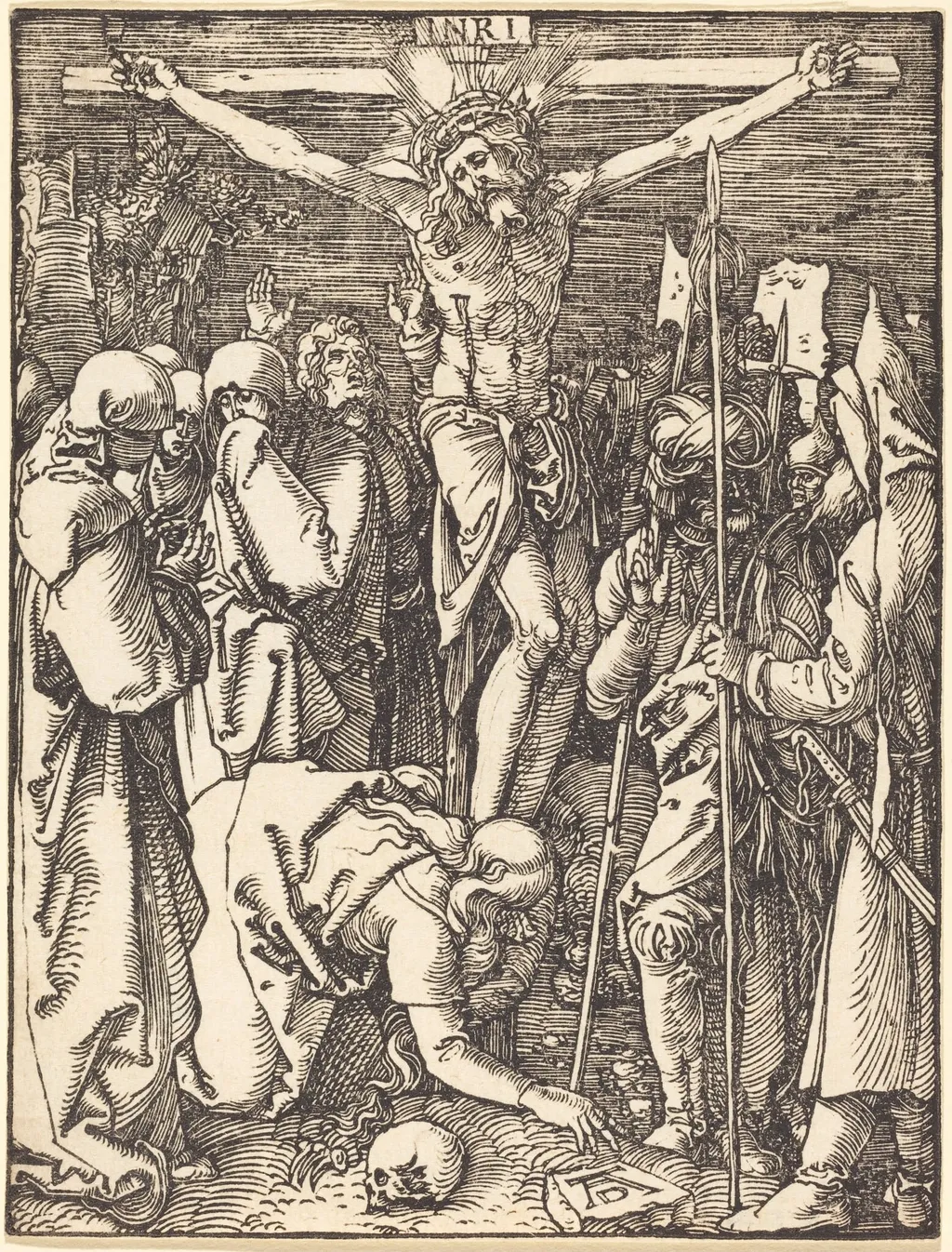
The Crucifixion is an ink print by the Northern Renaissance artist Albrecht Dürer. It dates from 1510 and is held in the collection of the British Museum.
- Inscription
- Inscribed:in block, lower right, on stone: AD [artist's monogram]; verso, lower center, in graphite by a later hand: 627; verso, bottom left, in graphite by a later hand: B 40; verso, bottom center, in graphite by a later hand: 25
About this work
Subject & Meaning
By illustrating this specific moment of suffering and sacrifice, the print reinforces the theological significance of the Passion within Christian iconography.
Albrecht Dürer's woodcut depicts the crucifixion of Jesus, serving as a visual interpretation of events described in the New Testament. Created as part of the Little Passion series, the work functions as a piece of religious art intended for devotional contemplation during the German Renaissance. The image focuses entirely on the central narrative of Christ's execution, utilizing the woodcut medium to disseminate this pivotal biblical story.
By illustrating this specific moment of suffering and sacrifice, the print reinforces the theological significance of the Passion within Christian iconography.
Technique & Style
The Crucifixion is a woodcut printed on laid paper, a relief technique in which the image is carved into a wooden block, inked, and transferred under pressure. Dated 1509, it belongs to the German Renaissance and forms part of the print tradition associated with Dürer's Little Passion series. The sheet measures 124 by 95 mm, a modest scale typical of devotional prints intended for private circulation.
As a religious work, it employs the graphic economy of the woodcut medium, dense parallel hatching and stark tonal contrasts, to convey the Crucifixion of Jesus, relying on line rather than wash or color to model form and shadow.
The impression is held in the National Gallery of Art in Washington, D.C., and the work is classified as a print within the institution's holdings.
History & Provenance
The Crucifixion was created by Albrecht Dürer in 1509 as a woodcut on laid paper within the German Renaissance tradition. It entered the collection of Joseph Daniel Böhm in Vienna and later passed to Robert Scholtz in Budapest before being acquired by William Schab in New York. Lessing J. Rosenwald purchased the work in 1940 and gifted it to the National Gallery of Art in 1943.
The print is part of Dürer's Little Passion series and depicts the crucifixion of Jesus based on New Testament narratives.
The work measures 124 cm in height and 95 cm in width.
This 1509 woodcut by Albrecht Dürer entered the collection of the National Gallery of Art in Washington, D.C., in 1943 as a gift from Lessing J. Rosenwald. Rosenwald had acquired the work in 1940 from the New York dealer William Schab. Prior to this, the print belonged to Robert Scholtz of Budapest and Joseph Daniel Böhm of Vienna.
The work is held within the museum's Rosenwald Collection. While the National Gallery of Art possesses this specific impression, other examples of the print are located in the Metropolitan Museum of Art and the British Museum.
Overview
Albrecht Dürer’s woodcut entitled The Crucifixion was produced around 1510 on laid paper. The print presents the biblical scene of Jesus on the cross, accompanied by a crowd of onlookers and a skull positioned at the foot of the cross, a traditional reference to Golgotha.
Context
Created during the early sixteenth century, the piece aligns with the Northern Renaissance’s focus on detailed naturalism and theological symbolism. It anticipates Dürer’s subsequent series, The Small Passion, and contributes to the period’s broader visual discourse on the crucifixion narrative.
Own this work as a print
Artist & collection
Artist
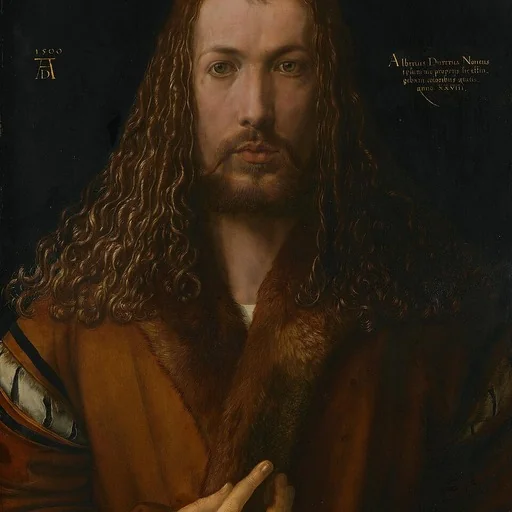
Albrecht Dürer spent his life in Nuremberg, a busy German city where artists traded prints like currency.

![Madonna and Child [obverse], by Albrecht Dürer](https://artifactworldgallery.com/img/albrecht-durer--madonna-and-child-obverse--d7b8ebf05d22ebe5-w320.webp)
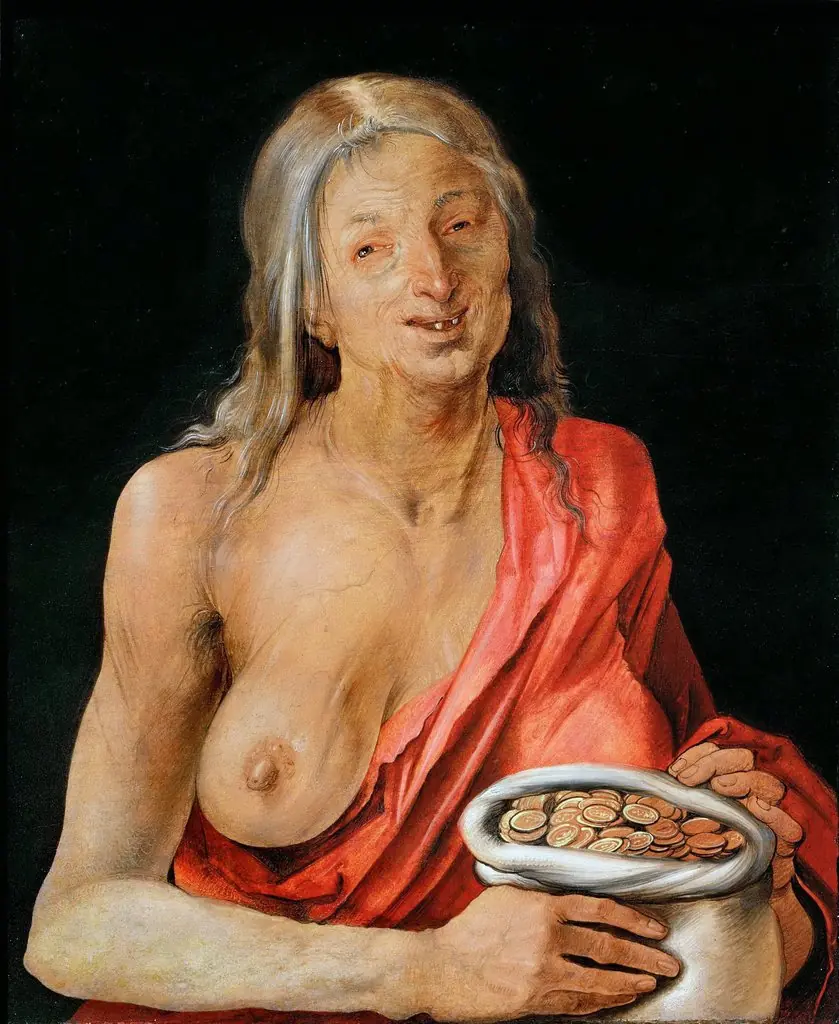
![Lot and His Daughters [reverse], by Albrecht Dürer](https://artifactworldgallery.com/img/albrecht-durer--lot-and-his-daughters-reverse--b4ebf9b282faa17a-w320.webp)
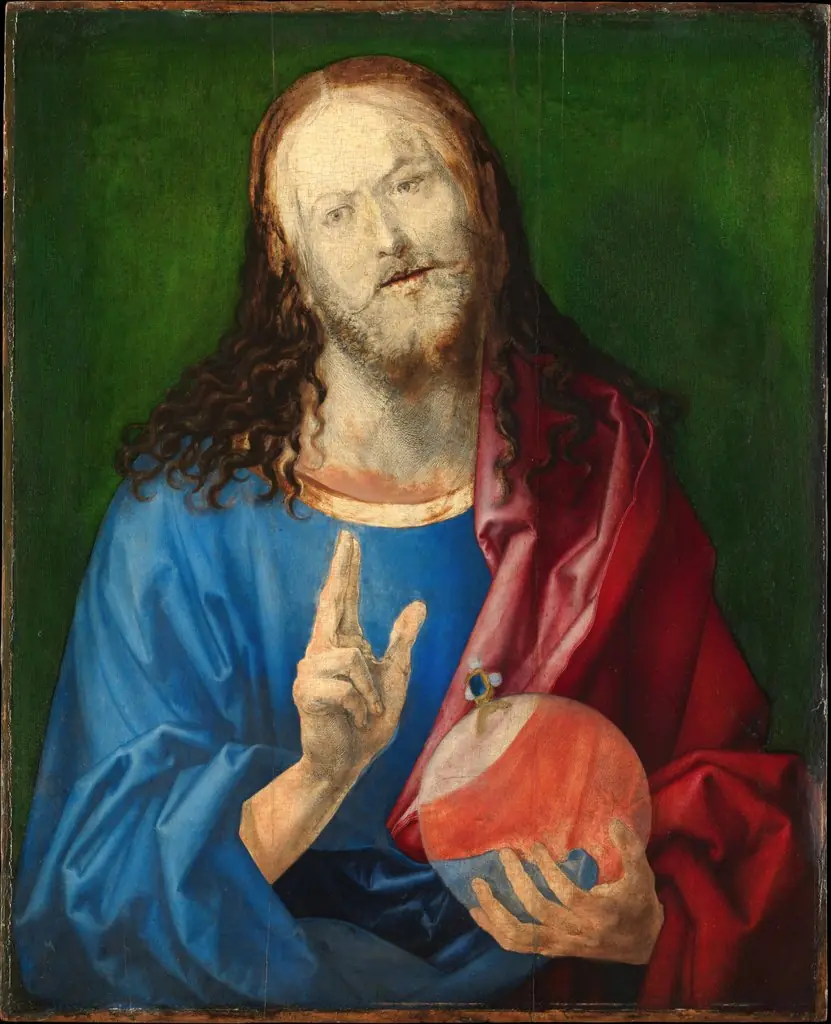
- The Crucifixion
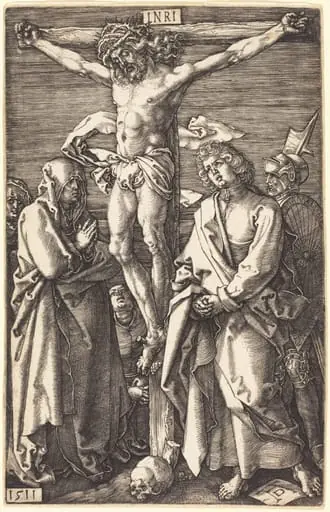 The Crucifixion
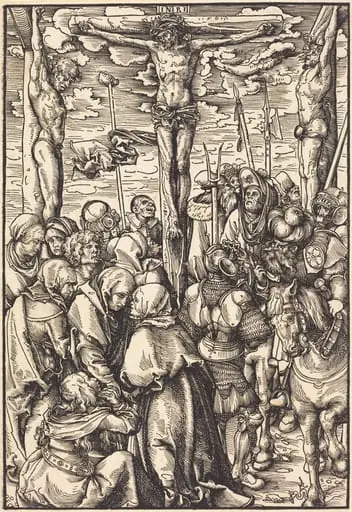 The Crucifixion
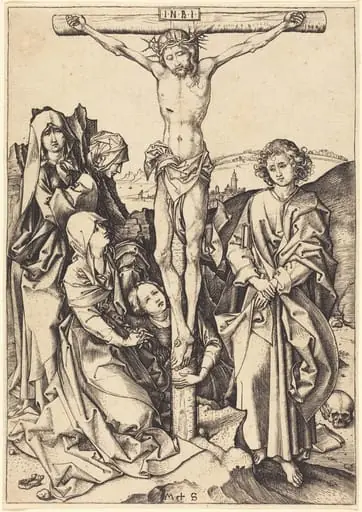 The Crucifixion
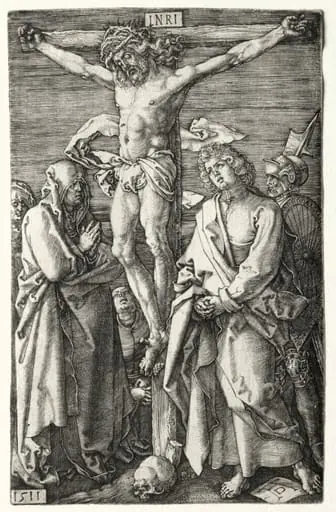 The Crucifixion
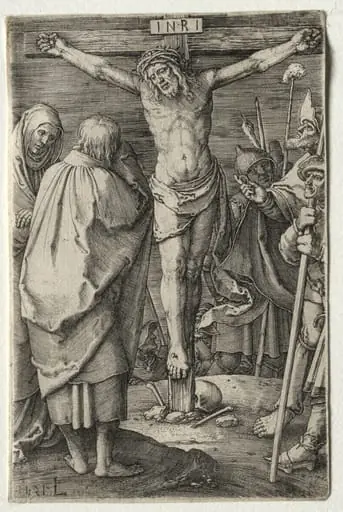 The Passion: The Crucifixion
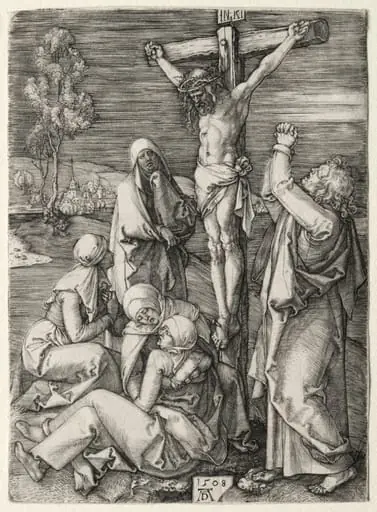 The Crucifixion
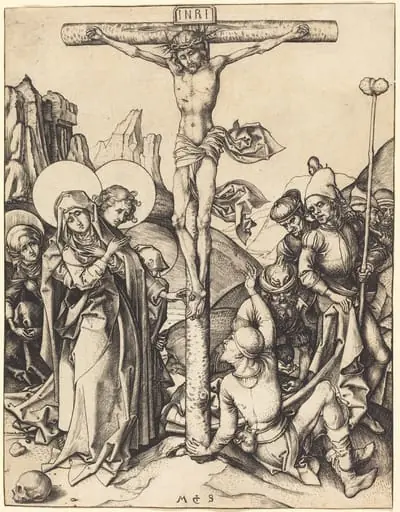 The Crucifixion
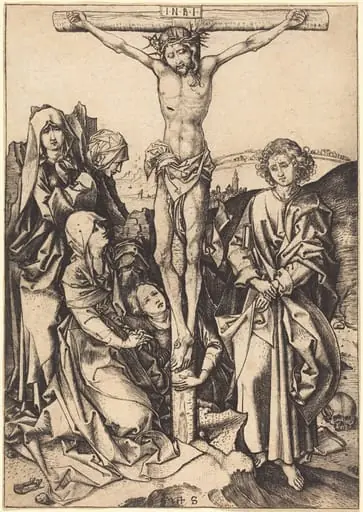
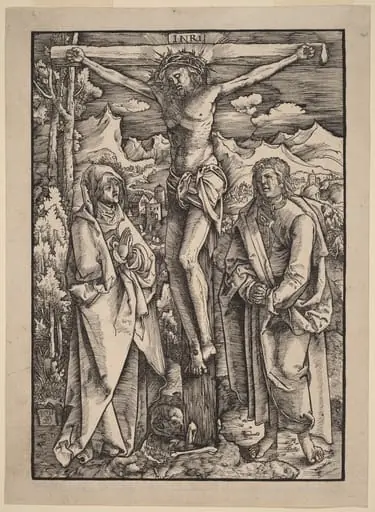 Christ on the Cross between the Virgin and Saint John
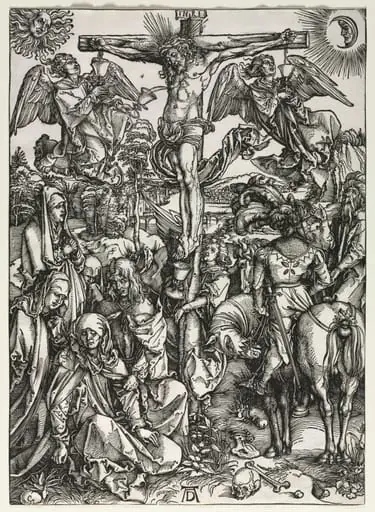 The Crucifixion
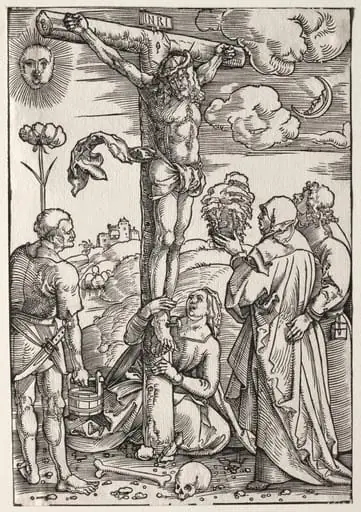 Christ on the Cross with Mary, St. John, Mary Magdalen and St. Stephen
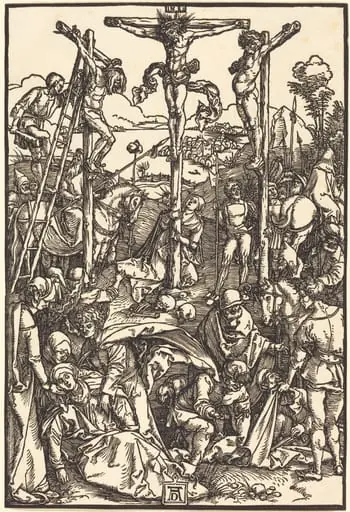 Calvary with the Three Crosses