Artwork
The Crucifixion called the Sword Pommel of Maximilian
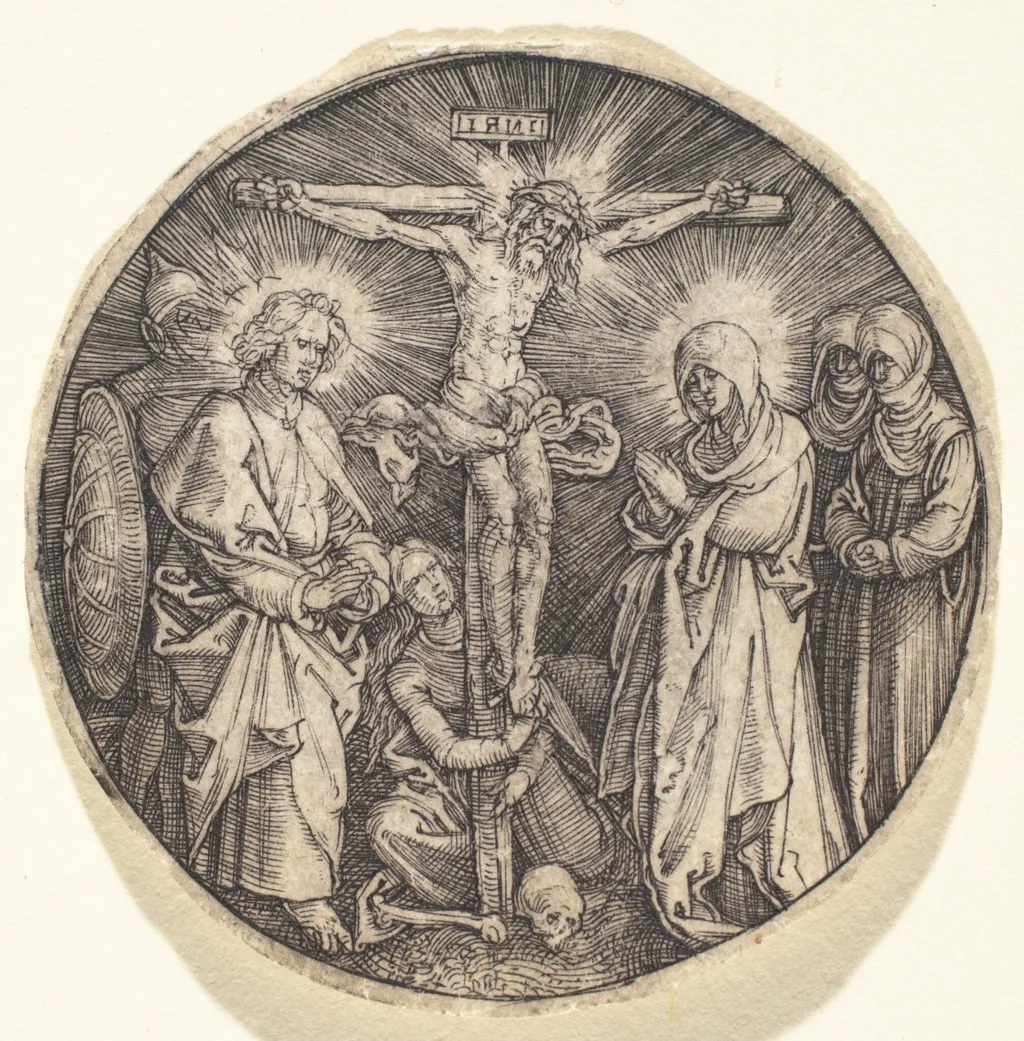
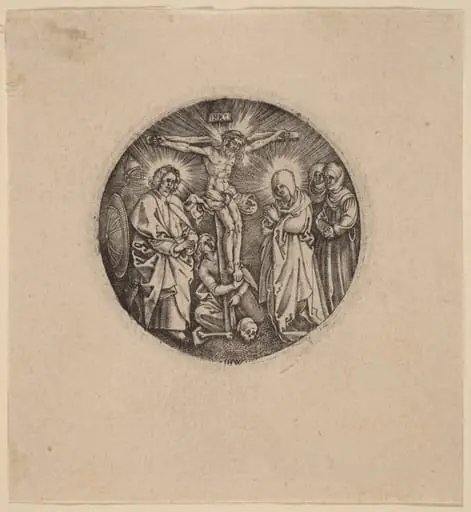
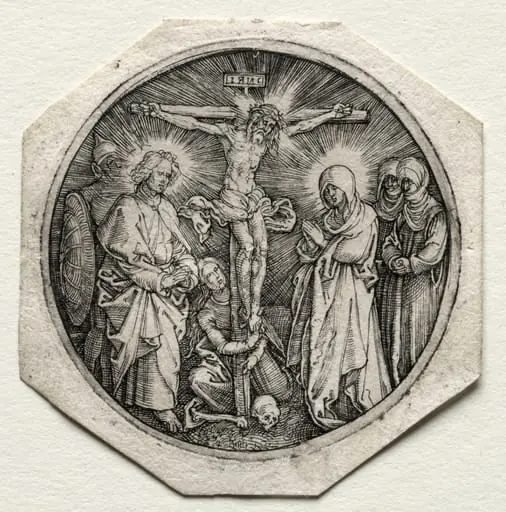
The Crucifixion called the Sword Pommel of Maximilian is an ink print by the Northern Renaissance artist Albrecht Dürer. It dates from 1518 and is held in the collection of the Metropolitan Museum of Art.
- Inscription
- Inscribed:verso, upper half, in graphite by a later hand: Original / Passavant / Prestel; verso, center, in graphite by a later hand: 378.; verso, lower center, in graphite by a later hand: B.23; verso, bottom center, in graphite by a later hand: C4265 [underlined]; verso, bottom right, in graphite by a later hand: C.9386
About this work
Subject & Meaning
Albrecht Dürer's 1518 engraving depicts the Crucifixion of Jesus, the central event of the New Testament that anchors the work's religious meaning.
Albrecht Dürer's 1518 engraving depicts the Crucifixion of Jesus, the central event of the New Testament that anchors the work's religious meaning. Flanking the cross are three identified figures: Mary, traditionally understood as the Virgin mother; Mary Magdalene; and John the Apostle. Together these mourners form the conventional iconographic grouping of the Crucifixion scene, with the two Marys and the beloved disciple positioned at the foot of the cross as witnesses to Christ's sacrifice.
The work belongs to the genre of religious art, situating it within the devotional printmaking tradition of the German Renaissance. By concentrating on the Crucifixion as its main subject, Dürer emphasizes the theological core of Christian redemption, while the inclusion of the holy attendants personalizes the moment of sorrow and invites the viewer into contemplative empathy.
Technique & Style
Created in 1518, this work is an engraving executed on laid paper. As a print from the German Renaissance, the piece utilizes incised lines to render the religious subject matter with the precision characteristic of the medium. The composition depicts the Crucifixion of Jesus, flanked by the Virgin Mary, Mary Magdalene, and John the Apostle.
The artwork was produced in Nuremberg, reflecting the specific artistic practices of that location during the early sixteenth century. The use of paper as the primary support allows for the fine detail typical of Dürer's graphic works, though specific details regarding the current physical condition or handling history of individual impressions are not provided in the available records.
History & Provenance
Albrecht Dürer created the engraving known as The Crucifixion called the Sword Pommel of Maximilian in 1518 in Nuremberg. The work's early provenance traces to Ralf Leopold von Retberg (1812–1885) of Munich. It later entered the collection of Richard H. Zinser in Forest Hills, New York, before being purchased in 1940 by Lessing J. Rosenwald in Jenkintown, Pennsylvania.
Rosenwald subsequently gifted the print to the National Gallery of Art in Washington, D.C., in 1943. The piece is now held within the Rosenwald Collection at the National Gallery, alongside other major institutions such as the Cleveland Museum of Art and the Germanisches Nationalmuseum that possess impressions of this 1518 print.
The engraving is held by the National Gallery of Art in Washington, D.C., where it entered the collection as a gift from Lessing J. Rosenwald in 1943. Rosenwald had acquired it in 1940 from Richard H. Zinser of Forest Hills, New York, and the work had previously belonged to the Munich-based collector Ralf Leopold von Retberg. The print bears Rosenwald's collector's mark, Lugt 1932d.
According to Wikidata records, impressions of the engraving are also located at the Cleveland Museum of Art and the Germanisches Nationalmuseum, and the work is associated with the broader Rosenwald Collection and the Prints in the National Gallery of Art holdings. No exhibition history is documented in the provided sources.
Overview
Albrecht Dürer’s small religious print, dated around 1518, portrays the Crucifixion scene on laid paper. The work, known as the Sword Pommel of Maximilian, presents the central figure of Christ on the cross surrounded by three mourners: the Apostle John, the Virgin Mary, and Mary Magdalene. Its compact size and fine detail reflect Dürer’s mature printmaking practice.
Context
Created in the final decade of Dürer’s career, the engraving reflects the artist’s continued interest in religious subjects and his mastery of print media as a means of disseminating devotional images. The work aligns with contemporary Northern Renaissance trends that combined detailed naturalism with expressive religious narrative.
Own this work as a print
Artist & collection
Artist
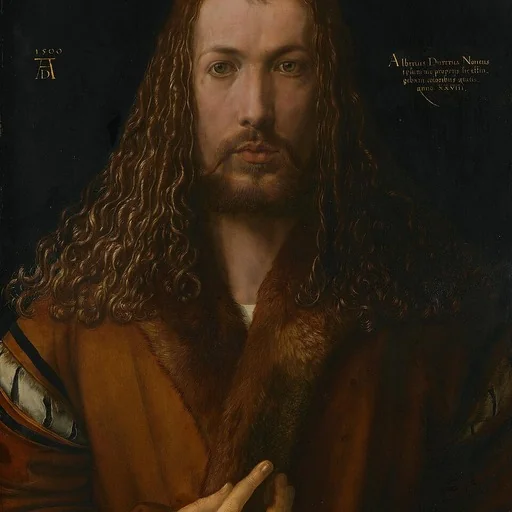
Albrecht Dürer spent his life in Nuremberg, a busy German city where artists traded prints like currency.

![Madonna and Child [obverse], by Albrecht Dürer](https://artifactworldgallery.com/img/albrecht-durer--madonna-and-child-obverse--d7b8ebf05d22ebe5-w320.webp)
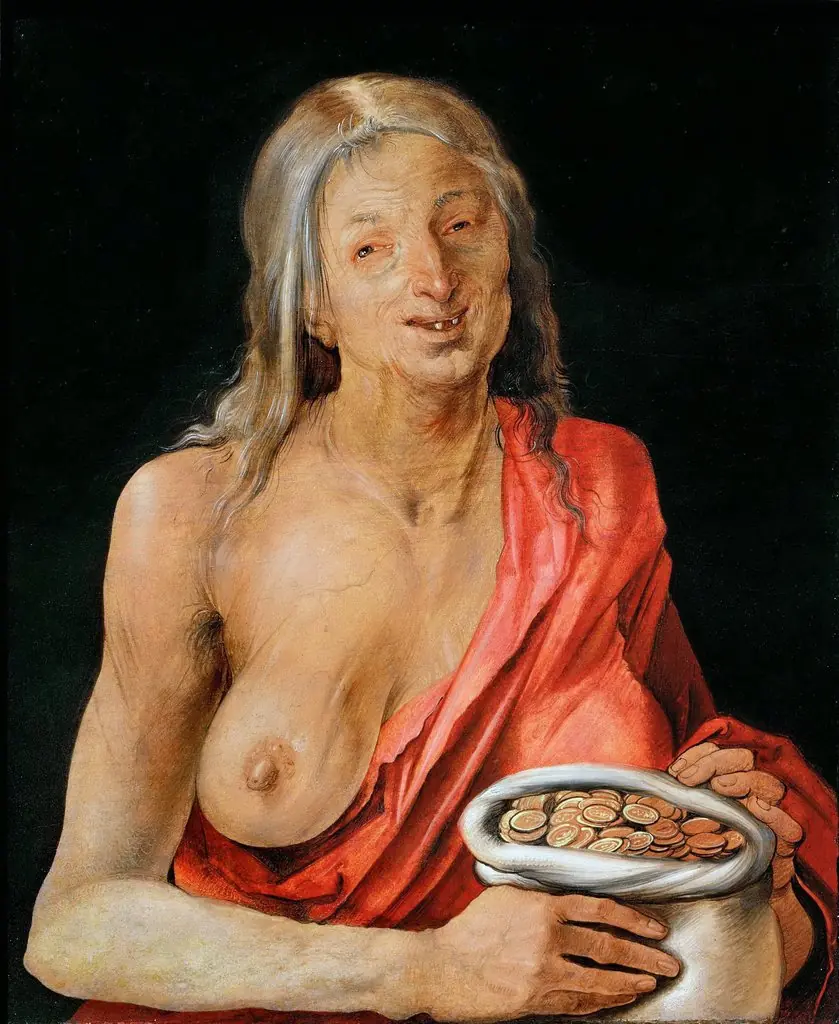
![Lot and His Daughters [reverse], by Albrecht Dürer](https://artifactworldgallery.com/img/albrecht-durer--lot-and-his-daughters-reverse--b4ebf9b282faa17a-w320.webp)
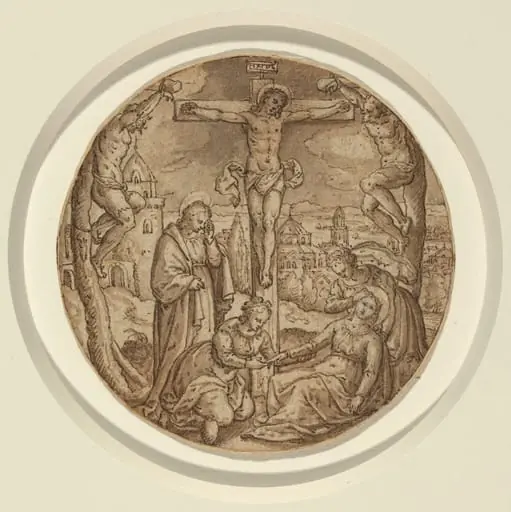 The Crucifixion
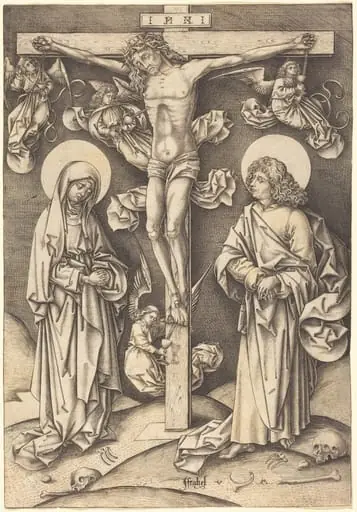 The Crucifixion
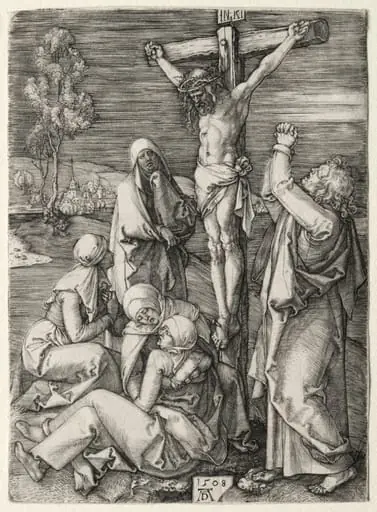 The Crucifixion
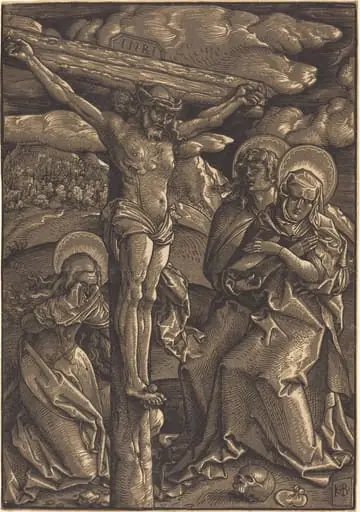 The Crucifixion
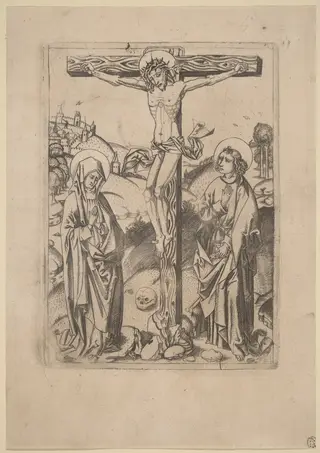 The Crucifixion
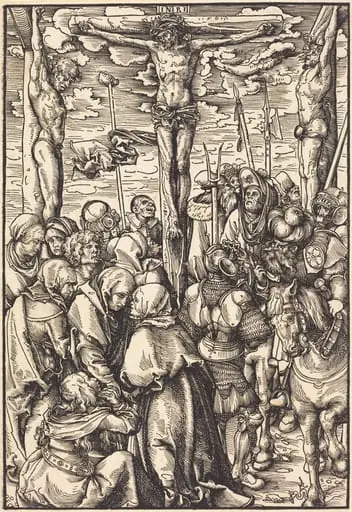 The Crucifixion
 The Crucifixion
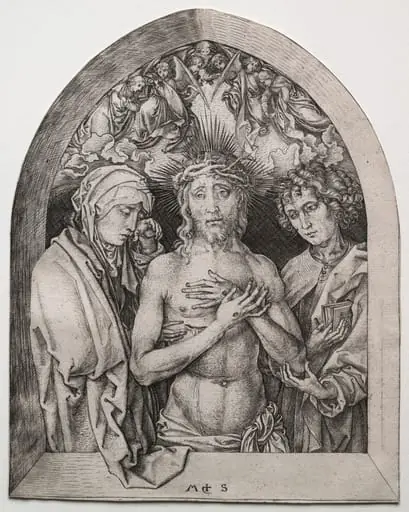 Christ as the Man of Sorrows between the Virgin and St. John
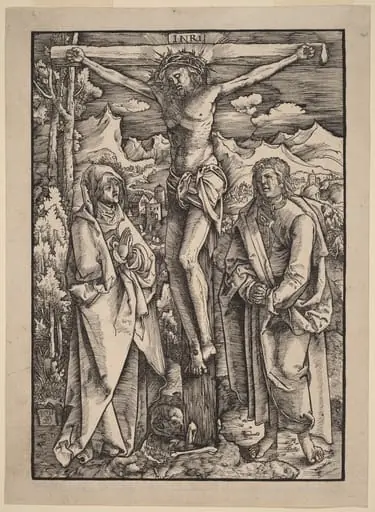 Christ on the Cross between the Virgin and Saint John
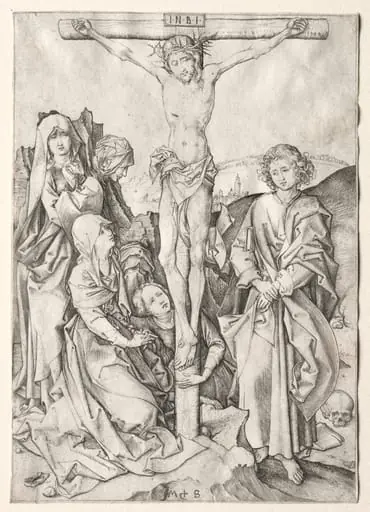 The Passion: Christ on the Cross
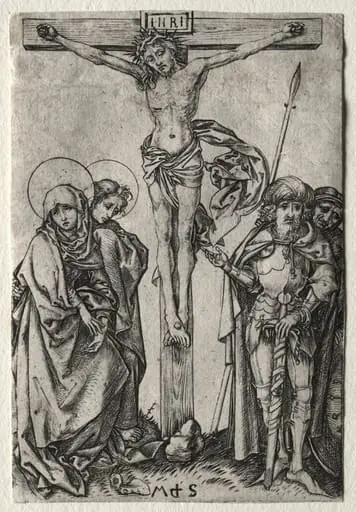 Christ on the Cross
- The Crucifixion called the Sword Pommel of Maxmilian