Artwork
The Passion: Christ on the Cross
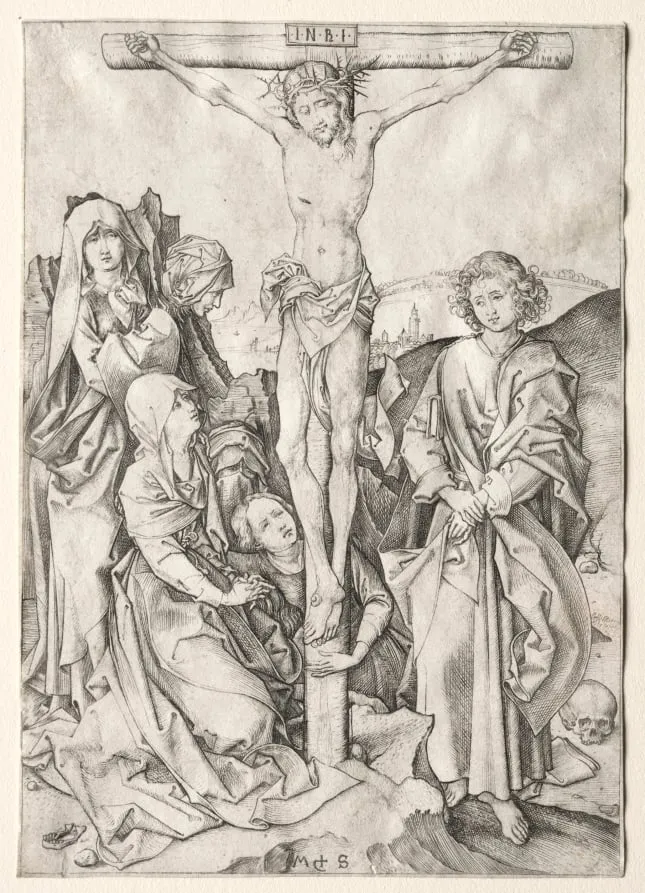
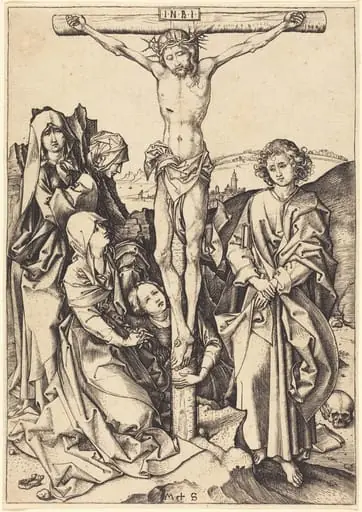
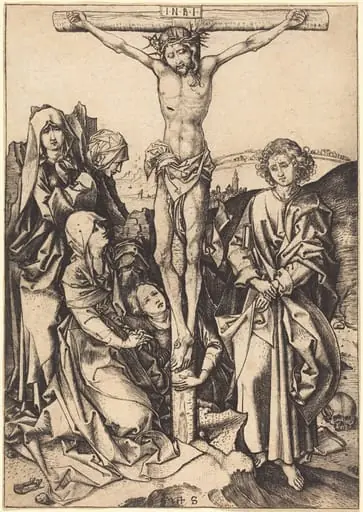
The Passion: Christ on the Cross is a print by the Renaissance artist Martin Schongauer. It dates from 1480 and is held in the collection of the Cleveland Museum of Art.
- Accession no.
- 1930.525
- Credit line
- Gift of The Print Club of Cleveland
About this work
Overview
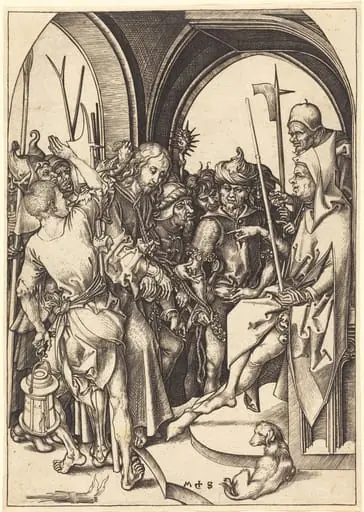
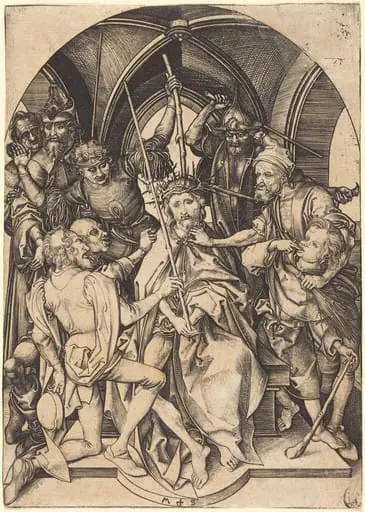
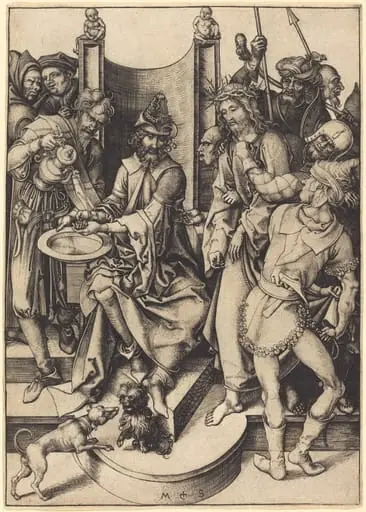
This print is part of Martin Schongauer's Passion series, a set of twelve engravings created around 1480 depicting the final days of Christ's life.
Subject & Meaning
The scene shows Christ on the cross surrounded by mourners, including Saint John the Evangelist and four women, evoking emotional compassion in the viewer through their expressions and poses.
Technique & Style
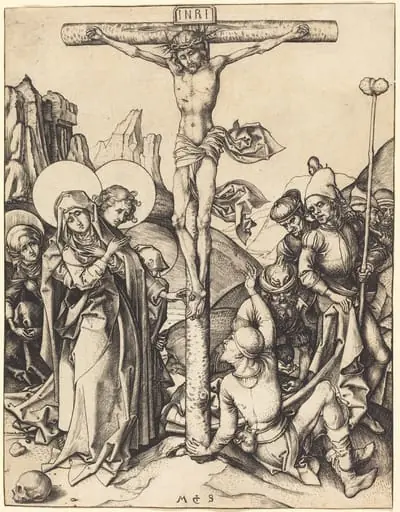
The engraving features a crowded composition with dramatic use of light and shadow, and exaggerated facial expressions, particularly among the soldiers, creating a sense of raw emotion.
Context
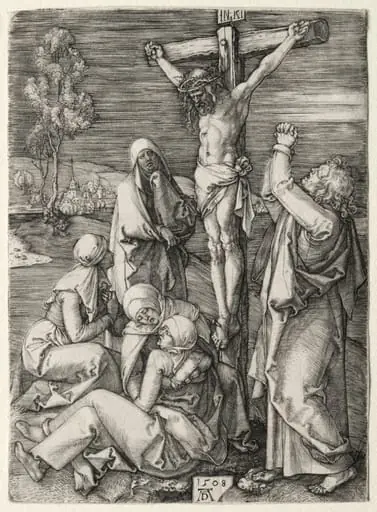
This work reflects the emerging interest in conveying intense emotions in German art during the late 15th century, and was influential across Europe, as evidenced by its extensive copying.
Artist & collection
Artist
Martin Schongauer (c. 1450–1453, Colmar – 2 February 1491, Breisach), also known as Martin Schön ("Martin beautiful") or Hübsch Martin ("pretty Martin") by his contemporaries, was an Alsatian engraver and painter. He…