Artwork
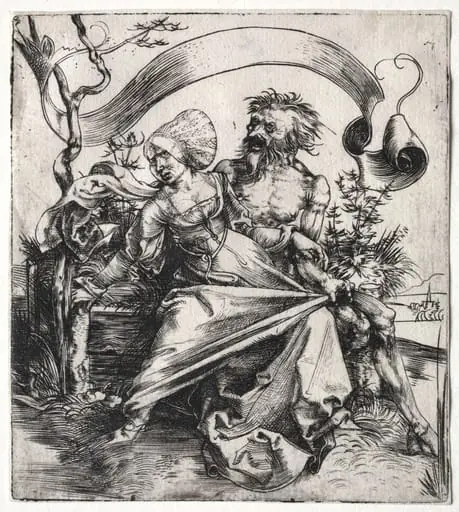
The Ravisher
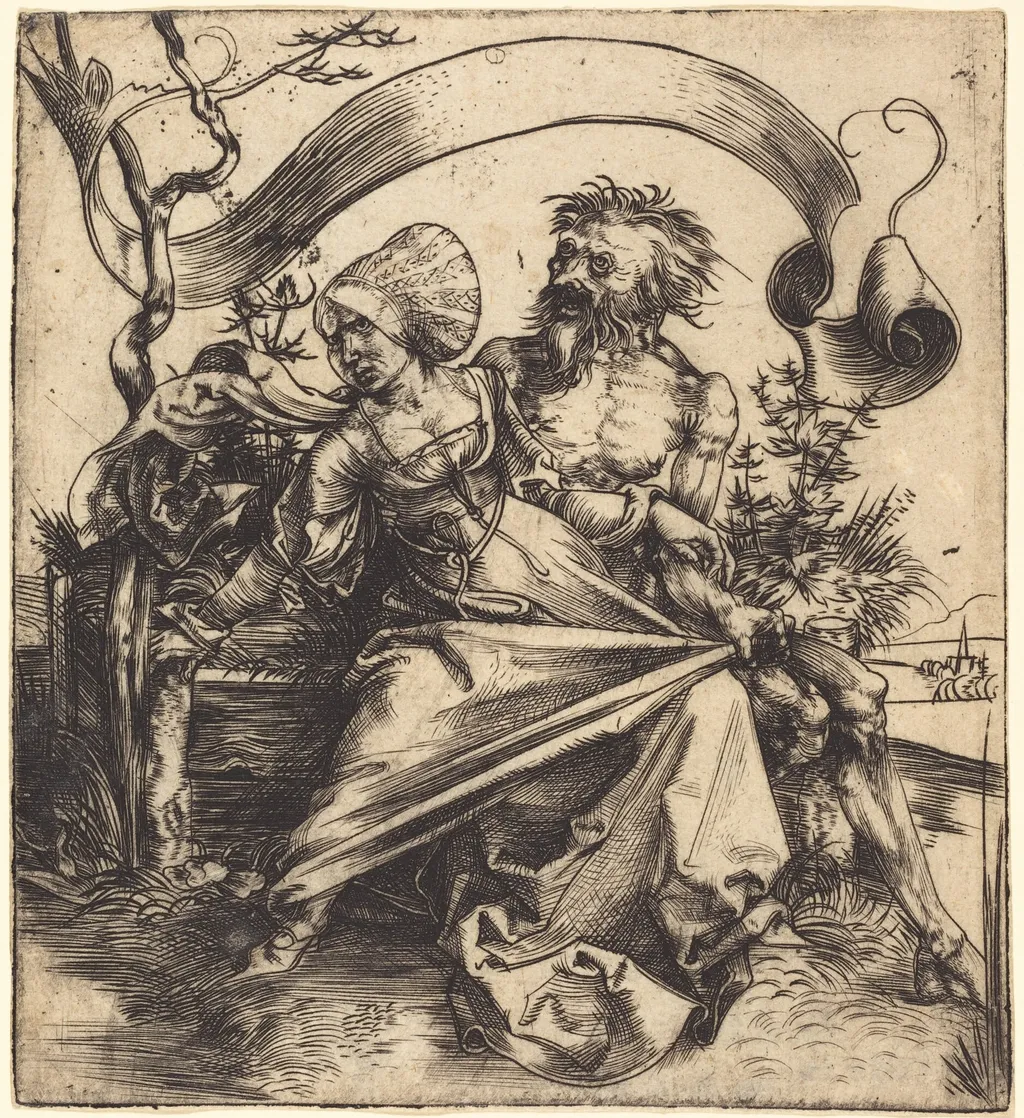
The Ravisher is an ink print by the Northern Renaissance artist Albrecht Dürer. It dates from 1495 and is held in the collection of the Metropolitan Museum of Art.
- Inscription
- Inscribed:verso, lower left, in graphite by a later hand: 86; verso, lower left, in graphite by a later hand: B.92; verso, lower left, in graphite by a later hand: a69432; verso, lower left, in graphite by a later hand: NR [?] 31638
About this work
Subject & Meaning
The work depicts these specific subjects, utilizing the German Renaissance tradition to convey a symbolic narrative rather than a literal scene.
Albrecht Dürer's 1495 engraving, The Ravisher, is classified as an allegory that visually explores the themes of death and dreams. The work depicts these specific subjects, utilizing the German Renaissance tradition to convey a symbolic narrative rather than a literal scene. By combining the imagery of Death with the concept of a dream, the print serves as a meditation on mortality and the subconscious state.
The composition functions as a moral or philosophical statement, characteristic of Dürer's allegorical prints from this period, inviting viewers to contemplate the transient nature of life through the lens of a nocturnal vision.
Technique & Style
The Ravisher is an engraving executed on laid paper, a medium characteristic of Albrecht Dürer's early printmaking practice. The composition combines allegorical imagery with motifs of dream and Death, reflecting the thematic concerns of the German Renaissance. The work measures 114 cm in height and 102 cm in width, and was produced in Nuremberg in 1495.
Its surface handling and condition are documented through its provenance from Vincent Mayer to Lessing J. Rosenwald before its gift to the National Gallery of Art in 1943.
History & Provenance
Created in 1495 as an engraving on laid paper, The Ravisher is dated to the mid-1490s in Dürer’s early graphic oeuvre. The work’s commissioning patron remains unrecorded in the documented record.
It entered modern collections via Vincent Mayer, New York, who held the impression by 1831. Lessing J. Rosenwald acquired it in 1929, and in 1943 he donated the sheet to the National Gallery of Art, Washington, D.C., where it remains in the Rosenwald Collection.
The engraving is held in the collection of the National Gallery of Art in Washington, D.C., specifically within the Rosenwald Collection. It was acquired as a gift from Lessing J. Rosenwald in 1943, having been purchased by him in 1929 from the estate of Vincent Mayer of New York. While other institutions such as the Chester Beatty Library, Städel Museum, Cleveland Museum of Art, Staatliche Kunsthalle Karlsruhe, and the Metropolitan Museum of Art also hold impressions of this work, the provenance of the Rosenwald impression is well-documented. No specific exhibition history is recorded in the provided sources.
Overview
Albrecht Dürer’s engraving known as The Ravisher, dated to around 1495, presents a stark allegorical scene. Executed on laid paper, the print portrays a skeletal figure in armor astride a goat, moving through a dark, tangled forest while a rope attached to the rider drags a third figure, and two other men flee, one stumbling.
Own this work as a print
Artist & collection
Artist
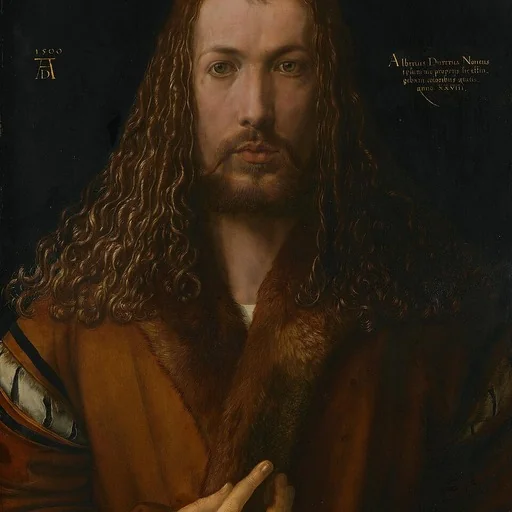
Albrecht Dürer spent his life in Nuremberg, a busy German city where artists traded prints like currency.

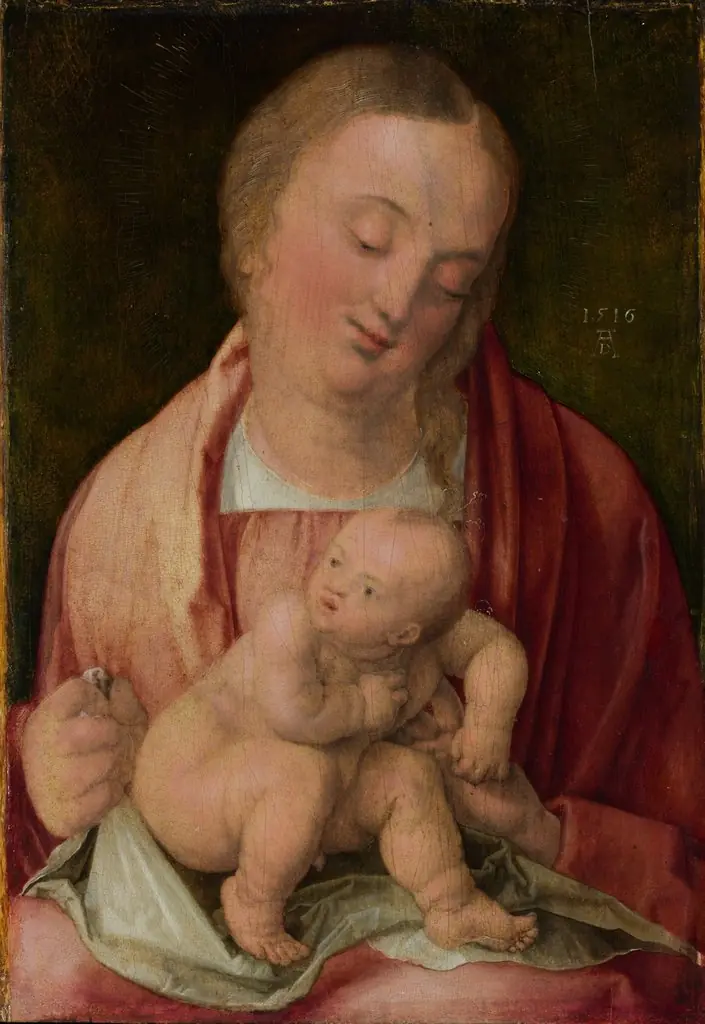
![Madonna and Child [obverse], by Albrecht Dürer](https://artifactworldgallery.com/img/albrecht-durer--madonna-and-child-obverse--d7b8ebf05d22ebe5-w320.webp)
![Lot and His Daughters [reverse], by Albrecht Dürer](https://artifactworldgallery.com/img/albrecht-durer--lot-and-his-daughters-reverse--b4ebf9b282faa17a-w320.webp)