Artwork
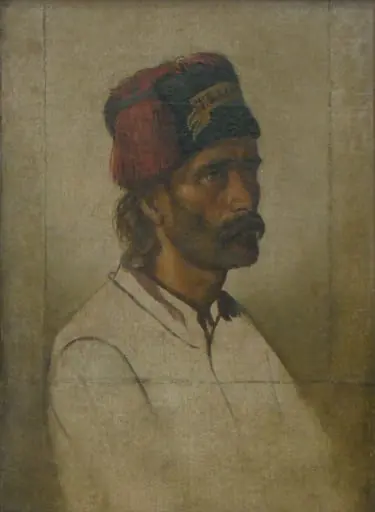
Țigan
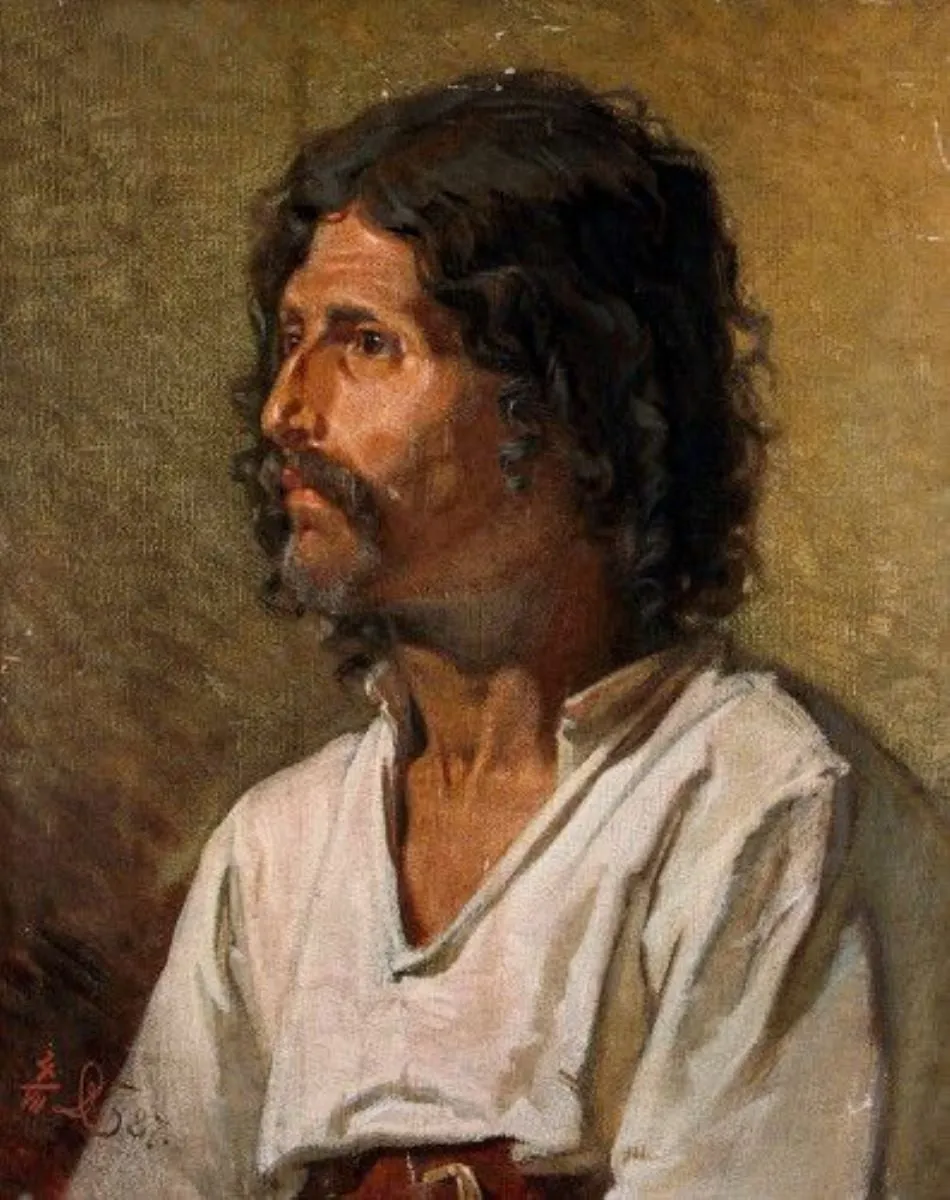
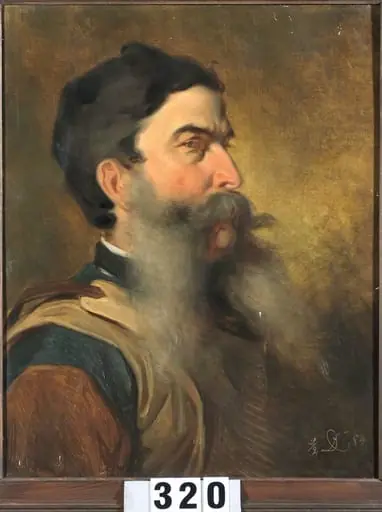
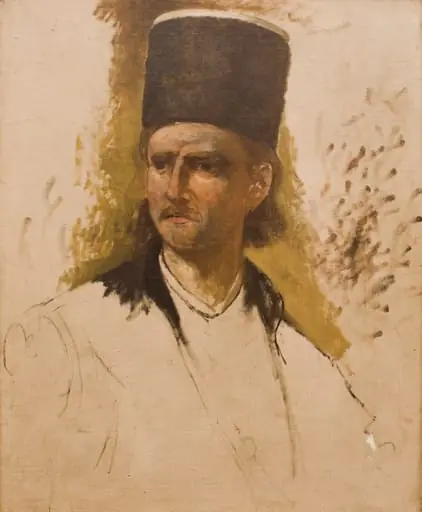
Țigan is an unspecified painting by the Academic Art artist Carl Dörschlag. It dates from 1882 and is held in the collection of the Brukenthal National Museum.
About this work
Overview
“Țigan,” executed around 1882 by Carl Dörschlag, is an oil painting that presents a solitary male figure against an indistinct backdrop. The work’s modest dimensions and muted palette focus attention on the sitter’s demeanor, while the title, meaning “Gypsy” in Romanian, hints at a cultural reference that was common in 19th‑century European genre scenes.
Subject & Meaning
The canvas depicts a man with long, dark hair and a full beard, dressed in a loose, light‑colored shirt cinched by a dark belt. His expression is solemn, and his gaze is directed outward, suggesting introspection or perhaps a moment of quiet resolve. The lack of narrative detail leaves the viewer to contemplate the individual’s identity and social position.
Technique & Style
Dörschlag employs a pronounced impasto technique, applying thick paint especially to the hair and beard, which creates a tactile surface and emphasizes the physicality of the figure. The brushwork varies between densely layered strokes and smoother washes, while the background is rendered with softened, blurred tones that recede, reinforcing the three‑dimensional presence of the sitter.
History & Provenance
Created circa 1882, the painting emerged during a period when Dörschlag, a German realist, frequently explored everyday subjects. Documentation of its early ownership is sparse, but the work has appeared in several European private collections before entering its current public display, where it contributes to a broader understanding of late‑19th‑century portraiture.
Artist & collection