Artwork
Portrait of a Gentleman
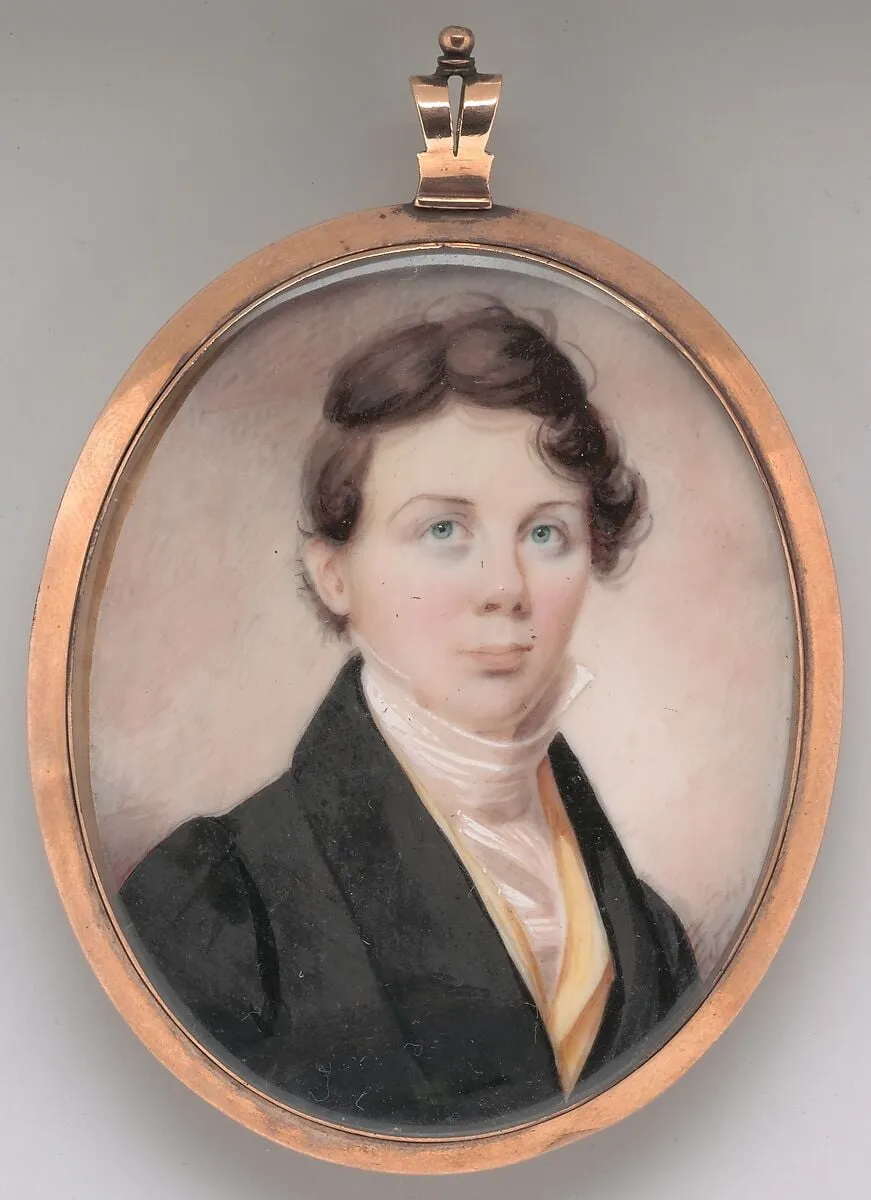
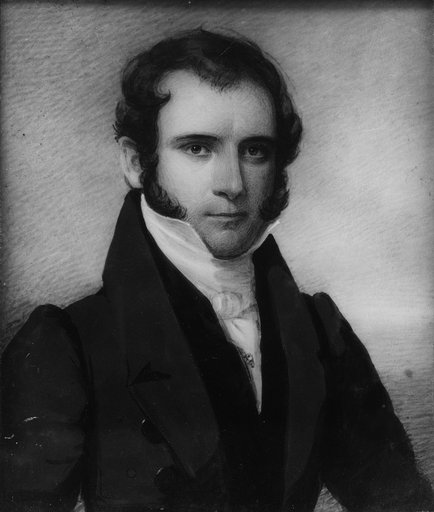
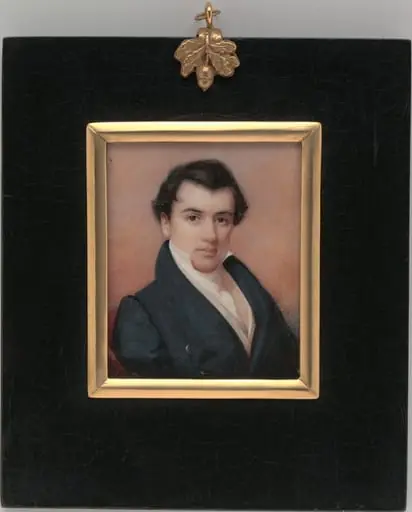
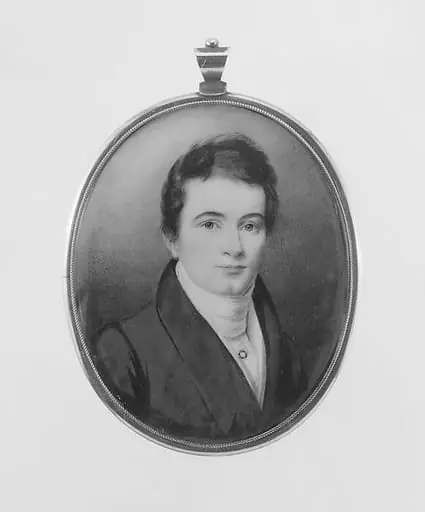
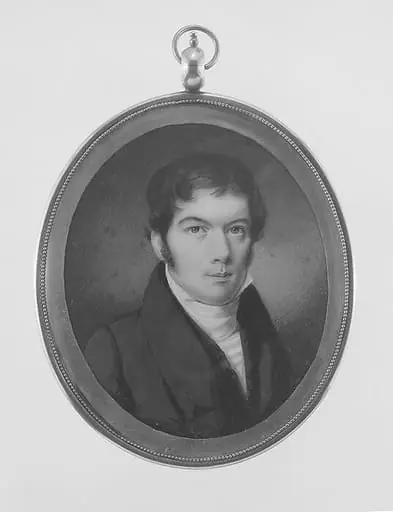
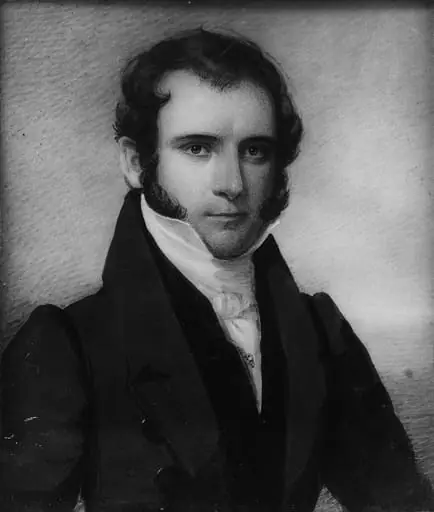
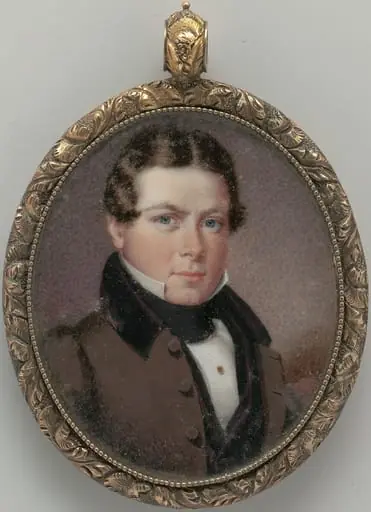
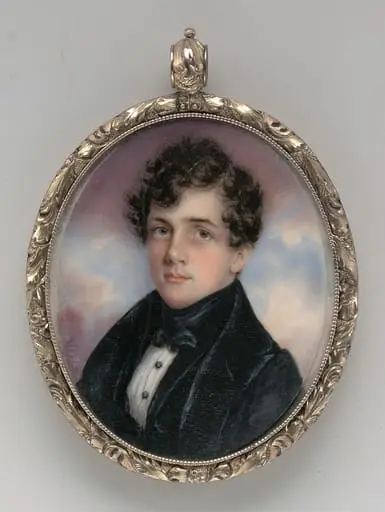
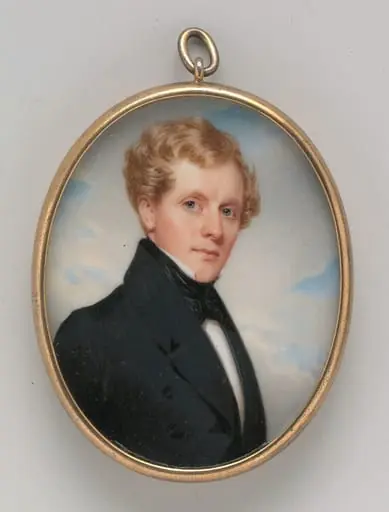
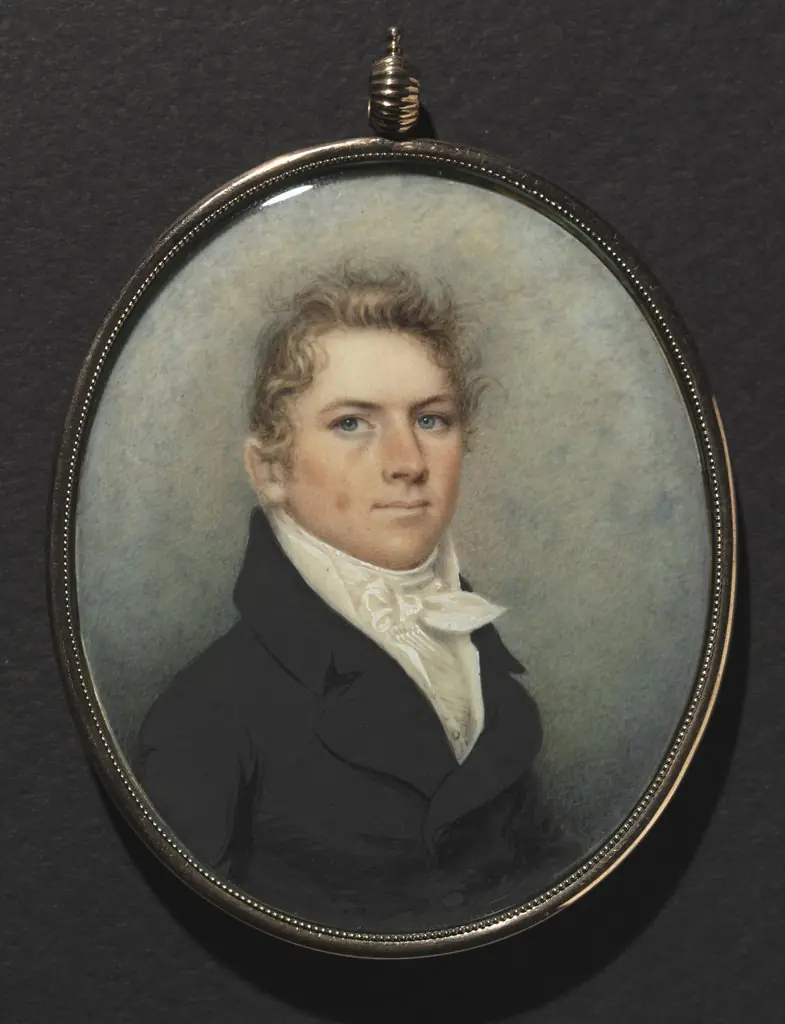
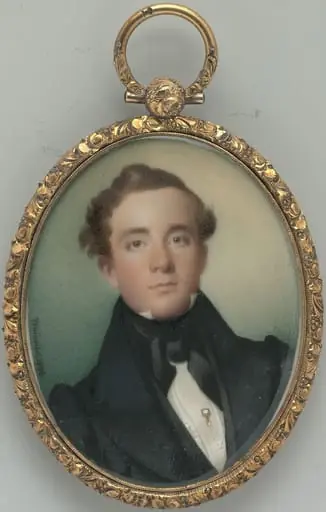
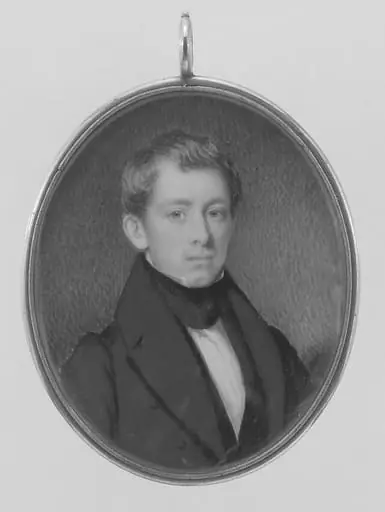
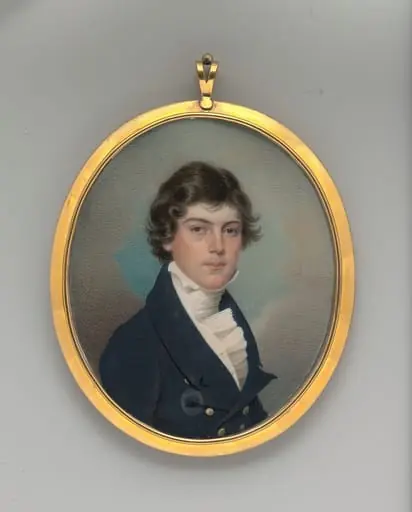
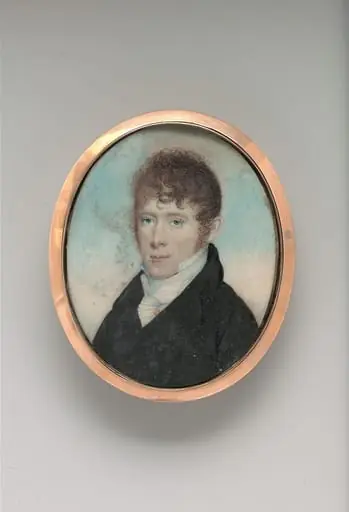
Portrait of a Gentleman is a watercolor painting by the American Folk Art artist Daniel Dickinson. It dates from 1822 and is held in the collection of the Metropolitan Museum of Art.
About this work
Technique & Style
A distinctive technical feature is the inclusion of a hair reserve on the verso, integrating human hair into the object's physical structure.
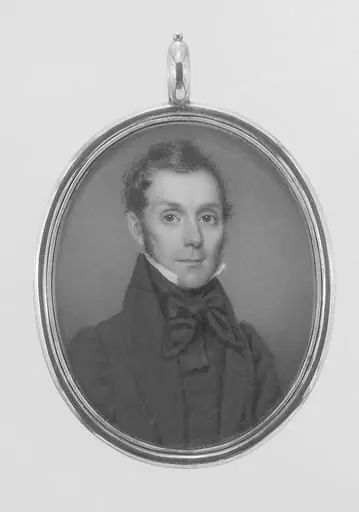
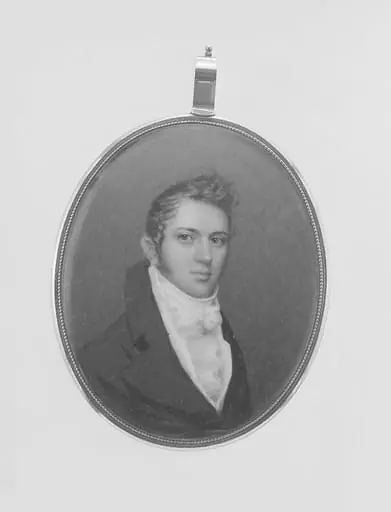
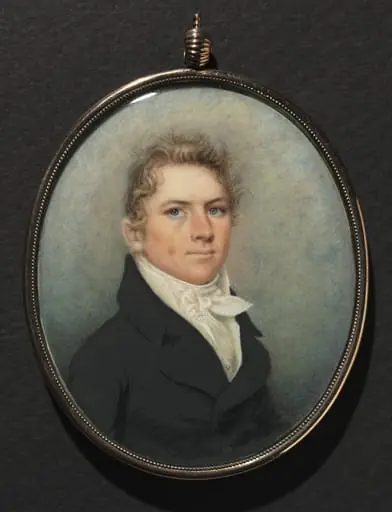
Executed in 1822 by Daniel Dickinson, this portrait utilizes watercolor applied to an ivory support. The work is housed within a gilded copper case, a format characteristic of miniature painting traditions. A distinctive technical feature is the inclusion of a hair reserve on the verso, integrating human hair into the object's physical structure.
Stylistically, the piece functions as a formal likeness of a male subject. The small scale of the ivory panel, measuring approximately 6.6 by 5.2 cm, necessitates a precise handling of the watercolor medium to render facial features within a confined space. The combination of the translucent watercolor layers over the luminous ivory ground creates the specific visual quality associated with early nineteenth-century American portraiture.
History & Provenance
Portrait of a Gentleman was produced in 1822 by American artist Daniel Dickinson. Executed in watercolor on ivory and set within a gilded copper case with a hair reserve on the verso, the piece measures approximately 6.6 × 5.2 cm and portrays a man in a conventional portrait format. It is held in the collection of the Metropolitan Museum of Art, classified within The American Wing. No specific accession number, acquisition date, or prior exhibition history is documented in the available records.
Overview
Daniel Dickinson's Portrait of a Gentleman, created in 1822, is a watercolor miniature on ivory. Encased in gilded copper, this small artwork depicts an unidentified man, his features softly illuminated against a light background. Its diminutive size suggests it was intended as a personal object, possibly worn or kept as a private memento, a common practice for such portraits during the period.
Subject & Meaning
This miniature portrays an unnamed gentleman, rendered with a gentle light on his face and dressed in a dark coat. The intimate scale of the portrait, designed to fit in one's palm, underscores its role as a deeply personal item. A lock of hair, preserved under glass on the reverse, further emphasizes its function as a private keepsake, likely exchanged between loved ones to maintain a tangible connection.
Context
Miniature portraits like this one were highly fashionable in the early nineteenth century, serving as cherished personal tokens. Often exchanged among family members, friends, or romantic partners, they provided a portable and discreet way to carry an image of a loved one. Their design as wearable jewelry or small, private objects reflects a cultural emphasis on sentimentality and personal connection during this era.
Artist & collection