Artwork
Portrait of a Gentleman
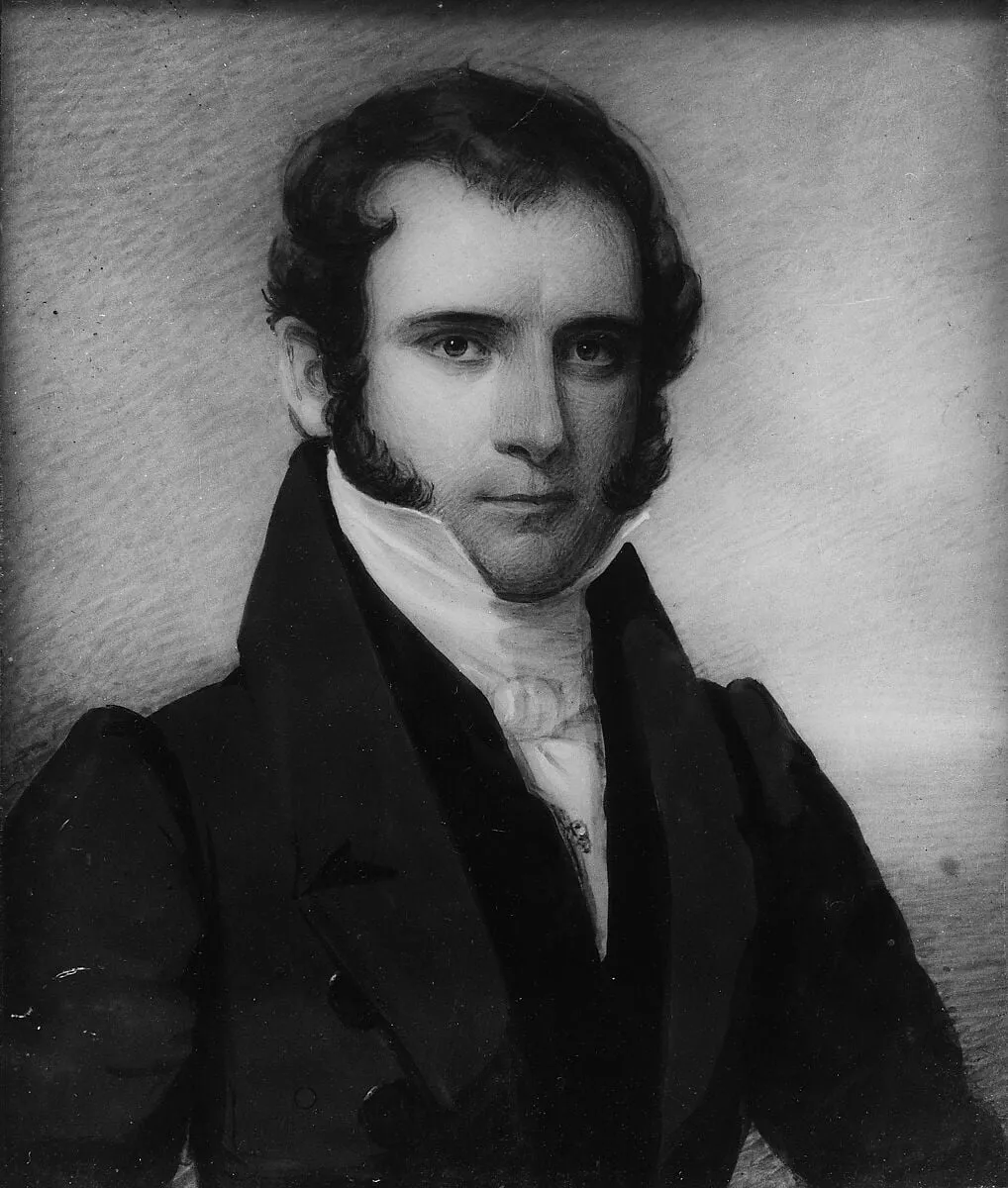
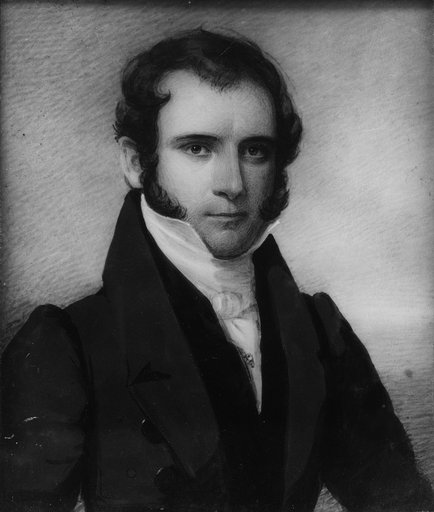
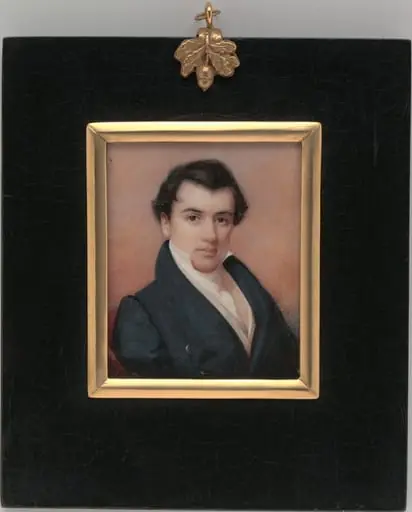
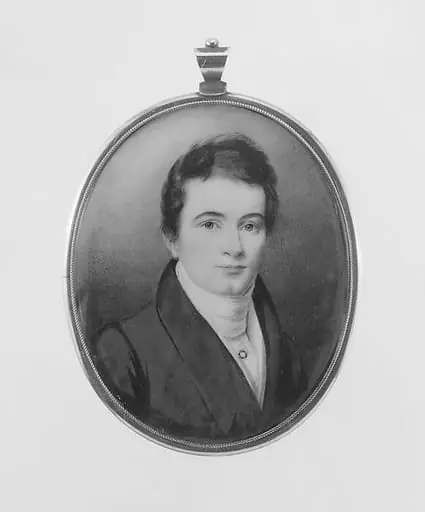
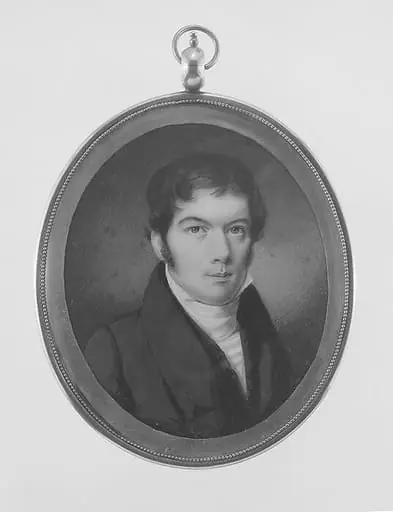
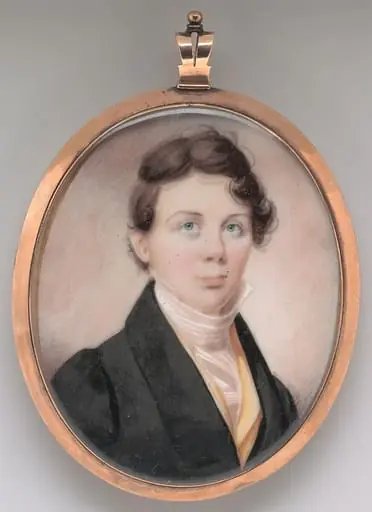
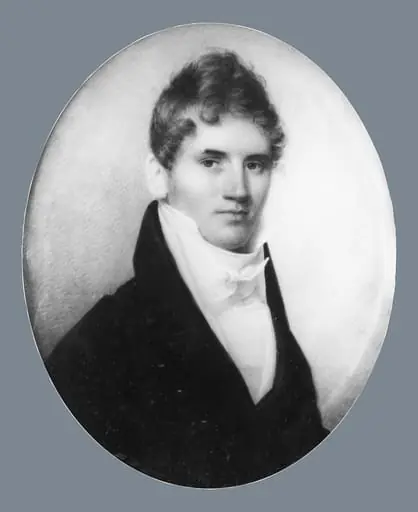
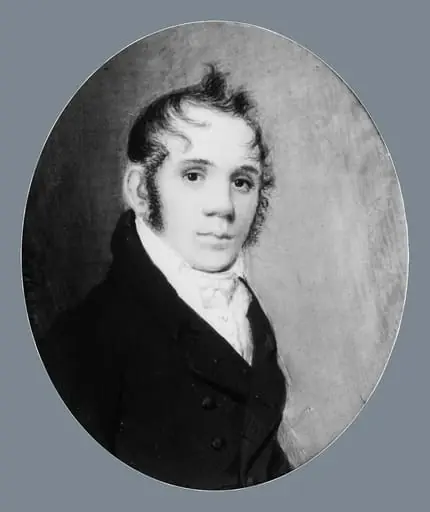
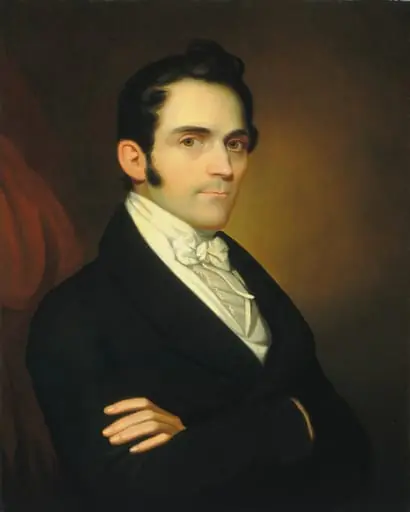
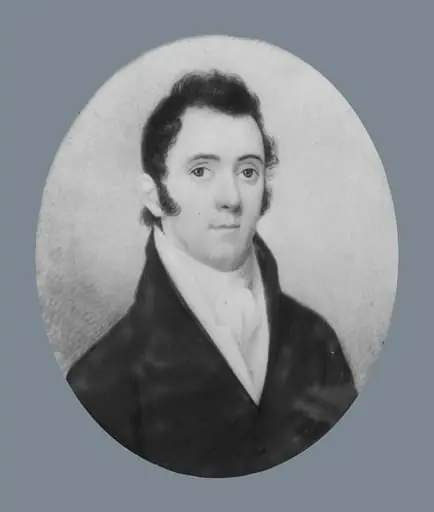
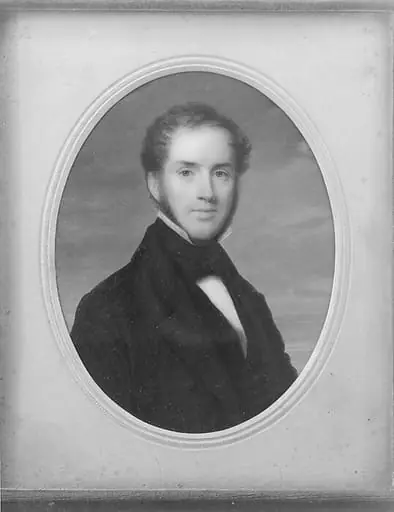
Portrait of a Gentleman is a watercolor painting by the American Folk Art artist Daniel Dickinson. It dates from 1821 and is held in the collection of the Metropolitan Museum of Art.
About this work
Technique & Style
Daniel Dickinson’s handling of the watercolor is delicate, allowing subtle gradations of tone to model the sitter’s features and attire.
The Portrait of a Gentleman is a watercolor miniature executed on an ivory support, a medium commonly employed for small-scale portraiture in the early nineteenth century. The ivory sheet measures approximately 8.3 cm in height and 7 cm in width, and is housed in a red leatherette case lined with green velvet. Daniel Dickinson’s handling of the watercolor is delicate, allowing subtle gradations of tone to model the sitter’s features and attire.
As a portrait genre work, it presents a gentleman’s likeness with the refined detail and intimate scale characteristic of American miniature painting of the period.
History & Provenance
Portrait of a Gentleman is a watercolor on ivory portraying a man, created by Daniel Dickinson in 1820. The work measures 8.3 × 7 inches and was executed on paper mounted to ivory, stored in a red leatherette case with green velvet lining. It belongs to the American Wing’s portrait genre and has been part of the Metropolitan Museum of Art’s collection since its acquisition, as recorded in the museum’s catalogue.
The painting’s inception is dated to 1820, and its subject is identified as a man, consistent with its genre classification. No earlier owners or commissioning details are documented, and the work remains on display in the museum’s American Wing.
Portrait of a Gentleman (1820) by Daniel Dickinson is housed in the Metropolitan Museum of Art, New York, within the American Wing galleries. The work is catalogued under accession number 31.61 in the museum’s collection. Its dimensions are 8.3 × 7 cm, and it is executed in watercolor on ivory mounted in a red leatherette case with green velvet lining.
The painting belongs to the portrait genre and depicts a seated man. Exhibition records in the supplied documentation do not list specific public displays beyond its permanent display in the museum’s American Wing.
Context
The 1820 watercolor portrait by Daniel Dickinson, listed in The American Wing, is recorded as a work of the portrait genre depicting a man, and it is housed in a red leatherette case with green velvet lining. Museum records and Wikidata entries confirm its inclusion in the Metropolitan Museum of Art collection and its classification as a portrait painted in 1820. Scholarship situates the piece within Dickinson’s early American portraiture, noting its neoclassical style and its role in representing elite subjectivity in the early Republic.
Its presence in a major American art museum underscores its significance in the narrative of United States art history and illustrates the transatlantic influences shaping portraiture of the period.
Overview
Daniel Dickinson painted this watercolor portrait of an unidentified man in 1821. Rendered on a small piece of ivory, the work is housed within a protective case, suggesting it was intended for intimate viewing. The sitter's direct gaze and formal attire reflect the conventions of early 19th-century American portraiture, capturing a moment in time with delicate precision.
Subject & Meaning
The subject, an unnamed gentleman, is presented in a dark coat with a crisp white collar and prominent gold buttons, details that stand out against a simple background. His face is softly illuminated, and he engages the viewer with a direct, steady gaze. This intimate scale and direct address were characteristic of personal portraits, often commissioned to commemorate individuals or to be exchanged among family members.
Artist & collection