Artwork
Portrait of Dina Lems, Wife of Jan Valckenburgh
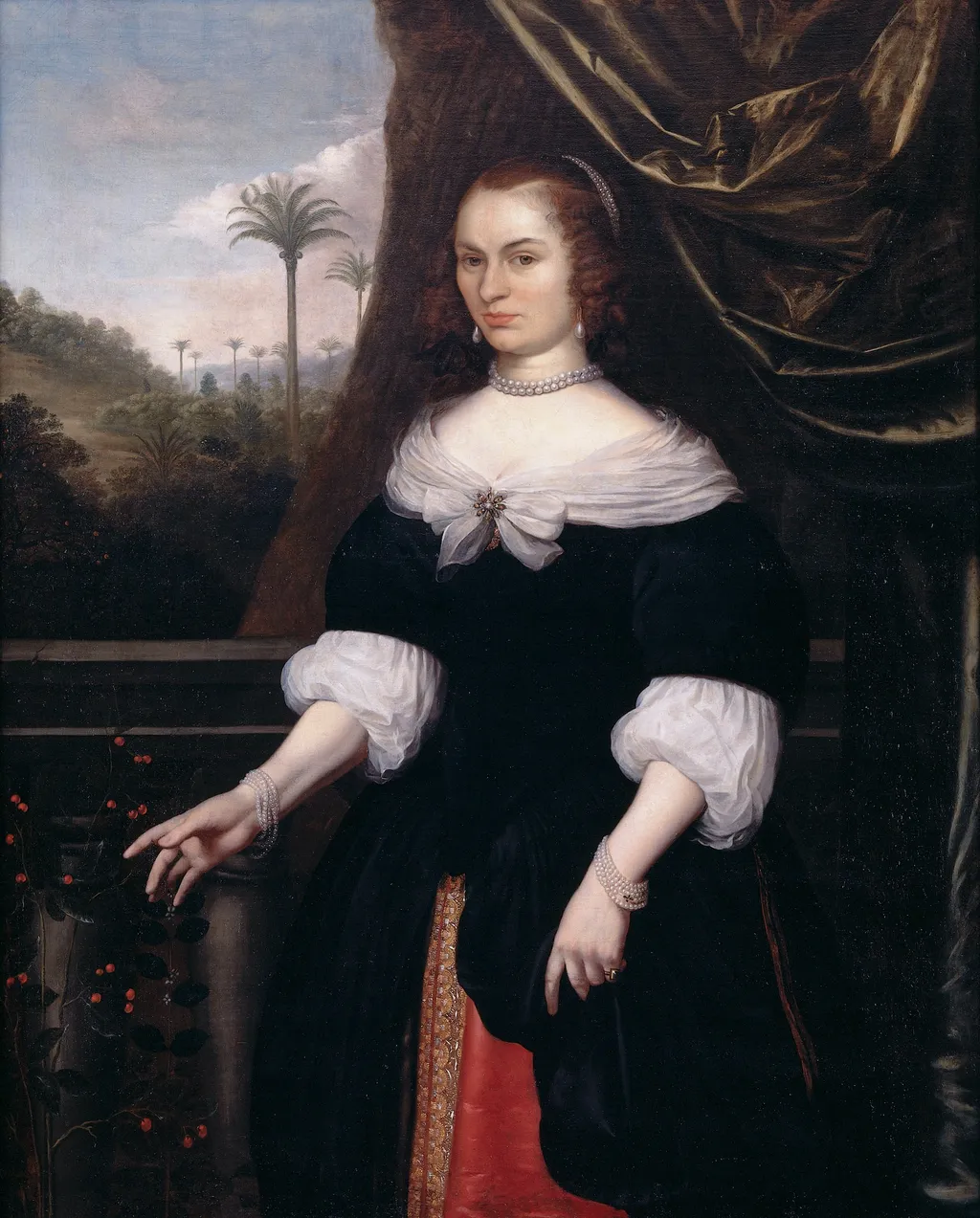
Portrait of Dina Lems, Wife of Jan Valckenburgh is an oil painting by the Dutch Golden Age artist Daniel Vertangen. It dates from 1660 and is held in the collection of the Rijksmuseum.
About this work
Technique & Style
The work is an oil painting created on canvas, reflecting the portrait genre typical of 17th-century Dutch art.
The work is an oil painting created on canvas, reflecting the portrait genre typical of 17th-century Dutch art. Its dimensions measure 128.3 centimeters in height by 102.0 centimeters in width, and it was produced in Amsterdam in 1660. The formal composition emphasizes a restrained palette and precise rendering of texture, characteristic of Vertangen's technique in handling oil on canvas to achieve lifelike detail.
History & Provenance
The painting was created in Amsterdam in 1660 by Daniel Vertangen as a portrait of Dina Lems, the wife of Jan Valckenburgh. It was later acquired by the Rijksmuseum and has remained in its collection, currently displayed at the museum. The work measures 128.3 cm in height and 102.0 cm in width and is executed in oil paint on canvas.
Context
The painting Portrait of Dina Lems, Wife of Jan Valckenburgh, attributed to Daniel Vertangen, exemplifies 17th-century Dutch portraiture through its formal composition and portrayal of civic identity. Its depiction of Dina Lems, wife of prominent Amsterdam figure Jan Valckenburgh, reflects contemporary social hierarchies and the growing influence of merchant families. The work's stylistic elements, including naturalistic rendering and muted palette, align with Vertangen's broader oeuvre within the Dutch Golden Age portrait tradition.
As part of the Rijksmuseum's collection, displayed in the Johnny Van Haeften Gallery, it contributes to scholarly understanding of portraiture's role in documenting 17th-century Amsterdam's social fabric.
The attribution to Vertangen, supported by archival records and stylistic analysis, situates the work within his documented output during his Amsterdam period. Its presence in a major national collection underscores its recognized significance in Dutch art history, particularly in illustrating the intersection of portraiture and civic identity among the urban elite.
Legacy
Portrait of Dina Lems, Wife of Jan Valckenburgh (1660) by Daniel Vertangen exerted limited documented influence on later portraiture, with its legacy primarily anchored in inclusion within the Rijksmuseum’s collection and scholarly attention to Vertangen’s oeuvre. The work remains recognized as a representative example of 17th-century Dutch portraiture, studied for its compositional details and historical context within Amsterdam’s artistic circles.
The painting is housed in the Rijksmuseum and featured in the Johnny Van Haeften Gallery, where it contributes to the museum’s presentation of Dutch Golden Age portraiture. Its technical execution in oil on canvas, measuring 128.3 cm by 102.0 cm, is noted in catalog records as indicative of Vertangen’s skill in rendering texture and drapery. The attribution to Vertangen and identification of the sitter as Dina Lems, wife of merchant Jan Valckenburgh, have been confirmed through archival research and conservation studies, reinforcing its significance in understanding family portraiture among Amsterdam’s merchant class.
Overview
This oil painting, created by Daniel Vertangen in 1660, is a portrait of Dina Lems, the wife of Jan Valckenburgh. It is part of the Rijksmuseum's collection.
Subject & Meaning
The subject is depicted wearing elegant attire, including a black dress with white accents and a red underskirt, along with pearl jewelry. Her refined appearance and poised stance convey a sense of dignity.
Own this work as a print
Artist & collection


 Portrait of a woman
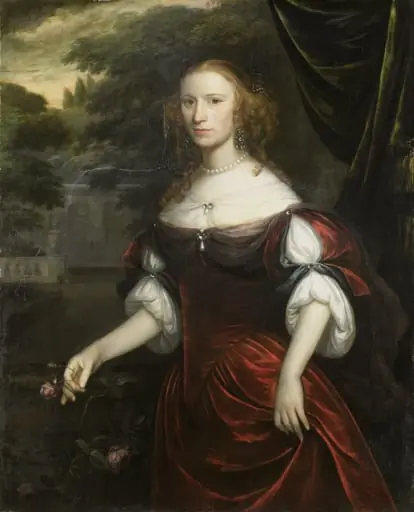 Portrait of a Woman
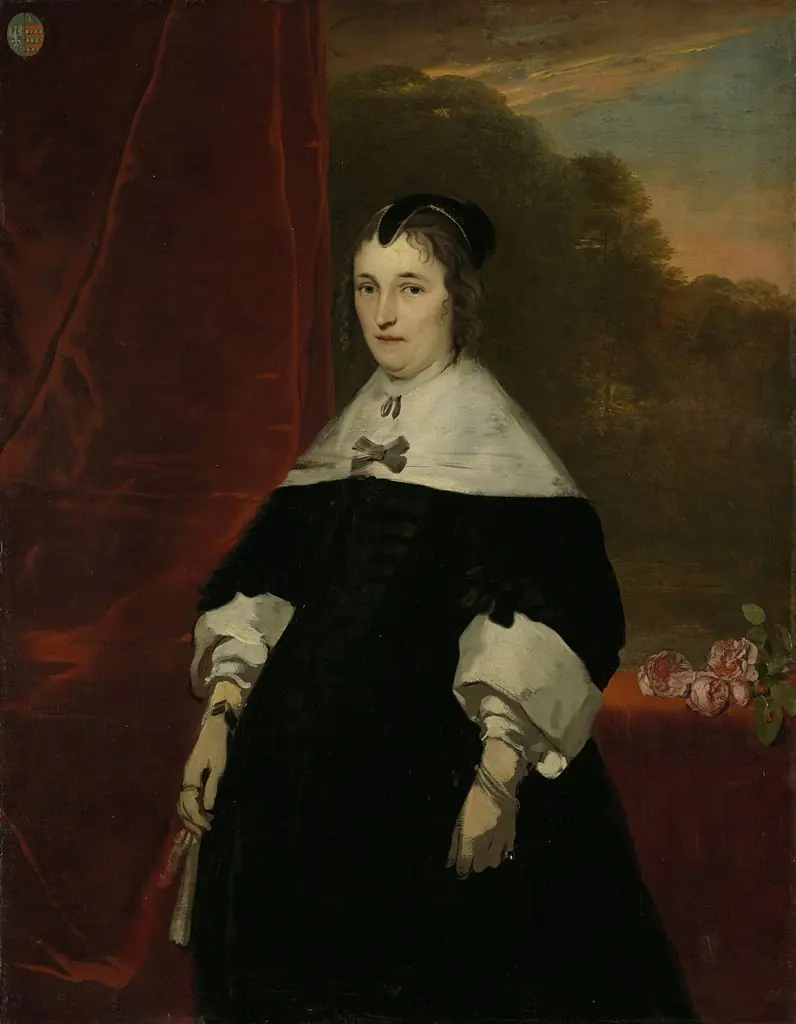 Machteld Bas (d 1681). Wife of Abraham de Visscher
 Portrait of Machtelt Bas (?-1681)
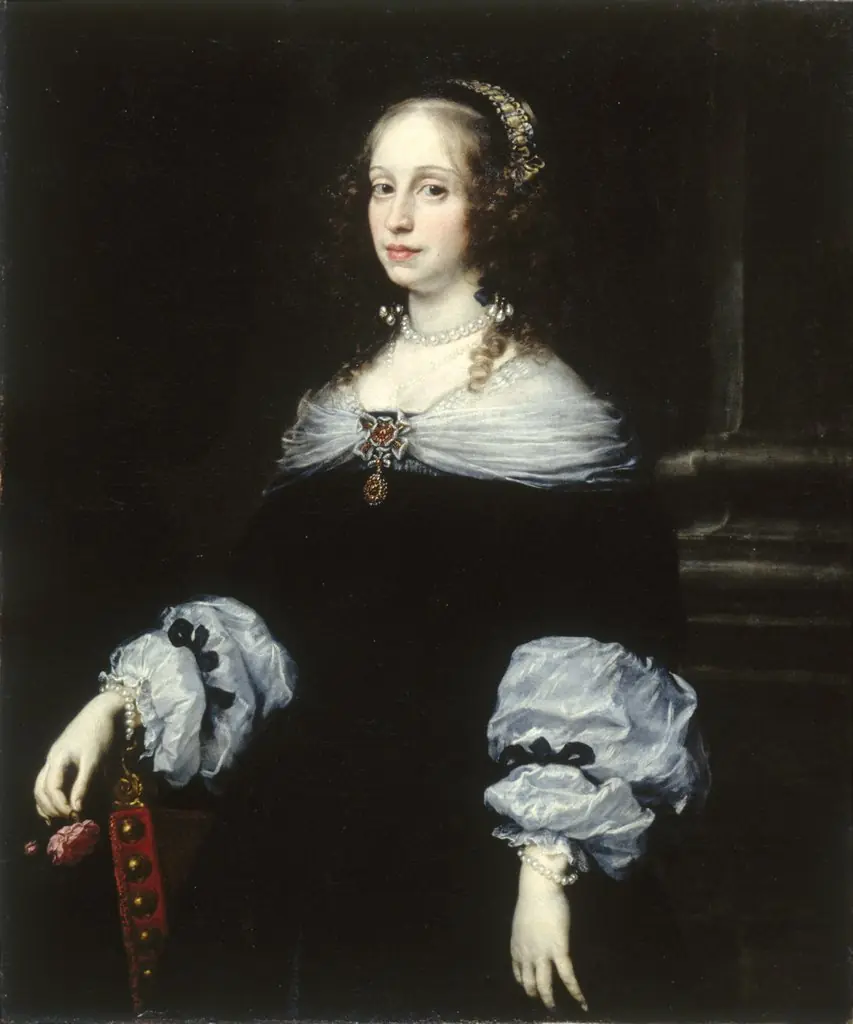 Portrait of Countess Teresa Dudley di Carpegna
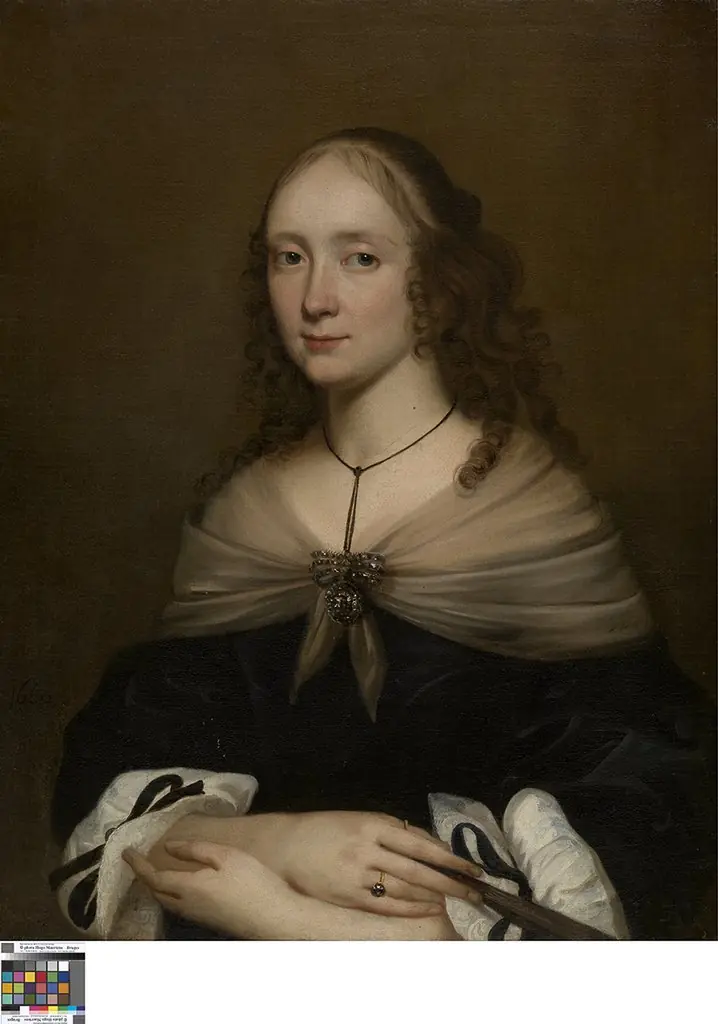 Portret van een vrouw
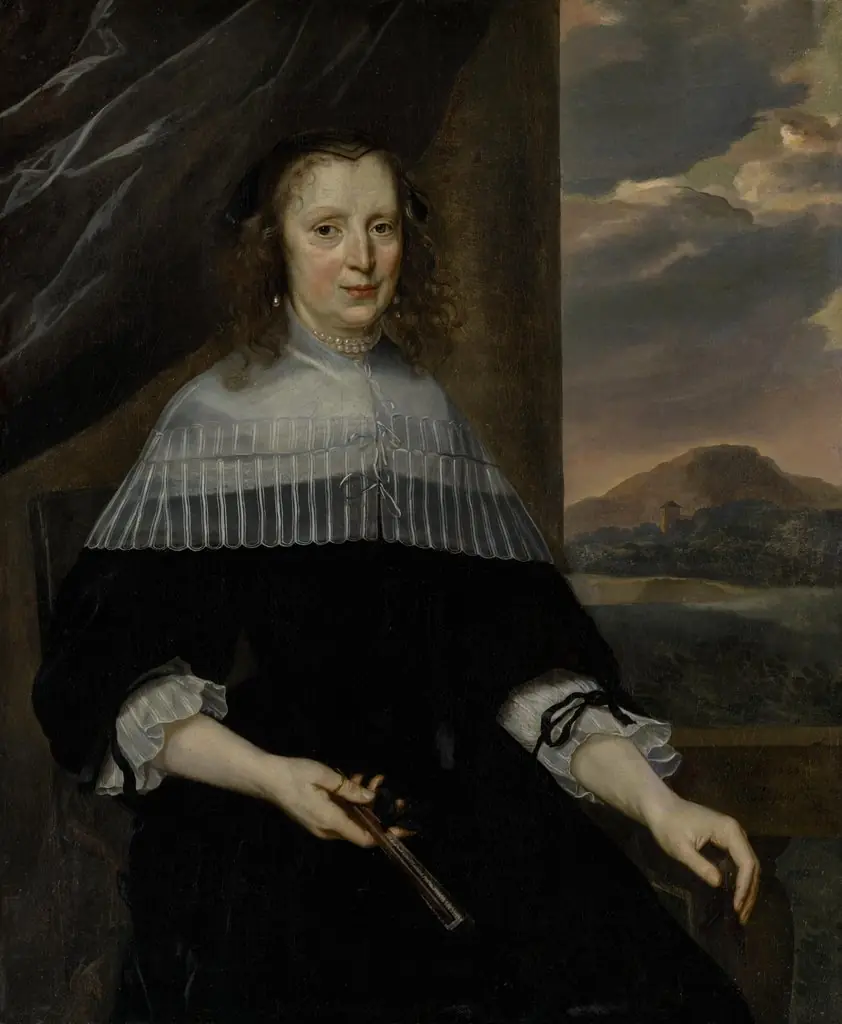 Bildnis einer Dame
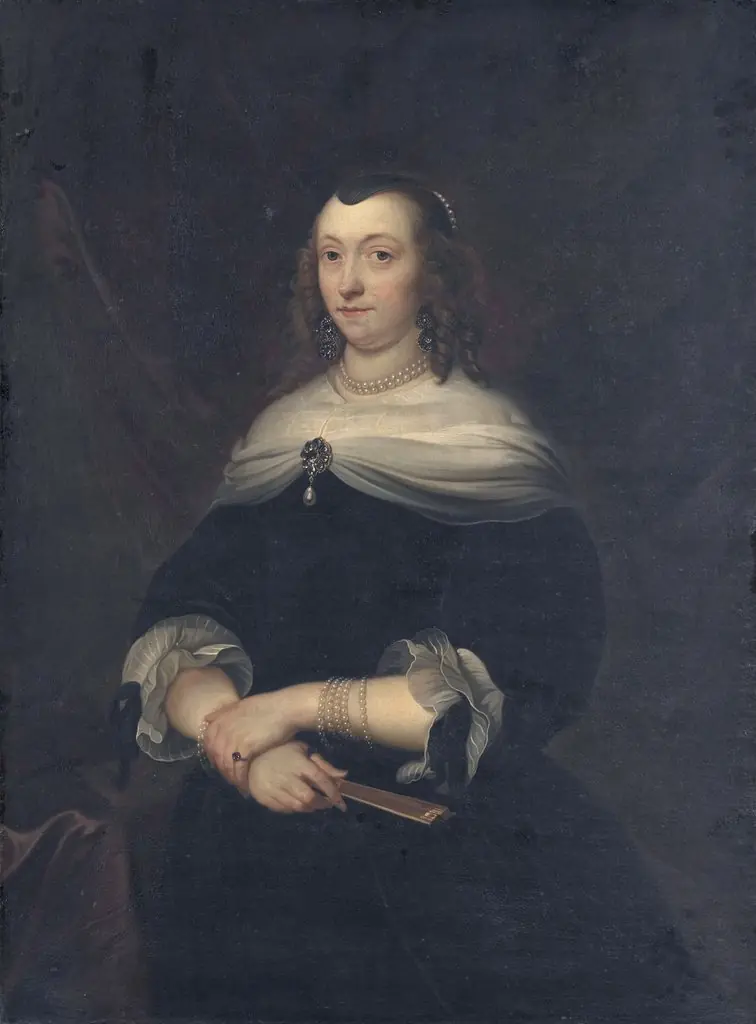 Portrait of a woman, thought to be Lucretia Boudaen
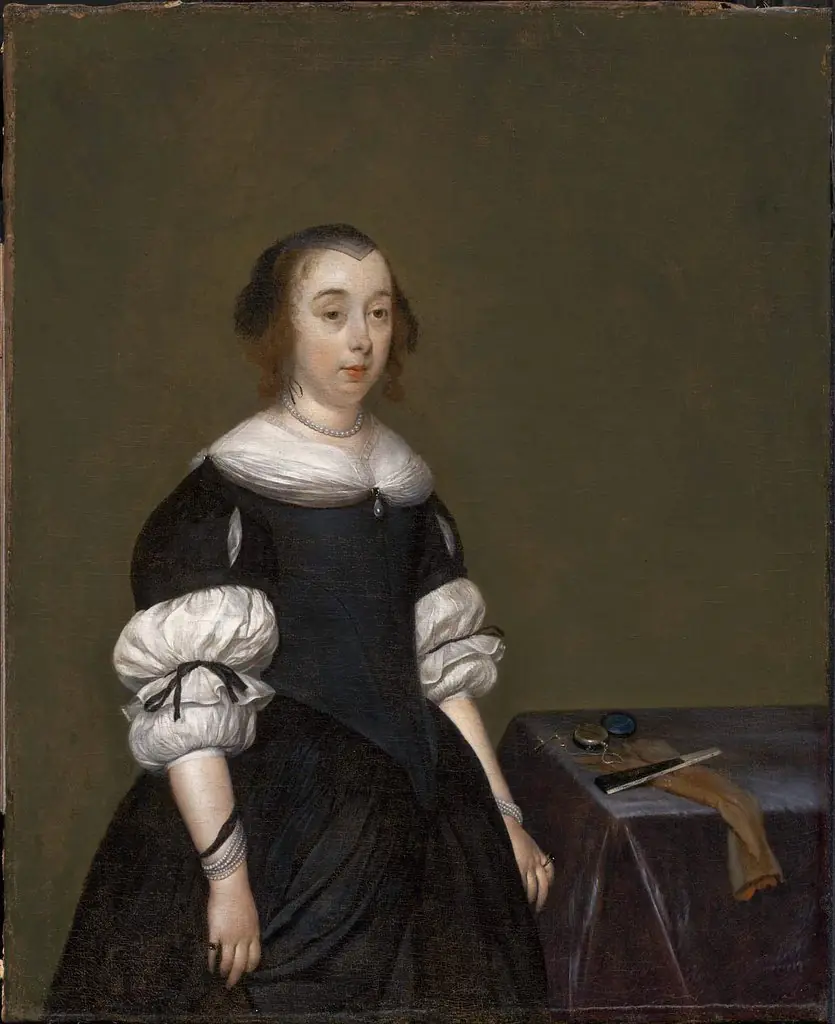 Portrait of a Woman
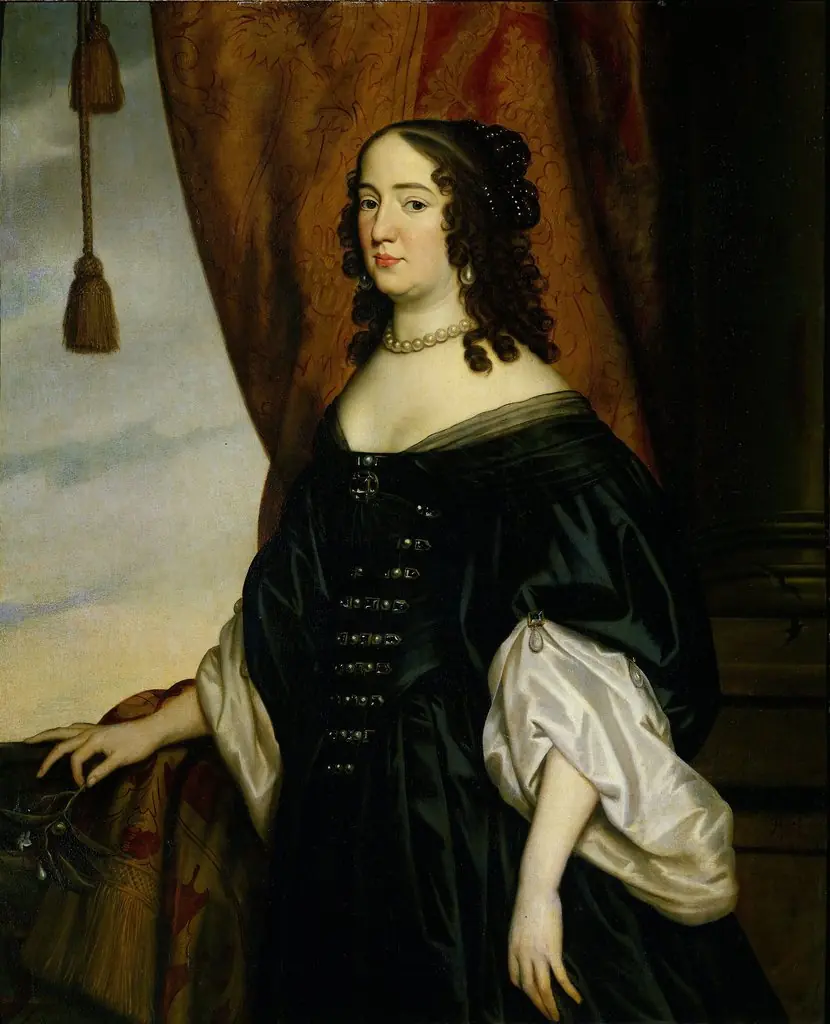 Portrait of Amalia van Solms (1602-75)
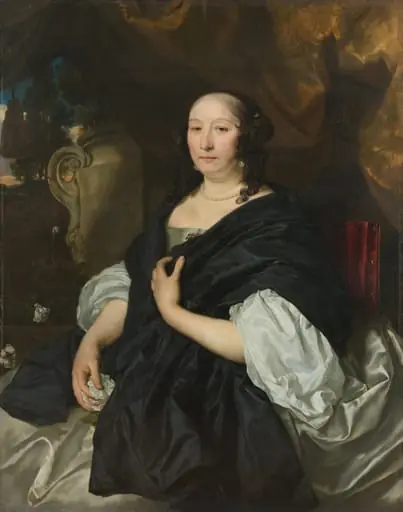 Portrait of Catharina van der Voort
- Portrait of Aletta van Ravensberg (1635-77). Wife of Jan van Nes