Artwork
Sunset on the River
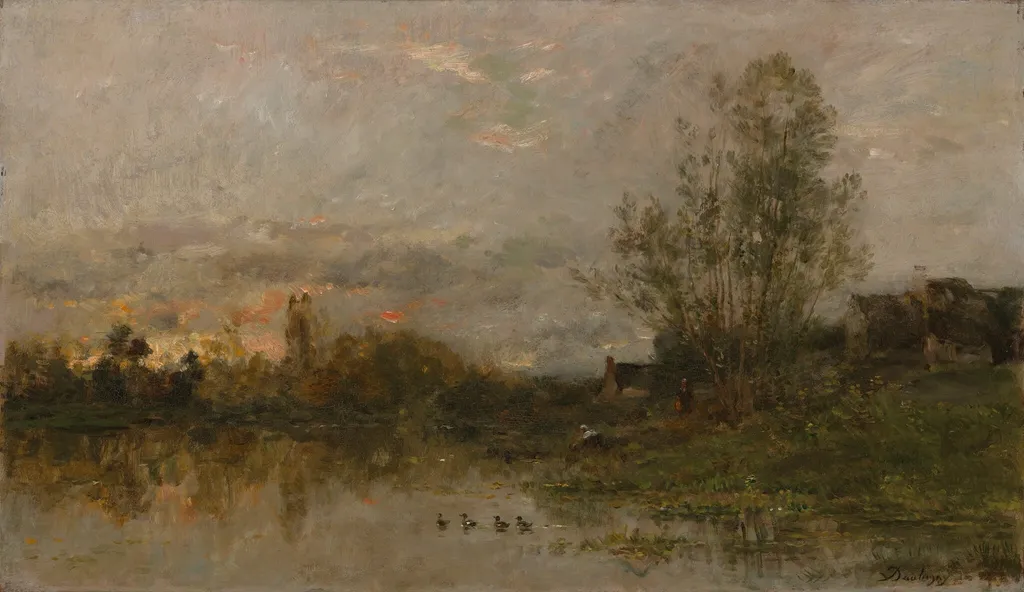
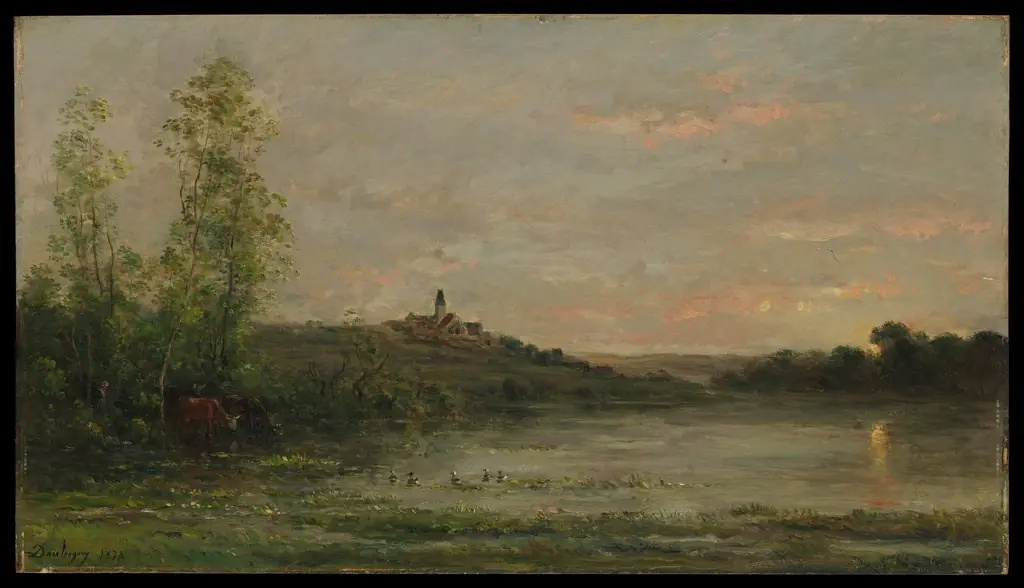
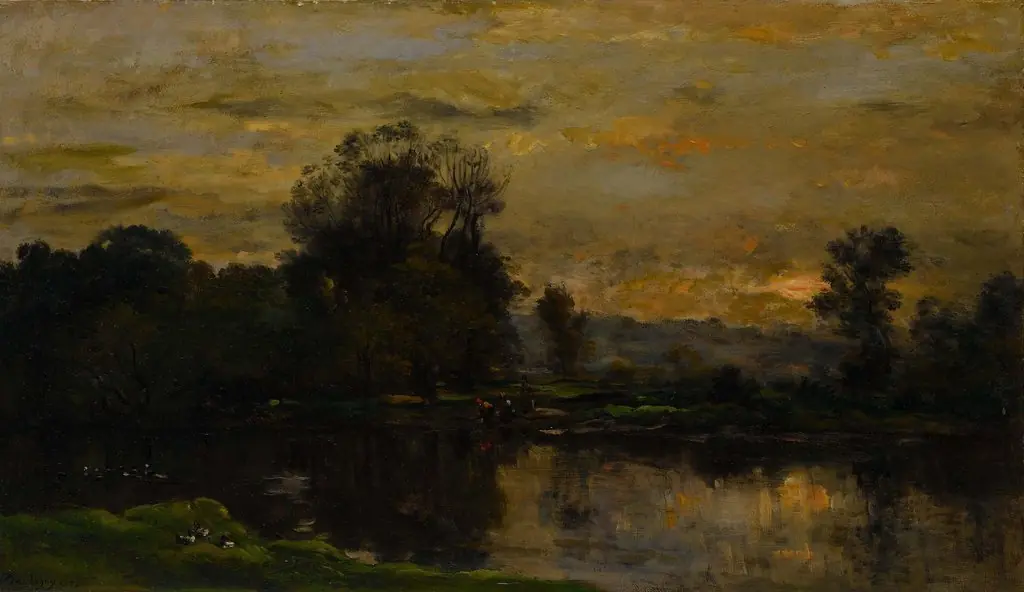
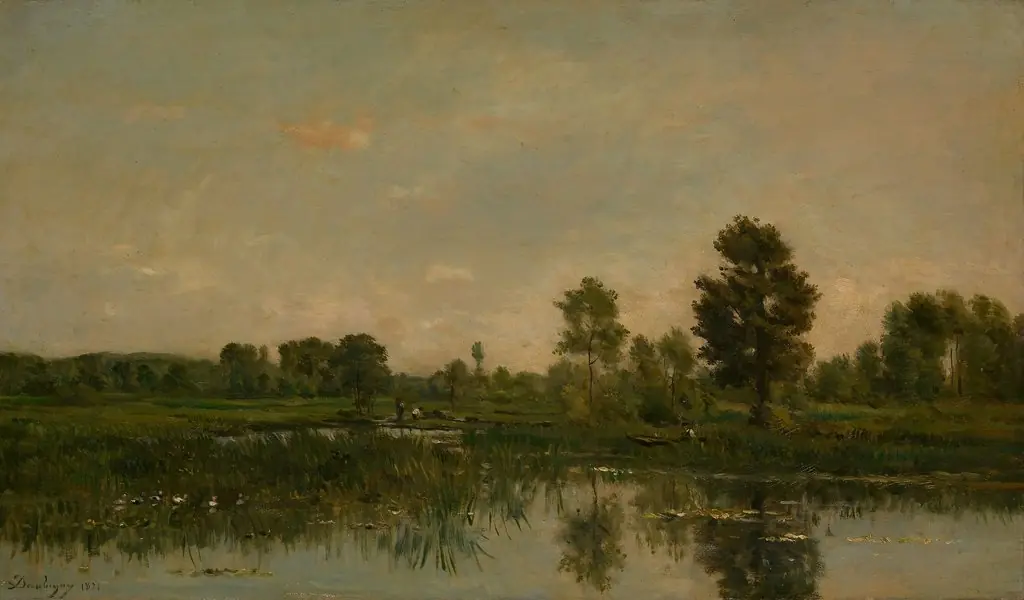
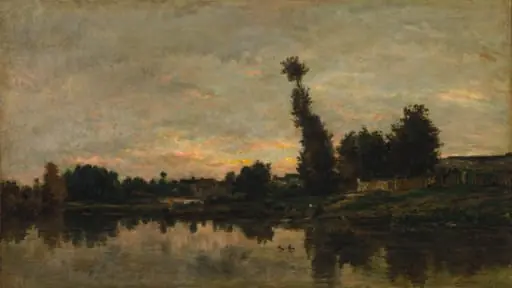
Sunset on the River is an oil painting by the Impressionist artist Charles François Daubigny. It dates from 1874 and is held in the collection of the National Gallery of Art. Created in 1874, this oil painting on wood portrays a tranquil river at dusk.
- Inscription
- Inscribed:lower right: Daubigny, 1874
About this work
History & Provenance
Lyall, who consigned it to the American Art Association sale in New York on 10 February 1903, where it was purchased by J.
The painting Sunset on the River was created by Charles-François Daubigny in 1874. It entered the market through William Schaus in New York before being acquired by David C. Lyall, who consigned it to the American Art Association sale in New York on 10 February 1903, where it was purchased by J. Carter for William A. Clark. Clark later bequeathed the work to the Corcoran Gallery of Art in Washington in April 1926.
In 2014, the painting was transferred to the National Gallery of Art, Washington, D.C., where it is currently held.
Sunset on the River is currently held by the National Gallery of Art in Washington, D.C. The work entered this collection in 2014 after being bequeathed to the Corcoran Gallery of Art in April 1926 by William A. Clark. Prior to the Clark acquisition, the painting was owned by David C. Lyall of New York and sold at his estate sale through the American Art Association on February 10, 1903. The Corcoran Gallery of Art previously held the work before its transfer to the National Gallery of Art.
The National Gallery of Art lists the painting in its collection as a work by Charles-François Daubigny created in 1874. No specific inventory or accession numbers are provided in the available sources, though the provenance traces a clear path from William Schaus in New York to the final public institutions.
Overview
Created in 1874, this oil painting on wood portrays a tranquil river at dusk. The composition captures the gentle glow of the setting sun as it reflects on the water’s surface, while a modest village nestles among the trees on the far bank. The work belongs to the late‑19th‑century French landscape tradition, preceding the full rise of Impressionism.
Subject & Meaning
The scene centers on a calm waterway edged by tall trees, with a few ducks drifting near the shore. The muted sky, suffused with pinks, yellows and soft grays, conveys the fleeting transition from day to night. By emphasizing natural light and atmospheric calm, the painting invites contemplation of the quiet moments found in rural riverine life.
Technique & Style
Executed with oil on a wooden panel, the artist employs rapid, loose brushwork that suggests an outdoor, plein‑air approach. Colors blend seamlessly yet retain visible texture, giving the surface a tactile quality. The handling of light and the almost sketch‑like strokes anticipate the concerns of later Impressionist painters while retaining a Barbizon‑school sensibility.
Artist & collection
Artist
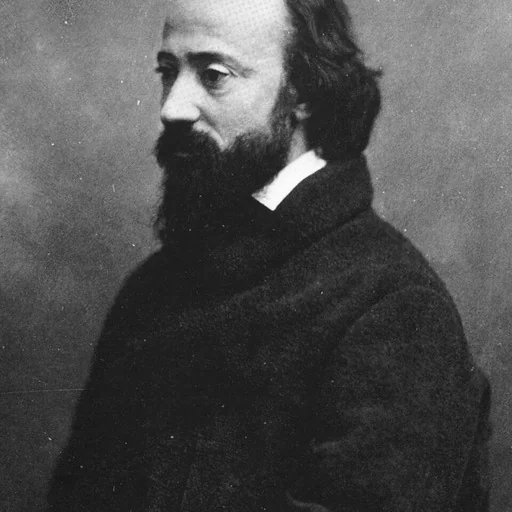
Charles-François Daubigny ( DOH-bin-yee, US: DOH-been-YEE, doh-BEEN-yee, French:; 15 February 1817 – 19 February 1878) was a French painter, one of the members of the Barbizon school, and is considered an important precursor of…