Artwork
Ah! ça... ils n'ont plus l'air de s'occuper de moi
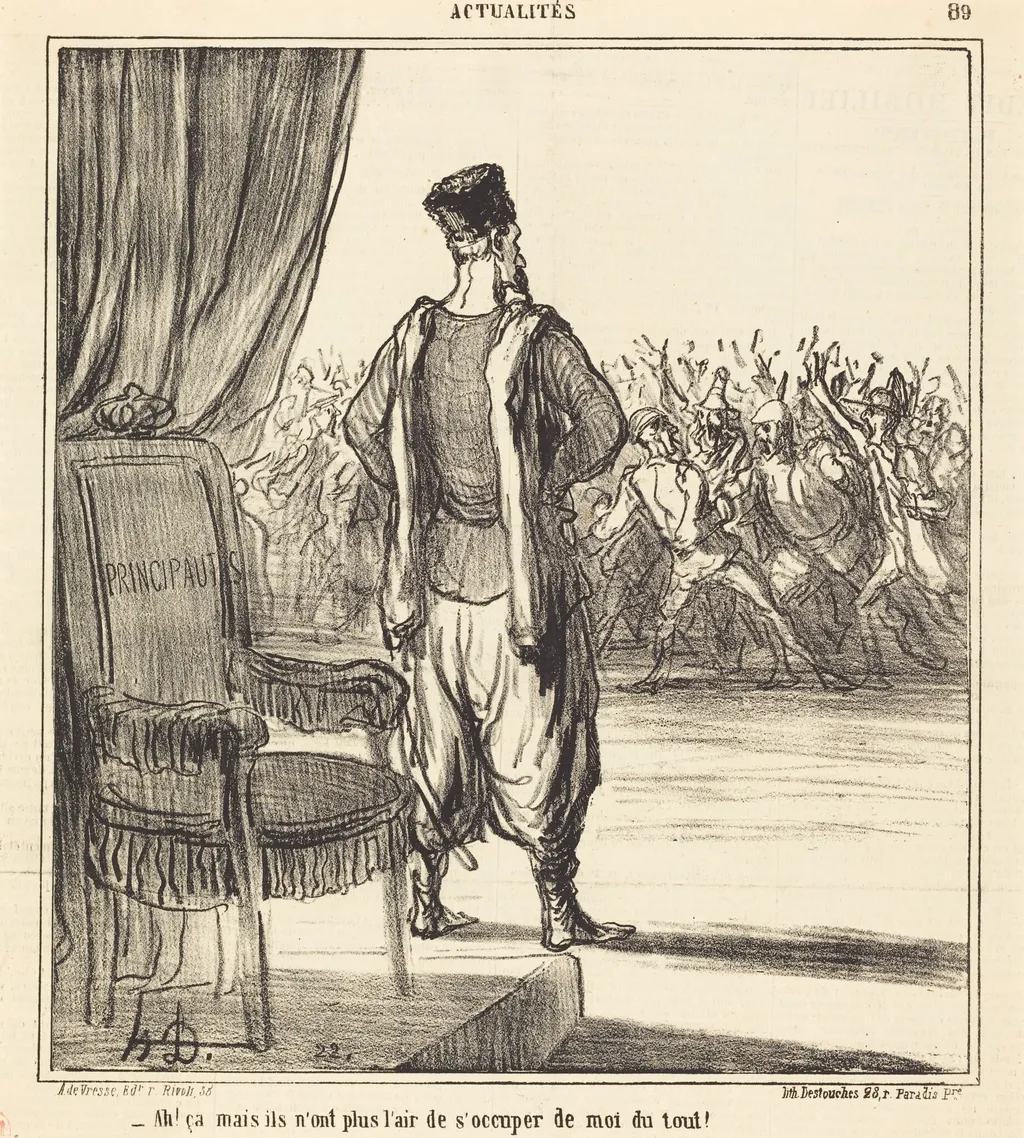
Ah! ça... ils n'ont plus l'air de s'occuper de moi is a print by the Impressionist artist Honoré Daumier. It dates from 1866 and is held in the collection of the National Gallery of Art.
About this work
Overview
Created in 1866, this gillotage print by Honoré Daumier captures a moment of quiet alienation within the theatrical world. Executed in the medium commonly used for mass-produced satirical imagery, the work reflects Daumier’s long-standing engagement with French society through visual critique. Unlike his more overt political cartoons, this piece uses subtlety to convey displacement and neglect.
Subject & Meaning
His weary posture and detached gaze signal societal abandonment, not by force, but by indifference.
The figure, dressed in outdated aristocratic attire, stands alone beside an empty chair marked 'PRINCIPAUT,' suggesting the obsolescence of old power structures. Behind him, a painted backdrop of a dramatic battle or hunt contrasts sharply with his stillness, underscoring his irrelevance to the grand narratives now unfolding without him. His weary posture and detached gaze signal societal abandonment, not by force, but by indifference.
Technique & Style
Daumier employed rapid, fluid linework typical of his sketch-based approach, rendering the figure with loose, expressive strokes that convey fatigue rather than detail. The background is deliberately chaotic, brushy and unfinished, enhancing the sense of neglect. The gillotage process, a photomechanical reproduction method, allowed for wide circulation, aligning the work’s aesthetic of immediacy with its message of ephemeral relevance.
History & Provenance
Produced during the later years of the Second Empire, the print emerged from Daumier’s continued association with satirical journals, though his output had diminished due to censorship and personal hardship. This piece was likely published in a periodical or as a standalone plate, circulating among middle-class readers familiar with his critiques. Its survival reflects its resonance within contemporary discourse on social change.
Context
In 1866, France was under Napoleon III’s authoritarian regime, where public spectacle masked political stagnation. Theatrical backdrops and ceremonial trappings were common metaphors for hollow authority. Daumier, once imprisoned for caricaturing Louis-Philippe, now turned his gaze to the fading aristocracy, observing how old elites were rendered invisible by the machinery of modern state spectacle.
Legacy
This print exemplifies Daumier’s shift from direct political satire to nuanced social observation. Its quiet despair influenced later artists exploring alienation in modern life, from Toulouse-Lautrec to early 20th-century expressionists. Though less celebrated than his more overtly political works, it remains a poignant record of how cultural memory fades when those who once commanded attention are left standing alone.
Own this work as a print
Artist & collection
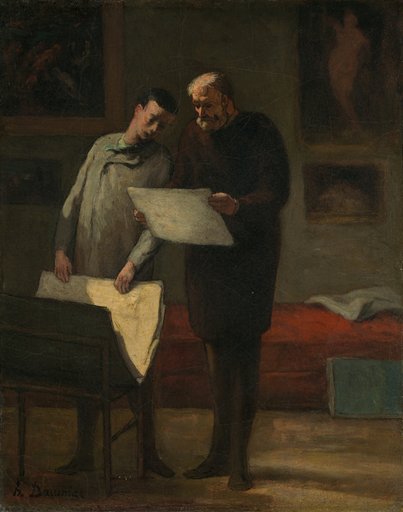
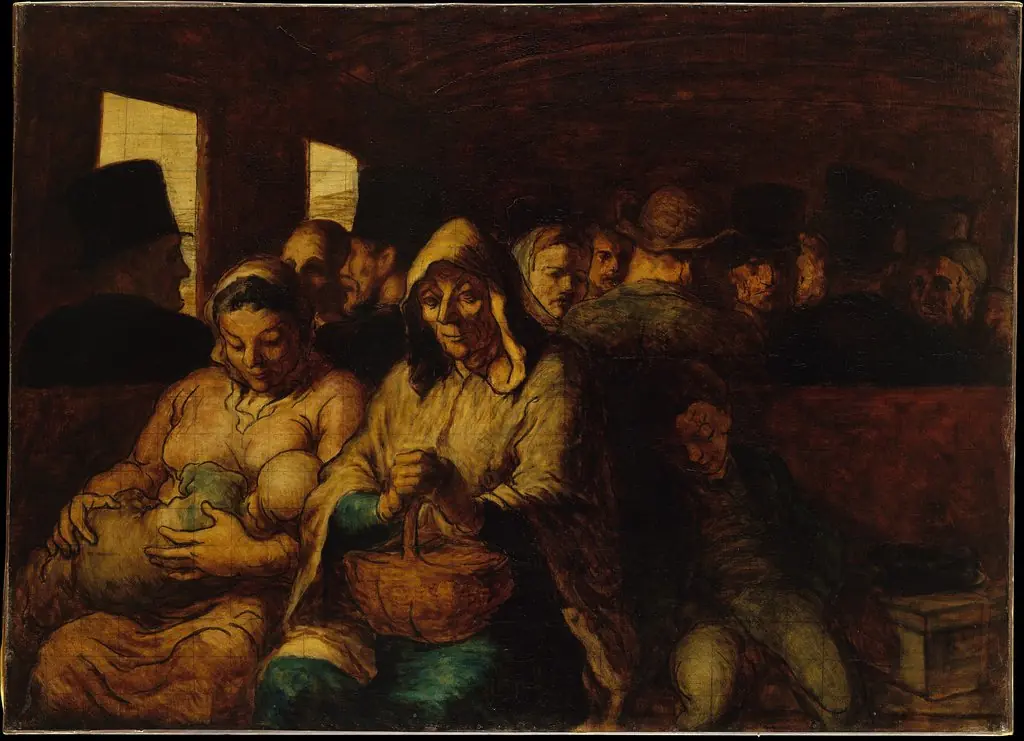
Artist
Honoré-Victorin Daumier (French: ; 26 February 1808 – 10 or 11 February 1879) was a French painter, sculptor, and printmaker, whose many works offer commentary on the social and political life in France, from the…

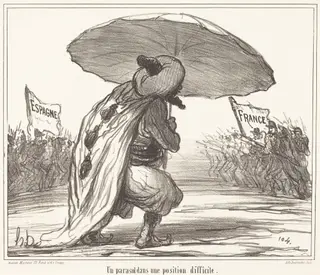
- Un Parasol dans une position difficile
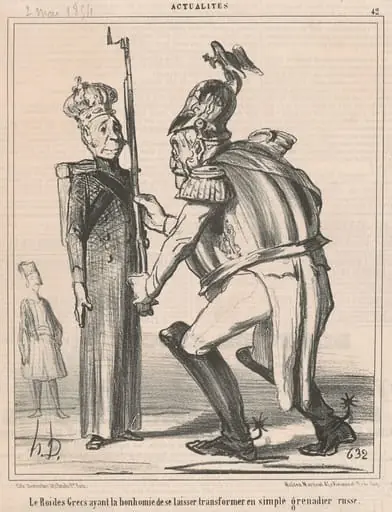 Le roi des grecs ...
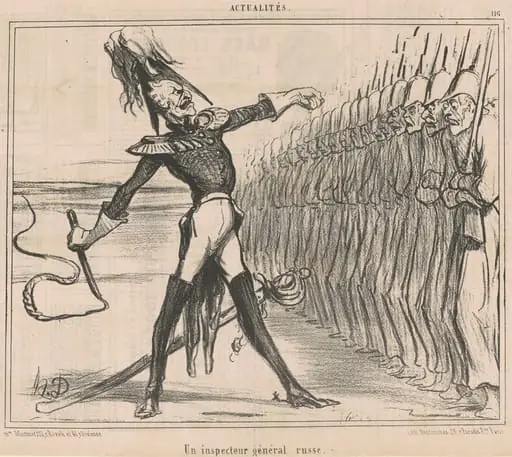 Un inspecteur général russe
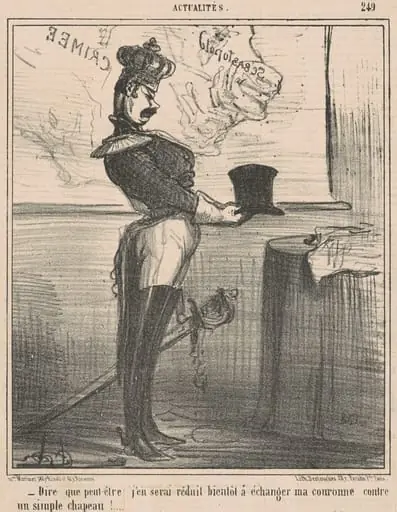 Dire que peut-être j'en serai réduit ...
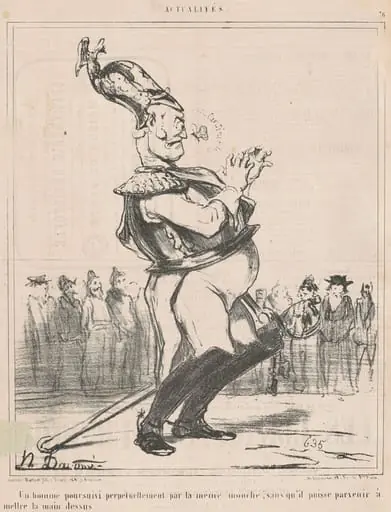 Un homme poursuivi ...
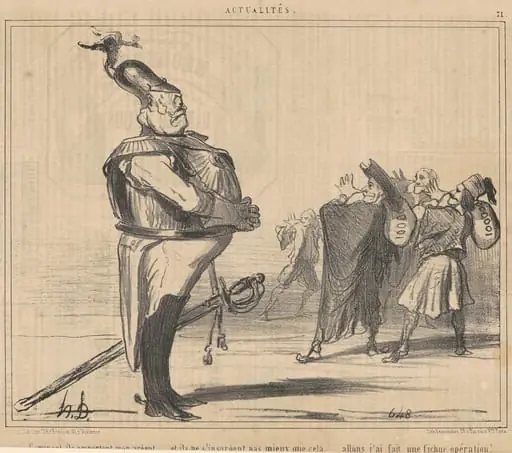 Comment, ils emportent mon argent ...
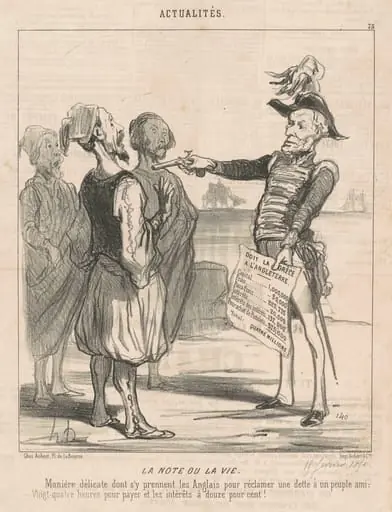 La note ou la vie
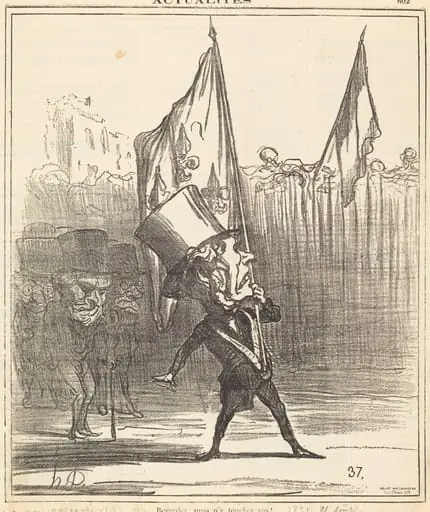 Regardez, mais n'y touchez pas!
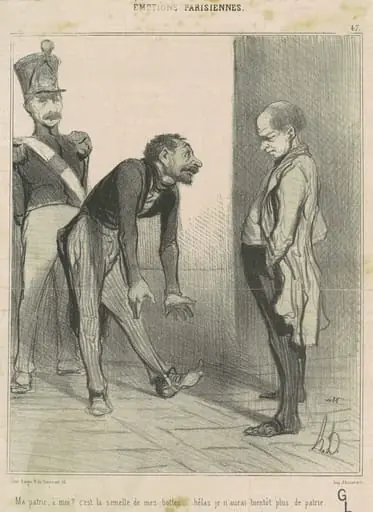 Ma patrie, a moi?...
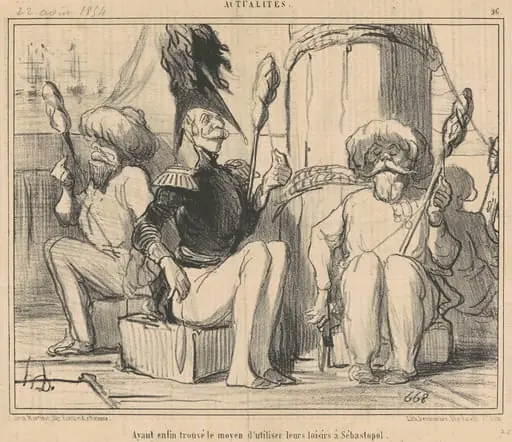 Ayant enfin trouvé le moyen d'utiliser leurs loisirs!
 Un directeur de n'importe quel theatre
 Le Gamin de Paris aux Tuileries