Artwork
Dis donc, Macaire, qué que c'est que c'thé...
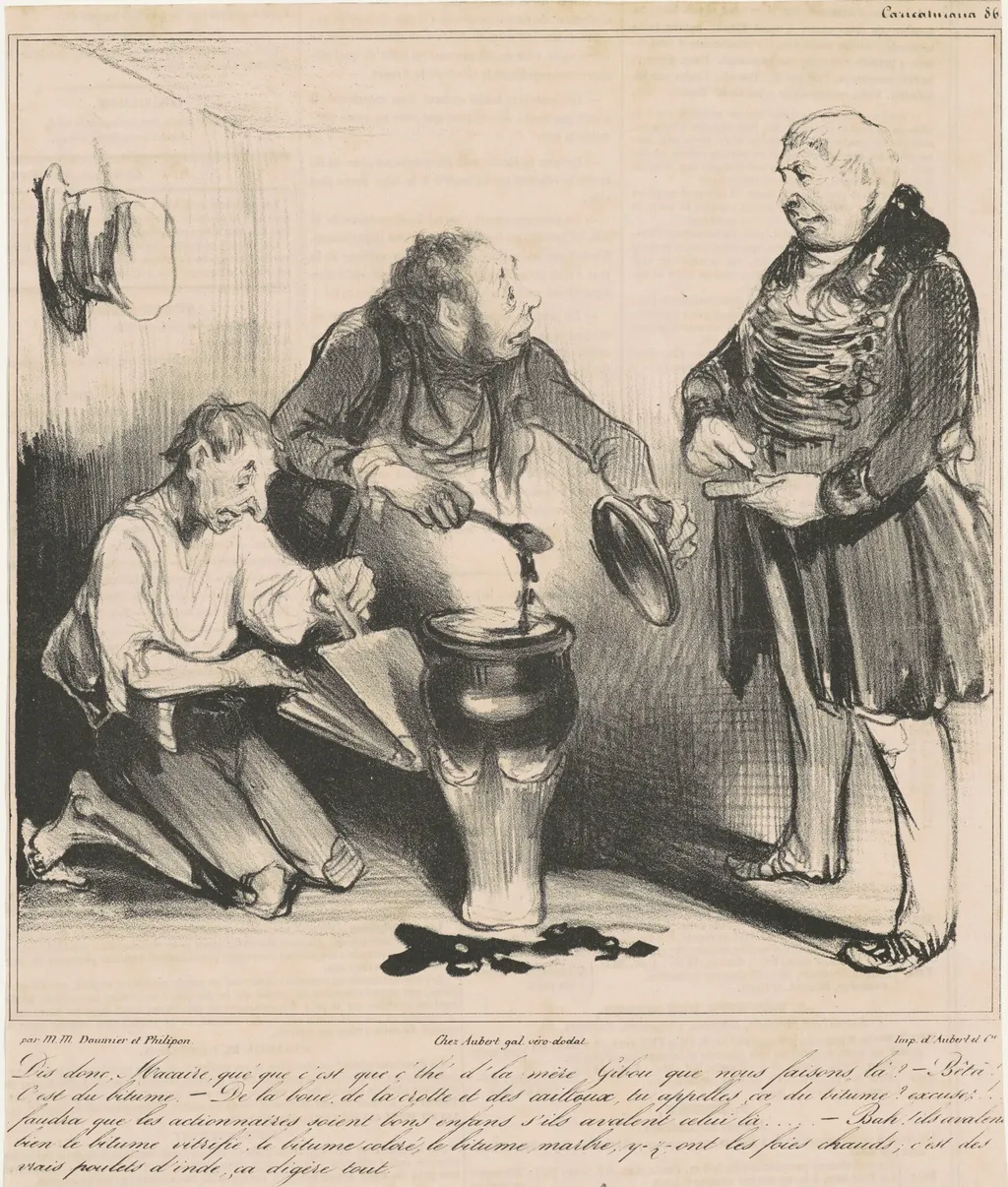
Dis donc, Macaire, qué que c'est que c'thé... is an ink print by the Romanticist artist Honoré Daumier. It dates from 1838 and is held in the collection of the National Gallery of Art. Dis donc, Macaire, qué que c'est que c'thé.
About this work
Overview
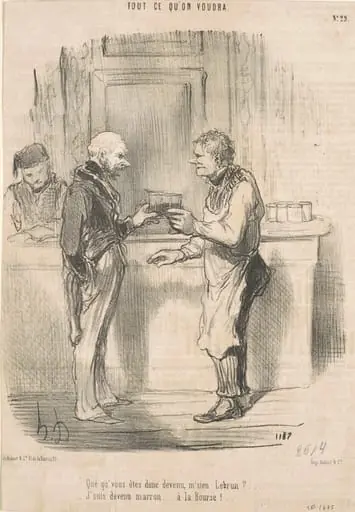
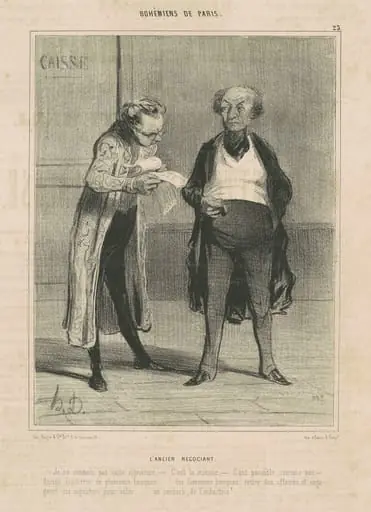
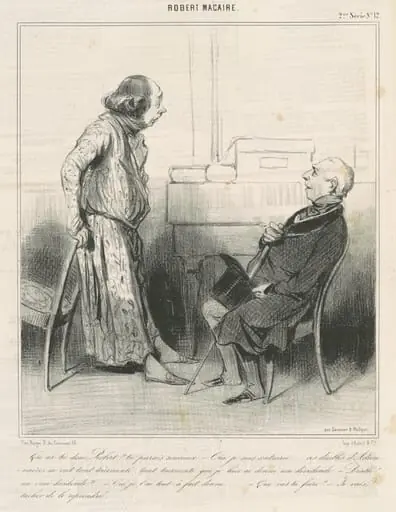
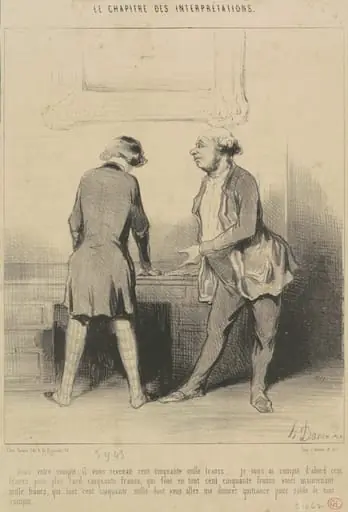
Dis donc, Macaire, qué que c'est que c'thé... is a lithograph by Honoré Daumier featuring three individuals mixing an unspecified substance in a large vase within a mundane indoor setting.
Subject & Meaning
The print captures an absurd everyday moment, using the characters' exaggerated reactions and impoverished attire to convey Daumier's social commentary on human behavior in ordinary circumstances.
Technique & Style
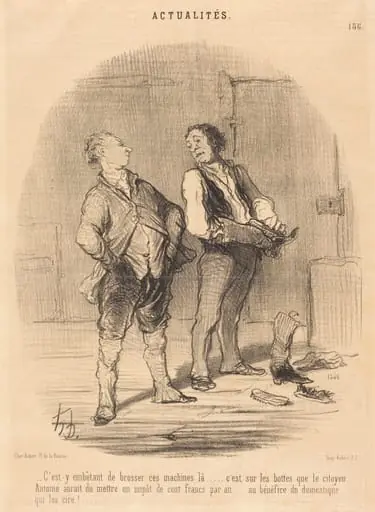
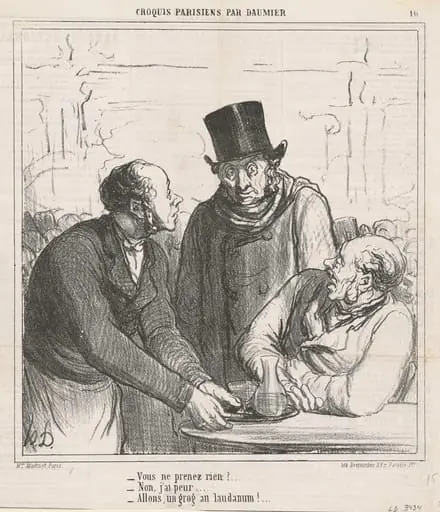
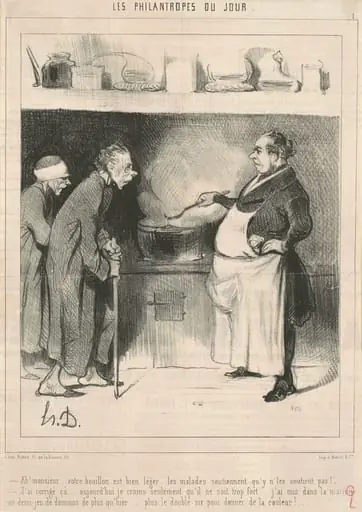
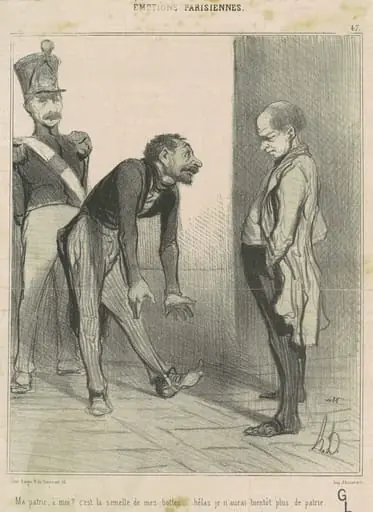
Daumier employs caricature, emphasizing distorted facial expressions and tattered clothing to critique and humorously highlight the subjects' situation, characteristic of his satirical approach.
Context
This work reflects Daumier's interest in observing and commenting on the lives of common people during 19th-century France, often using satire to address social issues.
Legacy
As part of Daumier's oeuvre, it exemplifies his influence on social commentary in art and the development of caricature as a vehicle for critique, continuing to inform interpretations of everyday life in art.
Own this work as a print
Artist & collection
Artist
Honoré-Victorin Daumier (French: ; 26 February 1808 – 10 or 11 February 1879) was a French painter, sculptor, and printmaker, whose many works offer commentary on the social and political life in France, from the…