Artwork
Ferdinand Favre
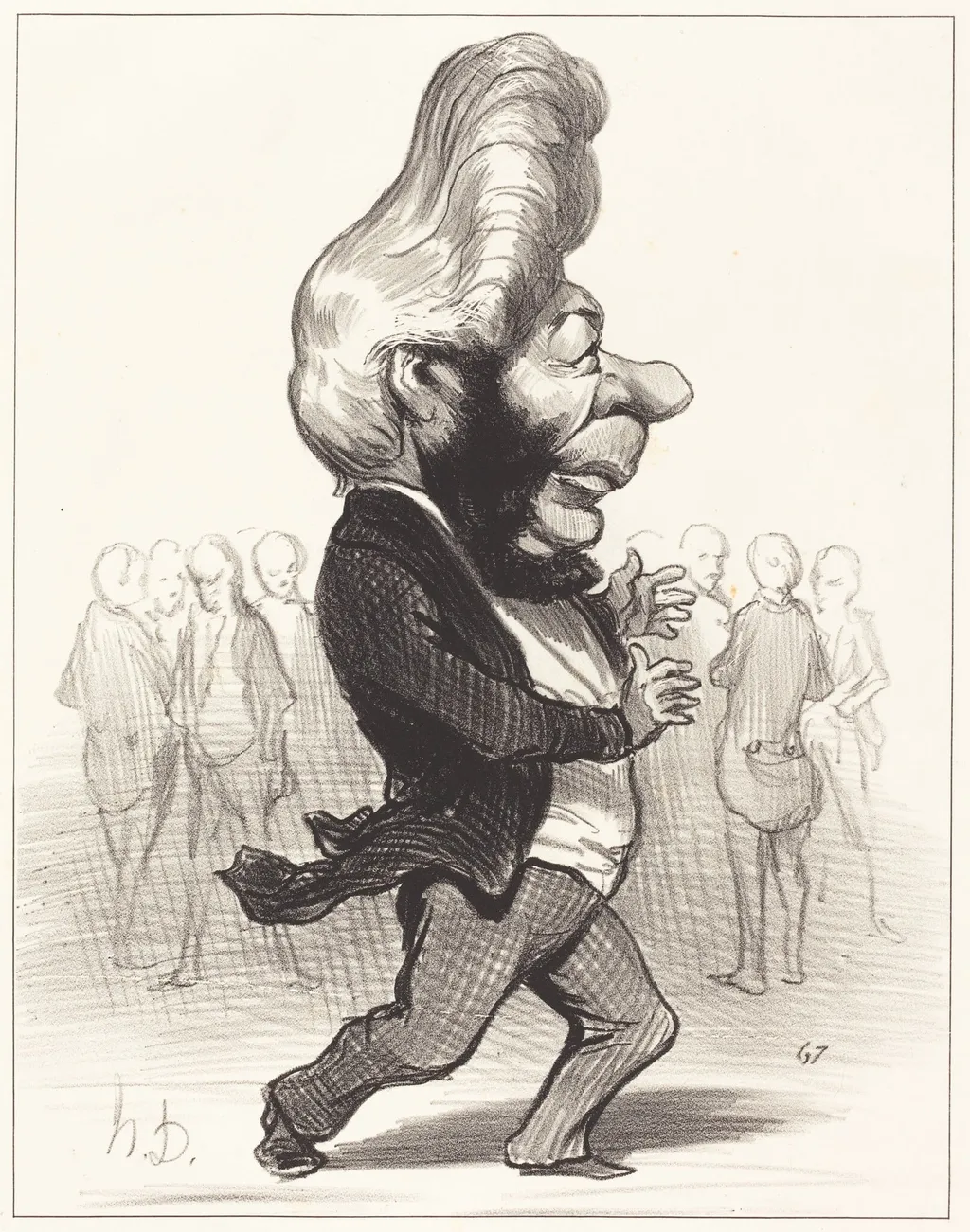
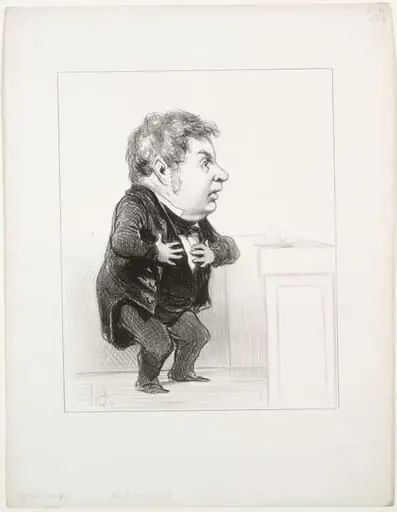
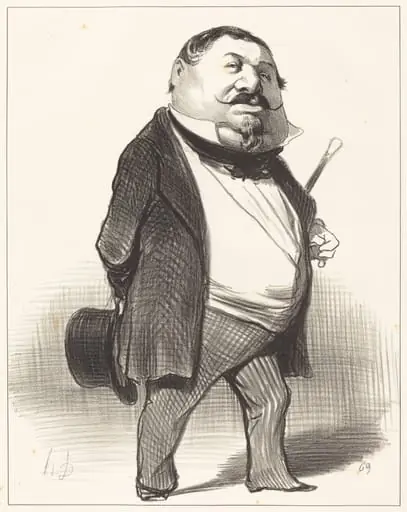
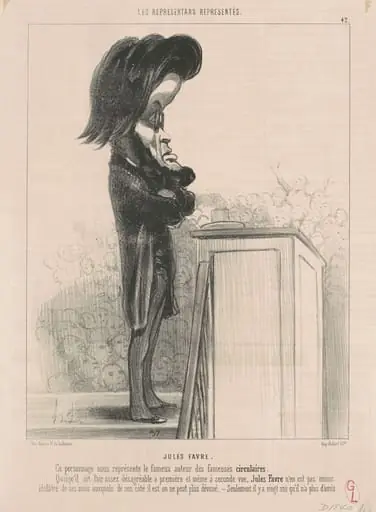
Ferdinand Favre is an ink print by the Romanticist artist Honoré Daumier. It dates from 1849 and is held in the collection of the National Gallery of Art.
About this work
Overview
Ferdinand Favre is a lithograph created by Honoré Daumier in 1849, functioning as a satirical portrait of the French politician of the same name. Characterized by Daumier's distinctive political commentary, the work critiques aspects of French society during this period.
Subject & Meaning
The lithograph depicts Ferdinand Favre, exaggerated in size and features, dancing jovially amidst a crowd of stiff, smaller onlookers. This caricature critiques Favre, likely targeting his political stance or social status, through Daumier's humorous yet pointed satire.
Technique & Style
Daumier employed lithography for its mass reproducibility, allowing broad dissemination of his political critiques. The piece exemplifies his caricatural style, where exaggeration serves as a tool for social commentary, a hallmark of his work in publications like La Caricature and Le Charivari.
History & Provenance
Produced in 1849, Ferdinand Favre reflects Daumier's republican democrat stance, aligning with his period of intense political caricature. Specific provenance details are not provided, but its creation coincides with Daumier's prolific output for French satirical journals.
Context
This work is set against the backdrop of 19th-century French political and social upheaval. Daumier's lithographs, including Ferdinand Favre, were instrumental in using satire to critique the monarchy, aristocracy, and clergy, resonating with a broad audience.
Legacy
Ferdinand Favre contributes to Daumier's legacy as a pioneering political caricaturist. His use of lithography to reach a wide audience helped establish the medium as a powerful tool for social and political commentary in art.
Own this work as a print
Artist & collection
Artist
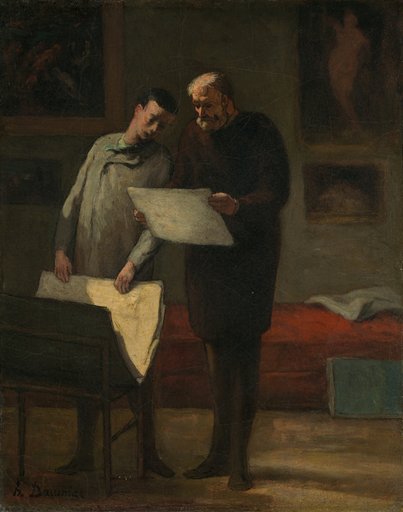
Honoré-Victorin Daumier (French: ; 26 February 1808 – 10 or 11 February 1879) was a French painter, sculptor, and printmaker, whose many works offer commentary on the social and political life in France, from the…