Artwork
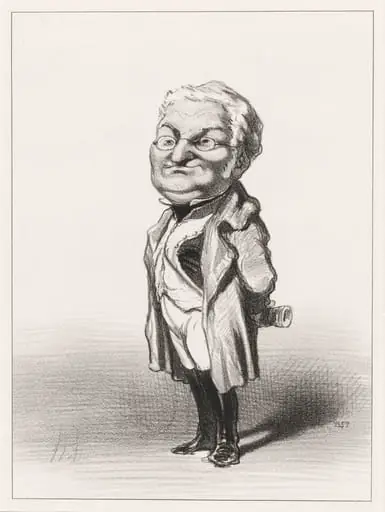
Fruchard, en buste
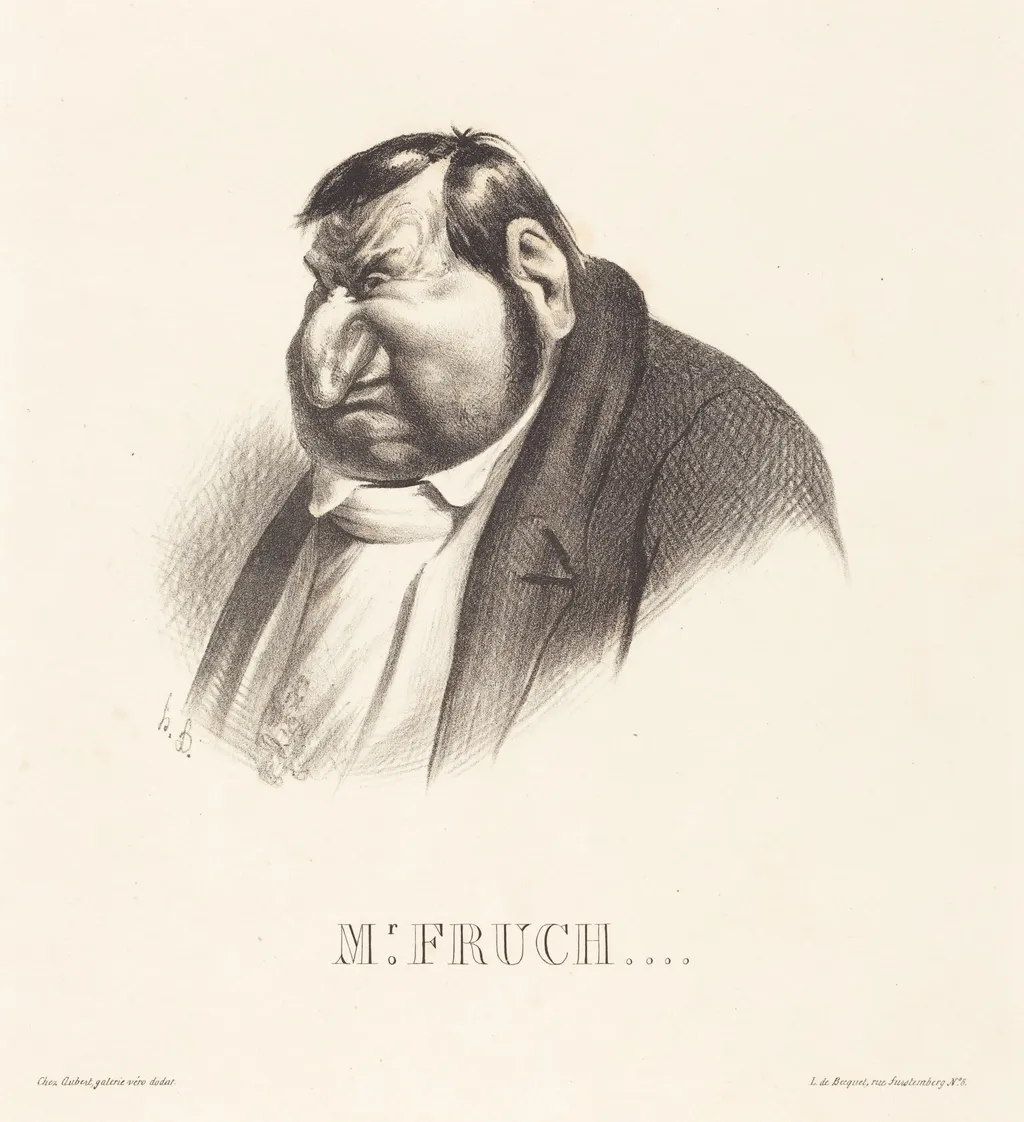
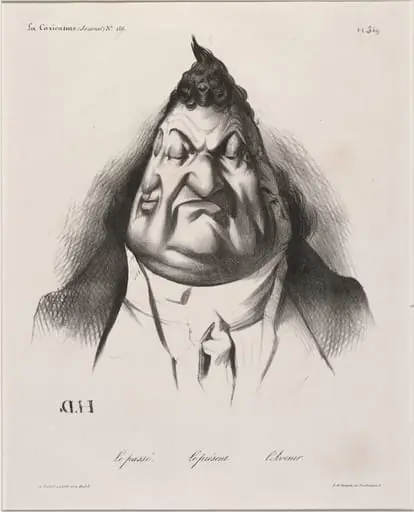
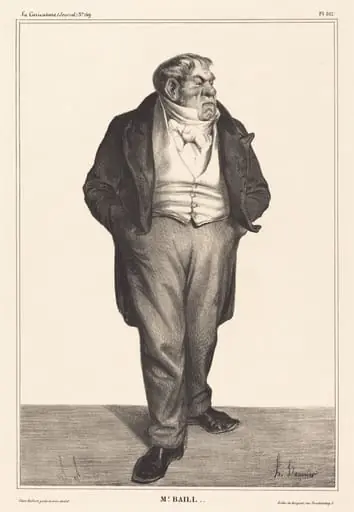
Fruchard, en buste is an ink print by the Romanticist artist Honoré Daumier. It dates from 1833 and is held in the collection of the National Gallery of Art.
About this work
Overview
The composition is set against a light beige background, emphasizing the subject’s facial features, notably a pronounced nose and a serious expression.
Created in 1833, this lithograph by Honoré Daumier depicts a bust‑length portrait of a formally dressed man. Rendered on wove paper, the image shows the figure in a suit jacket and white shirt, his hair neatly arranged and his gaze turned to the left. The composition is set against a light beige background, emphasizing the subject’s facial features, notably a pronounced nose and a serious expression.
Subject & Meaning
The work functions as a caricature, targeting a recognizable public figure of the time. By exaggerating the nose and maintaining a sober demeanor, Daumier satirizes the individual’s social standing, aligning with his broader republican critique of the French elite during a period of political turbulence.
Technique & Style
Executed as a lithograph, the piece utilizes the medium’s capacity for fine line work and tonal variation. Daumier’s approach combines precise drawing with subtle shading, producing a restrained palette of muted tones that foreground the subject’s visage while retaining the immediacy characteristic of his journalistic prints.
History & Provenance
The print was originally produced for Parisian satirical newspapers such as La Caricature and Le Charivari, venues through which Daumier disseminated his political commentary. Its creation falls within the early phase of his career, when he was establishing a reputation for incisive social observation amid the aftermath of the 1830 Revolution and the rise of the Second Empire.
Context
Daumier’s output in the 1830s responded to the shifting French political landscape, marked by tensions between republican ideals and monarchical authority. This lithograph exemplifies his use of visual satire to challenge the aristocracy and clergy, reflecting the broader role of print media as a vehicle for public discourse in 19th‑century France.
Own this work as a print
Artist & collection
Artist
Honoré-Victorin Daumier (French: ; 26 February 1808 – 10 or 11 February 1879) was a French painter, sculptor, and printmaker, whose many works offer commentary on the social and political life in France, from the…