Artwork
Grandeur et décadence d'O. Barrot
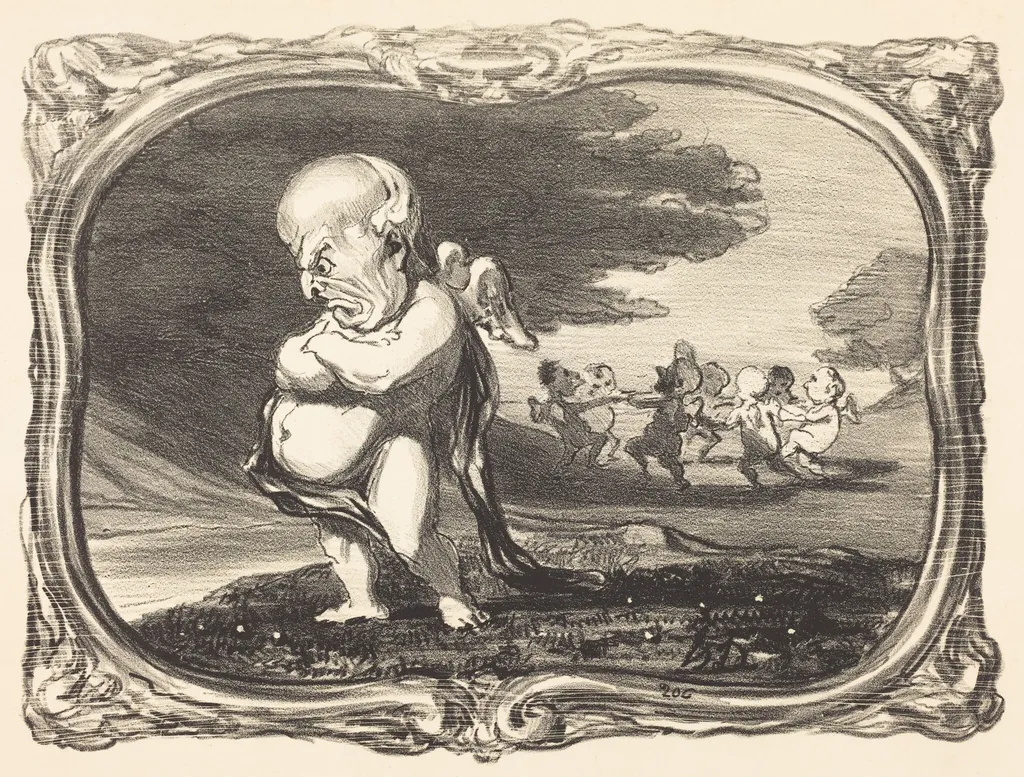
Grandeur et décadence d'O. Barrot is an ink print by the Impressionist artist Honoré Daumier. It dates from 1851 and is held in the collection of the National Gallery of Art. Created in 1851, Grandeur et décadence d'O.
About this work
Overview
Created in 1851, Grandeur et décadence d'O. Barrot is a lithographic print by Honoré Daumier. The work belongs to the artist’s extensive series of politically charged images that comment on French public life in the mid‑nineteenth century. Its title juxtaposes notions of grandeur and decline, hinting at a critique of a specific public figure within the turbulent republican context of the era.
Subject & Meaning
Behind him, diminutive winged children frolic near water beneath a cloudy sky, their carefree activity contrasting sharply with the adult’s somber demeanor.
The composition centers on a bald male figure seated on a rock, his chin propped on his hand as he gazes downward, suggesting fatigue or contemplation. Behind him, diminutive winged children frolic near water beneath a cloudy sky, their carefree activity contrasting sharply with the adult’s somber demeanor. This visual opposition underscores Daumier’s satirical intent, highlighting the disparity between public pomp and private despondency.
Technique & Style
Executed in lithography, the image employs a loose, sketch‑like line that leaves edges intentionally unfinished. The roughness of the drawing amplifies the sense of immediacy and spontaneity, a hallmark of Daumier’s printmaking practice. By favoring gestural marks over meticulous detail, the artist emphasizes mood and narrative over precise representation.
History & Provenance
Daumier produced the print during a prolific period when his caricatures appeared regularly in satirical journals such as La Caricature and Le Charivari. While the original paper carrier is not recorded here, the work circulated among the same readership that consumed his other politically oriented lithographs, reinforcing his reputation as a visual commentator on contemporary affairs.
Context
The lithograph emerged amid the aftermath of the 1848 Revolution and the early years of the Second Republic, a time of intense debate over France’s political future. Daumier’s republican sympathies informed his critique of figures associated with monarchical or authoritarian tendencies, using humor and visual irony to question the legitimacy of their authority.
Own this work as a print
Artist & collection
Artist
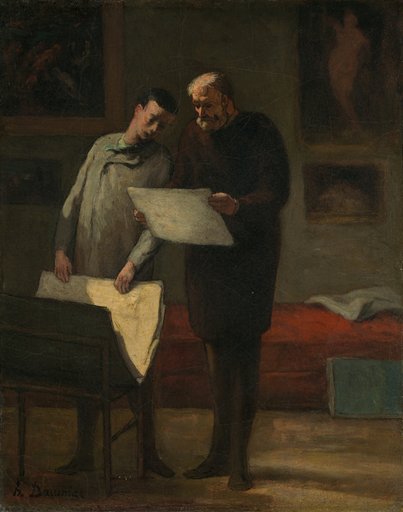
Honoré-Victorin Daumier (French: ; 26 February 1808 – 10 or 11 February 1879) was a French painter, sculptor, and printmaker, whose many works offer commentary on the social and political life in France, from the…









- Le Secret confié au dieu faune
 Les Curieux Punis
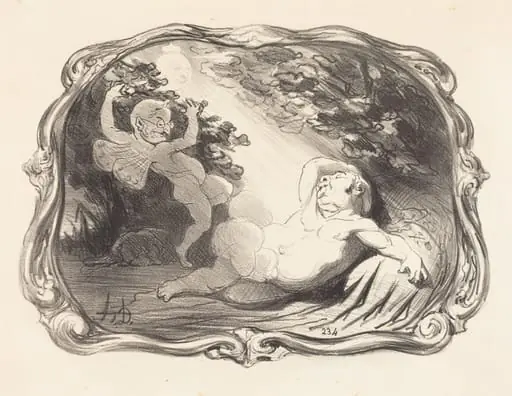 Le Sommeil d'Endymion-Berryer
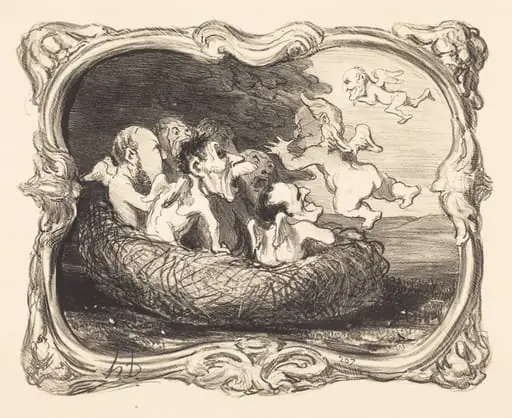 Le Nid abandonné
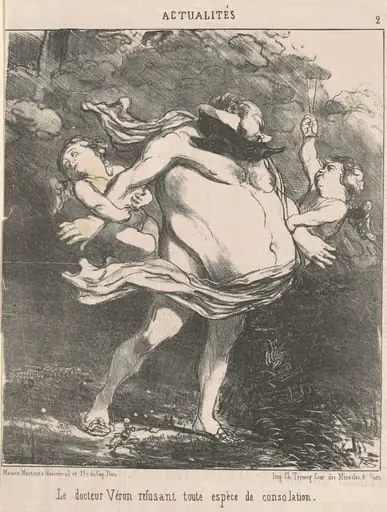 Le docteur Véron refusant ... consolation
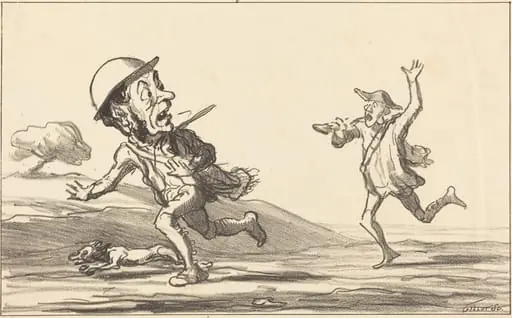 Allons bon!... il parait... chasse réservée
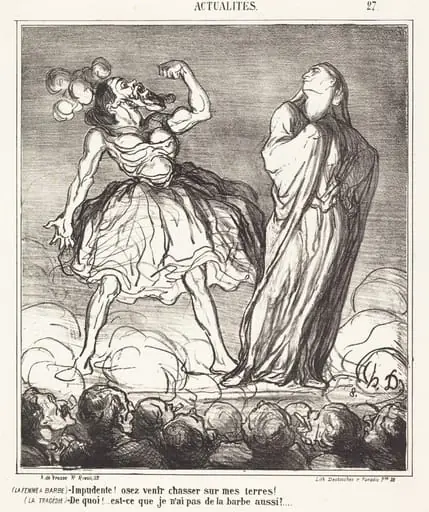 La Femme a barbe
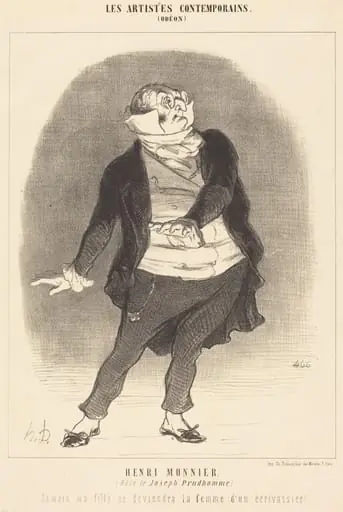 Henri Monnier (Rôle de Joseph Prudhomme)
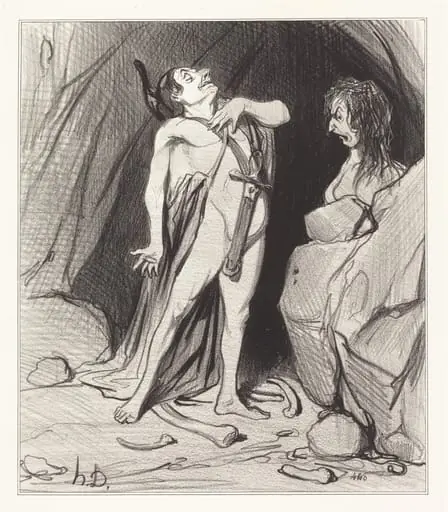 Oedipe chez le Sphinx
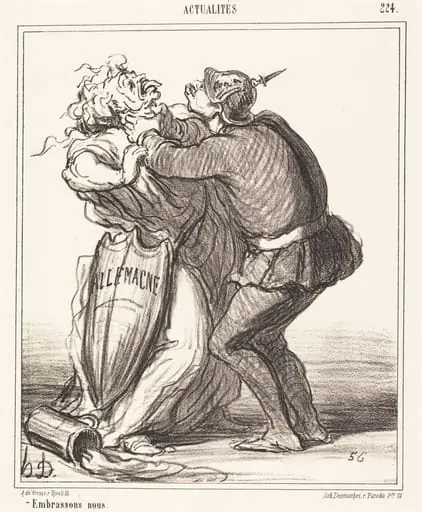 Embrassons nous
 Une assembleé modèle ...
 Ils prétendent qu'ils la soutiennent