Artwork
Les Journaux bienfaisans
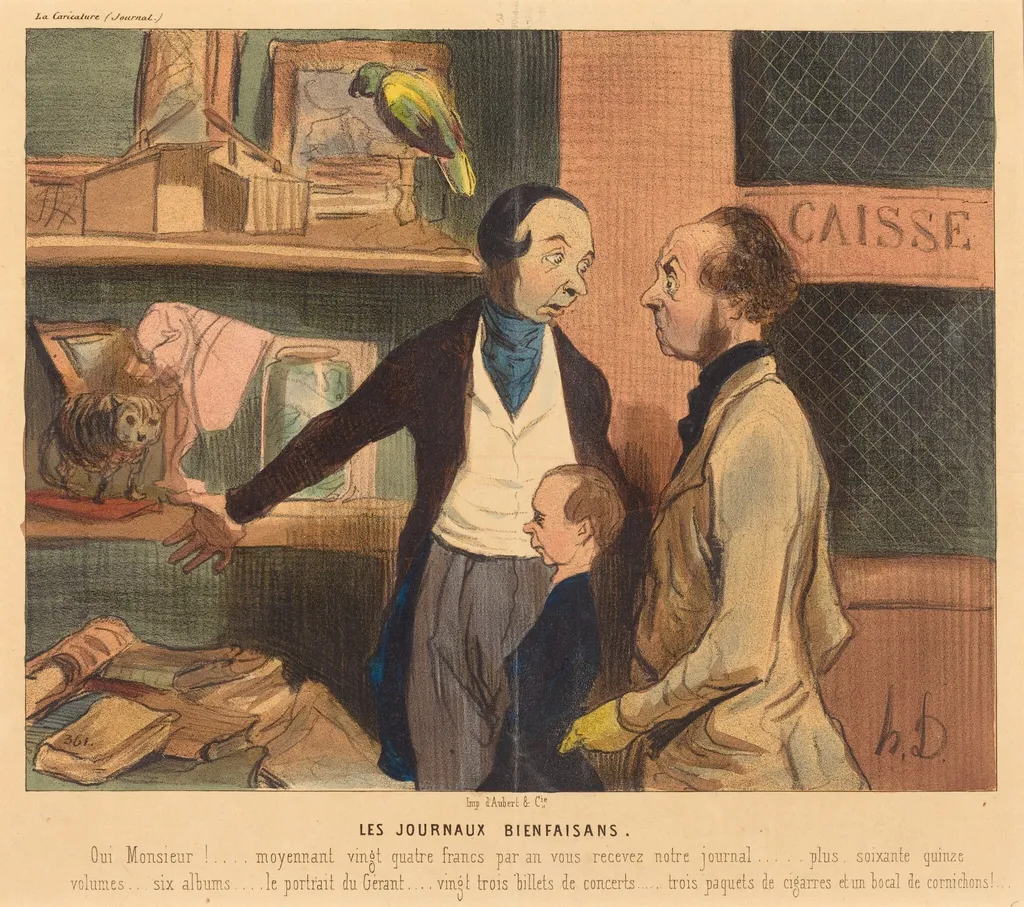
Les Journaux bienfaisans is an ink print by the Romanticist artist Honoré Daumier. It dates from 1842 and is held in the collection of the National Gallery of Art.
About this work
Overview
Les Journaux bienfaisans is a hand-colored lithograph created by Honoré Daumier in 1842. Characteristic of his satirical style, the print critiques societal norms through humorous, exaggerated depiction.
Subject & Meaning
The scene portrays three men and a boy in a cluttered room, with the boy holding a cat. The setting, including a 'CAISSE' sign and chaotic surroundings, satirizes the perceived generosity of newspapers, implying subscriptions offer absurd, useless items rather than value.
Technique & Style
Daumier employed hand-colored lithography to create the piece, leveraging the medium's accessibility for public commentary. Exaggerated facial features and a busy composition enhance the satirical, comedic effect.
History & Provenance
Produced during a peak in press illustration's influence on public debate, this work aligns with Daumier's career producing satirical prints for Parisian publications like La Caricature and Le Charivari, active from the July Revolution onwards.
Own this work as a print
Artist & collection
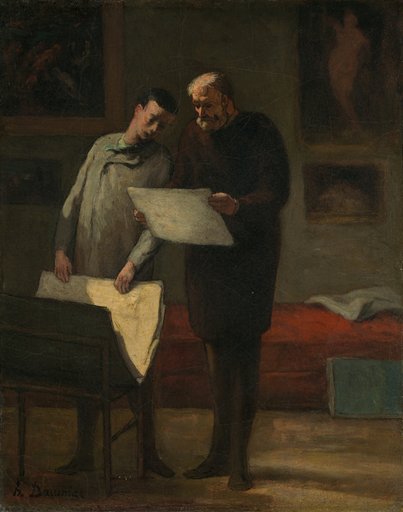
Artist
Honoré-Victorin Daumier (French: ; 26 February 1808 – 10 or 11 February 1879) was a French painter, sculptor, and printmaker, whose many works offer commentary on the social and political life in France, from the…

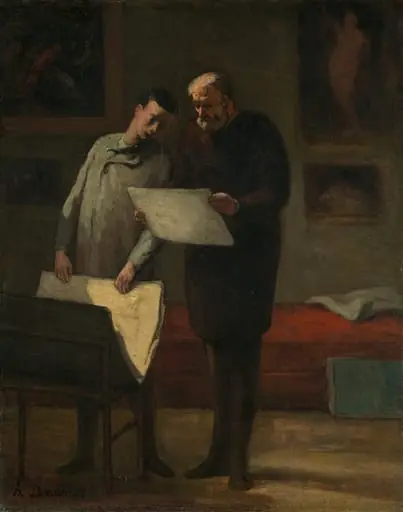
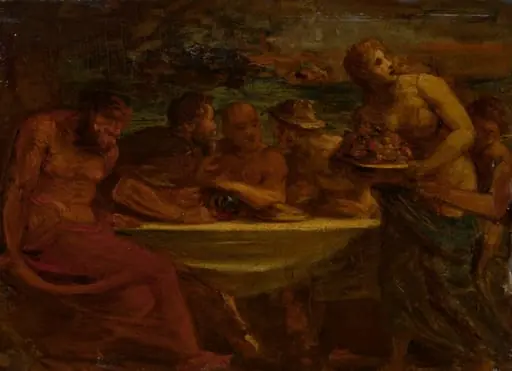
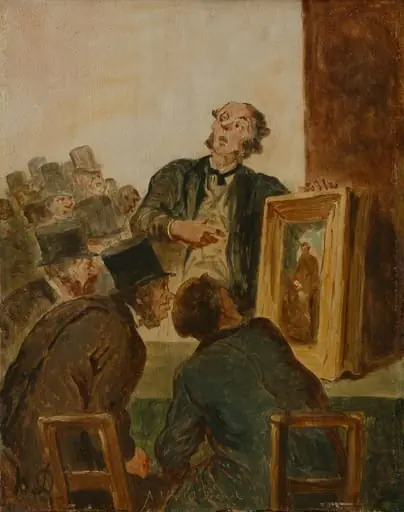
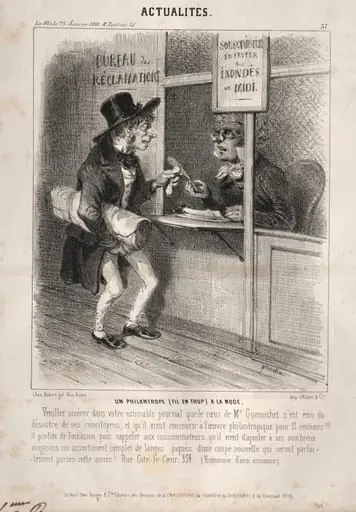
- Actualités: Un Philantrope à la mode
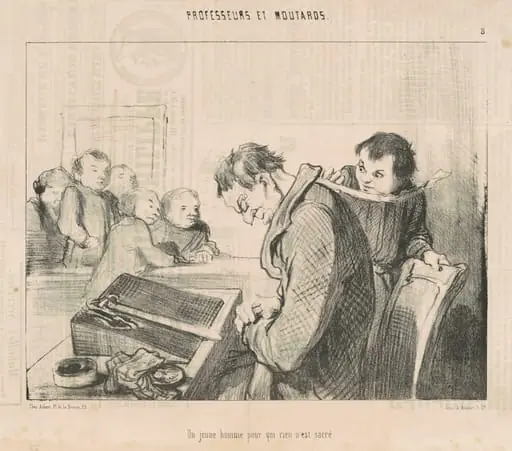 Un jeune homme pour qui rien n'est sacre
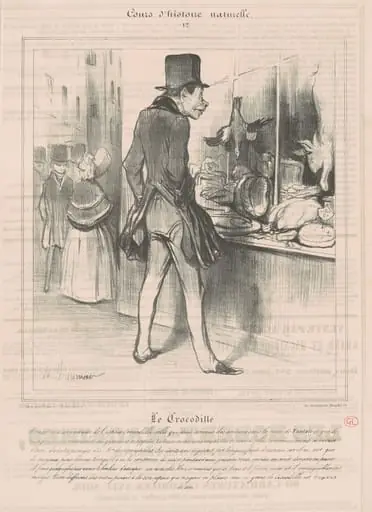 Le Crocodile
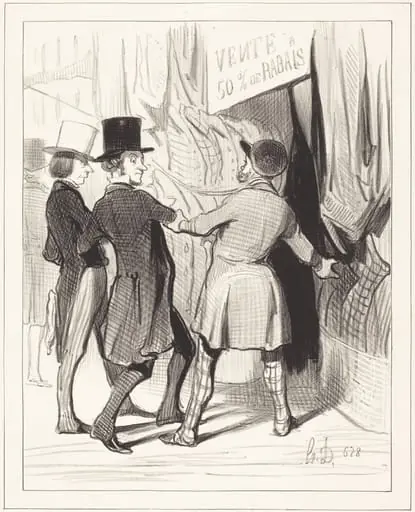 Entrez Messieurs... voici de magnifiques...
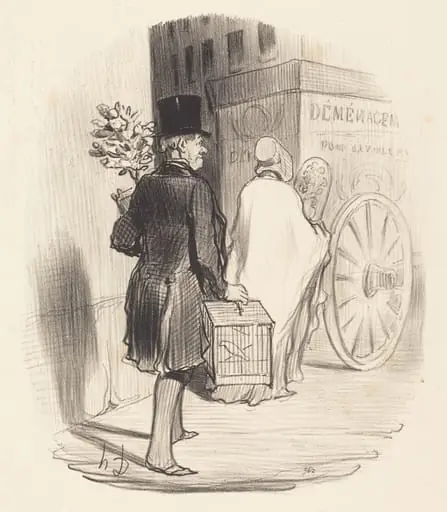 Parisien transportant dans un autre quartier...
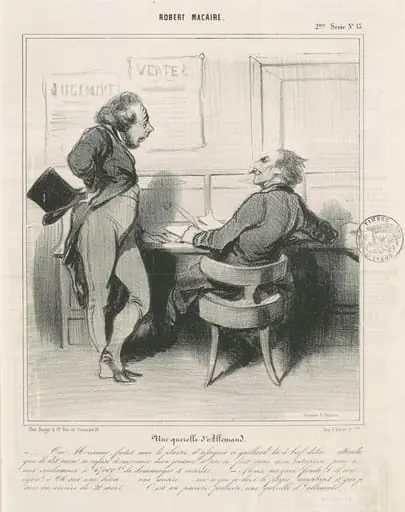 Une querelle d'allemand
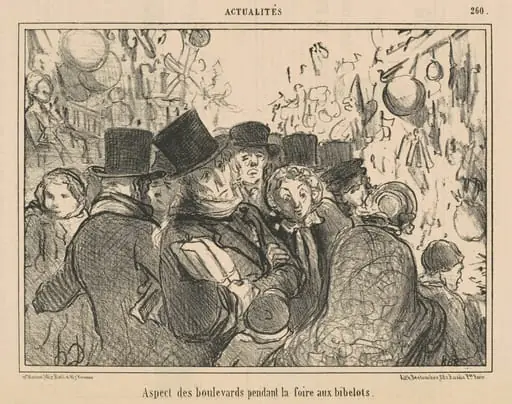 Aspect des boulevards pendant la foire aux bibelots
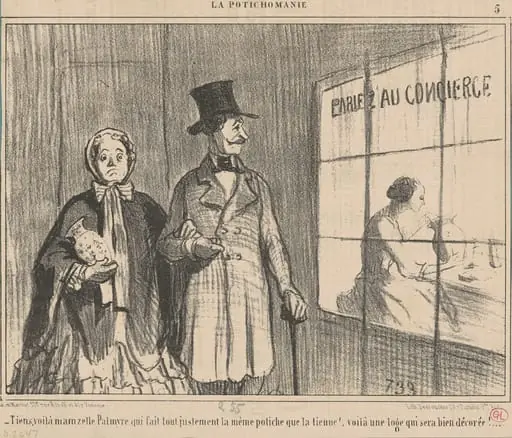 Tiens, voila mamzelle palmyre qui fait ...
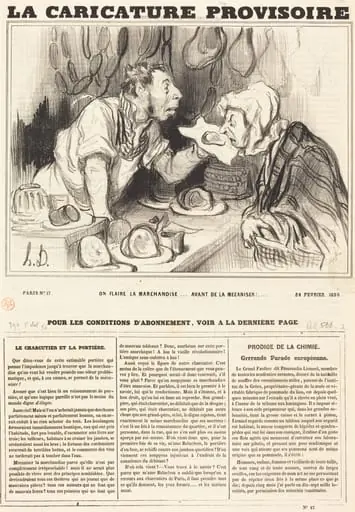 On flaire la marchandise... avant de la mécaniser!...
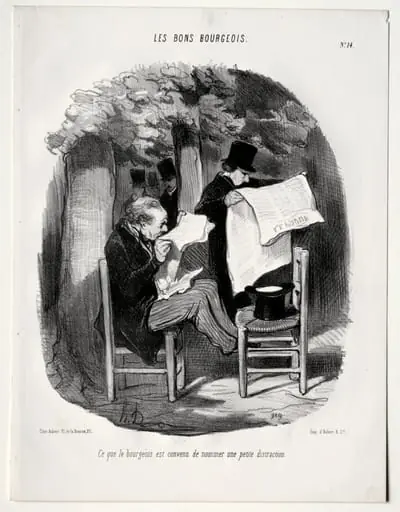 What the bourgeois calls a slight distraction
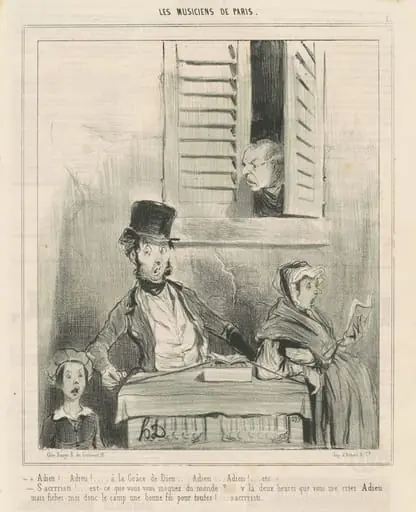 Adieu! ... A la grâce de dieu ...
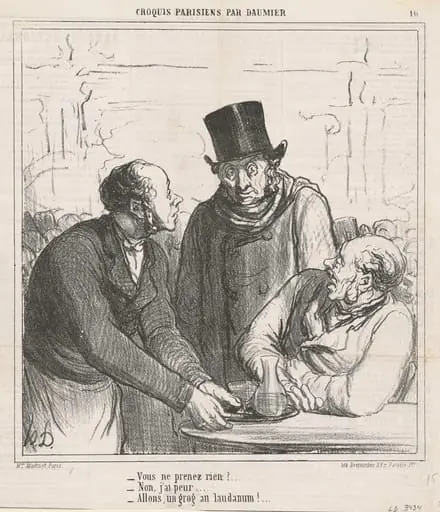 Vous ne prenez rien?