Artwork
Renouvele de Gulliver
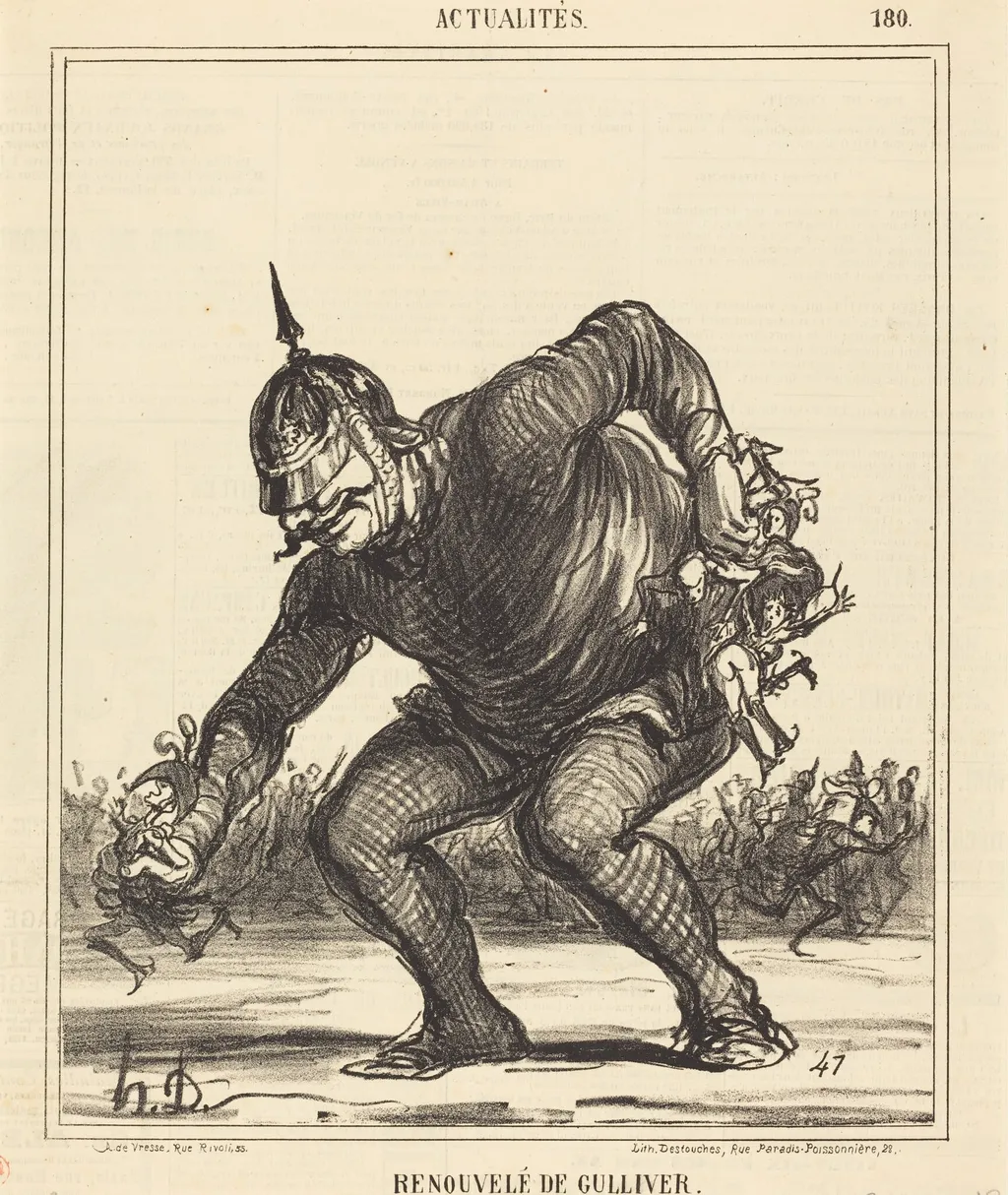
Renouvele de Gulliver is an ink print by the Impressionist artist Honoré Daumier. It dates from 1866 and is held in the collection of the National Gallery of Art.
About this work
Overview
Created in 1866, Renouvele de Gullier is a lithographic print on newsprint by the French artist Honoré Daumier. The image presents a towering soldier, his uniform adorned with a large plume, striding over a crowd of diminutive figures while clutching a tiny group beneath his arm. Rendered in stark black and white, the composition uses exaggerated scale to convey a satirical critique of authority.
Subject & Meaning
The work reinterprets the giant‑and‑tiny motif from Jonathan Swift’s Gulliver’s Travels, substituting the giant with a militaristic figure who dominates and threatens the smaller populace. By portraying the soldier as a bully crushing ordinary people, Daumier comments on the oppressive nature of contemporary power structures, suggesting that those in command treat the masses as objects of ridicule and subjugation.
Technique & Style
Daumier employed lithography, a printmaking process that allowed rapid, reproducible images on inexpensive paper. The medium’s capacity for bold contrasts suits the work’s graphic clarity, while the hand‑drawn lines convey a sense of immediacy. The stark monochrome palette emphasizes the power differential, and the exaggerated proportions are characteristic of Daumier’s caricatural style.
History & Provenance
The print emerged during a period of political turbulence in France, when Daumier was actively contributing to satirical journals such as La Caricature and Le Charivari. Produced for mass circulation, the lithograph was likely distributed among the readership of these publications, reflecting Daumier’s role as a republican commentator who used visual humor to address current events.
Context
Its enduring relevance lies in its clear visual language, which continues to inform studies of political satire and the history of print culture.
Renouvele de Gullier exemplifies Daumier’s broader engagement with social criticism through accessible media. By adapting a literary reference to address contemporary French politics, the print illustrates how 19th‑century artists leveraged popular formats to influence public opinion. Its enduring relevance lies in its clear visual language, which continues to inform studies of political satire and the history of print culture.
Own this work as a print
Artist & collection
Artist
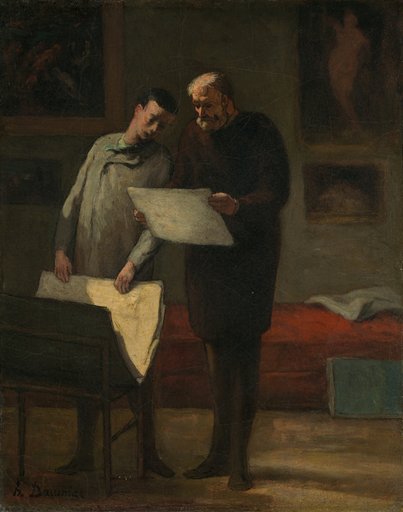
Honoré-Victorin Daumier (French: ; 26 February 1808 – 10 or 11 February 1879) was a French painter, sculptor, and printmaker, whose many works offer commentary on the social and political life in France, from the…

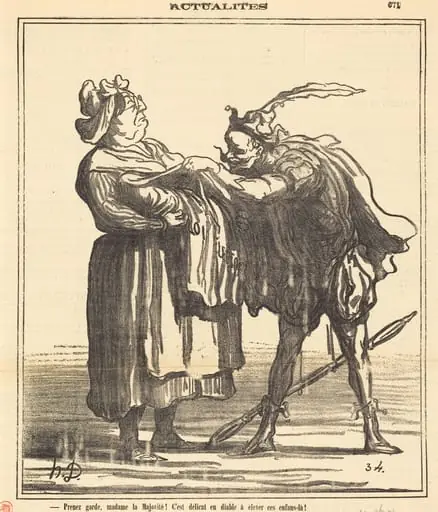 Prenez garde, madame la Majorité!
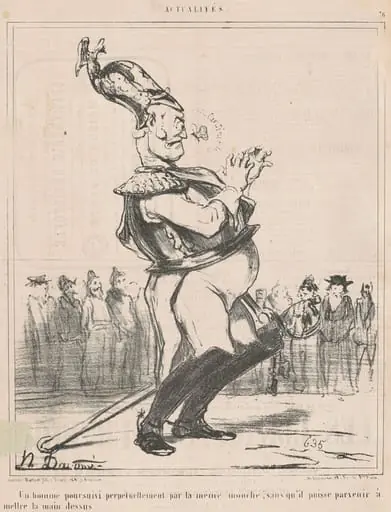 Un homme poursuivi ...
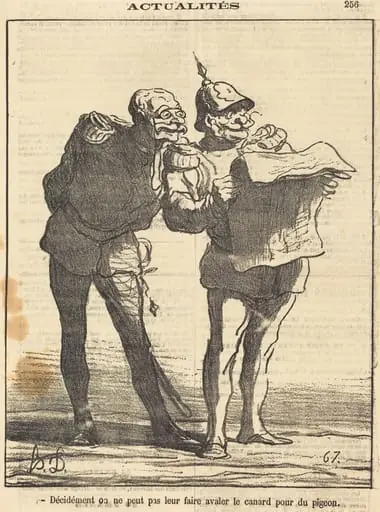 Décidément on ne peut pas...
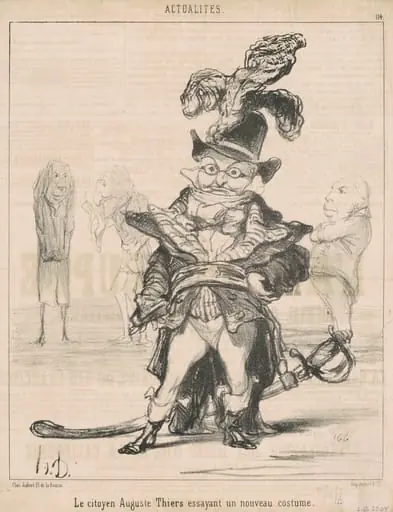 Le Citoyen ... Thiers essayant un nouveau costume
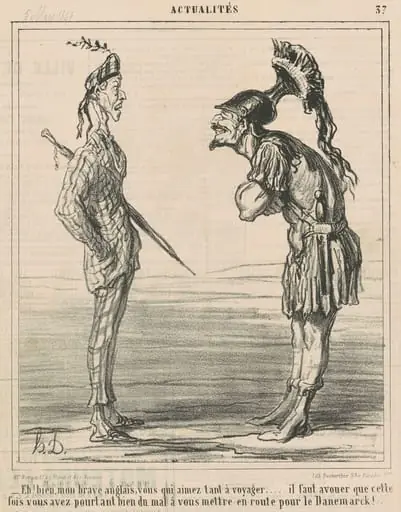 Eh bien! Mon brave anglais ...
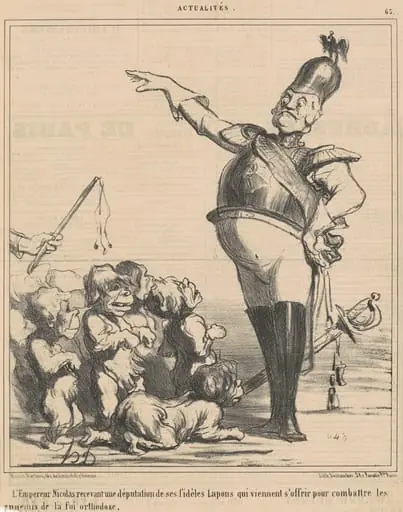 L'empereur Nicolas recevant une députation ...
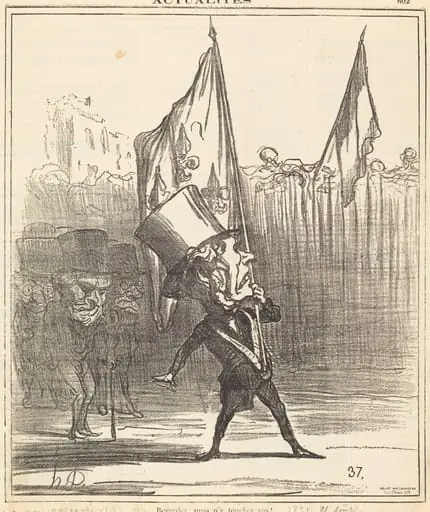 Regardez, mais n'y touchez pas!
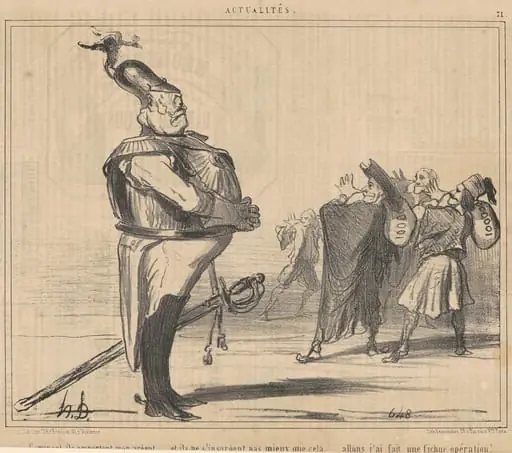 Comment, ils emportent mon argent ...
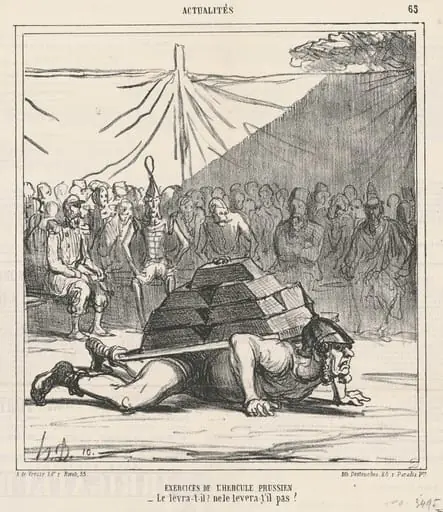 Exercises de l'hercule prussien
 Le Prince de Hohenzollern...
 Courant rejoindre les insurgés
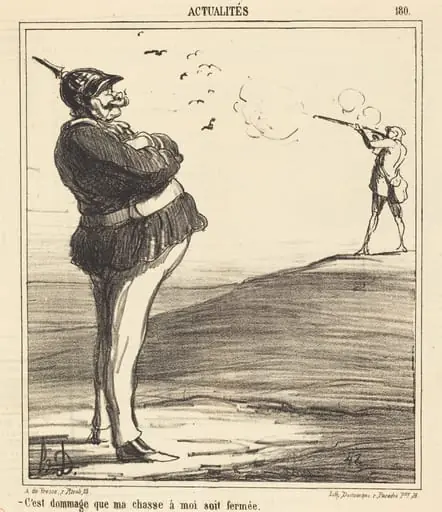
- C'est dommage que ma chasse a moi soit fermée