Artwork
Landscape with a Gipsy camp
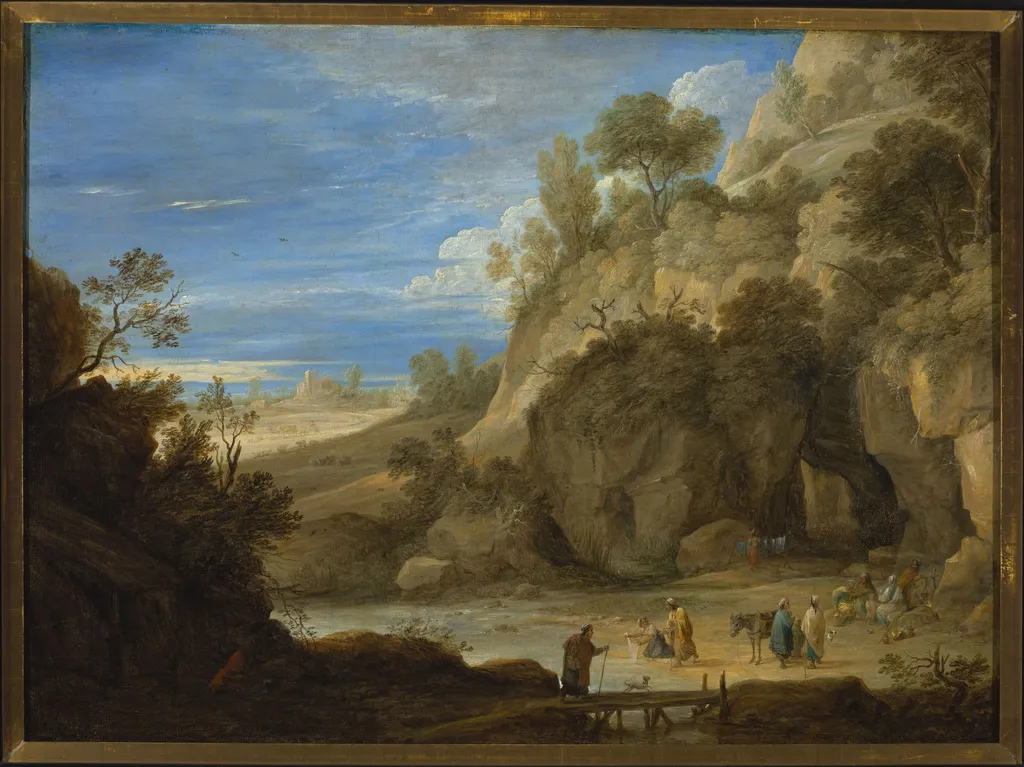
Landscape with a Gipsy camp is an oil painting by the Flemish Baroque painting artist David Teniers the Younger. It dates from 1641 and is held in the collection of the National Museum in Warsaw.
About this work
Overview
This work reflects Teniers' early career interest in depicting rural life and itinerant groups, a theme he would explore throughout his oeuvre.
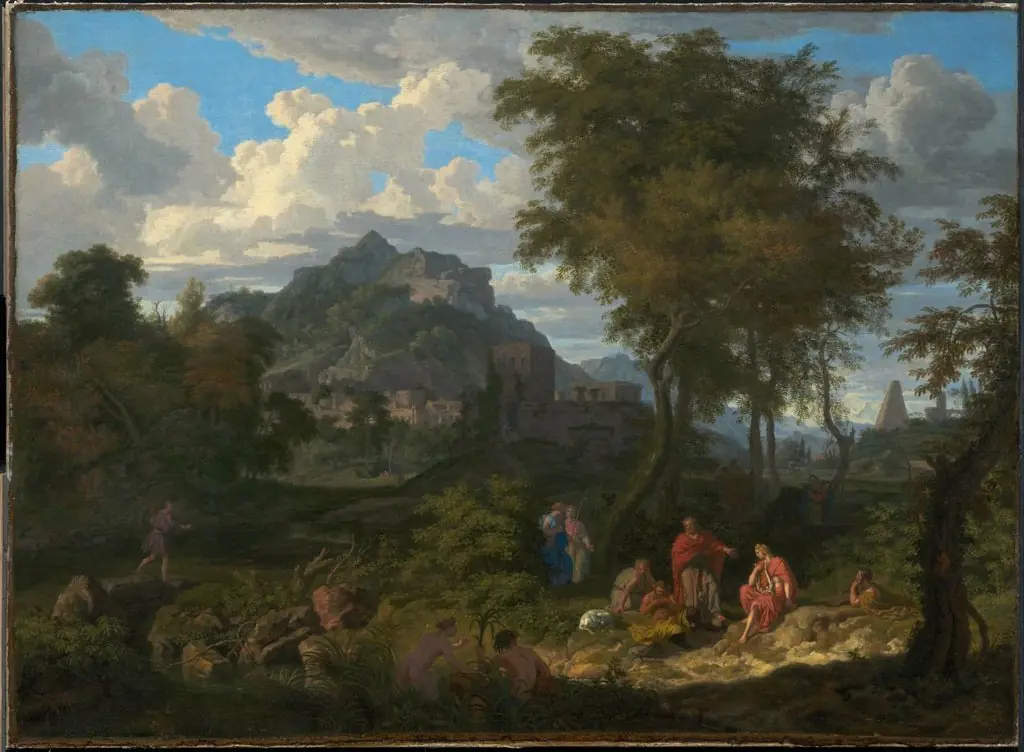
Landscape with a Gipsy Camp, painted by David Teniers the Younger in 1641, is an oil on canvas work that exemplifies the Flemish Baroque tradition of combining genre scenes with pastoral landscapes. The composition places a group of Romani figures and their temporary encampment in the immediate foreground, situated beside a rocky outcrop and a meandering stream. These figures, rendered with the artist's characteristic attention to costume and daily activity, provide a narrative focal point against the backdrop of a rolling, wooded terrain.
Teniers employs a high horizon line and atmospheric perspective to create a sense of depth, transitioning from the detailed, earthy tones of the camp to the softer, blue-hued sky and distant hills. This work reflects Teniers' early career interest in depicting rural life and itinerant groups, a theme he would explore throughout his oeuvre. While often associated with his later, more refined peasant scenes, this 1641 painting demonstrates his developing mastery in integrating human subjects into a cohesive natural setting, balancing the rustic realism of the camp with the idealized beauty of the surrounding environment.
Subject & Meaning
The composition centers on a gypsy camp situated beside a rocky outcrop, its tents and fire surrounded by people and animals. Trees and a modest stream frame the settlement, suggesting a temporary refuge within a broader rural setting. The tranquil atmosphere and modest scale of the figures convey everyday life rather than heroic narrative, emphasizing the coexistence of human activity and nature.
Technique & Style
Teniers employs a restrained palette, using earthy browns and greens for the cliff and foliage, while the sky is rendered in clear blue with soft white clouds. Warm, muted tones define the camp, and subtle gradations of light create a sense of depth. The handling of oil paint shows careful modeling of forms and a modest use of chiaroscuro to suggest volume without dramatic contrast.
History & Provenance
Created in the early 1640s, the painting entered the holdings of the National Museum in Warsaw, where it remains on display. Its provenance prior to acquisition by the museum is not extensively documented, but the work reflects Teniers’ mature period, during which he produced numerous genre and landscape scenes for a European market.
Own this work as a print
Artist & collection
Artist
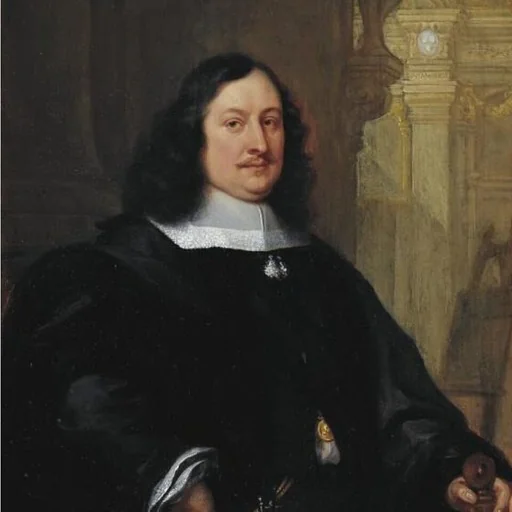
David Teniers the Younger or David Teniers II was a Flemish Baroque painter, printmaker, and artist.

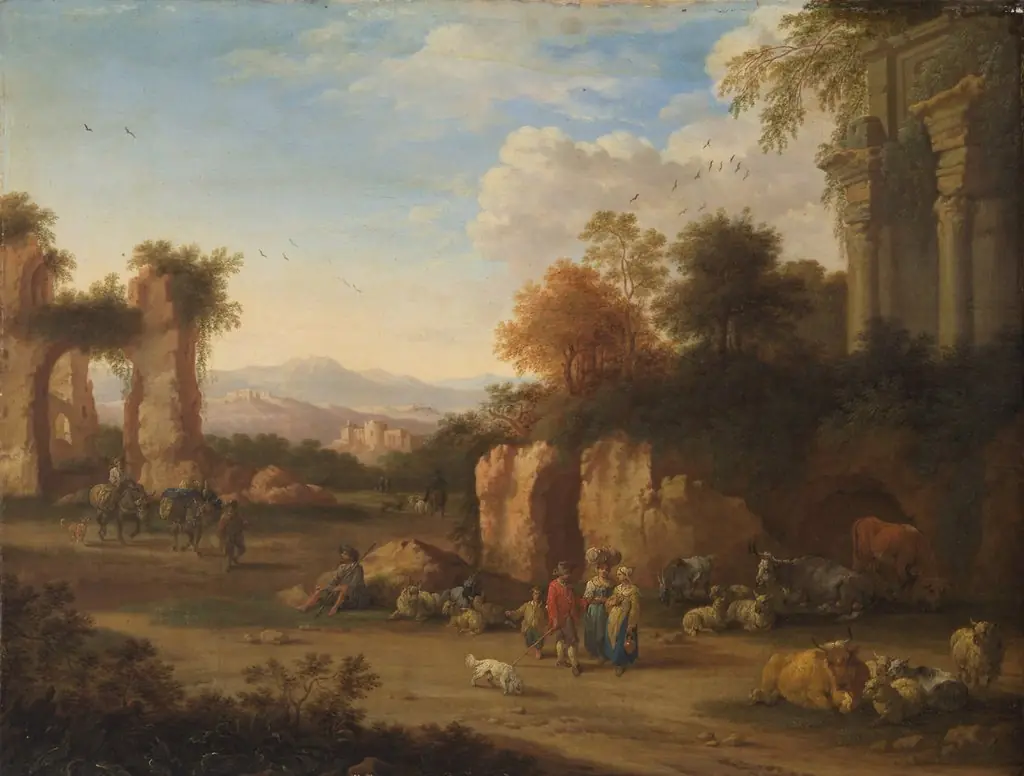 Italian landscape with ancient ruins and peasants
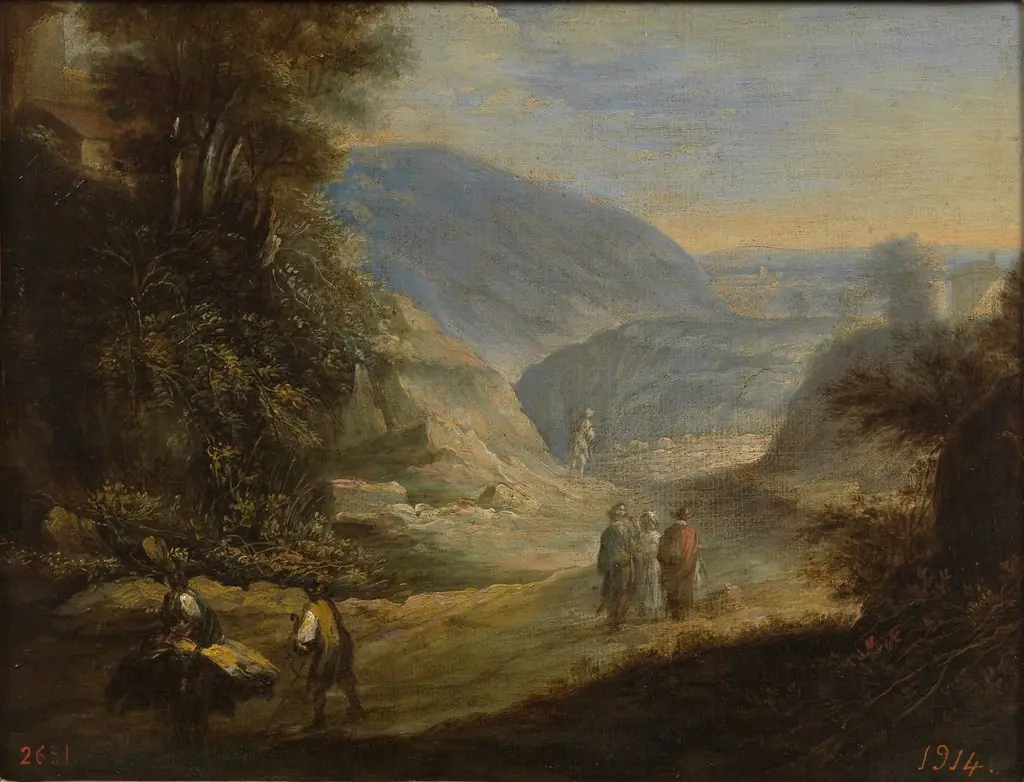 Landscape
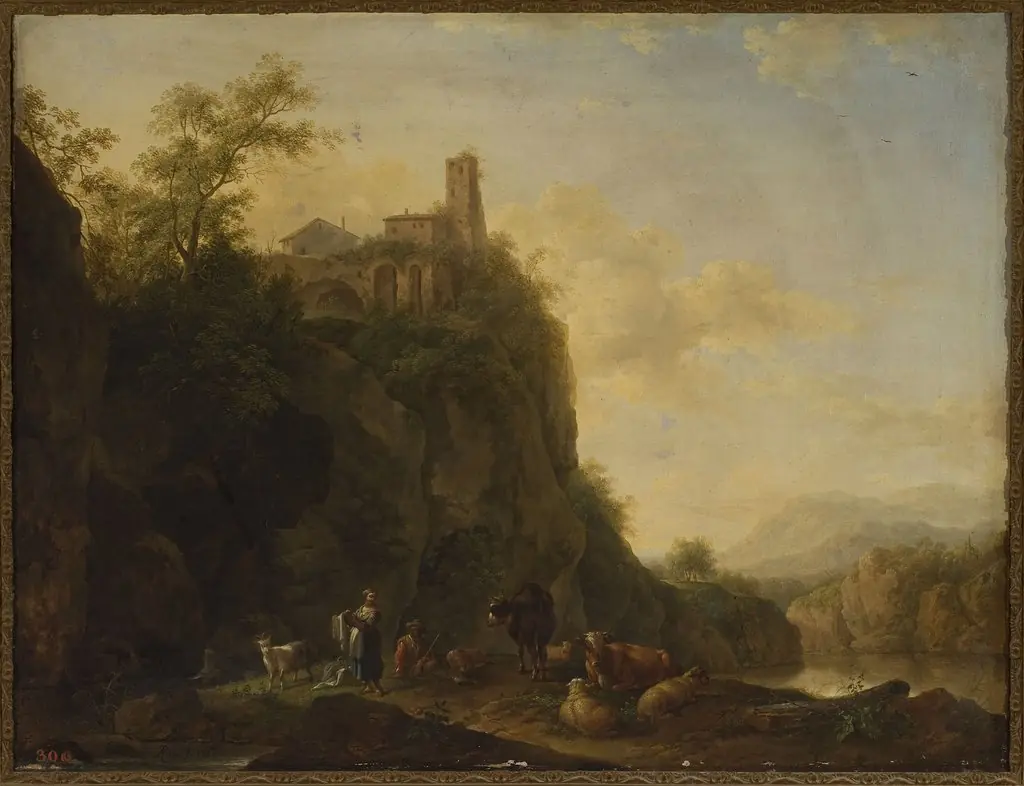 Mountain landscape with cattle
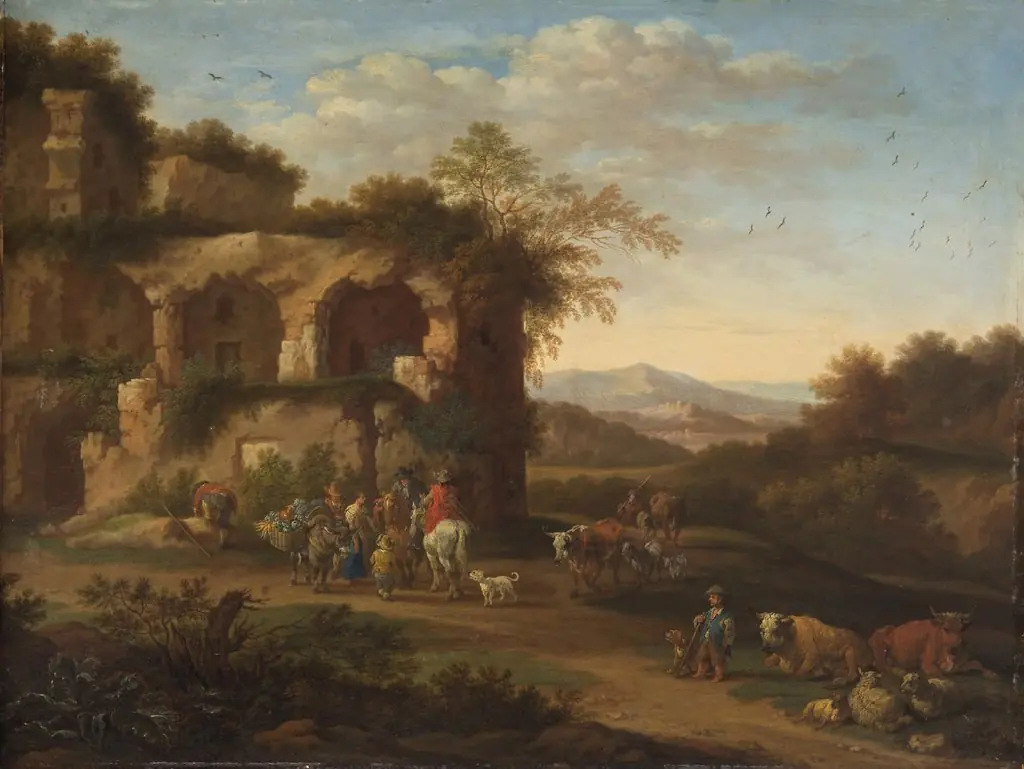 Italian landscape with antique ruins and herders
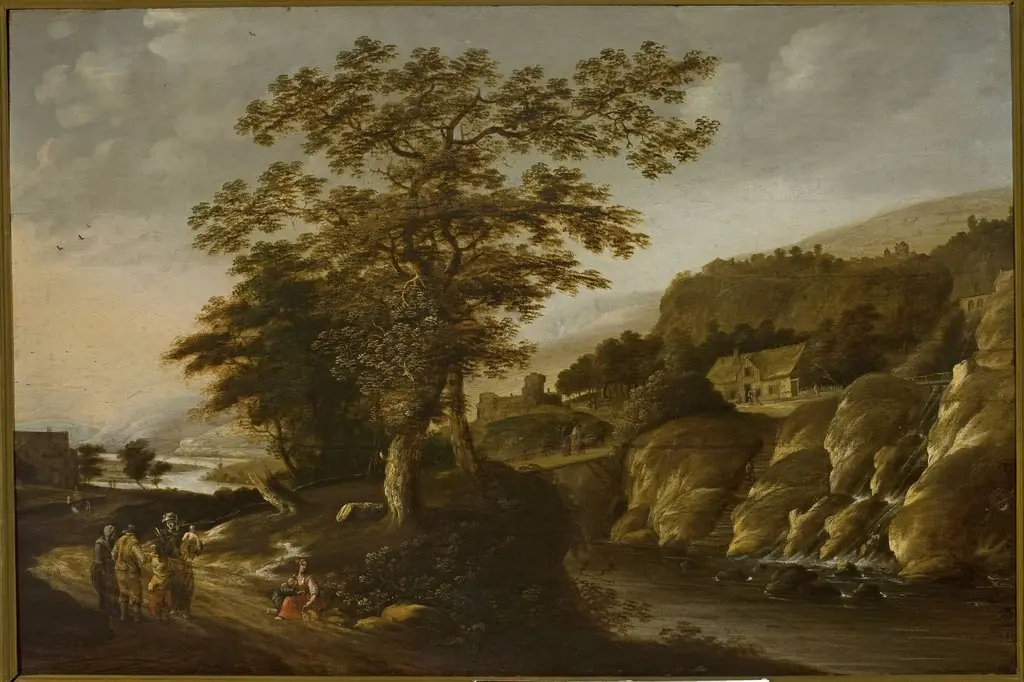 Rhine landscape with a waterfall
 The Fortune-Teller
 Paisaje con ermitaños
 Landscape with tavern and Roman aqueduct
 Morning
 King Midas Judging the Musical Contest between Pan and Apollo