Artwork
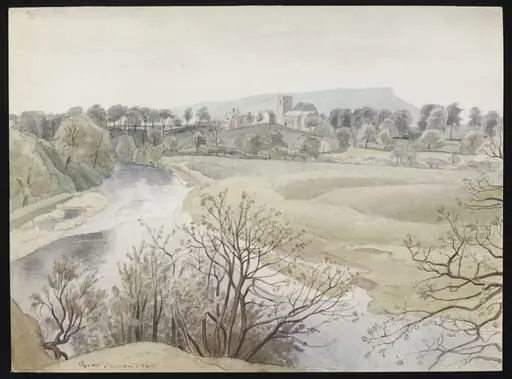
Medlock Valley, Daisy Nook, Oldham
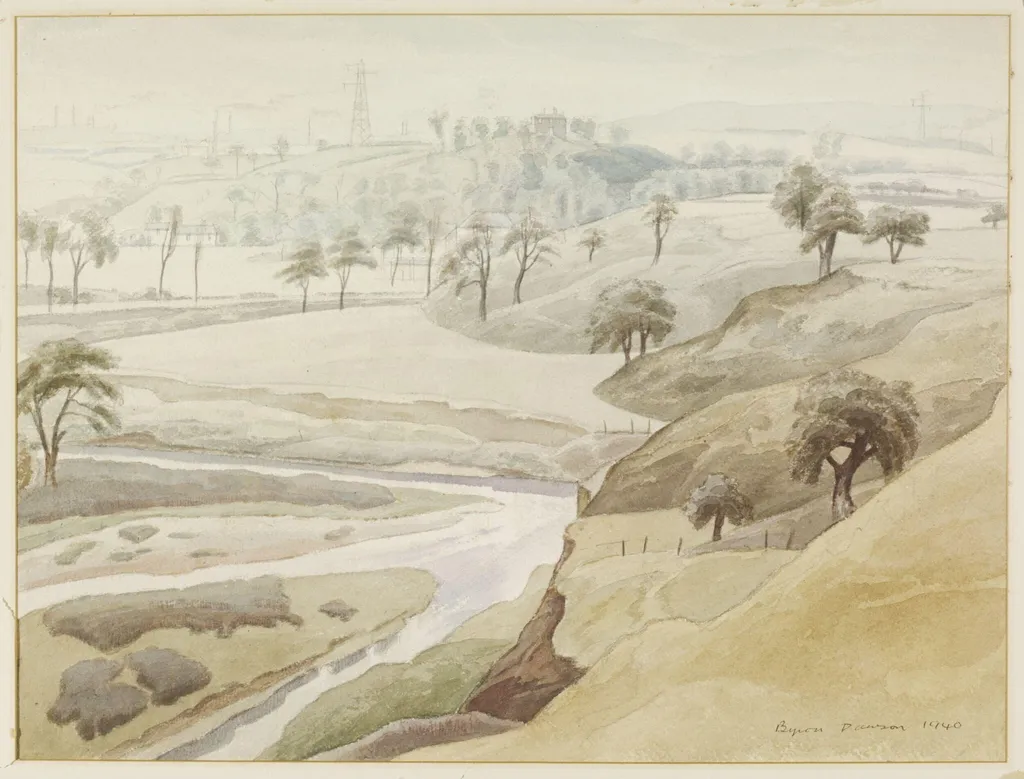
Medlock Valley, Daisy Nook, Oldham is a watercolor work on paper by the Regionalist artist Dawson. It dates from 1940 and is held in the collection of the Victoria and Albert Museum.
About this work
Overview
The watercolour, painted in 1940 by Dawson, portrays the Daisy Nook country park in Oldham. A gentle stream winds through the foreground, flanked by trees and shrubs, while rolling hills and scattered trees rise in the distance. The composition balances natural scenery with distant industrial silhouettes, creating a tranquil yet historically grounded view.
Subject & Meaning
The scene juxtaposes pastoral elements, water, foliage, and open land, with the faint outlines of pylons and smoking chimneys on the horizon, hinting at the coexistence of rural life and industrial development in the region. This contrast reflects the landscape’s evolving character during a period of rapid change.
Technique & Style
Executed in muted browns, greens, and greys, the watercolour employs soft, delicate brushwork that lends the image a calm atmosphere. The limited palette and gentle strokes emphasize the quietness of the valley while subtly acknowledging the encroaching modernity.
History & Provenance
The work was produced under the Recording Britain project, a wartime scheme organized by the Committee for the Employment of Artists in Wartime and funded by the Pilgrim Trust. Led by Sir Kenneth Clark, the initiative commissioned artists to document British landscapes and built environments perceived to be under threat from urban growth, agricultural change, and wartime damage.
Context
Recorded Britain amassed over 1,500 works, predominantly watercolours, focusing on English countryside, rural communities, and industrial sites. Dawson’s contribution fits within this broader effort to preserve visual records of places considered vulnerable during the early 1940s.
Artist & collection
Artist
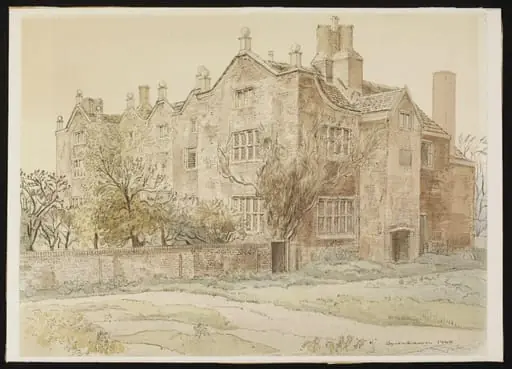
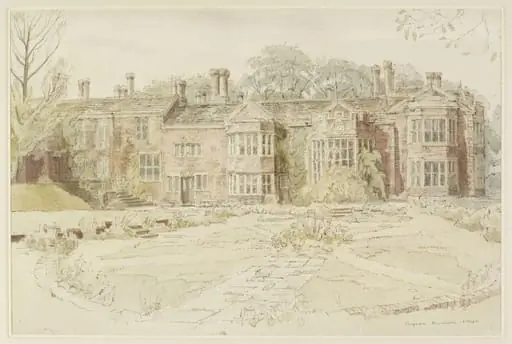
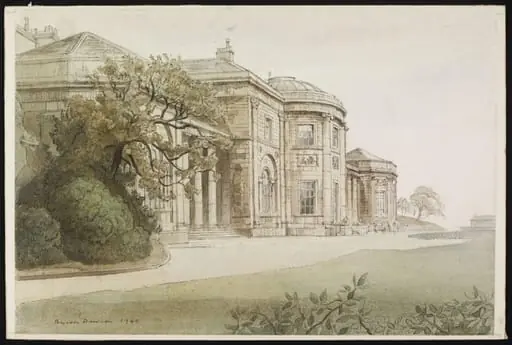
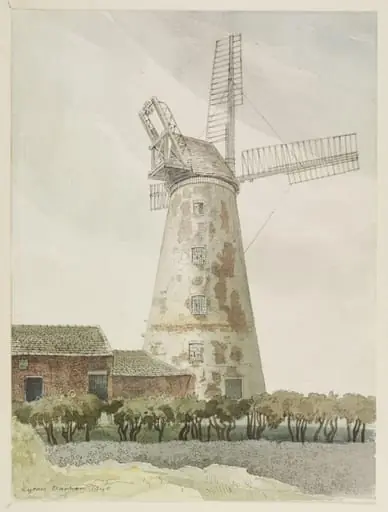
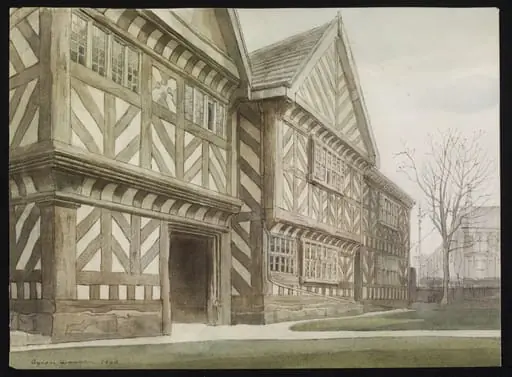
This artist painted watercolours of grand old buildings and riverside mills around Manchester and Lancashire in the early 1940s.

 Looking towards Bury from the North of the city
 Landscape
 The Southdown, Underhill Road; Ditchling Beacon, from the Meadows near Westmeston
 The Sea of Galilee from the heights of Safad
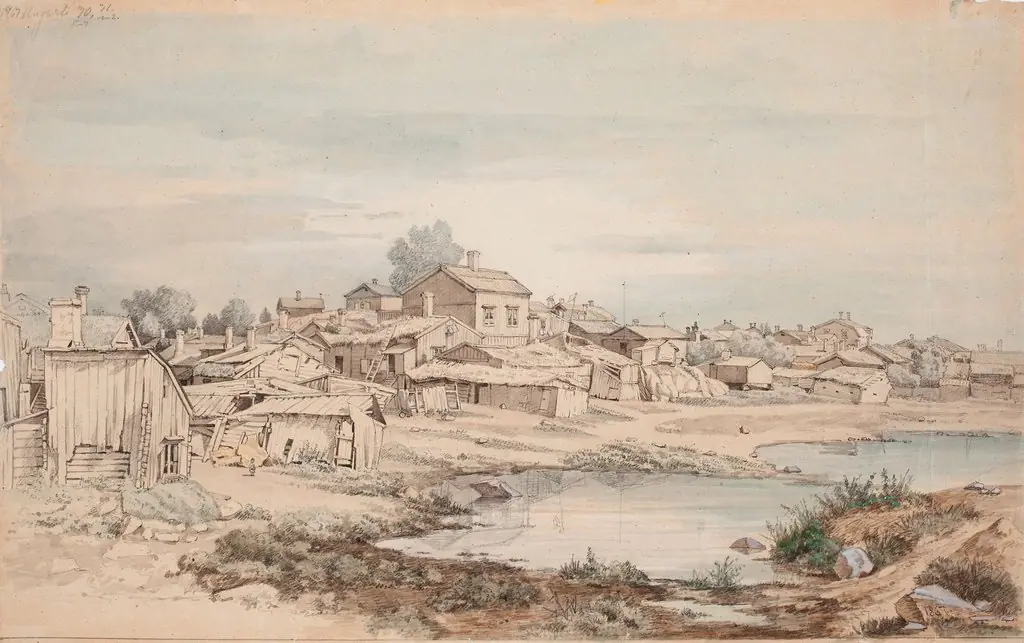 Katajanokka, luonnos
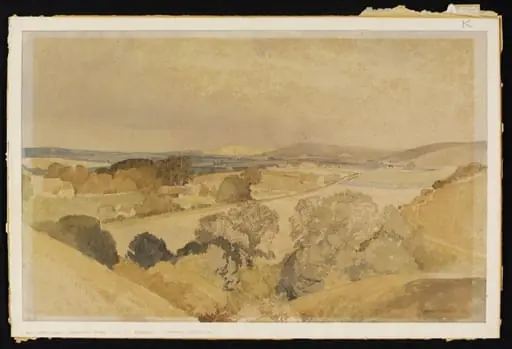 The Southdown, Underhill Road; Edburton, and the Road Eastwards
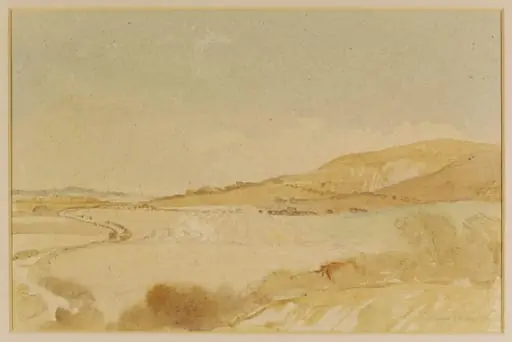 The Southdown, Underhill Road; Clayton to Westmeston
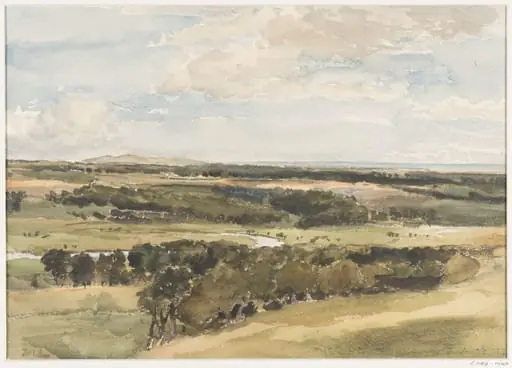 Arundel Park
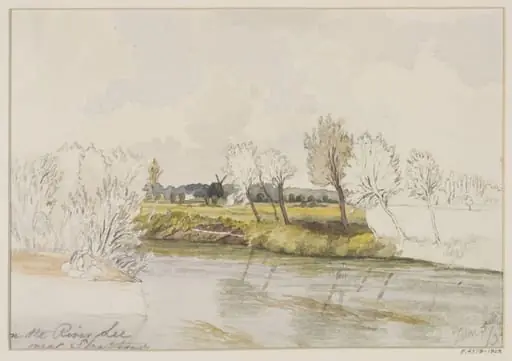 On the River Lee, near Stratford
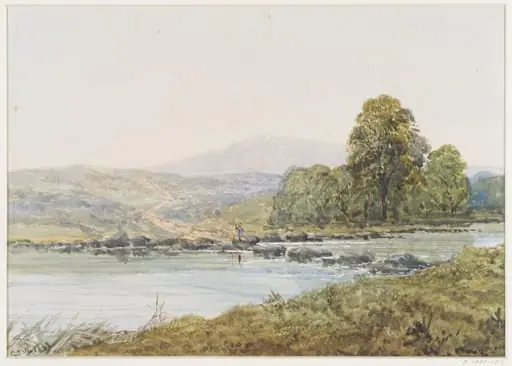 The Stepping-stones near Bettws-y-Coed, North Wales
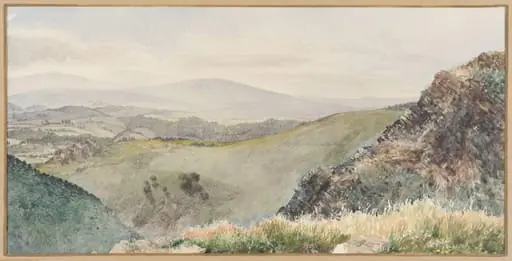 Untitled
- The Porter Valley, No.1