Artwork
Alexander and Bucephalus
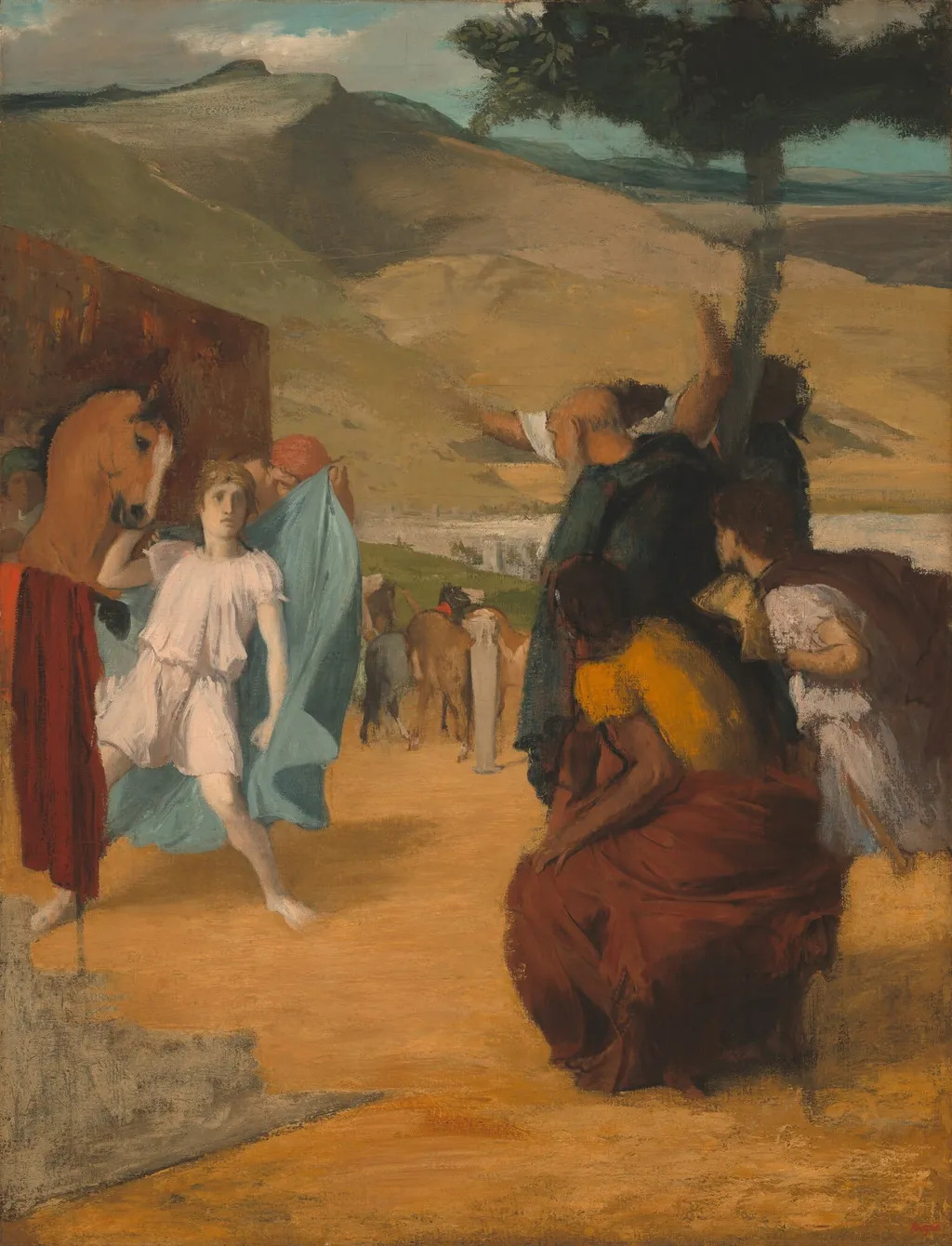
Alexander and Bucephalus is an oil painting by the Impressionist artist Edgar Degas. It dates from 1862 and is held in the collection of the National Gallery of Art.
- Inscription
- Inscribed:lower right: Degas
About this work
Overview
Its place in the artist's oeuvre offers crucial insight into Degas's formative development before his turn toward modern life subjects.
Alexander and Bucephalus is an oil on canvas history painting by Edgar Degas, dated 1861 or 1861/1862, measuring 115 by 89 cm. The work is held by the National Gallery of Art in Washington, D.C., where it is displayed in the West Building Main Floor, Gallery M90, under accession number 1997.57.1. Painted early in Degas's career, the picture represents a significant departure from the ballet and genre scenes for which he later became famous, demonstrating instead his engagement with classical history painting and the ambitious narrative traditions of French academic art. Its place in the artist's oeuvre offers crucial insight into Degas's formative development before his turn toward modern life subjects.
Subject & Meaning
The painting depicts the legendary episode from antiquity in which the young Alexander the Great tames Bucephalus, the horse that would become his celebrated war steed. In the left foreground, a light brown horse with a white blaze on its face stands beside a figure in a short white tunic who strides forward with one arm raised, presumably Alexander himself. Nearby, a figure in a red cap holds a large pale blue cloth, while to the right an older bearded man in dark robes gestures with his right arm extended, and a seated figure in yellow and deep red drapery occupies the lower right, turned away from the viewer. Additional figures and horses populate the middle distance against a backdrop of rolling hills, distant mountain, water, and a large dark tree. The composition conveys anticipation and the emergence of a pivotal relationship between horse and human, emblematic of bravery and exceptionalism in historical lore. The onlookers framing the scene enhance its gravitas, while the windswept landscape provides dramatic atmosphere for this moment of transformation.
Technique & Style
Executed in oil on canvas, the painting exhibits a palette of warm ochres and browns, muted greens, deep reds, and touches of pale blue and yellow. The brushwork varies from smooth in the figures to looser and more atmospheric in the landscape, with visible canvas texture in places and an overall unfinished or sketchlike quality in certain areas. Shadows are soft and diffused, with no strong directional light source. This handling has led scholars to consider the question of finish in Degas's work, with the painting serving as an important case study in the artist's experimental approach to surface and completion. The impression of incompleteness, particularly in the treatment of certain figures and the background, suggests either a deliberate aesthetic choice or a work abandoned in progress, reflecting the tension between academic finish and more spontaneous painterly effects that would characterize Degas's mature style.
History & Provenance
The painting was sold at the first Degas atelier sale, held 6-8 May 1918 at the Galerie Georges Petit in Paris, as lot number 5 under the title Achille et le Bucéphale. By 1951 it was in the collection of Dr. Hans Graber (1886-1956), an art historian and collector in Morcote, Switzerland, who wrote on nineteenth-century artists including Degas. It may have been exhibited at the Kunsthaus, Zurich, in 1929. Subsequently it passed through the hands of Walter Hugelshofer in Zurich, then to M. Knoedler and Co., New York, on joint account with Pinakos, Inc. (Rudolf Heinemann), New York, from October 1956. Knoedler's half was likely sold back to Pinakos, and the painting entered the collection of Lore Heinemann, widow of Rudolf J. Heinemann, who bequeathed it to the National Gallery of Art in 1997. The work has been exhibited at the Kunstmuseum Bern in 1951-1952, the Los Angeles County Museum in 1958, the National Gallery of Art in 1998 for Degas at the Races, the Staatliche Kunsthalle Karlsruhe in 2014-2015, the Minneapolis Institute of Art and National Gallery, London, in 2015-2016 for Delacroix and the Rise of Modern Art, and the National Gallery of Victoria, Melbourne, in 2016-2017 for Degas, A New Vision.
Context
Painted between 1859 and 1861, Alexander and Bucephalus belongs to a period when Degas was actively engaged with history painting, the most prestigious genre in the academic hierarchy of the time. This early work demonstrates his immersion in classical subject matter and compositional conventions before his decisive turn toward modern life subjects. The painting has been discussed in scholarly literature including Paul-André Lemoisne's catalogue raisonné and, more recently, in conservation studies examining Degas's working methods. Ann Hoenigswald and Kimberly A. Jones addressed the question of finish in Degas's work in a 2017 publication, using this painting as a significant example. The work's identification as Impressionist by some sources reflects a retrospective categorization based on the artist's later affiliation, though its actual style remains rooted in academic and historical traditions with emerging painterly freedoms.
Legacy
Alexander and Bucephalus occupies an important position in understanding Degas'sillac's artistic trajectory, representing the ambition and classical training of his early years before his reputation became fixed on dancers, bathers, and racetrack scenes. The painting's afterlife in scholarship has centered increasingly on material and technical analysis, as its apparent unfinished state offers evidence of Degas's evolving attitudes toward surface, completion, and the boundaries of traditional academic practice. Its inclusion in major international exhibitions from the 1950s through the 2010s attests to its sustained institutional recognition. The work's journey from a Paris studio sale through Swiss and American private collections to the National Gallery of Art mirrors the broader dispersal and reclamation of Degas's early history paintings in the twentieth century. As a bequest from Lore Heinemann, it now serves as a permanent resource for studying the foundational phase of one of the nineteenth century's most significant artists.
Own this work as a print
Artist & collection
Artist
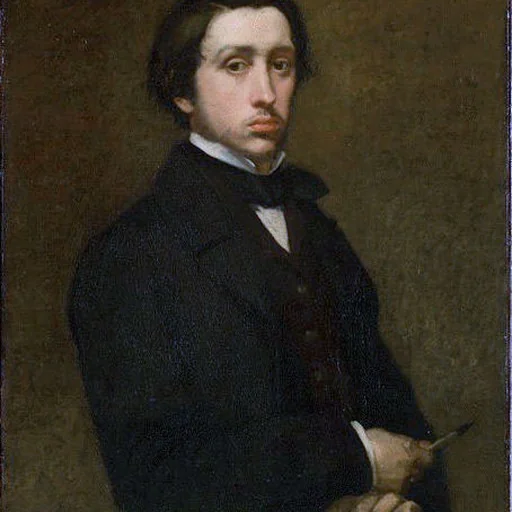
Born Hilaire-Germain-Edgar De Gas on 19 July 1834 in Paris, Edgar Degas came from an affluent banking family with aristocratic roots and spent his childhood among the cultivated circles of the French capital.

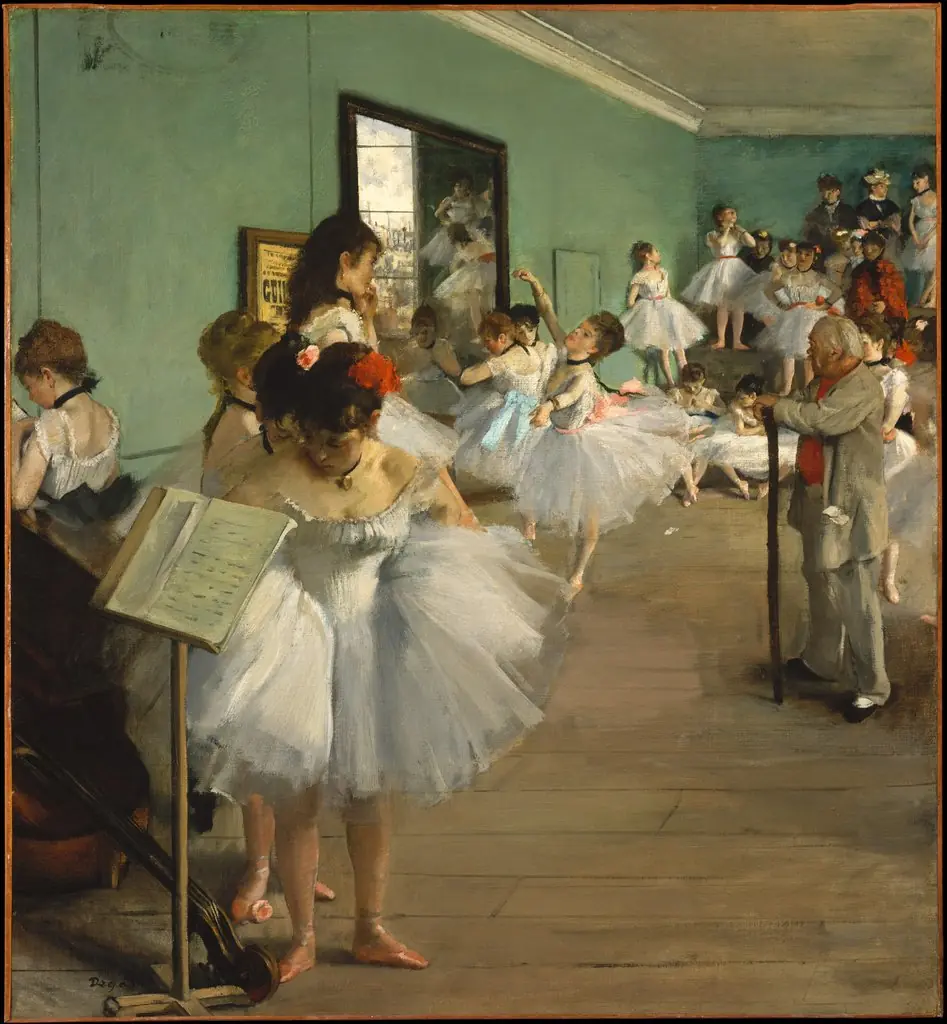
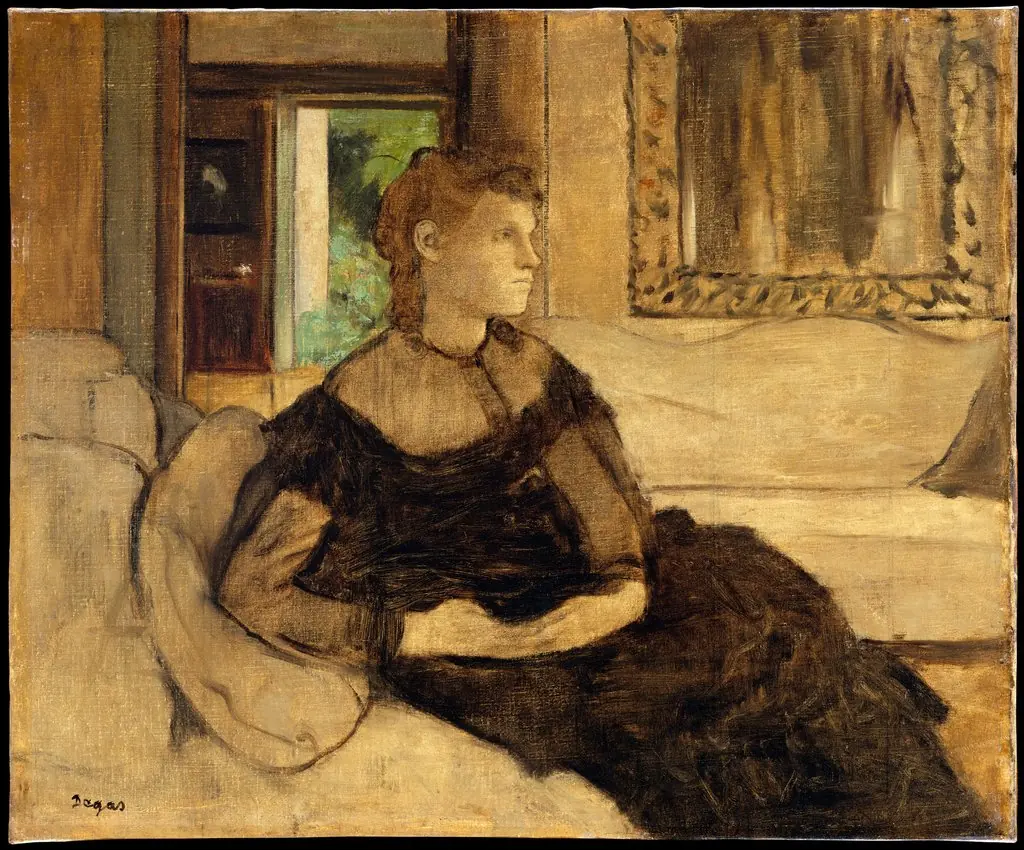
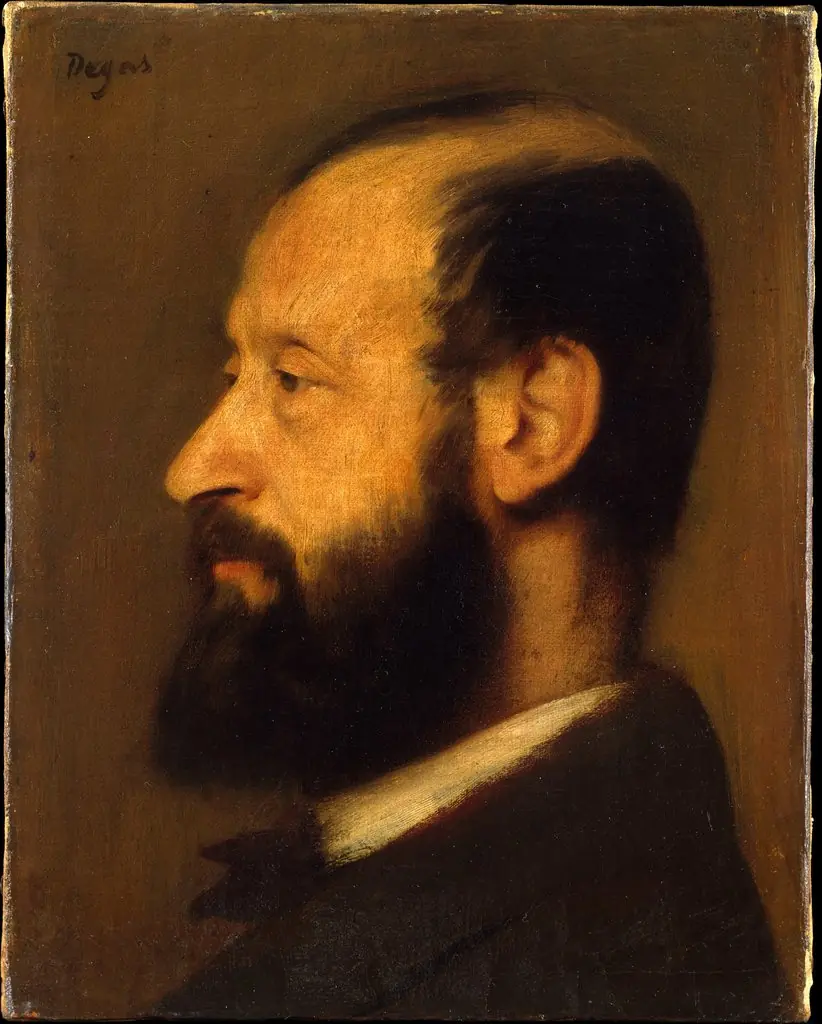
- The Good Samaritan
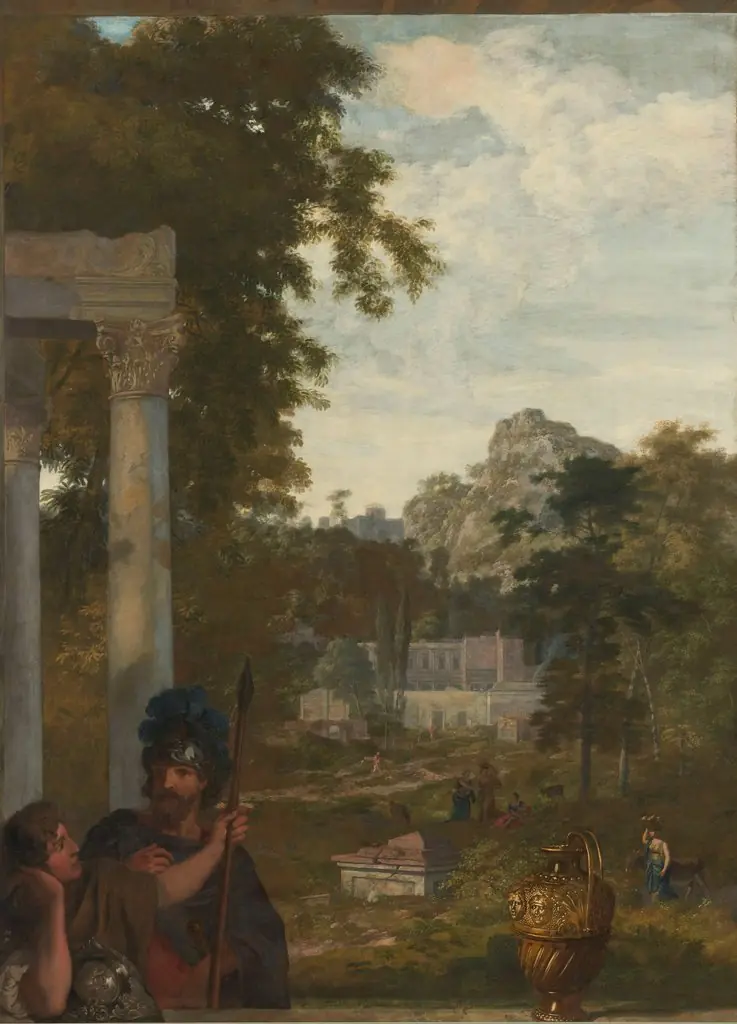 Italian landscape with two Roman soldiers
 The Annunciation to the Shepherds
 The Meeting of Antony and Cleopatra
 Baptism of Lithuania
 Joseph's Brothers Find the Silver Goblet in Benjamin's Pack.
 Saint Helen Testing the True Cross
 Flight into Egypt
 Saint Helen Testing the True Cross
 Istoria desenului
 Study for "Flight of the Holy Family to Egypt"
 The Betrayal of Christ