Artwork
Bathsheba at her bath
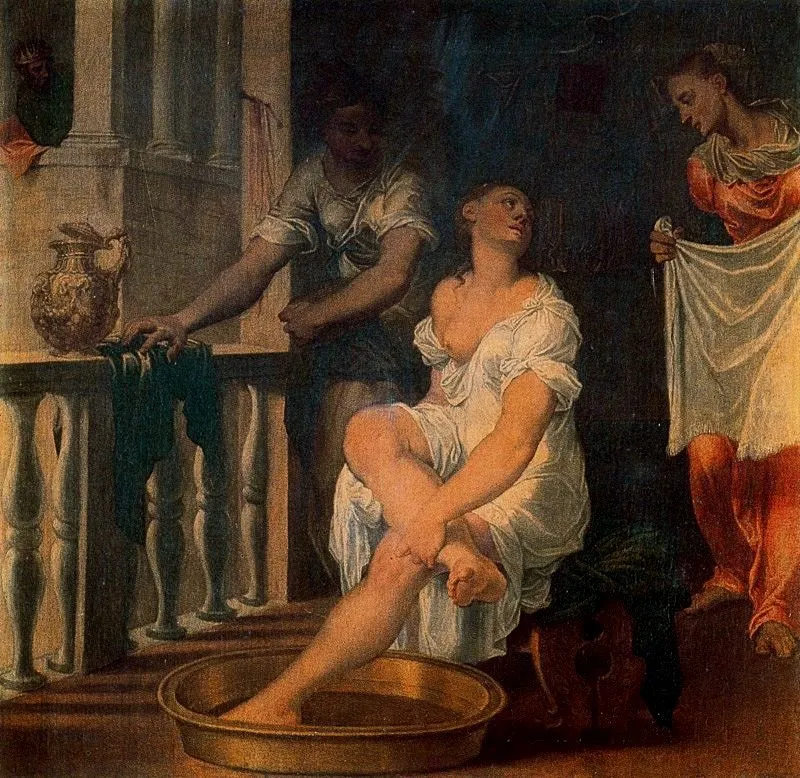
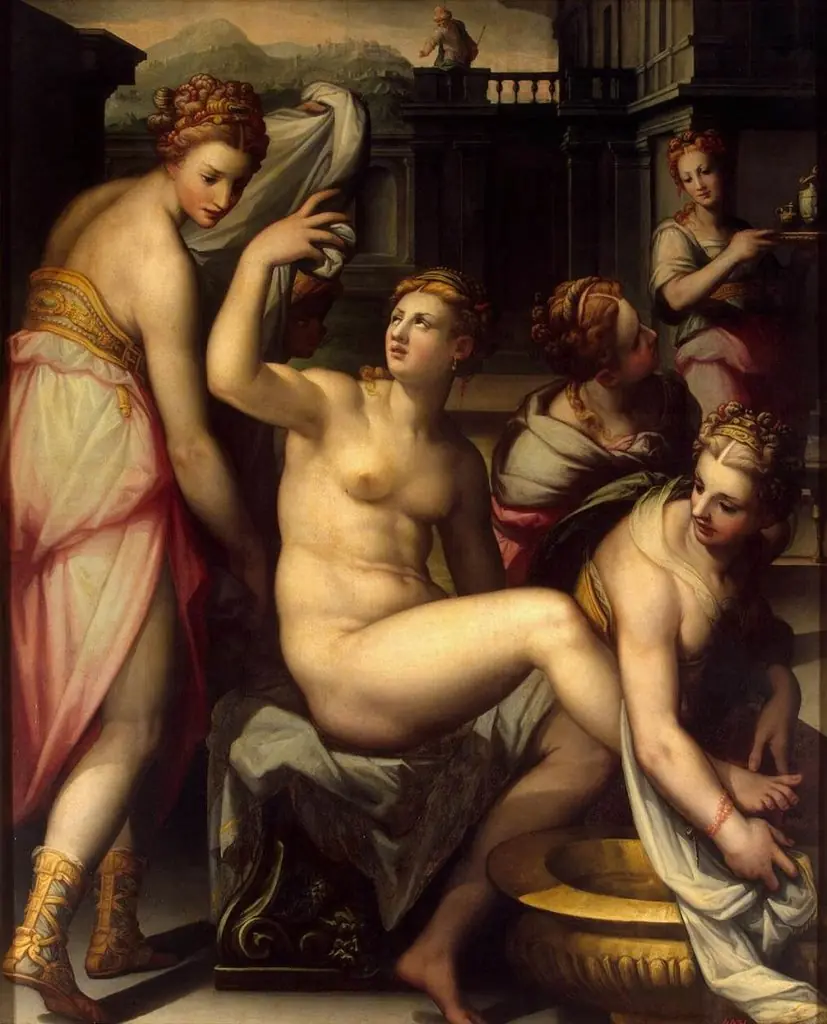
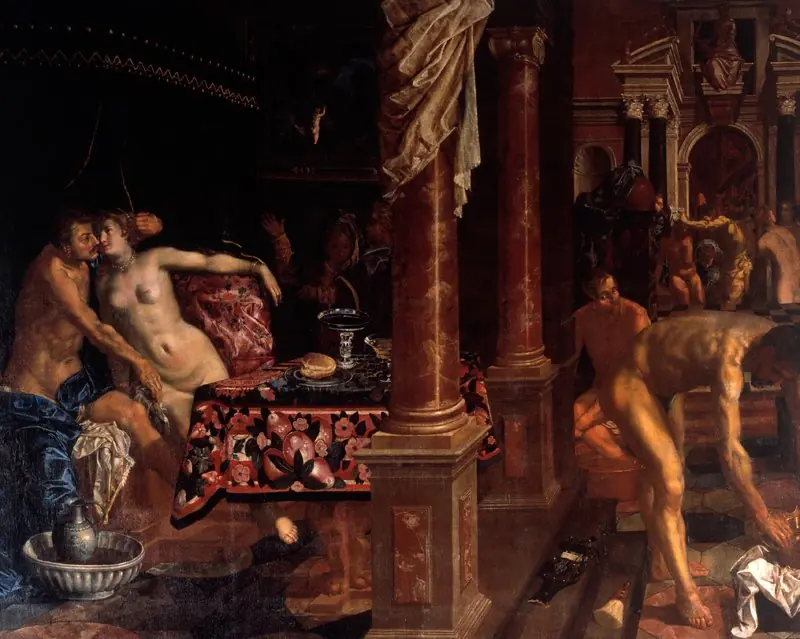
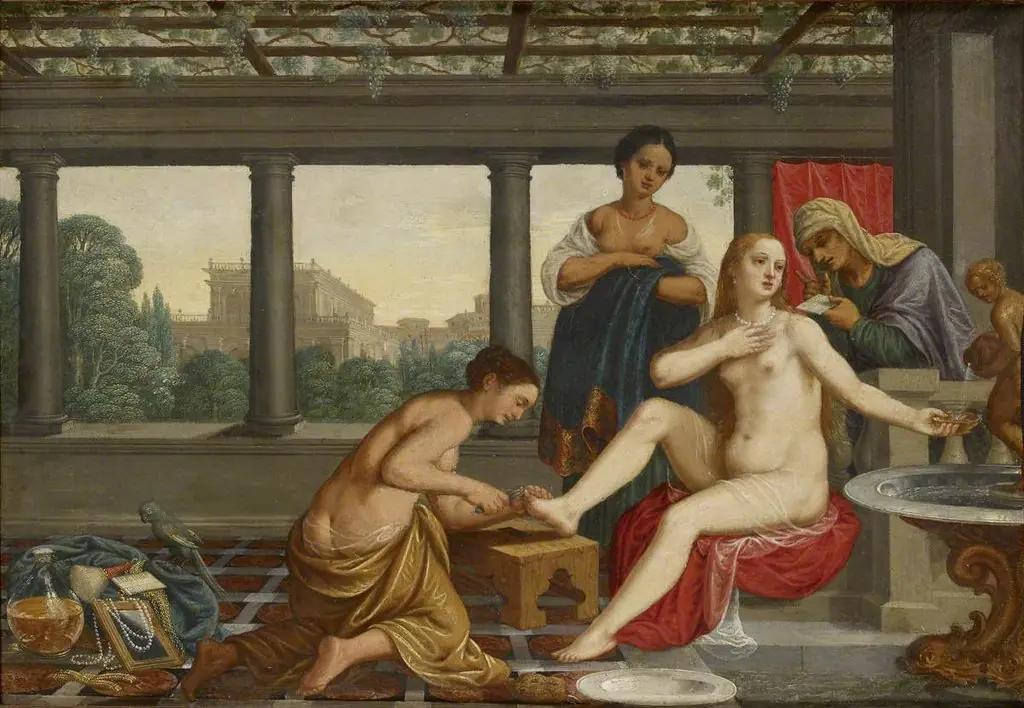
Bathsheba at her bath is an oil painting by the Mannerist artist Domenico Riccio. It dates from 1552 and is held in the collection of the Uffizi Gallery.
About this work
Subject & Meaning
The painting portrays the biblical figure Bathsheba in a moment of private contemplation, washing at a basin within an opulent interior.
The painting portrays the biblical figure Bathsheba in a moment of private contemplation, washing at a basin within an opulent interior. Her exposed breast and direct gaze underscore themes of sensuality and moral vulnerability, while the surrounding palace elements, a balustrade, column, and drapery, frame the scene as both domestic and regal. The composition merges narrative storytelling with symbolic emphasis on female beauty and ethical ambiguity, reflecting Renaissance preoccupations with virtue and transgression.
Technique & Style
The painting is executed in oil on panel, measuring 91 by 98 cm. The medium of oil paint allows for the detailed rendering of flesh tones and drapery characteristic of mid-16th-century Venetian-influenced practice. The depicted scene includes architectural elements, palace, balustrade, and column, that frame the seated bather, with attention to the textures of fabric and the female form. The handling shows particular focus on the nude figure, with explicit anatomical detail including the breasts and nipples, integrated within a composition that balances genre and religious subject matter.
History & Provenance
Domenico Riccio created the oil painting Bathsheba at her bath in 1552. Executed on a panel support, the work measures 91 cm in height and 98 cm in width. The piece is currently held in the collection of the Uffizi Gallery.
While the specific commission details and earlier ownership chain are not detailed in the available records, the work is firmly dated to the mid-16th century by the artist.
Context
Domenico Riccio’s Bathsheba at her Bath (1552) occupies a pivotal position in the transition from Venetian High Renaissance idealism to the more intimate, narrative-driven sensibilities of mid-sixteenth-century Verona. Scholars such as Bernard Aikema have situated the work within Riccio’s engagement with Venetian colorism, particularly the influence of Veronese, while emphasizing its departure from sacred solemnity toward a secularized, almost genre-like depiction of the biblical episode. The painting’s eroticized naturalism, evident in Bathsheba’s exposed body and the sumptuous drapery, reflects broader Cinquecento trends that blurred the boundaries between religious subject matter and private, decorative erotica.
Critical reception has underscored the work’s dual function as both a moralizing narrative and a display of technical virtuosity. The Uffizi’s acquisition (as per its documented provenance) signals its recognition as a key example of Veronese school painting, though Riccio’s interpretation remains distinct for its quieter, introspective tone compared to the theatricality of his contemporaries. Recent scholarship has also explored the painting’s gendered dynamics, analyzing how the composition’s voyeuristic framing aligns with period conventions of female representation in biblical and mythological contexts.
Overview
Domenico Riccio, also known as Domenico Brusasorci, painted Bathsheba at her Bath in 1552. Executed in oil on canvas, the work belongs to the mid‑sixteenth‑century Italian Mannerist tradition. It is presently part of the Uffizi Gallery’s collection in Florence.
Artist & collection
Artist
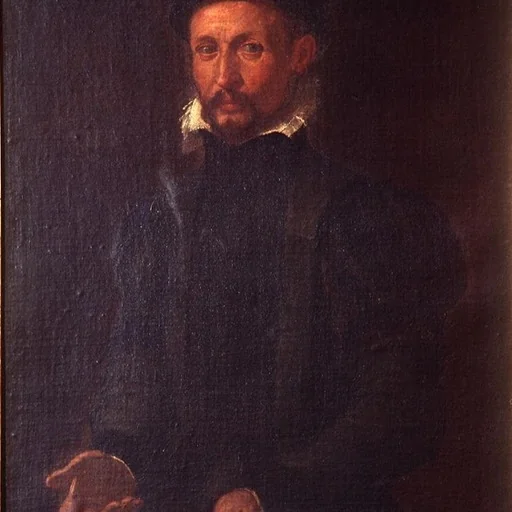
Domenico Riccio (also known as commonly known as Domenico Brusasorci; 1516 – 1567) was an Italian painter in a Mannerist style from Verona, best known for frescoes.