Artwork
Bathsheba's Bath
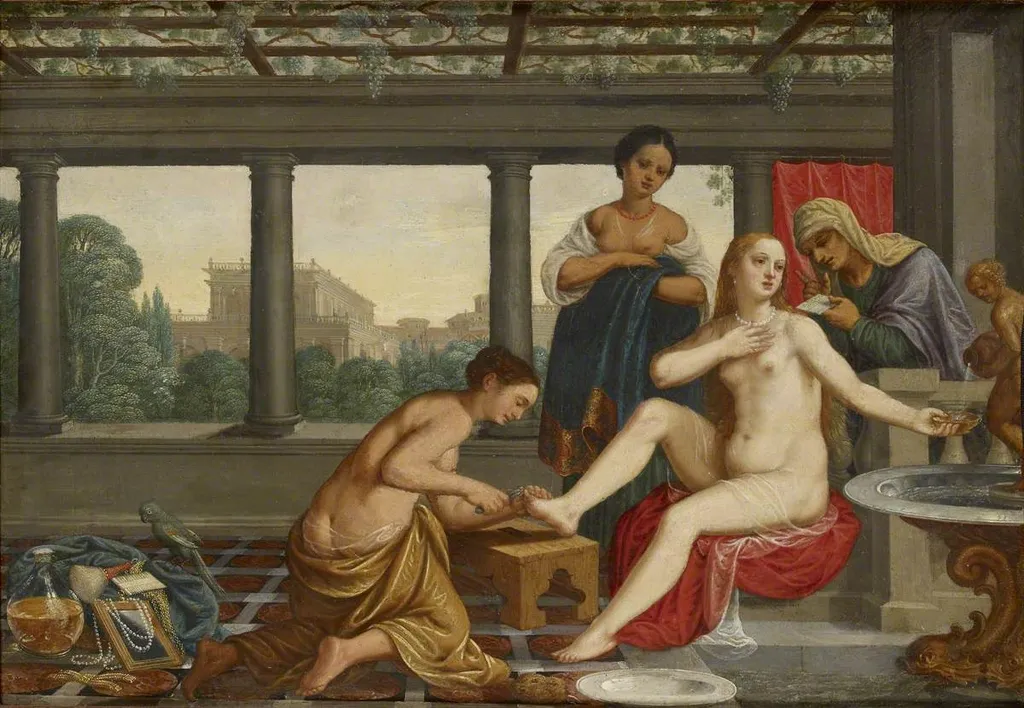
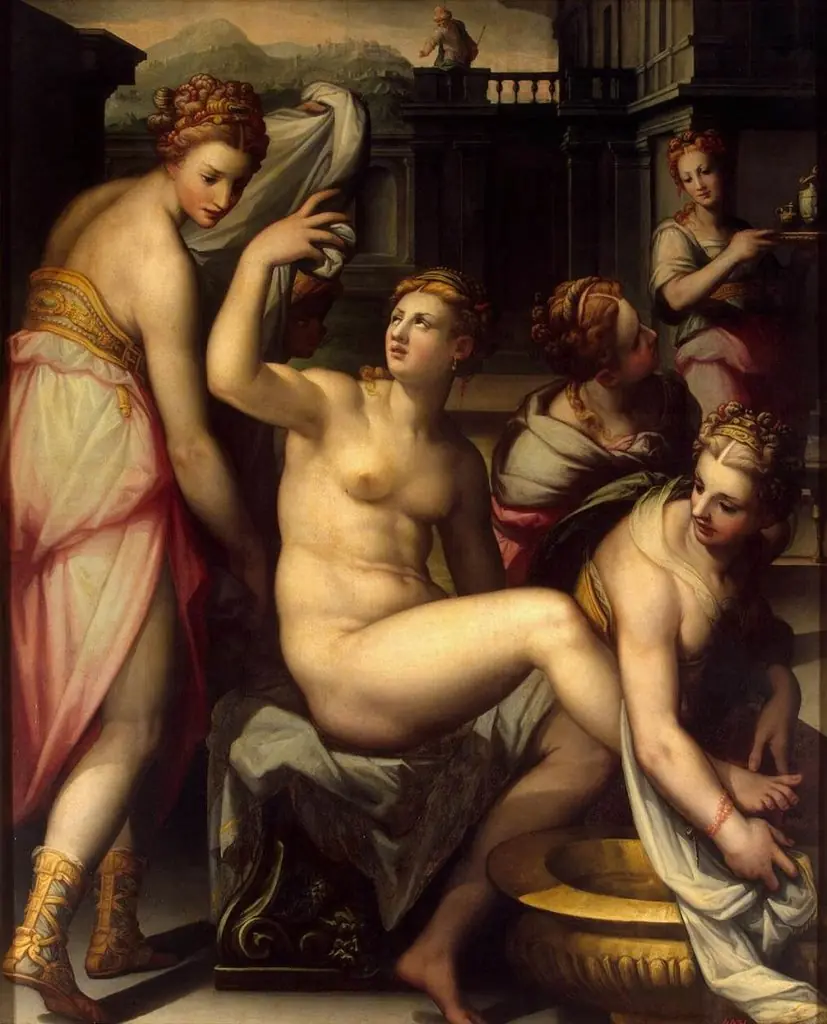
Bathsheba's Bath is an oil painting by the Early Baroque Italian artist Johann König. It dates from 1610 and is held in the collection of the Ashmolean Museum.
About this work
Subject & Meaning
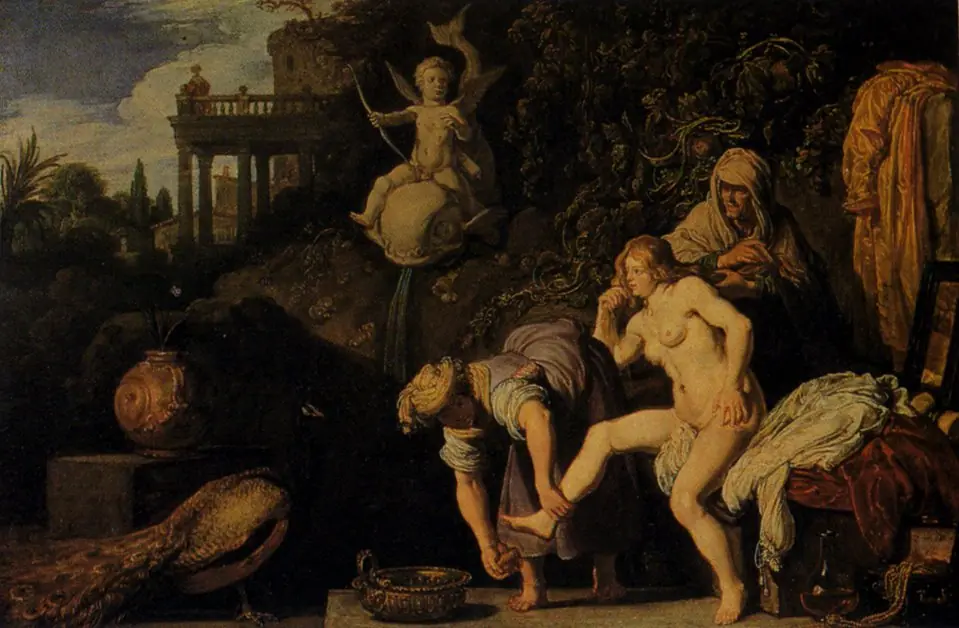
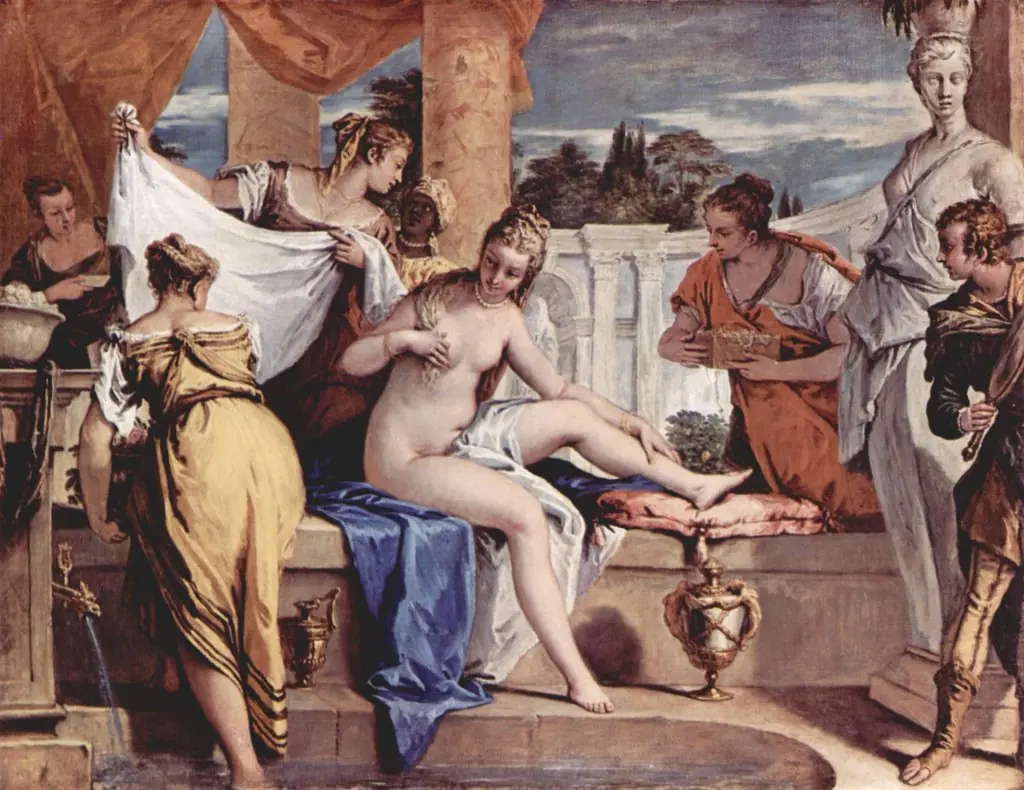
She is depicted washing at a basin, her feet resting on a footstool, draped with a veil and adorned with a pearl necklace.
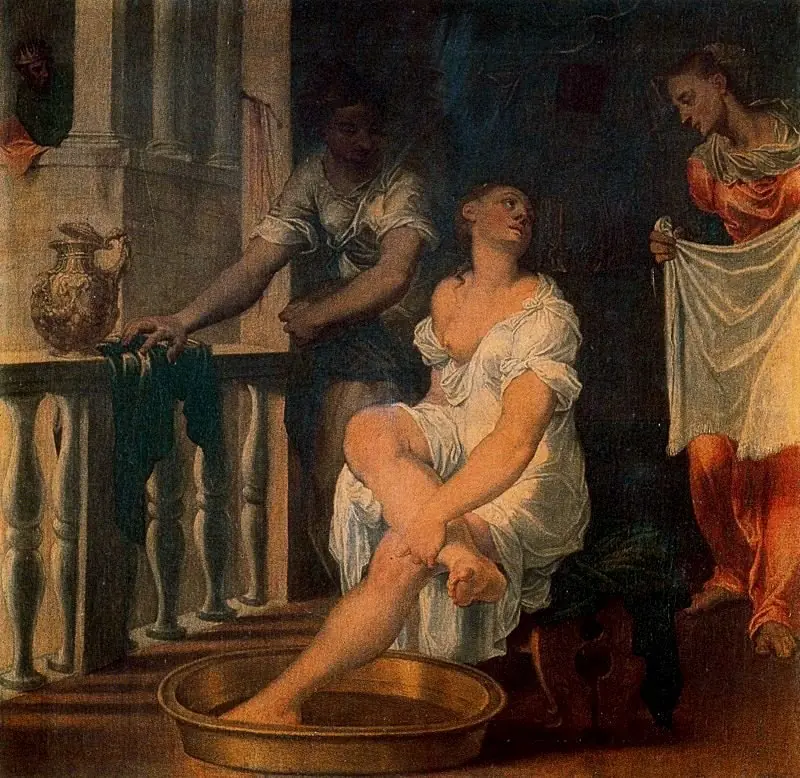
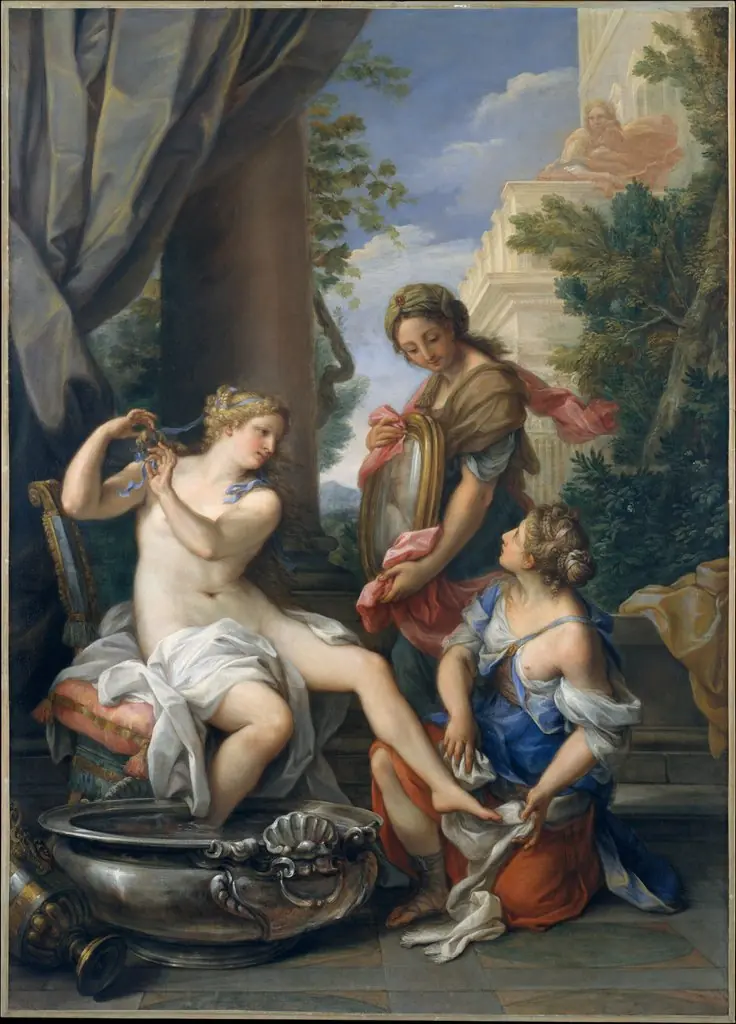
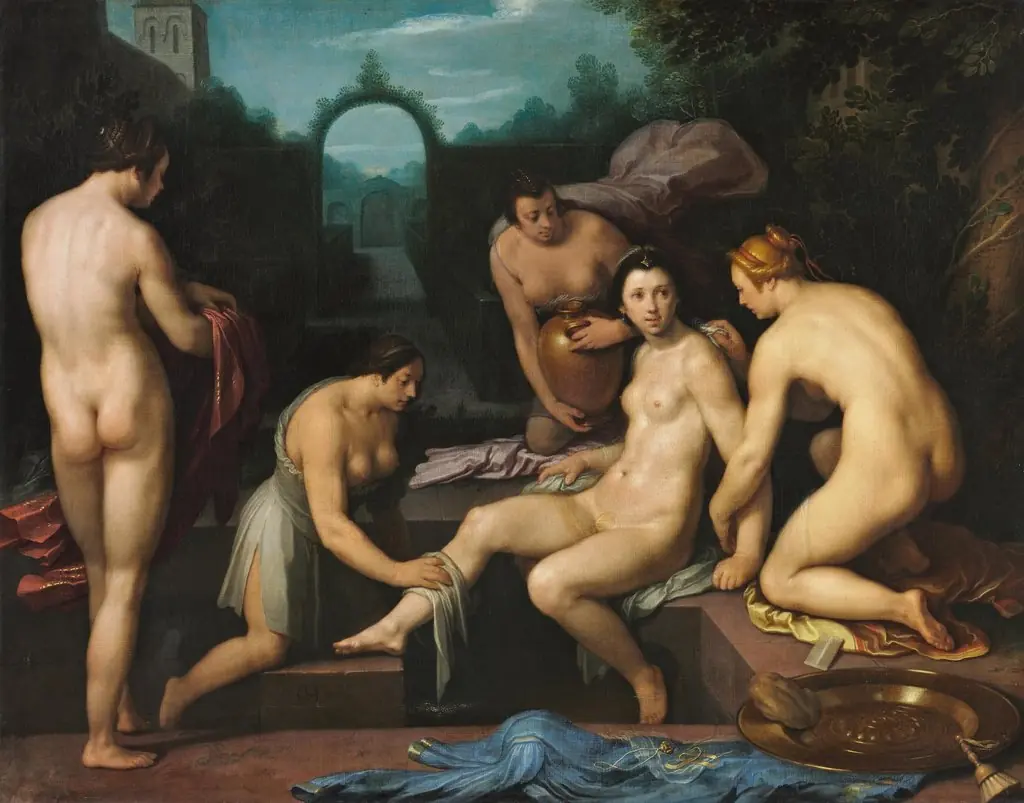
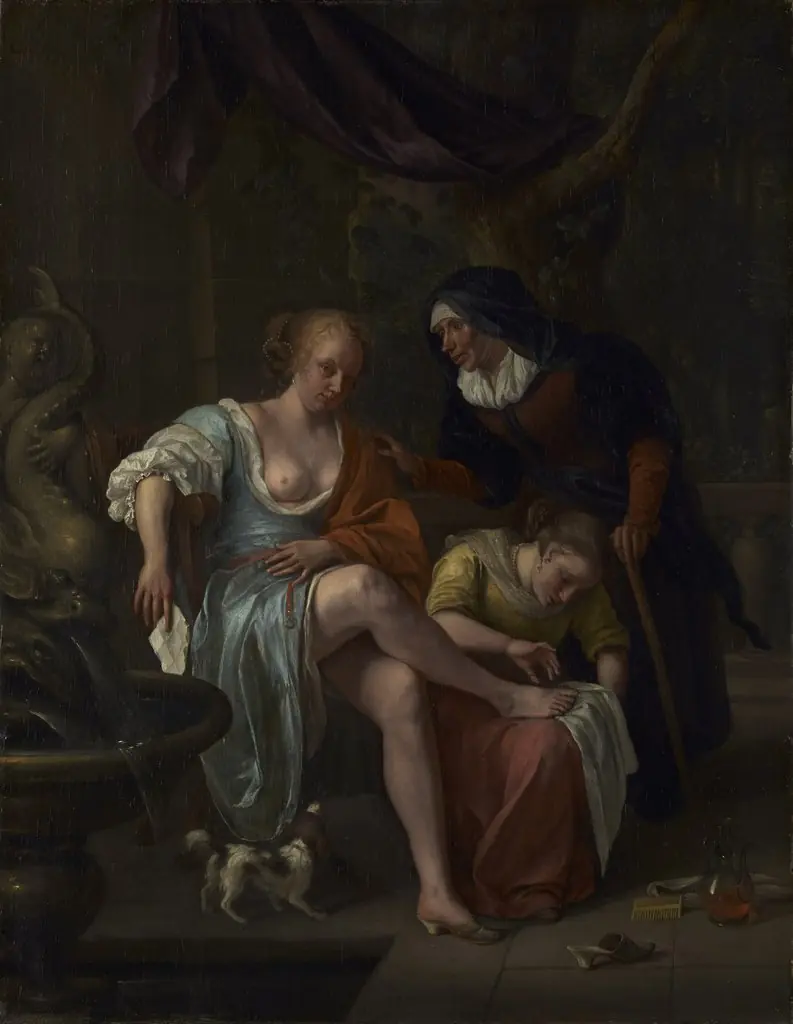
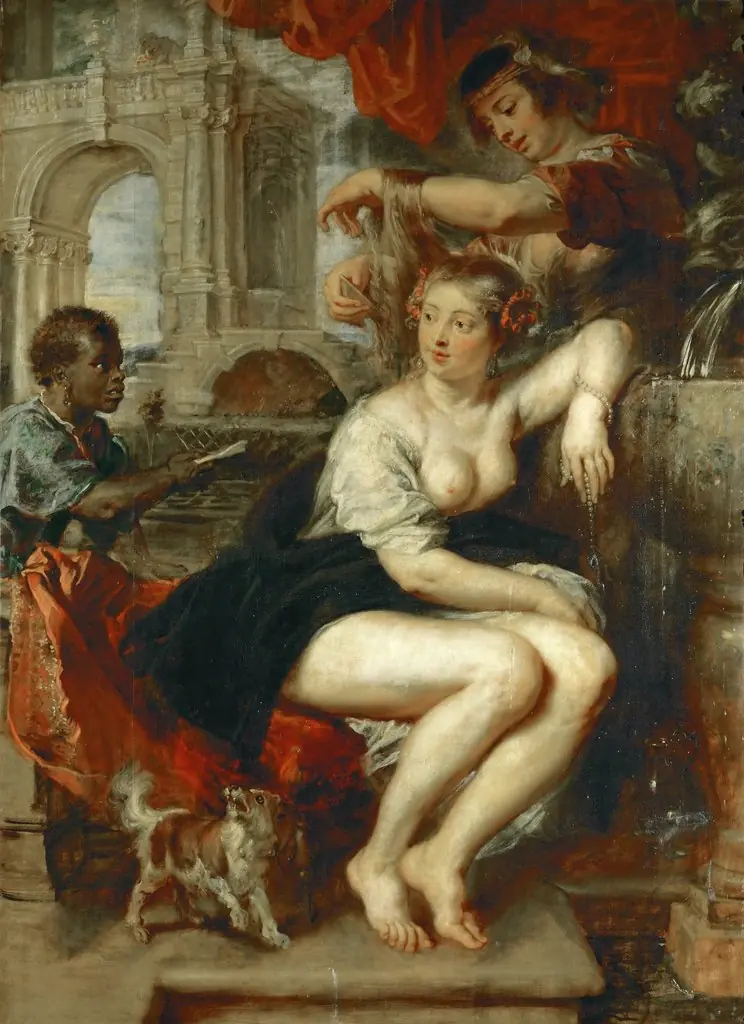
The painting shows Bathsheba seated at her bath, a nude or partially clothed figure attended by servants. She is depicted washing at a basin, her feet resting on a footstool, draped with a veil and adorned with a pearl necklace. Surrounding details include a fountain, column, drapery, a tree, and a small bird (Psittacidae), while a letter held by an attendant alludes to the summons from King David.
These elements together illustrate the biblical moment of Bathsheba’s bath, emphasizing themes of beauty, temptation, and the impending narrative of desire and consequence.
Technique & Style
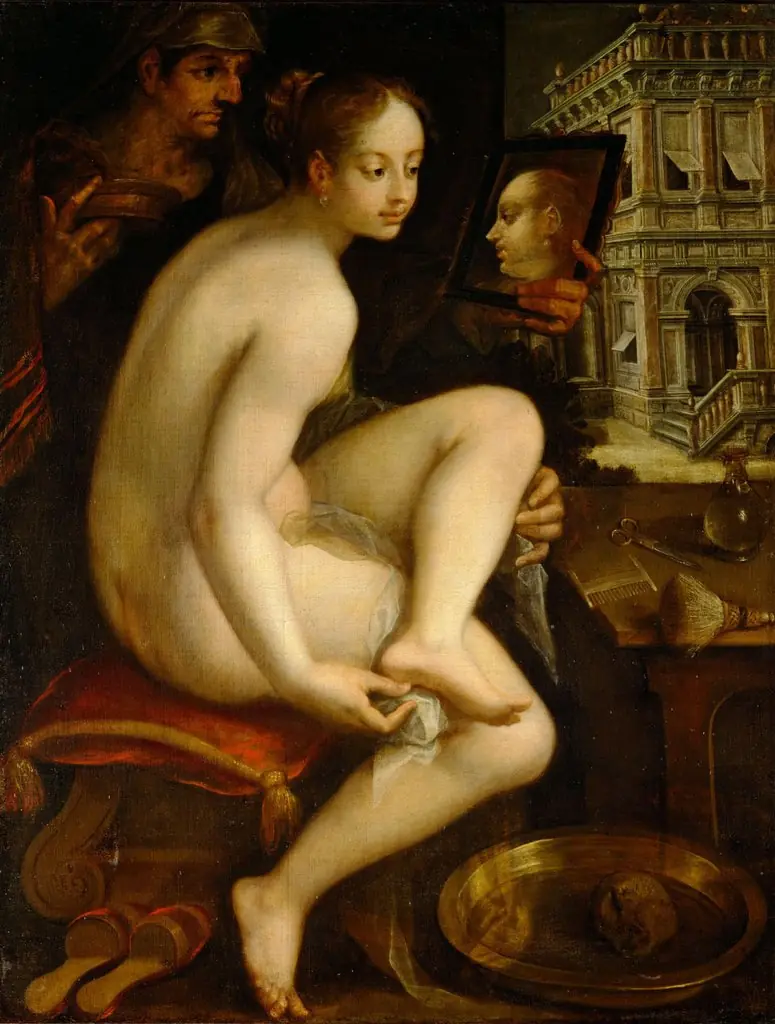
Executed circa 1610 to 1616, this work is an oil painting applied directly onto a copper support. The panel measures 23 centimeters in height by 33 centimeters in width, indicating a small-scale format typical for intimate cabinet pieces. The choice of copper as a ground allows for the smooth, fine detailing observed in the rendering of textures, such as the figures' skin, drapery, and architectural elements like columns and loggias.
The composition features a group of figures within a palace setting, characterized by specific narrative details including a wash basin, footstool, and exotic birds. The handling of the medium facilitates a high degree of precision in depicting minute attributes, from jewelry and pearls to the anatomical specifics of the nude subjects, all set against a backdrop that includes sky and fountain elements.
History & Provenance
Bathsheba's Bath is a 1610 oil painting executed on copper by Johann König, depicting the biblical figure Bathsheba at her toilet. The work measures approximately 23 × 33 cm and belongs to the genre of religious and nude art. It entered the Ashmolean Museum’s collection in 1945 after being purchased, and its accession number is WA1945.100.
The painting is catalogued in the museum’s catalogue as “The Toilet of Bathsheba” and is recorded in Art UK with the same dimensions and medium. The dating is anchored to the inception date of 1610 recorded in the artist’s catalogue raisonné.
Johann König's Bathsheba's Bath (also catalogued as The Toilet of Bathsheba) is held by the Ashmolean Museum in Oxford, where it forms part of the institution's painting collection. The work, executed in oil on copper and measuring 23 by 33 cm, carries the accession number WA1945.100, indicating that it entered the museum in 1945 through purchase. Its date is given as 1610 in the museum's records, though Art UK lists it more broadly as c. 1610–1616. Beyond its current housing at the Ashmolean, no further exhibition history is documented in the available sources.
Overview
Bathsheba's Bath is a painting rendered on a copper support, portraying a central female figure attended by several women. The scene unfolds within an interior space, where one woman kneels to trim toenails, another holds a mirror, and an older, veiled figure offers a small box. Through arched windows, a distant city and trees are faintly discernible, providing a glimpse of the world beyond.
Artist & collection
Artist
Johann König (21 October 1586 – 4 March 1642) was a German painter. He was a follower of Adam Elsheimer. He is known primarily for his painted copper panels.