Artwork
Bathsheba
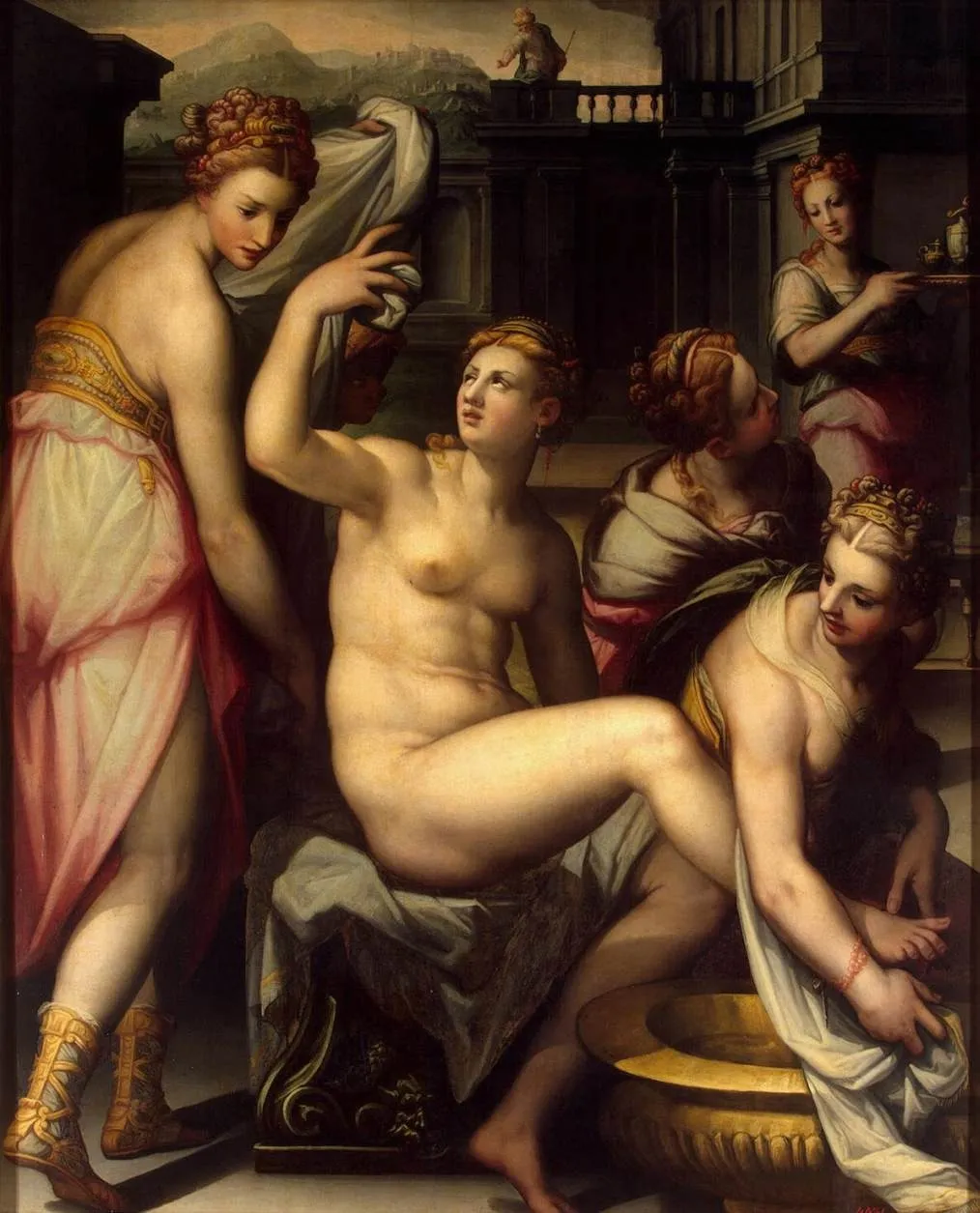
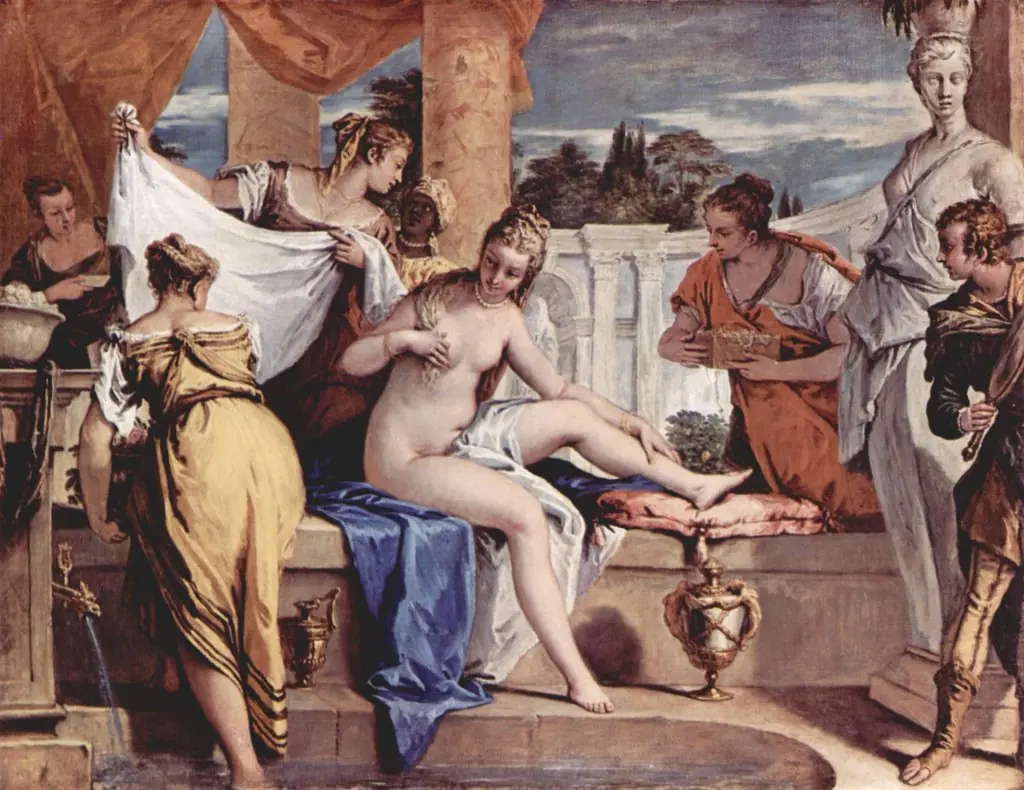
Bathsheba is an oil painting by the Mannerist artist Giovanni Battista Naldini. It dates from 1570 and is held in the collection of the Hermitage Museum.
About this work
Subject & Meaning
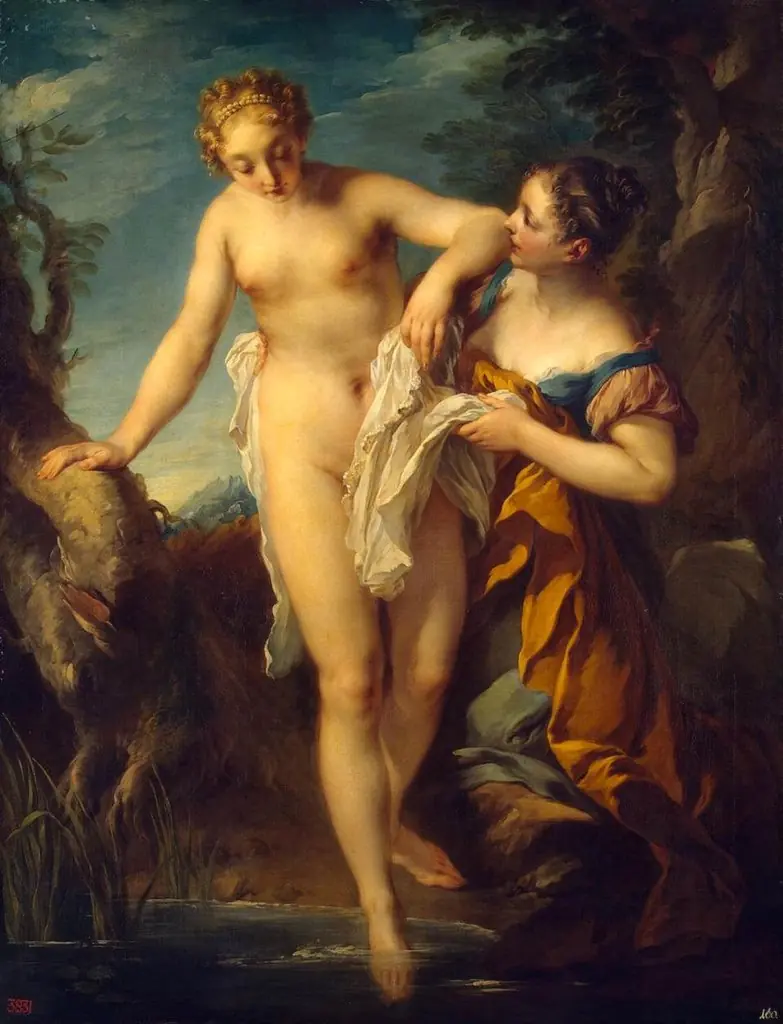
The painting depicts her seated, nude to the waist, attended by a maidservant who appears to be washing or examining her foot.
The subject of Naldini’s Bathsheba (1570) is the biblical Bathsheba at her bath, a scene drawn from 2 Samuel 11. The painting depicts her seated, nude to the waist, attended by a maidservant who appears to be washing or examining her foot. The composition emphasizes Bathsheba’s exposed body, particularly her breasts and navel, while the maid’s gesture and the presence of drapery introduce a narrative of preparation or ritual cleansing.
The sky and clouds in the background frame the scene, underscoring its intimate yet charged atmosphere. The work aligns with Counter-Reformation religious imagery, using the female nude within a sacred context to evoke themes of beauty, vulnerability, and moral consequence.
Technique & Style
Created in 1570 by Giovanni Battista Naldini, the painting Bathsheba is executed in oil paint on a canvas support. The work measures 182 centimeters in height and 150 centimeters in width, presenting a substantial vertical format typical of religious and genre art of the period. Stylistically, the piece depicts the biblical figure in a nude state, focusing on formal qualities such as the rendering of the female form, drapery, and atmospheric elements like sky and clouds.
The composition includes detailed attention to anatomical features, including the navel and breast, alongside the narrative action of washing and a pedicure. As a religious genre painting originating in Italy, the artwork combines devotional subject matter with naturalistic observation of the human body and setting.
History & Provenance
The work was painted by Giovanni Battista Naldini in 1570, during the late Italian Renaissance, and is documented as an oil-on-canvas depiction of Bathsheba at her bath. It entered the collection of the Hermitage Museum, where it remains held today. The painting’s early provenance is not detailed in the available sources, but its attribution and dating to 1570 are consistently supported by both internal records and the Hermitage Museum’s documented entry.
Overview
Giovanni Battista Naldini's 1570 oil painting, Bathsheba, presents a scene from the biblical narrative. This work, executed in oil, depicts the central figure of Bathsheba alongside several attendants. Currently housed at the State Hermitage Museum, the artwork offers a detailed portrayal of the subject, characteristic of its period. The composition emphasizes the figures within a carefully rendered interior space, inviting contemplation of the depicted moment.
Artist & collection
Artist
Giovanni Battista Naldini (1537–1591) was an artist, born in Florence.