Artwork
The Execution of Emperor Maximilian
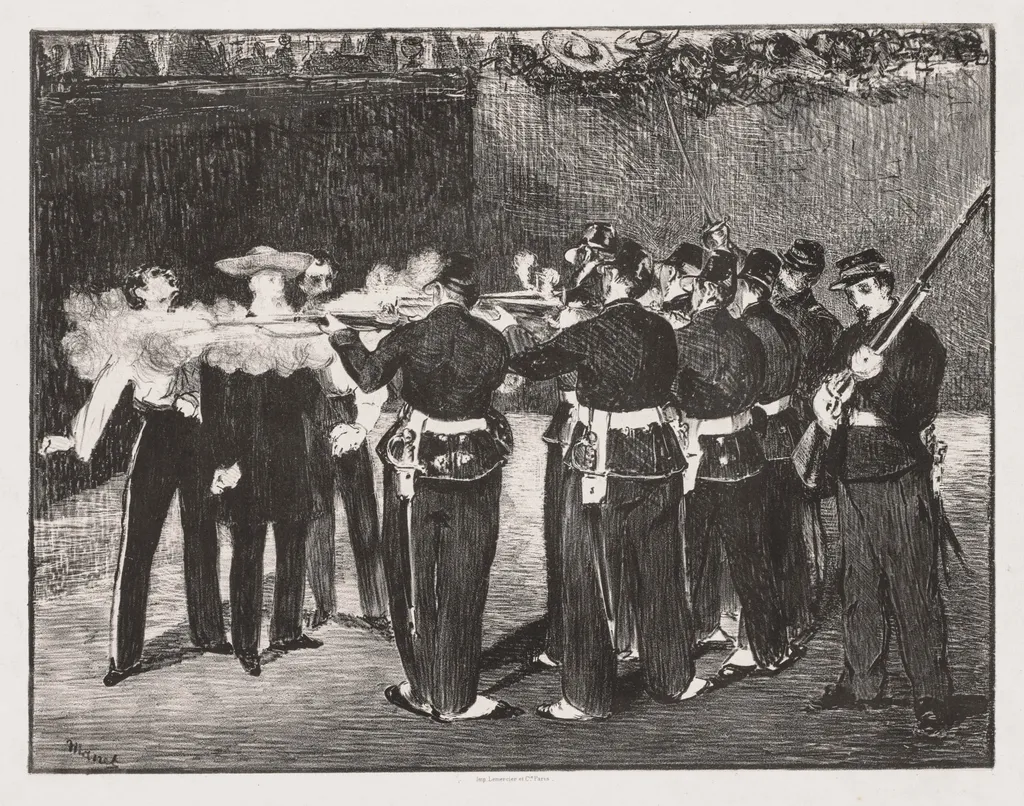
The Execution of Emperor Maximilian is a print by the Impressionist artist Édouard Manet. It dates from 1867 and is held in the collection of the Cleveland Museum of Art.
- Accession no.
- 1925.1035
- Credit line
- Dudley P. Allen Fund
About this work
Overview
The Execution of Emperor Maximilian is an 1867 print by Édouard Manet, currently in the collection of The Cleveland Museum of Art.
Subject & Meaning
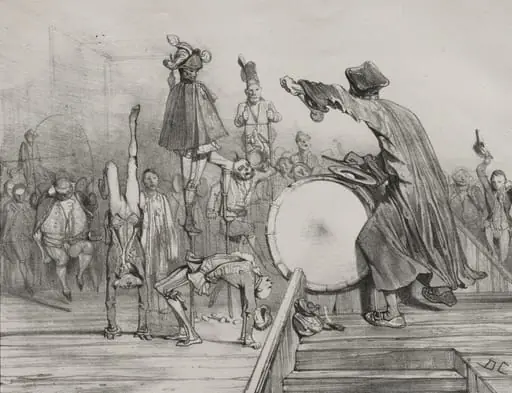
The print depicts a tense scene of soldiers, some armed with rifles and others with musical instruments, poised in unison, suggesting a moment of anticipation before a dramatic event, implied to be the execution of Emperor Maximilian. The obscured background and hidden faces heighten the sense of foreboding and anonymity among the executioners.
Technique & Style
Characterized by quick, rough lines, the work resembles a hasty sketch, emphasizing immediacy. Strong sidelighting accentuates the soldiers' uniforms, creating contrast against a dark, indistinct background that may represent a crowd or building.
History & Provenance
Created in 1867, the print is part of The Cleveland Museum of Art's collection, though specific acquisition details are not provided here.
Context
This work aligns with Realist tendencies, reflecting Manet's approach to depicting stark, unromanticized scenes of contemporary life and historical events without sentimentalization.
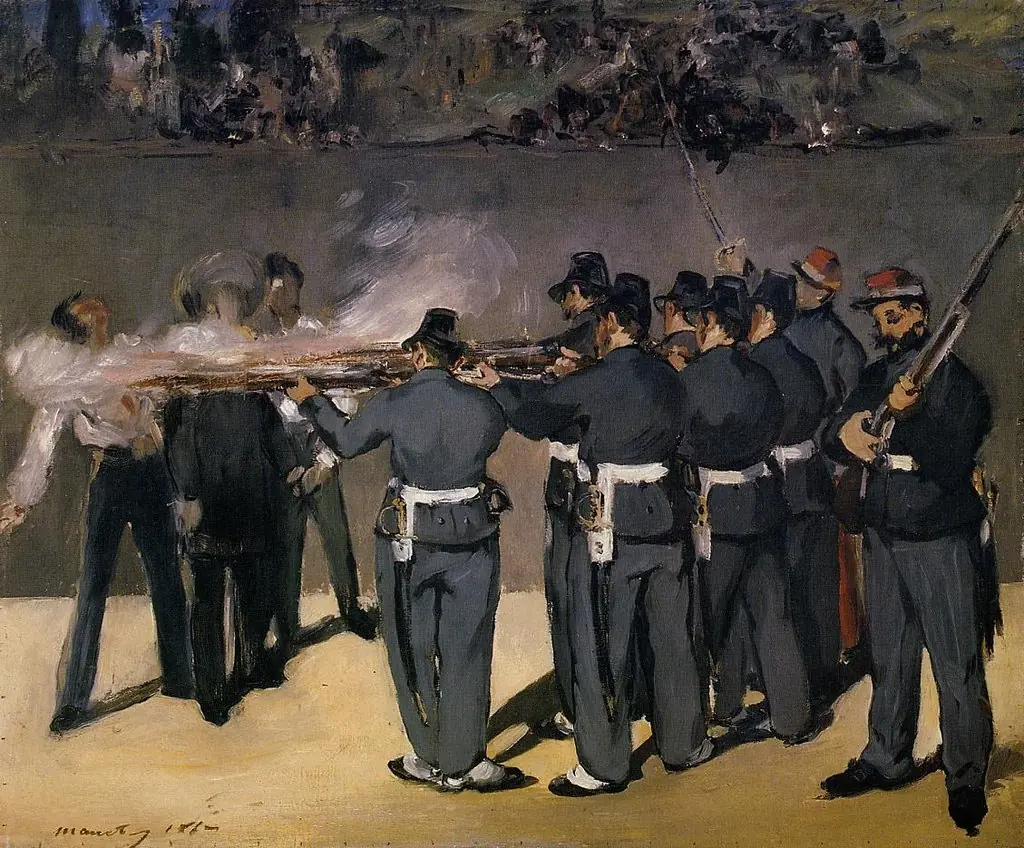
Own this work as a print
Artist & collection
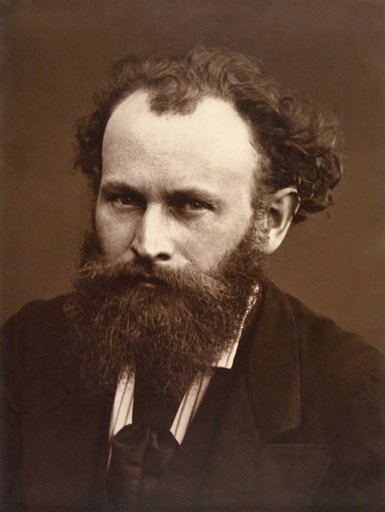
Artist
Édouard Manet was a French modernist painter. He was one of the first 19th-century artists to paint modern life, as well as a pivotal figure in the transition from Realism to Impressionism.