Artwork
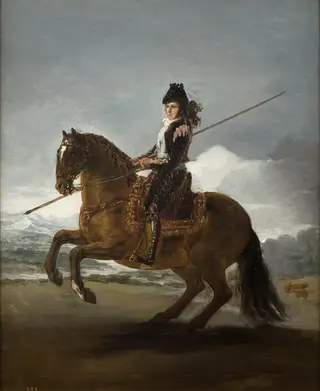
The Matador Saluting
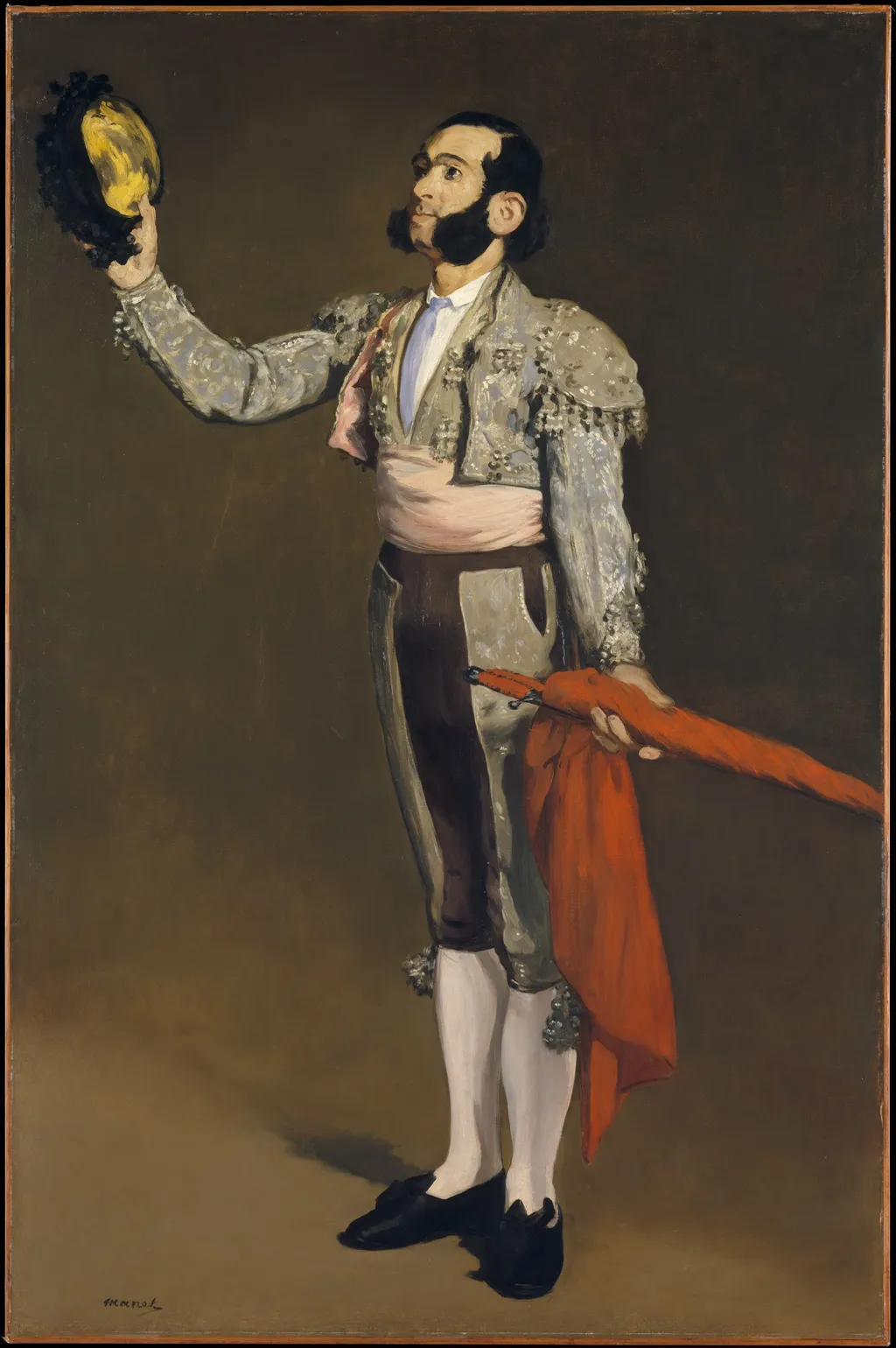
The Matador Saluting is an oil painting by the Academic Art artist Édouard Manet. It dates from 1866 and is held in the collection of the Metropolitan Museum of Art.
About this work
A lone bullfighter raises his hat in salute, the red cape over his arm catching the light against a muted ground.
A lone bullfighter raises his hat in salute, the red cape over his arm catching the light against a muted ground. Edouard Manet painted the full-length portrait of the matador Cayetano Sanz y Pozas between 1866 and 1867, his first work after studying Diego Velazquez in Madrid during his only trip to Spain. The Metropolitan Museum of Art acquired the canvas in 1929 through the H. O. Havemeyer Collection.
Subject & Meaning
The painting depicts a matador (or torero) in a formal salute, traditionally interpreted as acknowledging the crowd's applause after killing a bull, though first owner Théodore Duret argued the figure is instead asking permission to perform the kill. Manet’s brother Eugène posed as the model. Created after Manet’s 1865 trip to Spain, the work reflects his admiration for Spanish culture and its art, particularly the compositions and palettes of Diego Velázquez and Francisco de Zurbarán.
The figure wears a full traje de luces (bullfighting costume) including a montera hat and muleta, and is shown standing in a greeting posture. As one of Manet’s first large-format works, it signals his engagement with Spanish themes and academic genre painting.
Technique & Style
Édouard Manet executed The Matador Saluting in oil on canvas between 1866 and 1867. Measuring 171.1 × 113 cm, the painting was Manet's first large-format work, a scale he deliberately chose to enhance the figure’s imposing presence. Executed after his 1865 trip to Spain, the composition and palette reflect Manet’s admiration for Diego Velázquez and Francisco de Zurbarán, particularly in the stark chiaroscuro and restrained coloring reminiscent of Spanish Baroque painting.
The medium is handled with broad, visible brushstrokes typical of Manet’s mature style, conveying both the texture of the matador’s costume and the atmospheric immediacy of the bullring. No specific condition notes are available from the sources.
History & Provenance
Édouard Manet executed The Matador Saluting between 1866 and 1867, with the first definite reference to the work dating to an 1867 exhibition at the pavillon de l'Alma. The painting was refused by the Paris Salon of 1866. Manet's brother Eugène served as the model.
It was Manet's first large-format work. The first owner was art critic Théodore Duret. Louisine Havemeyer purchased it from Duret, initially hesitating due to its size, but was persuaded by Mary Cassatt.
Henry Osborne Havemeyer acquired it, and the painting was bequeathed to the Metropolitan Museum of Art in 1929 as part of the Havemeyer collection.
The Matador Saluting is held at the Metropolitan Museum of Art in New York, to which it was bequeathed in 1929 as part of the Henry Osborne and Louisine Havemeyer collection. The painting was refused at the Paris Salon of 1866 but subsequently shown in Manet's studio with the prefect's permission. Its first certain exhibition was at the pavillon de l'Alma in 1867.
Context
Refused by the official Paris Salon of 1866, 'The Matador Saluting' was first certainly documented in 1867 at Manet's pavillon de l'Alma exhibition (Moffett). Scholars Moreau-Nélaton and Tabarant identify the model as the artist’s brother Eugène. First owner Théodore Duret interpreted the scene as the matador requesting permission to kill, while others see him receiving applause.
Executed after Manet’s 1865 trip to Spain, the painting reflects his admiration for Spanish art. Charles S. Moffett emphasizes the influence of Velázquez and Zurbarán in its composition and palette. As Manet’s first large-format work, its scale initially concerned collector Louisine Havemeyer until Mary Cassatt affirmed it was the intended format.
The painting later entered the Metropolitan Museum of Art in 1929, where it remains a key example of Manet’s Spanish period.
Legacy
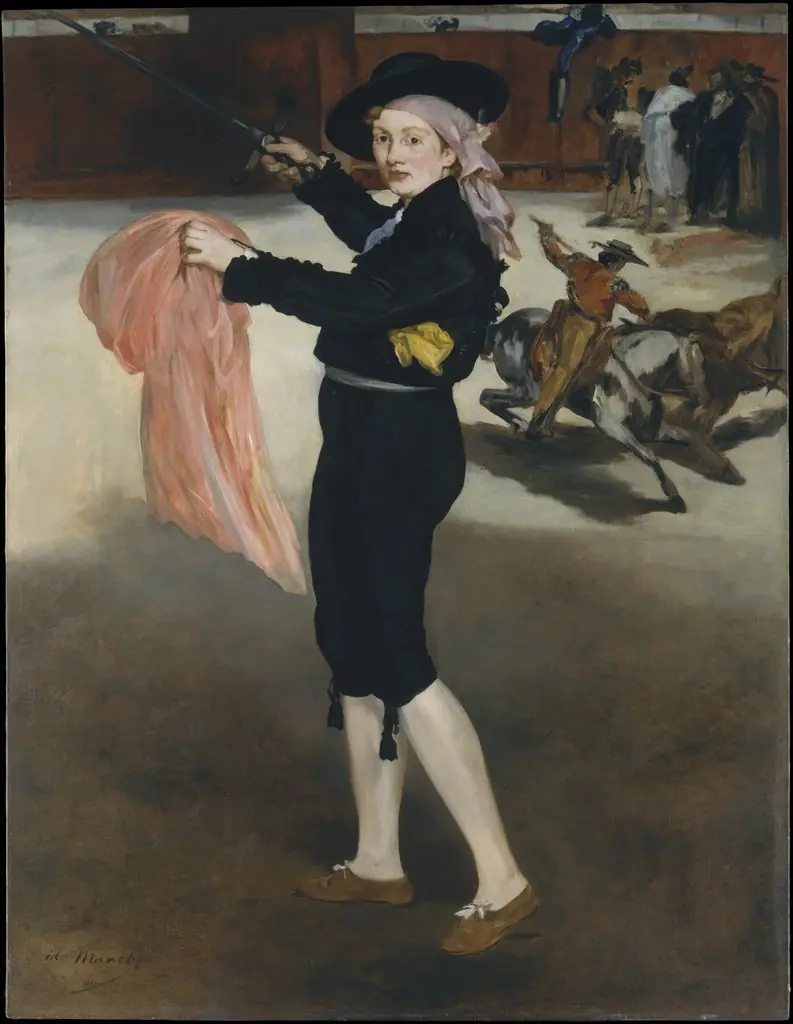
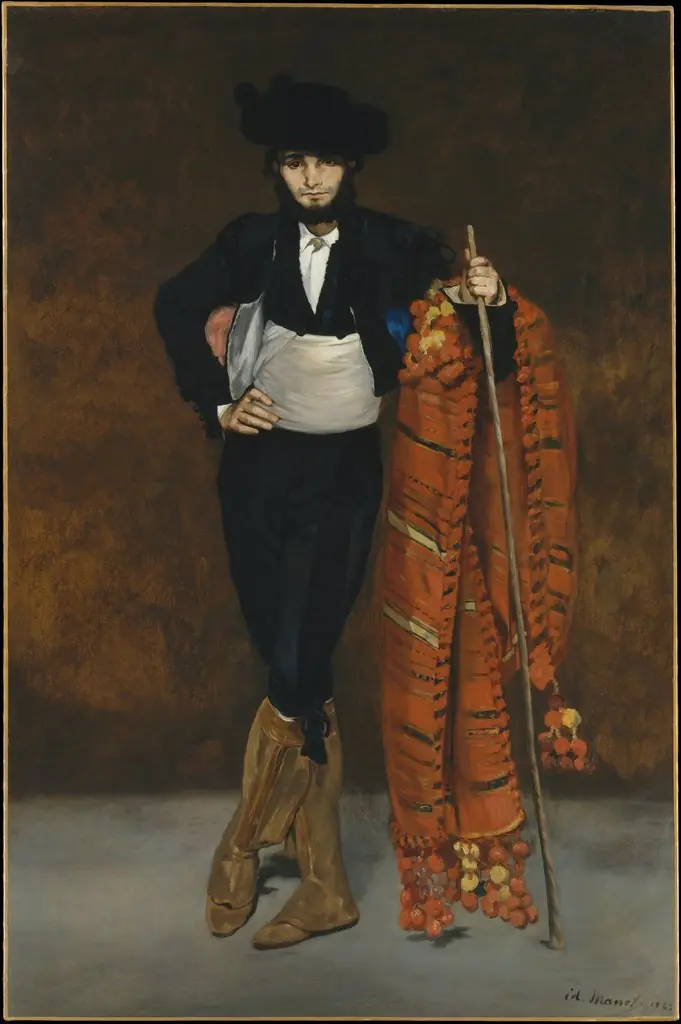
The Matador Saluting holds a notable place in Manet's oeuvre as his first large-format painting. Its acquisition by Henry Osborne Havemeyer, encouraged by Mary Cassatt, sparked Havemeyer's lasting interest in large-scale works, prompting him to also purchase Young Man Dressed as a Majo. Both paintings, along with Mlle V. in Costume of an Espada, were bequeathed to the Metropolitan Museum of Art in 1929, where The Matador Saluting remains in the collection, ensuring its enduring visibility and scholarly access.
Overview
Édouard Manet's "The Matador Saluting," painted in oil between 1866 and 1867, depicts the bullfighter Cayetano Sanz y Pozas. This full-length portrait, showing the matador raising his hat in a poised gesture, marks a significant shift in Manet's approach to figure painting. It was the first major work completed after his formative trip to Spain, where he directly engaged with the art of the Spanish Golden Age. The vibrant red cape, a detail observed firsthand, stands out against a subdued background.
Own this work as a print
Artist & collection
Artist
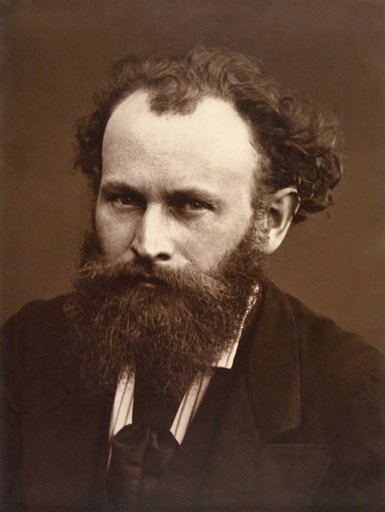
Édouard Manet was a French modernist painter. He was one of the first 19th-century artists to paint modern life, as well as a pivotal figure in the transition from Realism to Impressionism.