Artwork
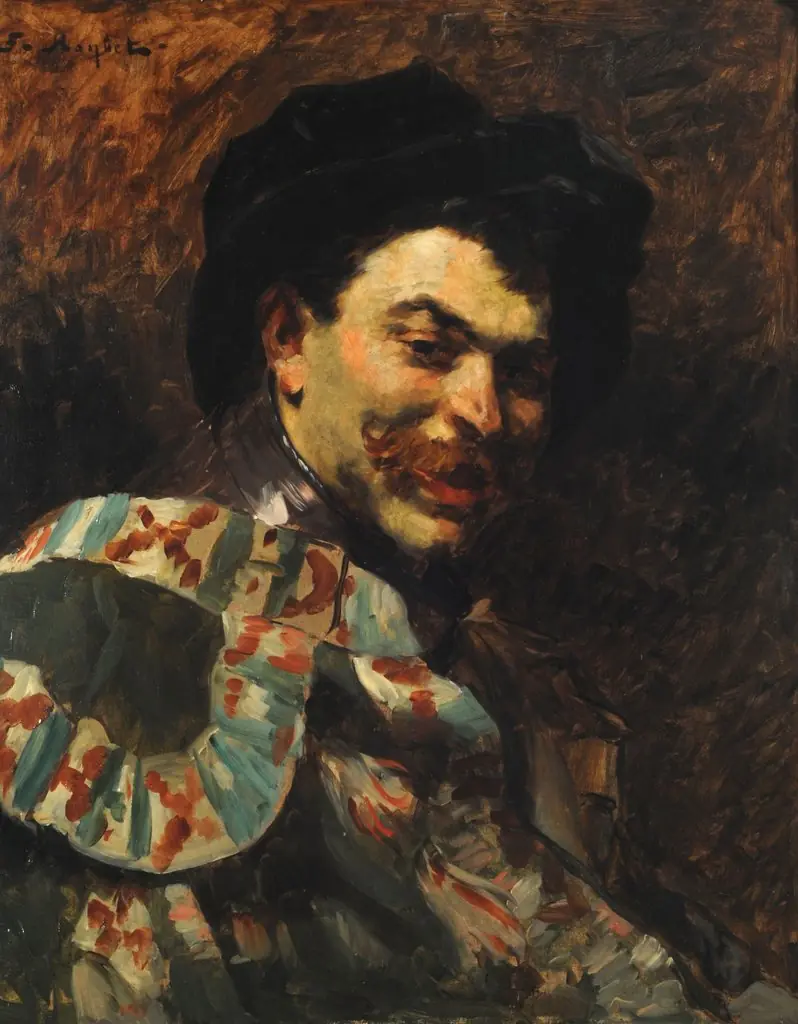
Young man in Mayo costume
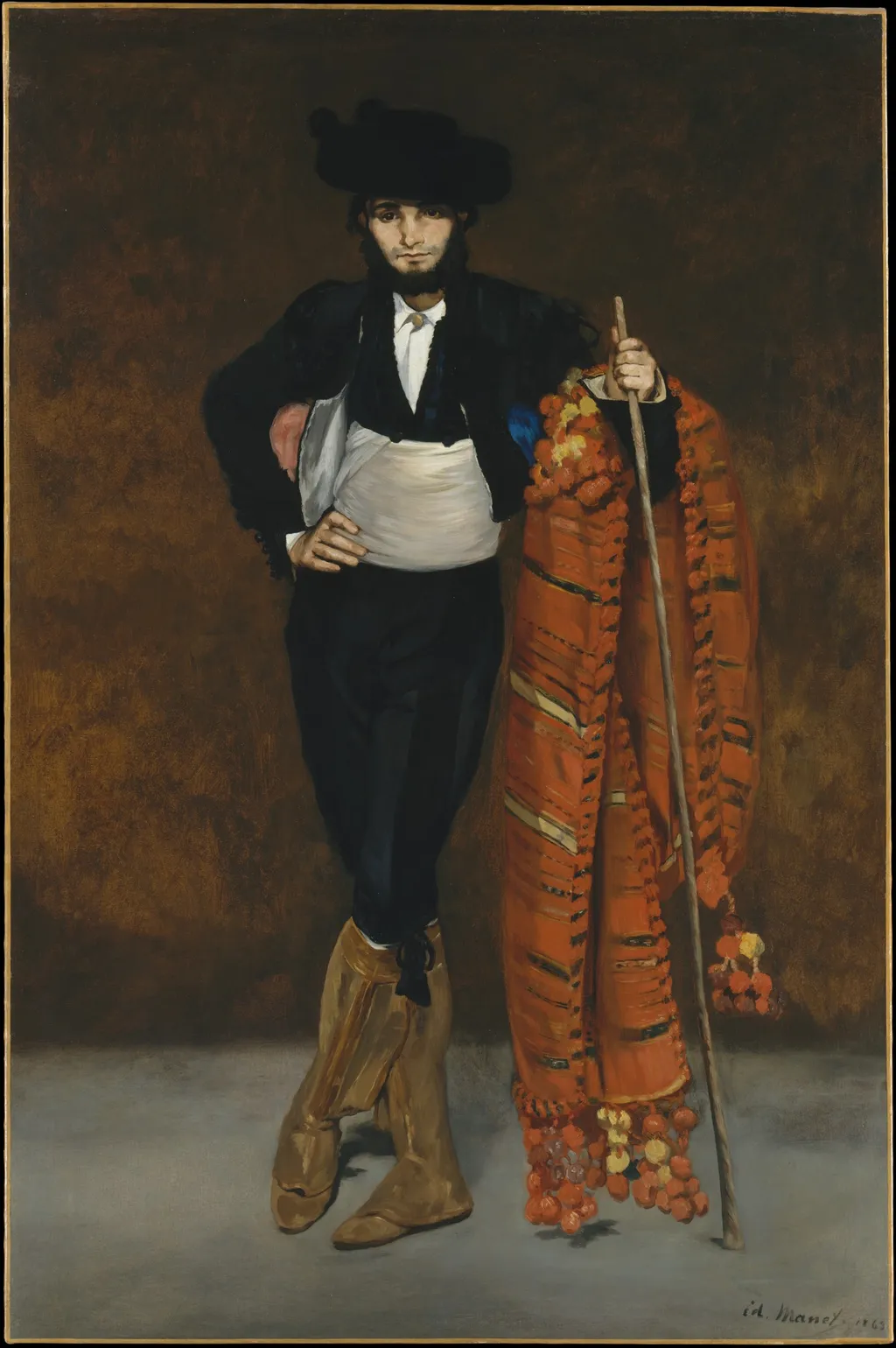
Young man in Mayo costume is an oil painting by the Academic Art artist Édouard Manet. It dates from 1863 and is held in the collection of the Metropolitan Museum of Art.
About this work
Gustave Manet posed for his brother Edouard in 1863 in the same bolero jacket and trousers Victorine Meurent had worn for Mademoiselle V...
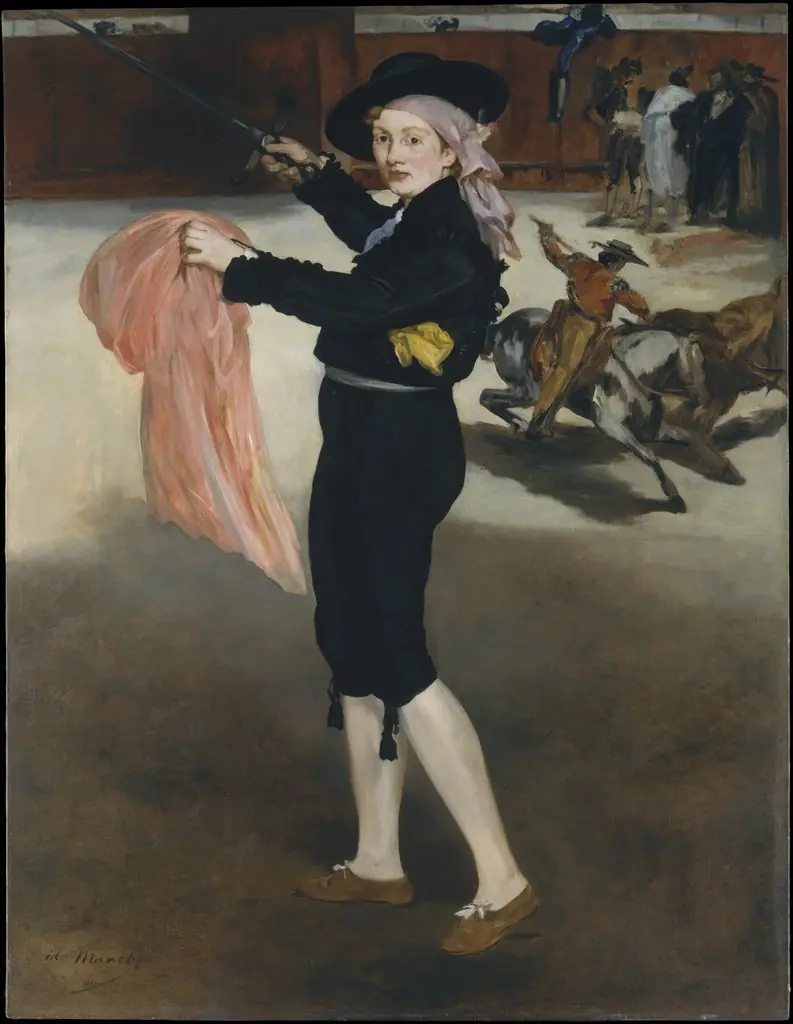
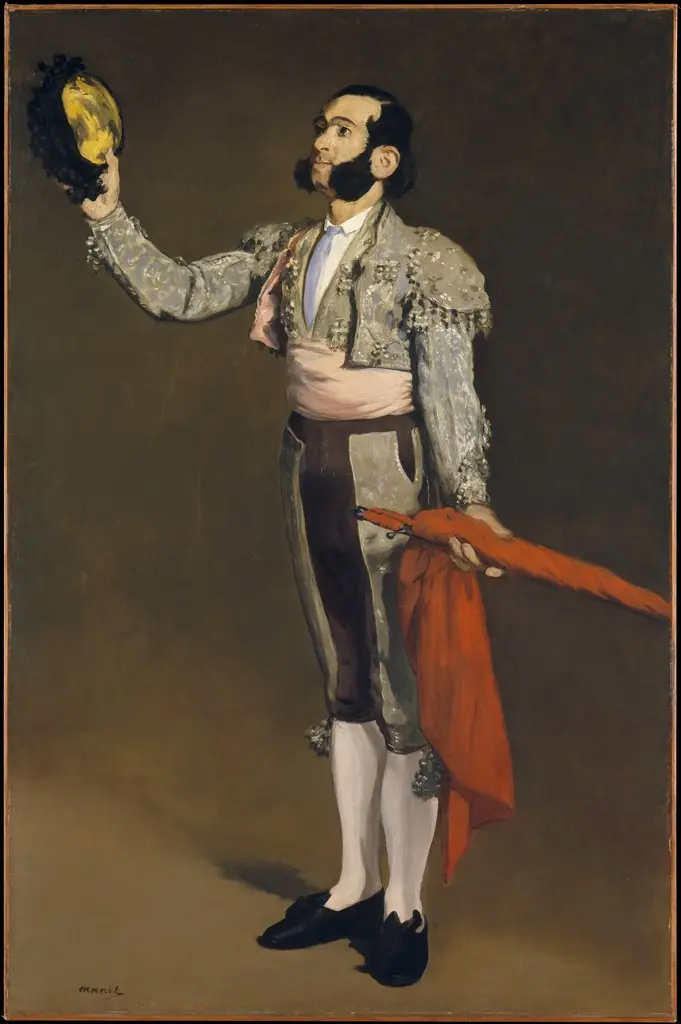
Gustave Manet posed for his brother Edouard in 1863 in the same bolero jacket and trousers Victorine Meurent had worn for Mademoiselle V... in the Costume of an Espada. Both paintings were rejected from the official Paris Salon that spring and appeared together at the scandalous Salon des Refuses. Critics praised the bold brushwork and color of Young Man in the Costume of a Majo, though some grumbled that the artist gave the sitter's face no more care than his costume.
Subject & Meaning
The subject is Manet's youngest brother Gustave, posed in the costume of a majo, a term for lower-class Spanish men known for their stylish, defiant dress and attitude. This choice reflects Manet's Spanish period, when he was heavily influenced by Velazquez and Goya. The costume, obtained from a Spanish dealer, also appears in other Manet works.
Iconographically, the majo represented a romanticized Spanish masculinity popular in mid-19th-century France. The painting's meaning lies partly in its masquerade: Gustave's face is rendered sketchily while the red blanket and costume are meticulously detailed, a contrast that confused critics. This emphasis on dress over likeness suggests Manet's interest in the theatricality of identity and cultural appropriation, rather than a straightforward portrait.
Technique & Style
Executed in 1863, Young Man in Majo Costume is an oil-on-canvas painting characteristic of Manet's Spanish period, revealing the strong influence of Diego Velazquez. The composition is marked by a monochrome background that isolates the figure. Manet's handling is deliberately uneven: the model's face is rendered with a sketchy, almost unfinished quality, while the richly folded red blanket is meticulously worked with precise detail.
This stark contrast between a loosely brushed visage and a carefully finished accessory was a frequent target of contemporary criticism. The painting thus exemplifies Manet's early break with academic finish, foregrounding a painterly tension between summarily treated passages and areas of heightened attention.
History & Provenance
Painted in 1863, the work depicts Edouard Manet's youngest brother Gustave in the costume of a Spanish majo. It was first exhibited that year at the Salon des Refuses. The painting remained with Manet until January 1872, when he sold it to dealer Paul Durand-Ruel for 1,500 francs.
It then passed through the collections of Ernest Hoschedc (purchased January 1877) and baritone Jean-Baptiste Faure (acquired June 1878). Durand-Ruel repurchased it in December 1898 for 20,000 francs and sold it the following February to Henry Osborne Havemeyer and his wife Louisine for $10,000. The Havemeyers bequeathed it to the Metropolitan Museum of Art in 1929.
Its first public exhibition was at the seminal Salon des Refuses of 1863, where it was shown alongside Manet's Dejeuner sur l'herbe and Miss V Dressed as a Bullfighter.
Context
Exhibited at the 1863 Salon des Refuses alongside Manet's Dejeuner sur l'herbe, the painting belongs to the artist's Spanish period, reflecting his deep admiration for Velazquez, Goya, and the contemporary Parisian vogue for Spanish themes furthered by writers such as Gautier and Merimee. It provoked mixed critical reactions: contemporaries faulted the sketchy execution, particularly the contrast between the carefully finished red blanket and the barely detailed face, yet the vivid palette also drew praise, including from Emile Zola. The work has since been analyzed in scholarly publications as a key example of Manet's early stylistic debts and his engagement with Spanish visual culture within the broader context of mid-nineteenth-century French art.
Overview
Édouard Manet's Young Man in Mayo Costume, painted in 1863, is an oil on canvas work featuring the artist's youngest brother, Gustave. The sitter is depicted in the distinctive attire of a majo, a fashionable figure in Spanish culture. This painting is currently housed in the collection of the Metropolitan Museum of Art, representing a key moment in Manet's early career.
Own this work as a print
Artist & collection
Artist
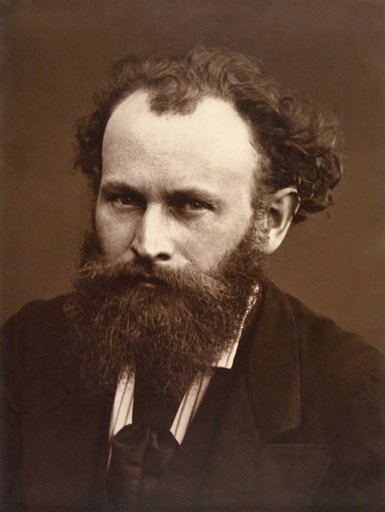
Édouard Manet was a French modernist painter. He was one of the first 19th-century artists to paint modern life, as well as a pivotal figure in the transition from Realism to Impressionism.