Artwork
Still Life with Jug and Knife
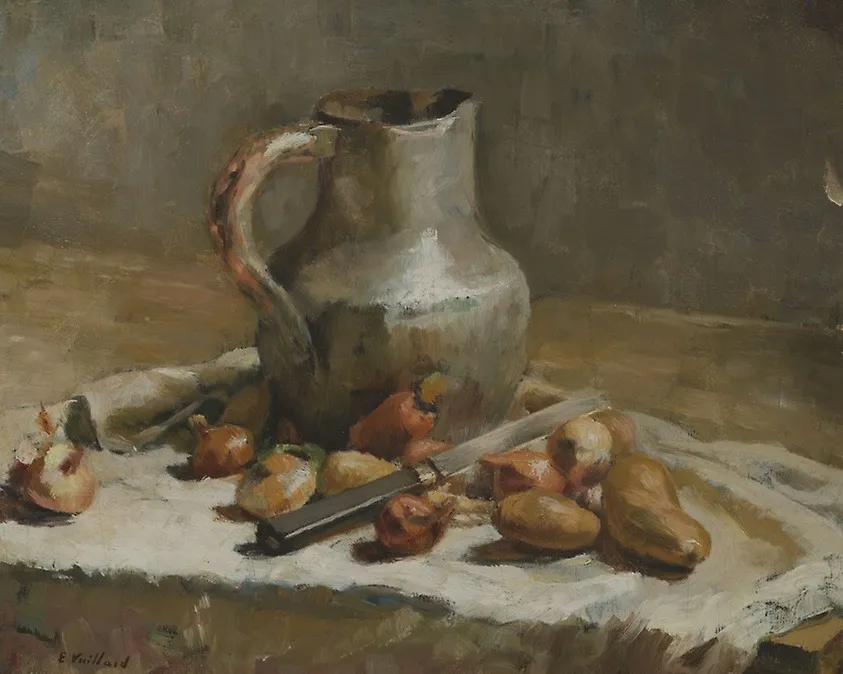
Still Life with Jug and Knife is an oil painting by the Les Nabis artist Édouard Vuillard. It dates from 1894 and is held in the collection of the Art Institute of Chicago.
About this work
Overview
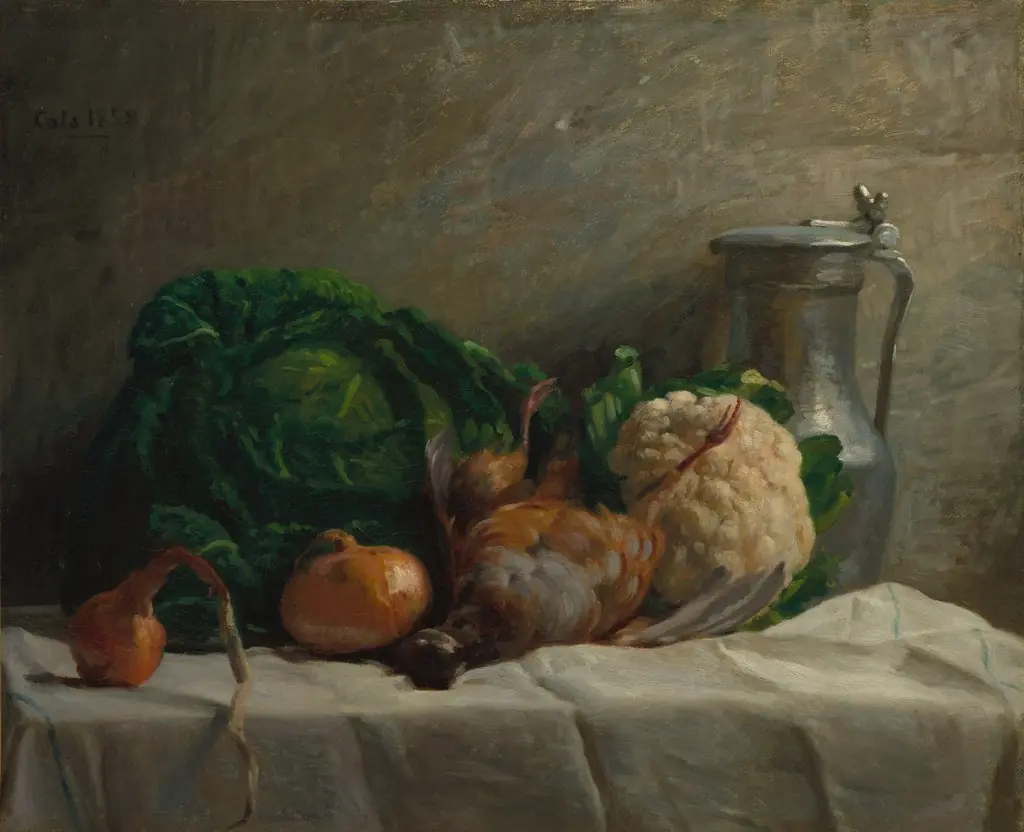
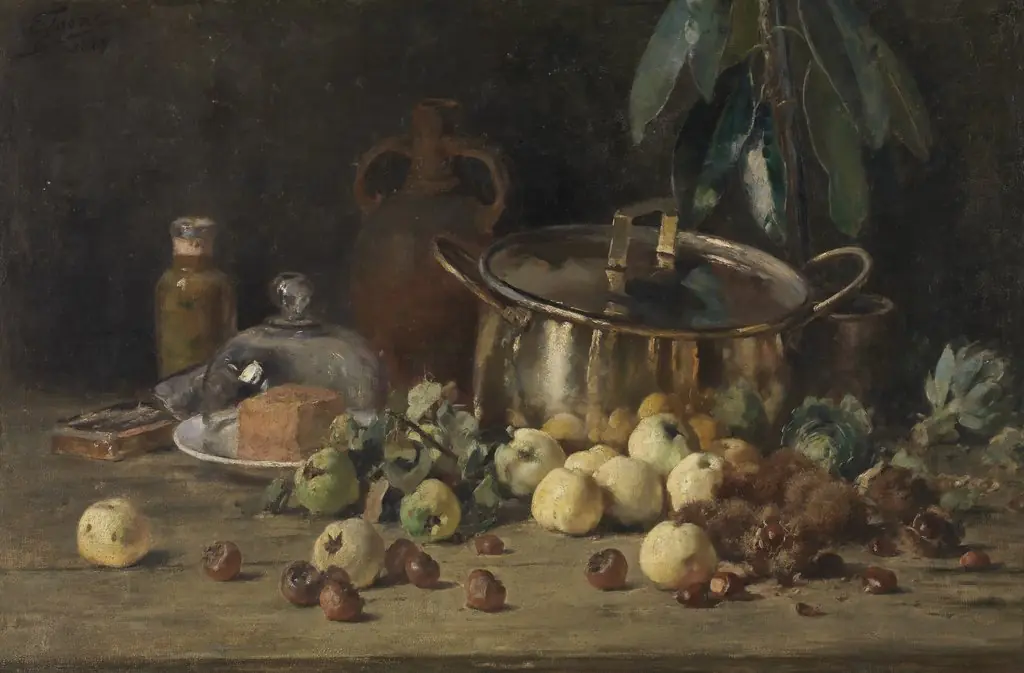
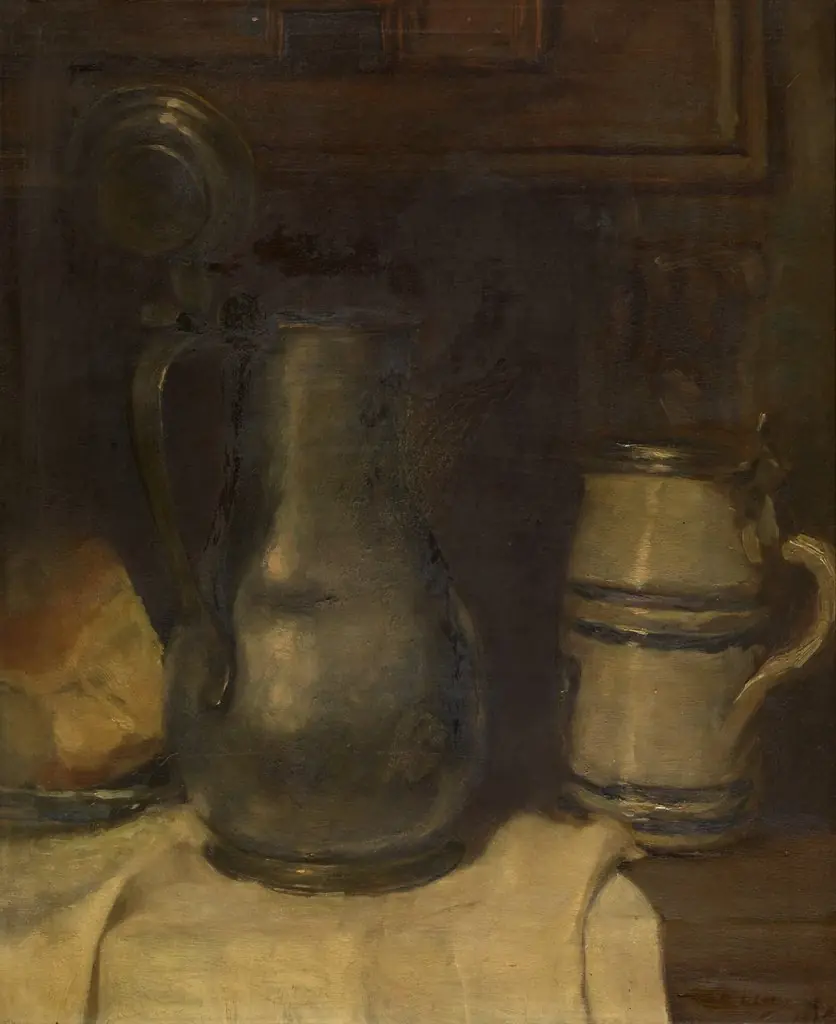
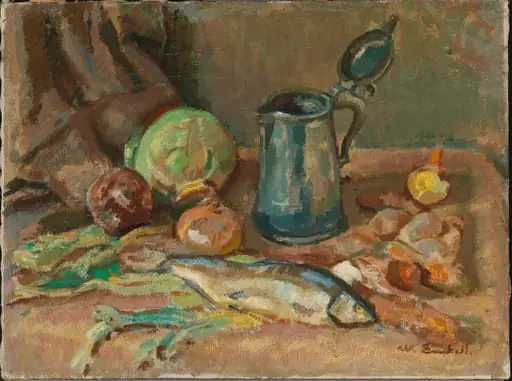
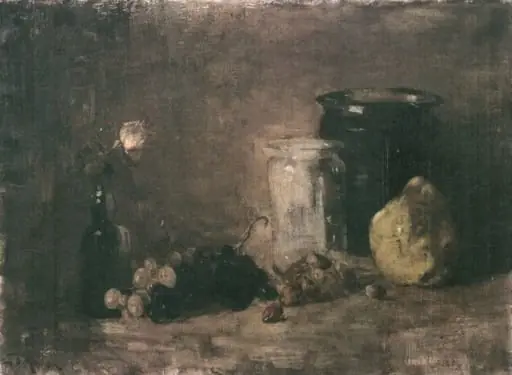
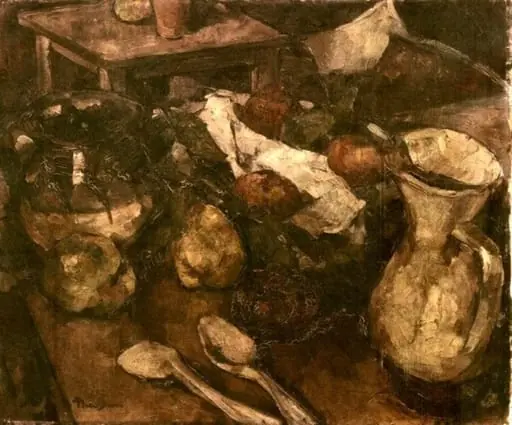
The composition centers on simple household items, a metal jug, a knife, and assorted produce, arranged on a table against a muted wall.
Painted in 1894, Still Life with Jug and Knife is an oil on canvas work by French artist Édouard Vuillard. It belongs to a series of domestic still lifes he produced during his involvement with the Nabis group. The composition centers on simple household items, a metal jug, a knife, and assorted produce, arranged on a table against a muted wall. Vuillard’s approach emphasizes tone and texture over narrative, reflecting his interest in quiet, intimate scenes.
Subject & Meaning
The painting presents ordinary objects, fruit, vegetables, a jug, and a knife, without symbolic pretense. Their arrangement suggests a moment after use, grounding the scene in daily life. Vuillard’s focus on these mundane items reflects the Nabis’ belief in finding artistic value in the everyday.
The absence of human figures heightens the sense of stillness, inviting contemplation of form and presence rather than story.
Technique & Style
Vuillard employed thick, visible brushwork to build surface texture, particularly in the jug and tablecloth. Dark, muted tones dominate the palette, with subtle shifts in value creating volume without traditional perspective. Flattened spatial planes and reduced depth echo Japanese woodblock prints, a key influence on the Nabis. Shadows are rendered with soft gradations, enhancing realism while preserving the painting’s intimate, compressed space.
History & Provenance
Created in 1894, the painting remained in Vuillard’s possession until it entered the Art Institute of Chicago’s collection in 1928. Its acquisition followed the museum’s growing interest in French Post-Impressionist works. No significant alterations or restorations are documented, and the painting has been consistently exhibited as an example of Vuillard’s early mature style during his Nabis period.
Context
In the mid-1890s, Vuillard was deeply engaged with the Nabis, a group of avant-garde artists who rejected naturalism in favor of symbolic color and decorative form. While many Nabis focused on figures and interiors, Vuillard turned to still life as a means to explore color relationships and spatial ambiguity. This work aligns with contemporaneous experiments by Bonnard and Denis, who similarly sought to elevate domestic subjects through stylized composition.
Legacy
Though less known than his interior scenes, Still Life with Jug and Knife exemplifies Vuillard’s quiet innovation in still-life painting. Its emphasis on texture, tonal harmony, and restrained palette influenced later generations of French painters interested in the emotional resonance of ordinary objects. The work remains a key reference in studies of Nabis aesthetics and the evolution of modern still life beyond traditional realism.
Artist & collection
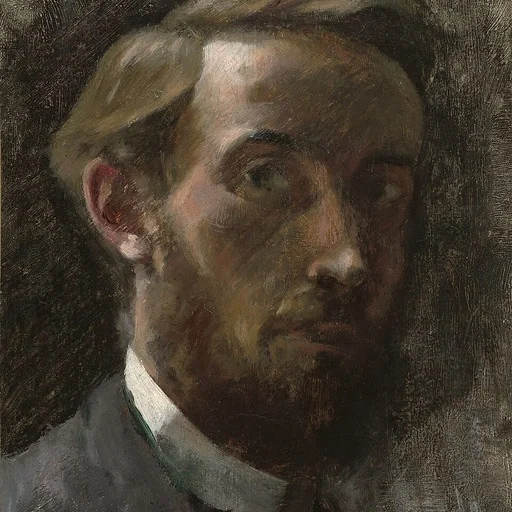
Artist
Jean-Édouard Vuillard (French:; 11 November 1868 – 21 June 1940) was a French painter, decorative artist, and printmaker.