Artwork
Mt. Taibo in the Style of Wang Meng

Mt. Taibo in the Style of Wang Meng is an unspecified painting by the Ming dynasty painting artist Du Qiong. It dates from 1442 and is held in the collection of the Cleveland Museum of Art. Created in 1442, Mt.
About this work
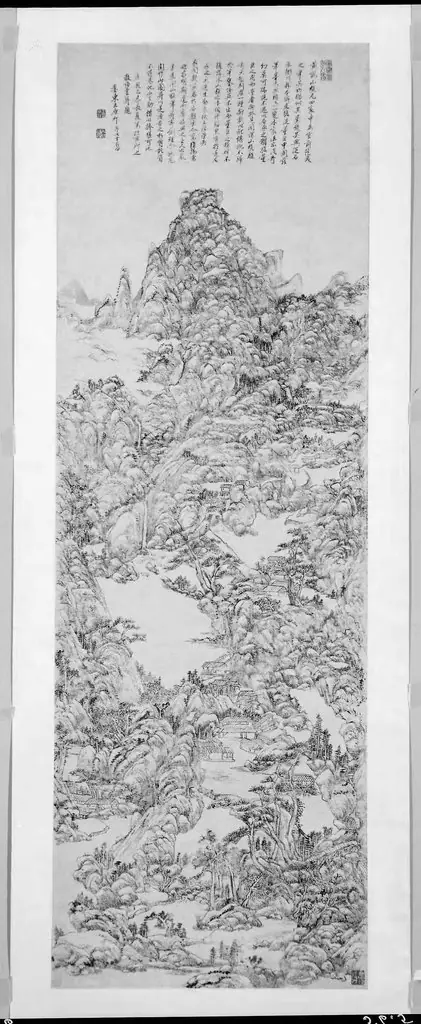
The top of the painting is covered in Chinese characters, like a poem or notes about the scene.
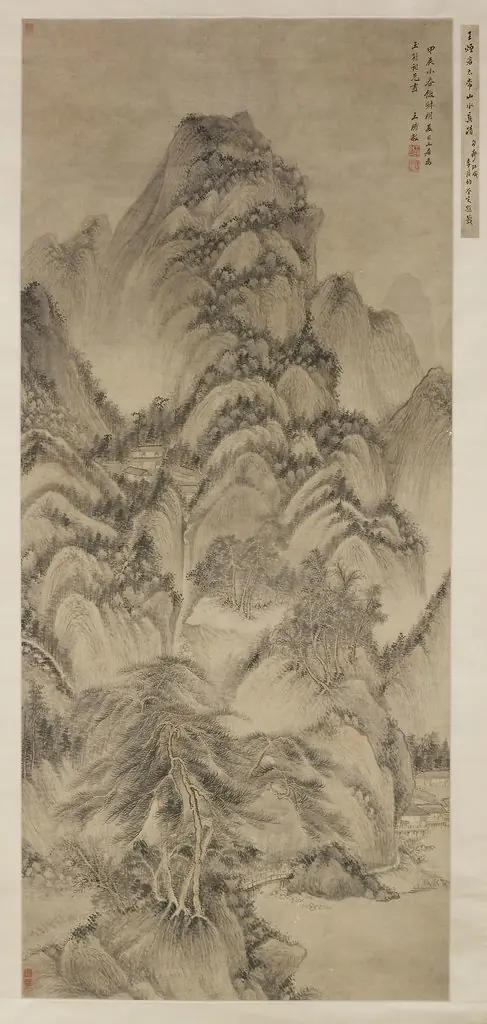
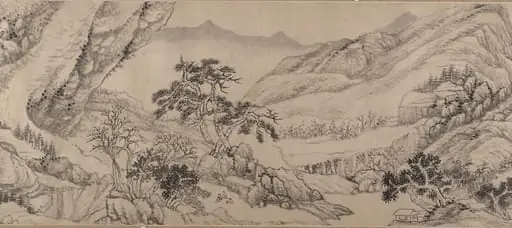
This long, narrow painting shows a mountain range stretching across the whole scene. The peaks are dark and jagged, while the valleys below have soft, misty lines. Tiny figures and buildings dot the landscape, almost lost in the scale. The colors are mostly gray, black, and light brown, with some faint blue in the distance.
The top of the painting is covered in Chinese characters, like a poem or notes about the scene. It looks like the artist was copying an older style, almost like a puzzle.
If you like this, check out Du Qiong (Chinese, 1396–1474) for more of his work.
History & Provenance
Du Qiong created the painting Mt. Taibo in the Style of Wang Meng in 1442. The work originates from China and is identified as a painting executed in that specific year.
It is currently held in the collection of the Cleveland Museum of Art, where it is cataloged under the accession number 1968.195. The artwork reflects a historical homage to the earlier master Wang Meng, executed by Du Qiong, who lived from 1396 to 1474.
The painting is held by the Cleveland Museum of Art, where it is recorded as inventory number 1968.195.
It has been exhibited at the Cleveland Museum of Art in the exhibition “Chinese Painting and Calligraphy,” held from March 26 to May 12, 1968.
Overview
Created in 1442, Mt. Taibo in the Style of Wang Meng is a hanging scroll by the Ming dynasty scholar-painter Du Qiong. The work depicts the Taibo Mountains, rendered in a vertical composition that emphasizes the towering scale of the landscape.
Du Qiong explicitly references the Yuan dynasty master Wang Meng, adopting his characteristic dense, textured brushwork known as 'hemp-fiber' strokes to model the rugged, jagged peaks. The painting features a monochromatic palette dominated by ink washes of black and gray, with subtle earth tones suggesting the rocky terrain. Tiny figures and architectural elements, such as pavilions, are integrated into the valleys and paths, appearing diminutive against the overwhelming natural grandeur.
This piece exemplifies the Ming literati tradition of emulating past masters while asserting individual scholarly identity. It reflects Du Qiong's role in the early Ming revival of Yuan aesthetic principles, prioritizing expressive brushwork and poetic atmosphere over strict realism. The work stands as a significant example of how Ming artists engaged with the legacy of the Four Masters of the Yuan, particularly Wang Meng's complex, layered mountain structures.
Subject & Meaning
The composition depicts a sweeping range of jagged peaks and soft, mist‑filled valleys, suggesting the vastness of nature and the insignificance of human activity. Scattered figures and diminutive structures appear almost lost amid the landscape, reinforcing a Daoist sensibility that values the harmony of humanity within the larger natural world.
Technique & Style
Du Qiong adopts the brushwork and compositional principles associated with the Yuan master Wang Meng, employing dense, textured strokes to build the craggy ridges and delicate washes for the misty lowlands. The limited palette and layered ink washes create depth, while the precise, calligraphic inscription at the top demonstrates the artist’s scholarly training.
Context
During the 15th century, Chinese scholar‑artists often emulated earlier masters to assert their erudition. Du Qiong’s homage to Wang Meng reflects this tradition, positioning his work within a lineage that prized personal expression through the reinterpretation of established models, while also engaging with contemporary poetic and philosophical discourse.

Artist & collection

Artist
Du Qiong; ca. 1396-1474 was a Chinese landscape painter, calligrapher and poet during the Ming dynasty (1368–1644).