Artwork
Angel
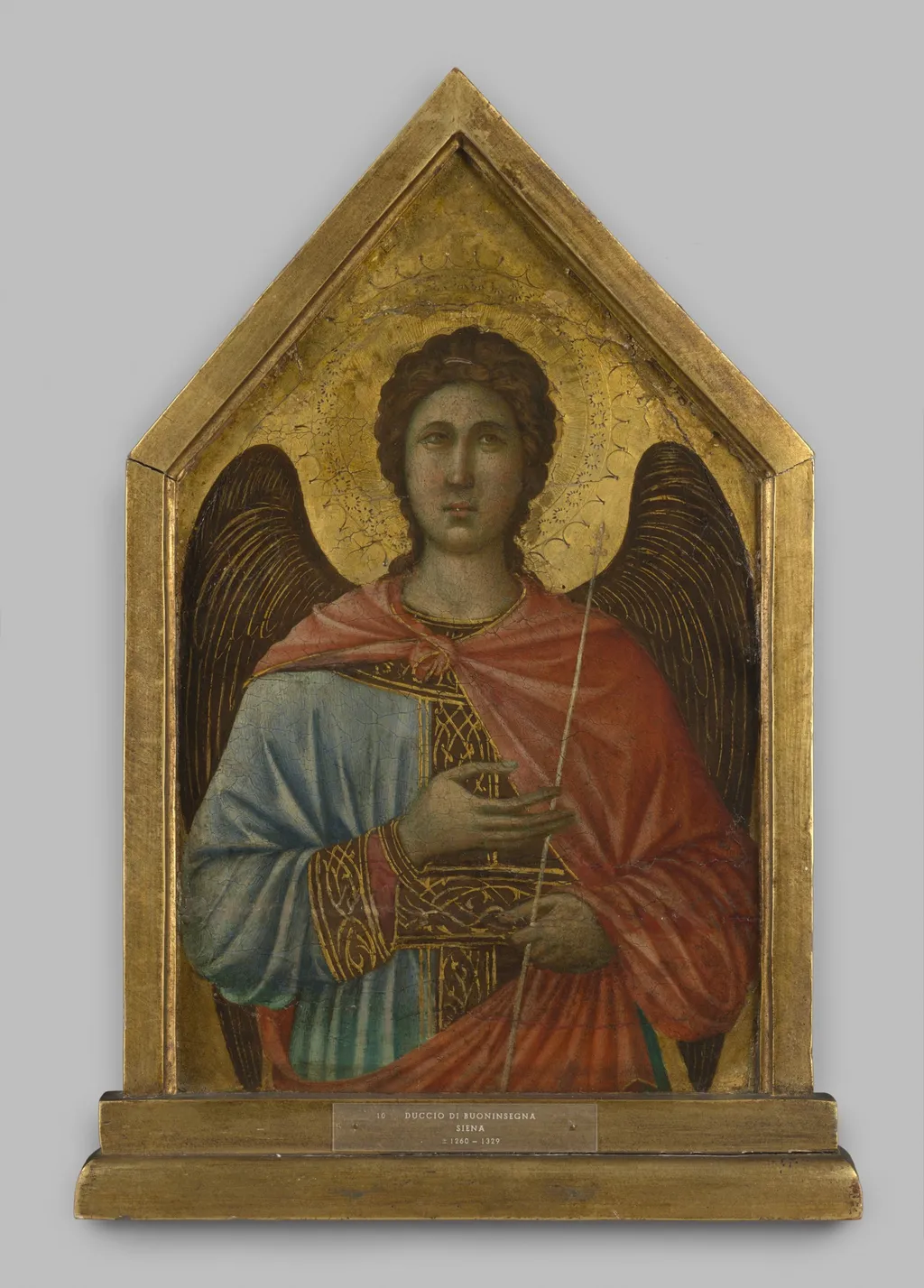
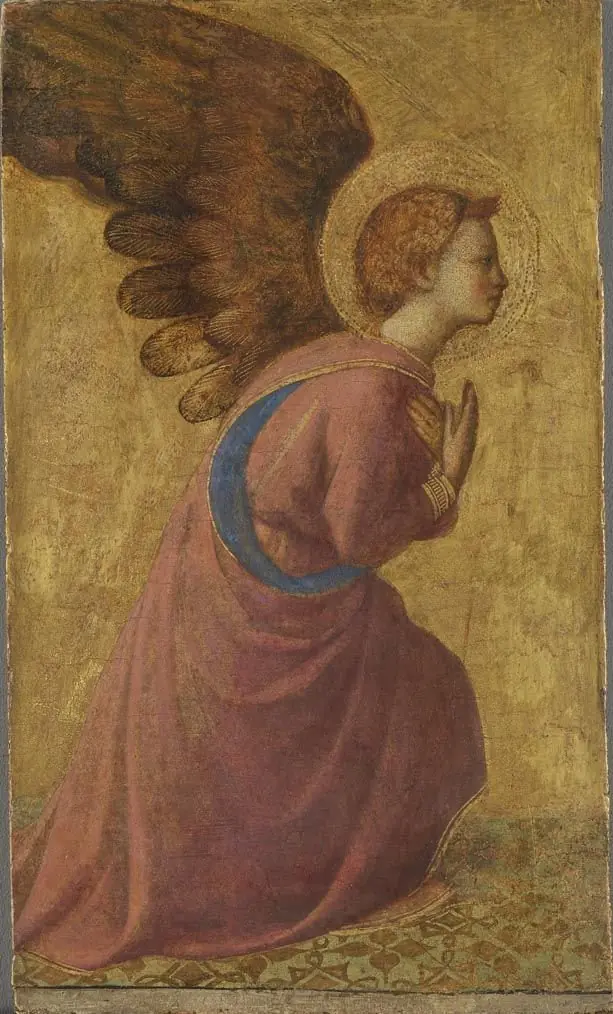
Angel is an oil painting by the Italo Byzantine artist Duccio di Buoninsegna. It dates from 1309 and is held in the collection of the Rijksmuseum.
About this work
Subject & Meaning
The painting depicts an angel as its main subject, a devotional figure rooted in Christian religious art.
The painting depicts an angel as its main subject, a devotional figure rooted in Christian religious art. Created by Duccio di Buoninsegna in 1308–1309, the work was originally part of the frontside of the Maestà altarpiece, where such angelic figures served as celestial attendants within a sacred ensemble. Its classification as religious art underscores its function as an object of veneration, with the angel embodying divine presence and serving as a messenger between the heavenly and earthly realms.
The fragmentary nature of the panel, now separated from its original monumental context and dispersed across collections including the Rijksmuseum and Castle Huis Bergh, reflects the dismantling of the Maestà over centuries. Despite this fragmentation, the surviving angel retains its iconographic purpose: to mediate sacred vision and reinforce the theological meaning of the altarpiece from which it came.
Technique & Style
Angel is executed in oil paint on a wooden panel, a relatively uncommon technique for early fourteenth-century Italian panel painting, where tempera on panel was the prevailing method. The work measures roughly 30.0 cm in height by 18.3 cm in width, with a secondary recorded height of 26 cm, reflecting its small, devotional scale. Stylistically, it belongs to Duccio di Buoninsegna's religious oeuvre and was originally part of the frontispiece of the Maestà altarpiece, indicating that it was conceived as an integrated component of a larger polyptych rather than as an independent panel.
Its handling and formal qualities are therefore tied to Duccio's late Sienese manner, shaped by its function as a subsidiary element within the Maestà ensemble.
No information regarding the current condition of the panel or surface state is documented in the available sources.
History & Provenance
Created by Duccio di Buoninsegna between 1308 and 1309, this panel painting originally formed part of the front side of the Maestà altarpiece for Siena Cathedral. The work, depicting an angel in oil on panel, was subsequently owned by Jan Herman van Heek. Its provenance later included the collection of the Gebruder Douwes and the Castle Huis Bergh before entering the holdings of the Rijksmuseum, where it is currently displayed in hall 0.2.
Overview
Created in 1309, this oil painting titled Angel is attributed to the Sienese painter Duccio di Buoninsegna. The work presents a solitary celestial figure rendered against a luminous gold ground and is currently part of the collection of the Rijksmuseum in Amsterdam.
Context
Produced during a period when Sienese art emphasized decorative elegance and spiritual intimacy, the work exemplifies Duccio’s role in shaping the visual language of religious imagery in the early 14th century, bridging Byzantine influences and emerging naturalism.
Artist & collection


![Saint Catherine of Alexandria, with an Angel [right panel], by Pietro Lorenzetti](https://artifactworldgallery.com/img/pietro-lorenzetti--saint-catherine-of-alexandria-with-an-angel-right-panel--8acb359f1d360041-w320.webp)