Artwork
Leslie Pease Barnum
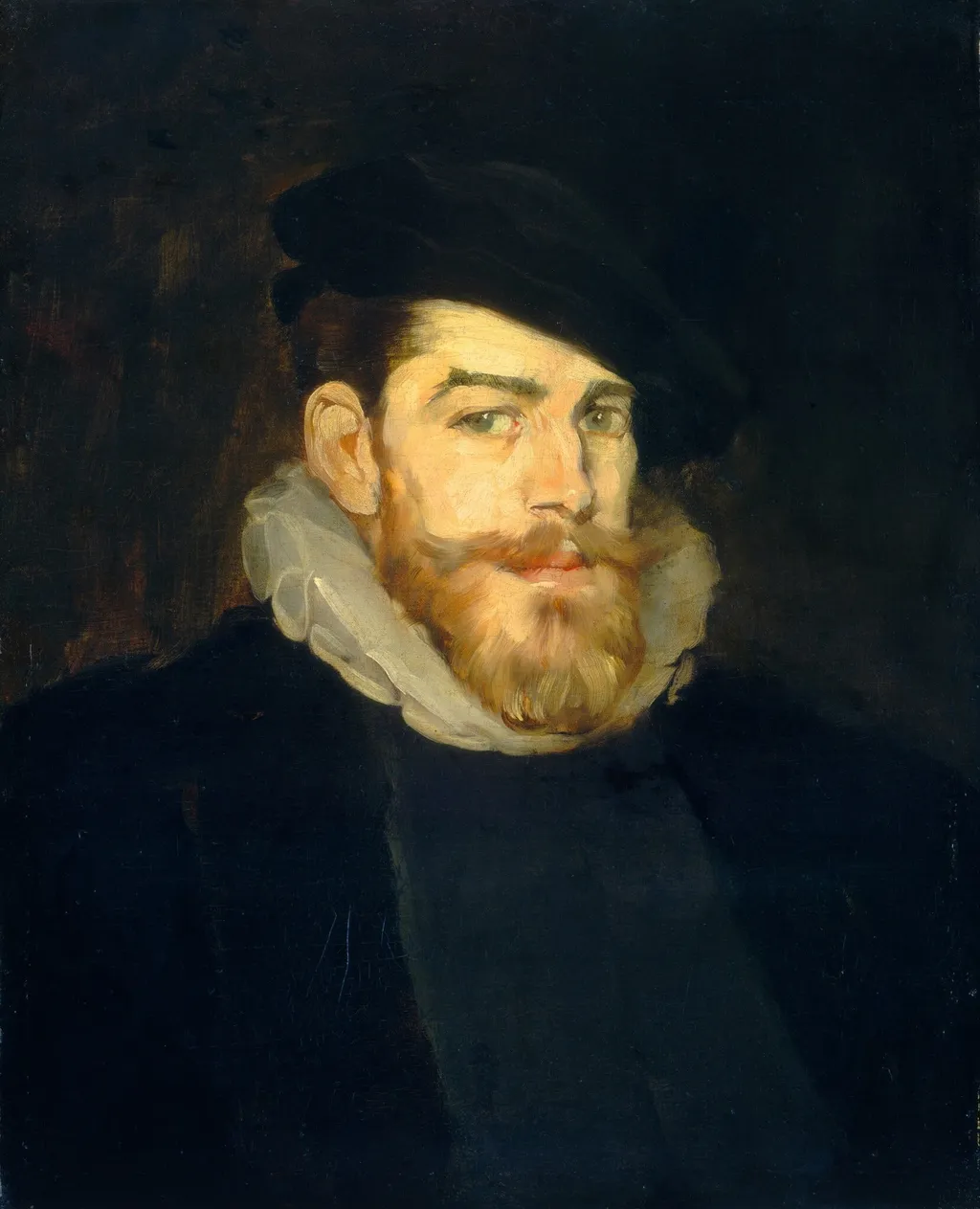
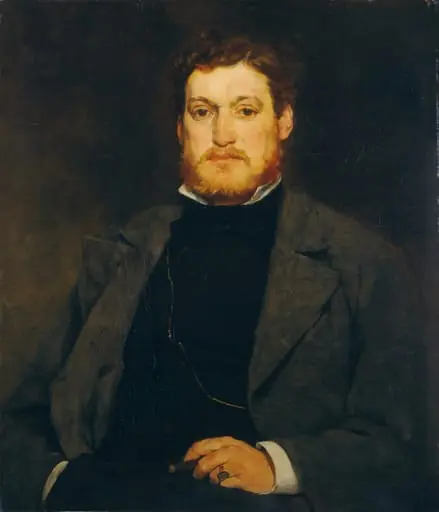
Leslie Pease Barnum is an oil painting by the American Impressionist artist Frank Duveneck. It dates from 1876 and is held in the collection of the National Gallery of Art.
About this work
History & Provenance
Leslie Pease Barnum is an oil-on-canvas portrait painted by Frank Duveneck in 1876, depicting the sitter Leslie Pease Barnum (1846–1915).
Leslie Pease Barnum is an oil-on-canvas portrait painted by Frank Duveneck in 1876, depicting the sitter Leslie Pease Barnum (1846–1915).
The work remained in the Barnum family, passing from the sitter to his sister Louise Barnum Robbins and subsequently to his niece Mrs. Arthur L. Fuller.
It was sold by Richard Creifelds to Thomas B. Clarke on 13 February 1919, stayed in Clarke's estate, and was later sold through M. Knoedler & Co. in 1936 to the A. W. Mellon Educational and Charitable Trust, which gifted it to the National Gallery of Art in 1942.
Context
Frank Duveneck's 1876 oil portrait of Leslie Pease Barnum entered the National Gallery of Art through the Andrew W. Mellon collection, having passed from the sitter's family to Richard Creifelds, then to Thomas B. Clarke in 1919, before being gifted to the museum in 1942. The work was noted in a 1928 exhibition catalogue of early American portraits, underscoring its place within Duveneck's portraiture and the broader study of nineteenth-century American realism.
Legacy
Frank Duveneck's 1876 portrait of Leslie Pease Barnum entered the National Gallery of Art in 1942 as part of the Andrew W. Mellon collection. Its documented chain of ownership, from the sitter's family through Richard Creifelds and Thomas B. Clarke to Mellon, reflects its standing among examples of early American portraiture. Its inclusion in a 1928 catalogue, annotated with details from M. Knoedler & Co., demonstrates contemporary recognition of the painting, and its display at the National Gallery of Art continues to inform studies of nineteenth-century American portraiture.
Overview
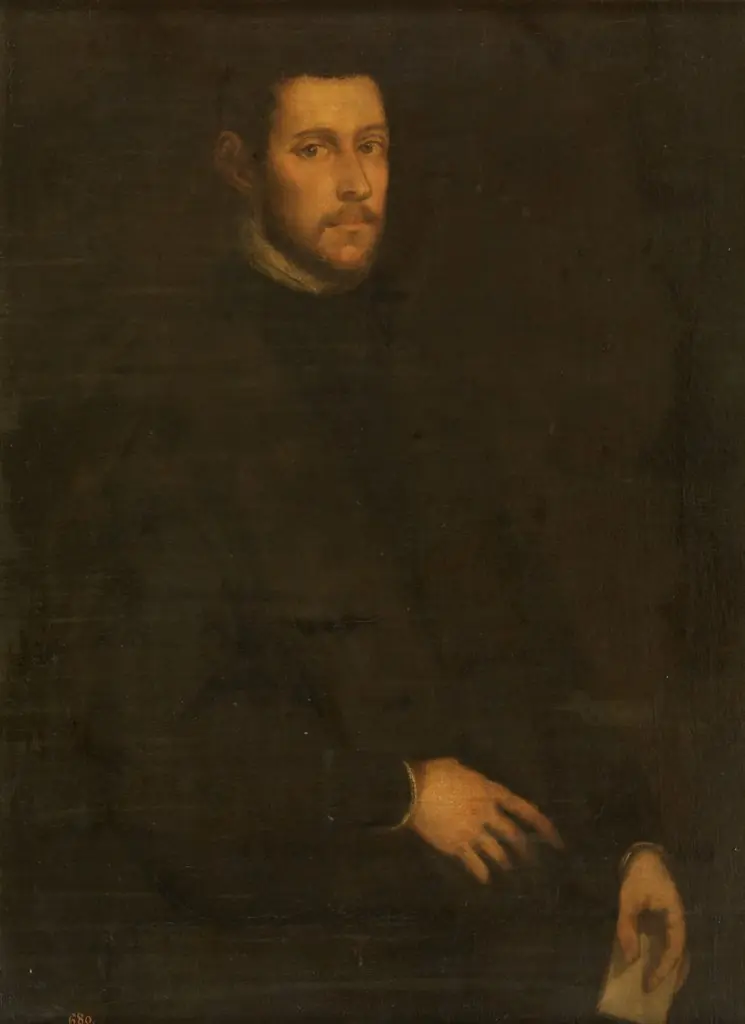
Frank Duveneck created the oil on canvas portrait titled Leslie Pease Barnum in 1876. This painting features a man with a distinctive beard and mustache, rendered with a specific approach to light and brushwork. The artist's technique emphasizes the sitter's face, making it stand out against a dark background, a common characteristic in portraiture of the late 19th century.
Technique & Style
Duveneck employed chiaroscuro, a technique of strong contrasts between light and dark, to give this portrait a dramatic effect. The subject's face is illuminated from one side, causing a striking glow on one cheek and his beard while the other side remains in shadow. This directional lighting makes the figure emerge from the deep background.
The brushstrokes are visibly loose, particularly in the rendering of the skin and hair, contributing to a soft, almost unfinished appearance.
Subject & Meaning
The portrait depicts Leslie Pease Barnum, a man characterized by his thick beard and mustache. His dark collar recedes into the dark background, further emphasizing his face. The strategic lighting focuses attention directly on his features, creating a sense of immediate presence.
This compositional choice ensures that the viewer's eye is drawn to the sitter's expression and physical details, making him the undeniable focal point of the artwork.
Own this work as a print
Artist & collection

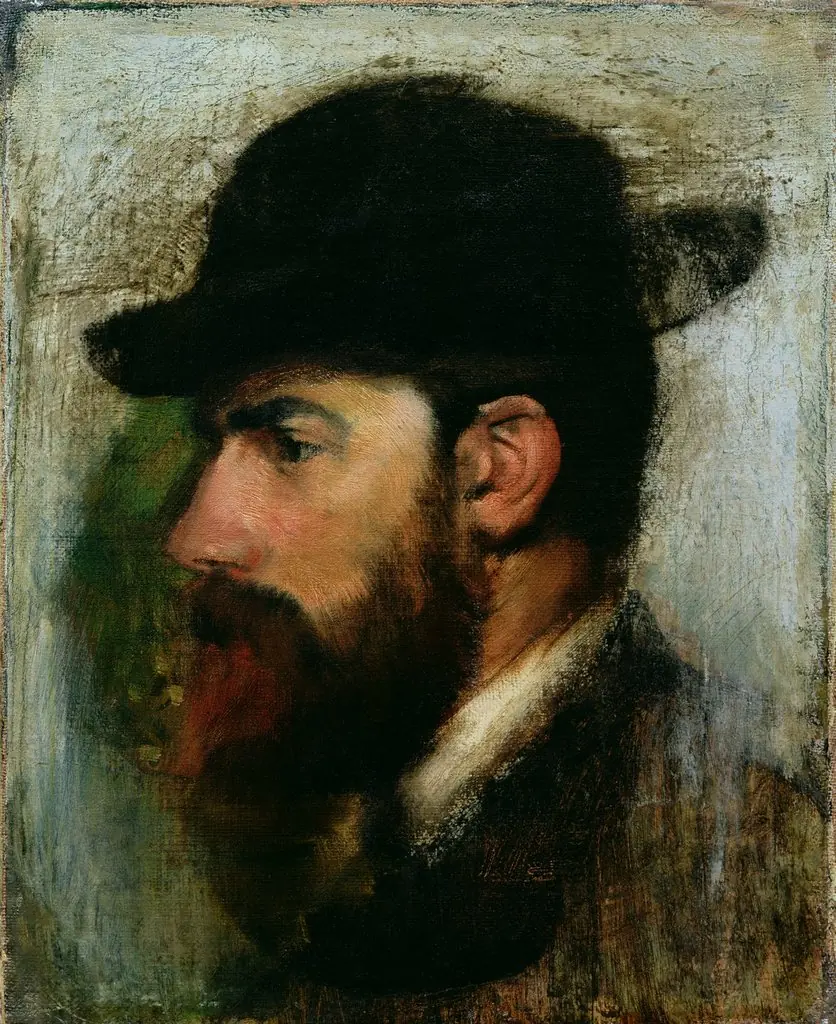
- Portrait d’Henri Rouart
 The Master Smith of Lyme Regis
 El artista (Tít.ant.: Cabeza de hombre)
 Portrait of a Gentleman
 Wilhelm Wartenegg in einem Kostüm des 17. Jahrhunderts
 The Cossack
 The Cossack
 Worthington Whittredge
 Fredrik Ulrik Wrangel af Sauss (1853-1929), Count, Chamberlain, Genealogist
 Portrait of Antoni Kamieński (1860/1861–1933), painter
 Portrait of a man
 Self-portrait (?)