Artwork
The Virgin as Intercessor
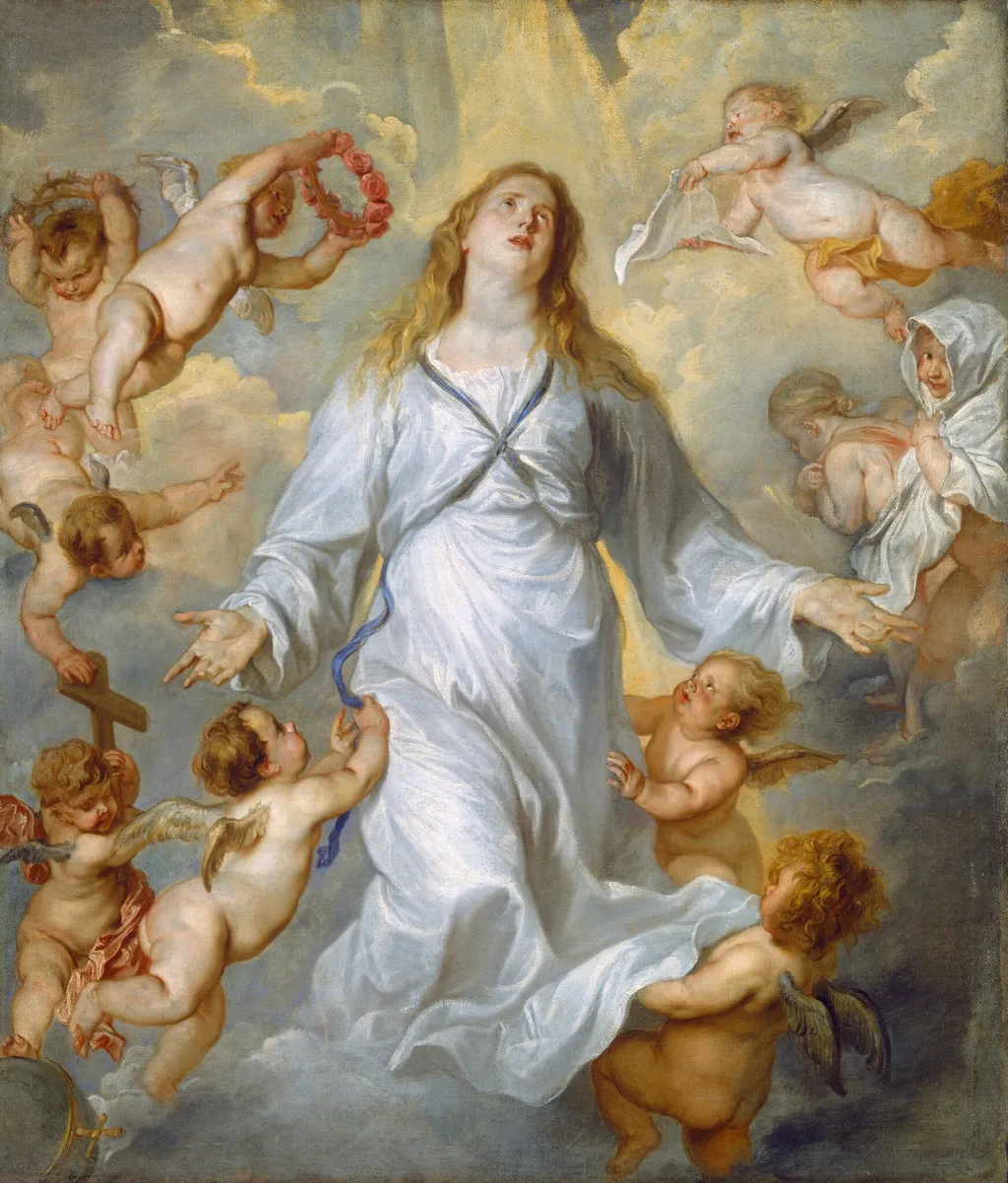
The Virgin as Intercessor is an oil painting by the Baroque artist Anthony van Dyck. It dates from 1628 and is held in the collection of the National Gallery of Art.
About this work
Subject & Meaning
In this composition the Virgin is elevated on a cloud, surrounded by angels and radiant light, visual cues that signal her mediation between earth and heaven.
The painting presents the Virgin Mary in the moment of the Assumption, a traditional iconographic scene that emphasizes her role as intercessor for humanity. In this composition the Virgin is elevated on a cloud, surrounded by angels and radiant light, visual cues that signal her mediation between earth and heaven. The upward movement and heavenly setting symbolize her capacity to intercede on behalf of the faithful, inviting viewers to seek her advocacy.
By depicting the Assumption, the work underscores the theological notion of Mary’s heavenly intercession as a source of hope and spiritual protection.
Technique & Style
The work is executed in oil on canvas, measuring approximately 118.8 cm by 102.3 cm, and is classified as a religious painting depicting the Assumption of Mary. Van Dyck’s technique employs layered oil paint to achieve soft modeling and luminous color, characteristic of early‑Baroque portraiture adapted to devotional subjects. The canvas is stretched on a wooden support and has been transferred through several private collections before entering the National Gallery of Art, where it remains in stable condition.
Stylistically, the composition combines dynamic diagonal movement with a centralized figure of the Virgin, rendered in a naturalistic yet idealized manner.
History & Provenance
Painted in 1628, The Virgin as Intercessor is attributed to Anthony van Dyck. By 1670 it hung in the Antwerp home of the artist’s early patron, the dealer and collector P. van de Copello, and was recorded in Hieronymus Janssens’s gallery scene of that year. It next passed to the Amsterdam dealer P. van de Copello and was sold on 26 January 1774 to the Dutch collector John Hope.
After Hope’s death it descended in his family, first to his son Henry Philip Hope, then to nephew Henry Thomas Hope, and then to Adèle Hope-Bichat, before reaching her grandson, Henry Francis Hope, 8th Duke of Newcastle-under-Lyme. The Hope collection dispersed in 1898 when Asher Wertheimer and Colnaghi sold it to Peter A.B. Widener, whose estate bequeathed it in 1942 to the National Gallery of Art, Washington.
The Virgin as Intercessor is held by the National Gallery of Art in Washington, D.C., where it was accessioned in 1942 as a gift from Joseph E. Widener. The work entered the museum's collection via inheritance from the estate of Peter A.B. Widener, who purchased it in December 1898 from dealers Asher Wertheimer and P. & D. Colnaghi & Co. Prior to its arrival in the United States, the painting resided in various European private collections, including those of the Hope family in London and Deepdene, and was recorded in an Antwerp collection by 1670.
While the provided sources detail its extensive provenance and current location, they do not list specific exhibitions in which the painting has appeared.
Overview
This oil on canvas painting, titled The Virgin as Intercessor, depicts the Virgin Mary in a celestial setting. She is portrayed in an elegant robe, encircled by angels, and directs her gaze heavenward. The artwork emphasizes her significant role as a mediator, a theme frequently explored in religious art of the period.
The artist's use of light and shadow contributes to the visual depth and dramatic impact of the scene.
Own this work as a print
Artist & collection
Artist
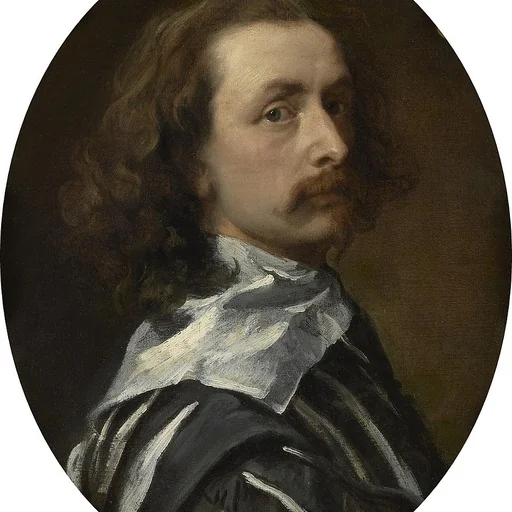
Sir Anthony van Dyck (; Dutch: Antoon van Dijck; 22 March 1599 – 9 December 1641) was a Flemish Baroque artist, who became the leading court painter in England after success in the Spanish Netherlands and Italy.

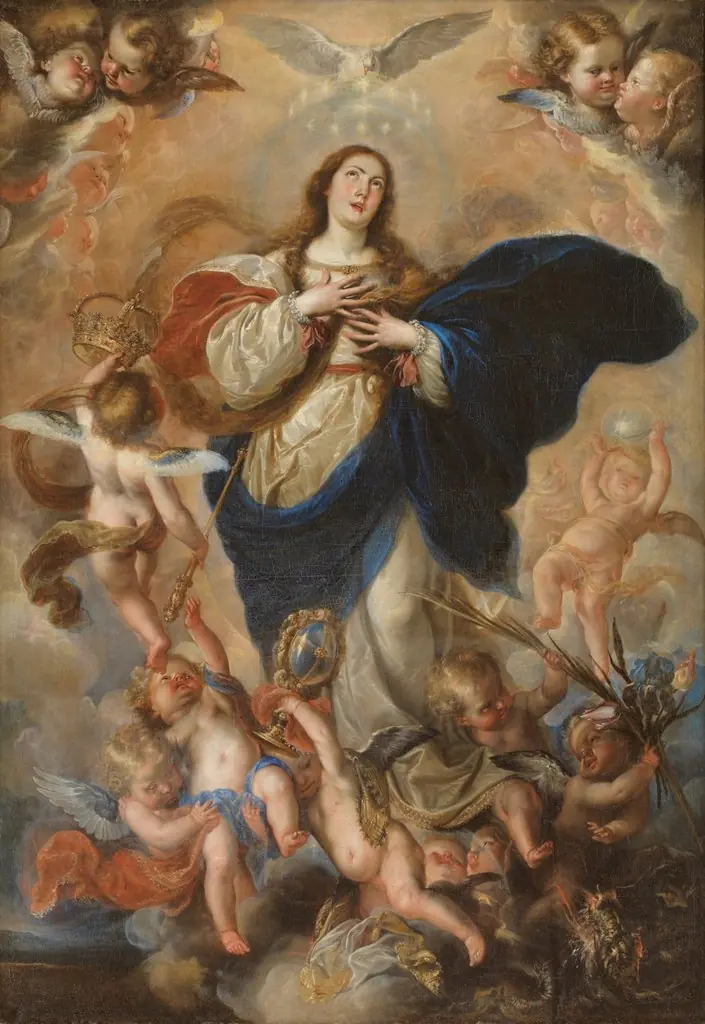 Immaculate Conception
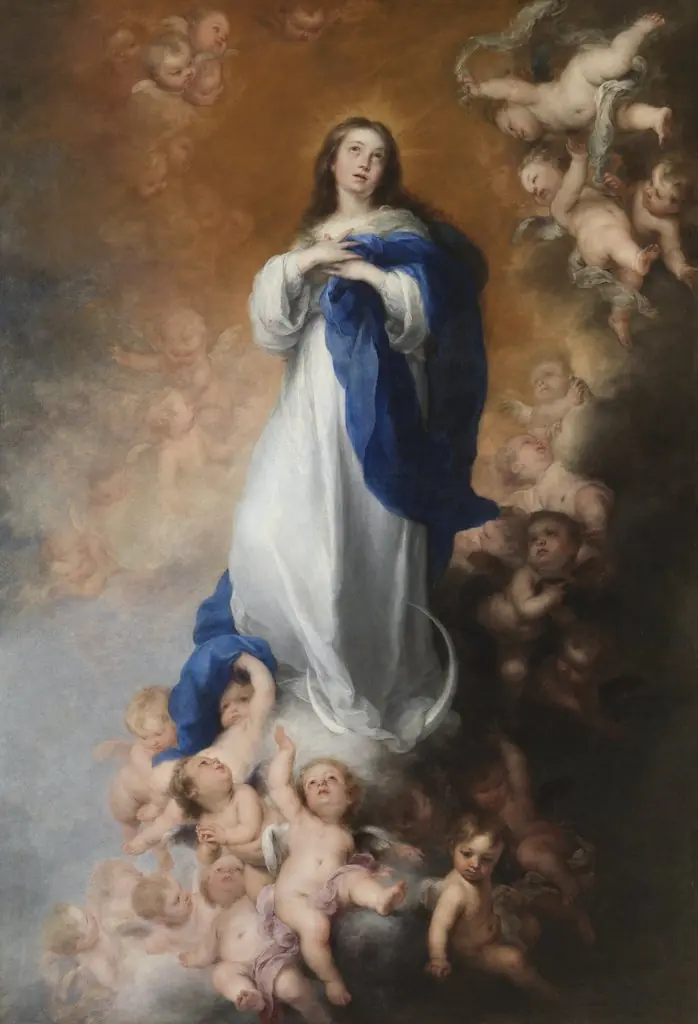 The Immaculate Conception of Los Venerables
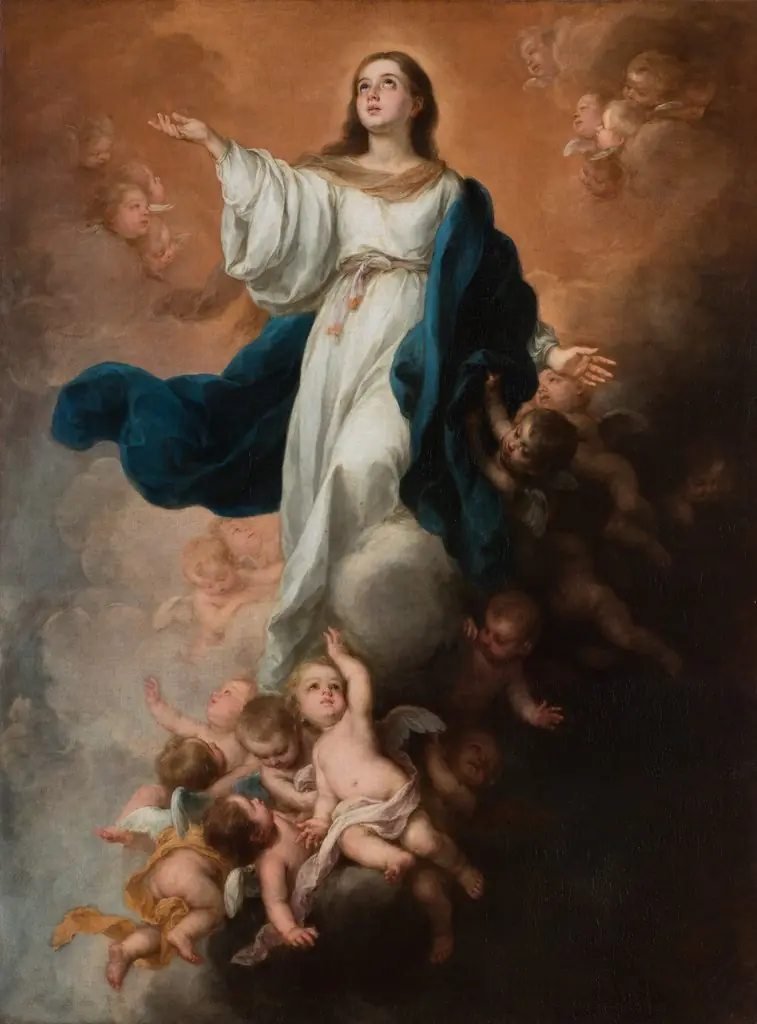 Walpole Immaculate Conception
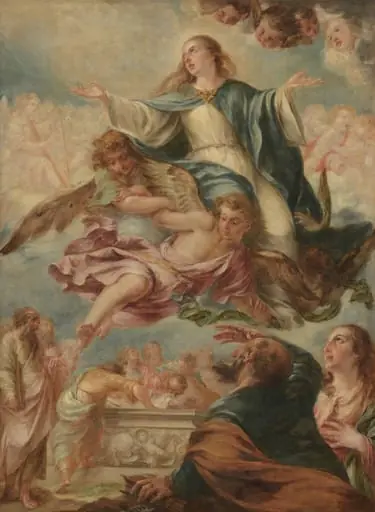 The Assumption of the Virgin
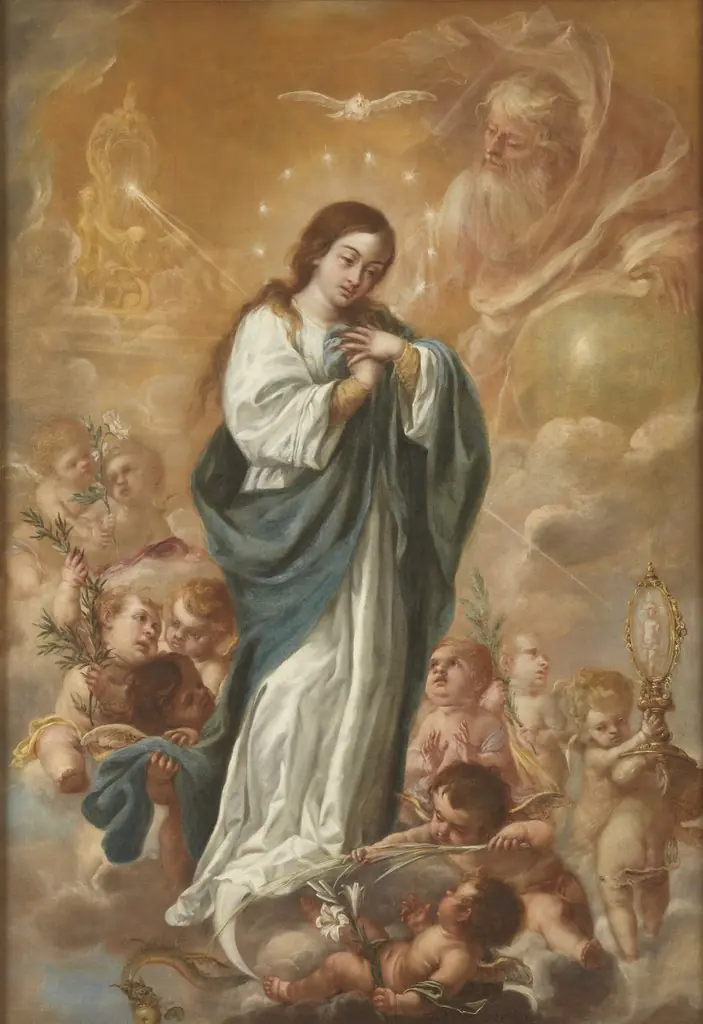 Immaculate Conception
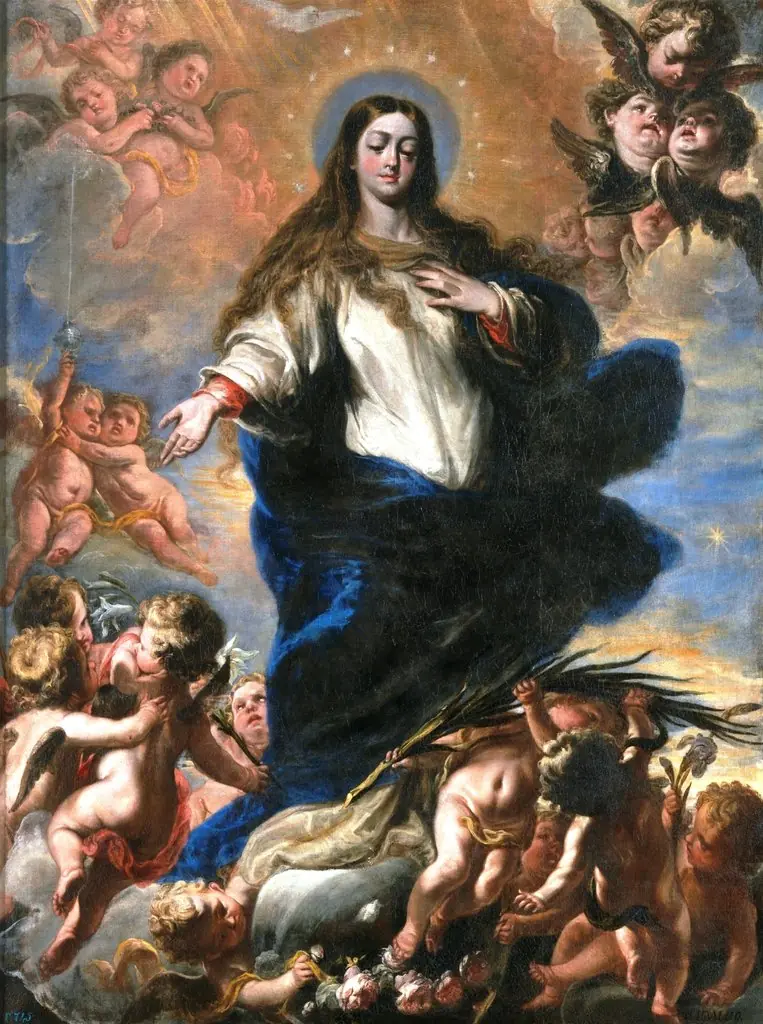 The Immaculate Conception
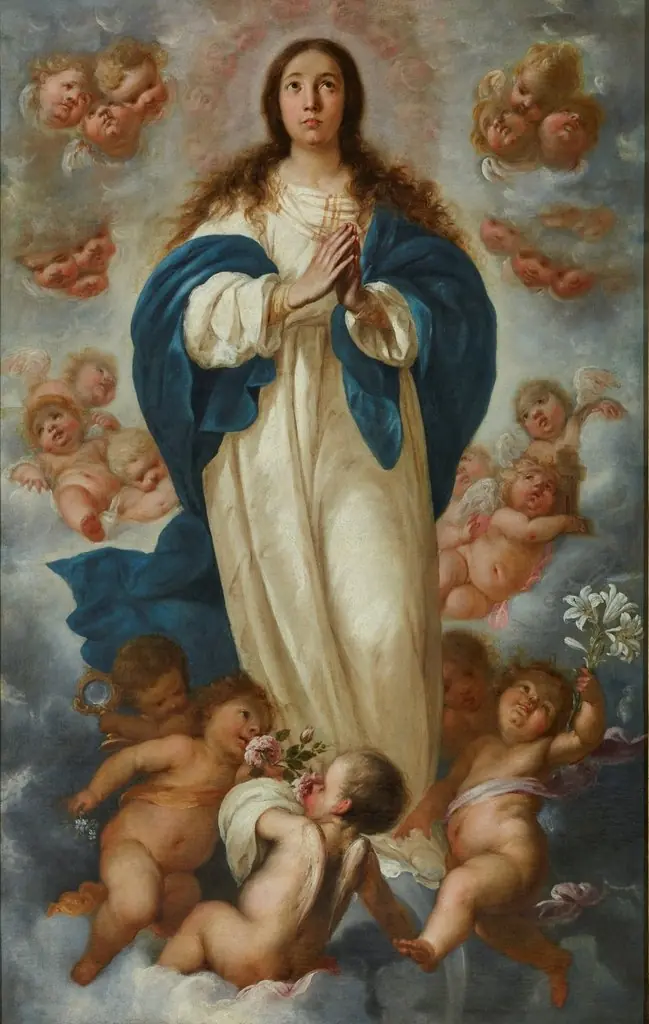 The Immaculate Conception
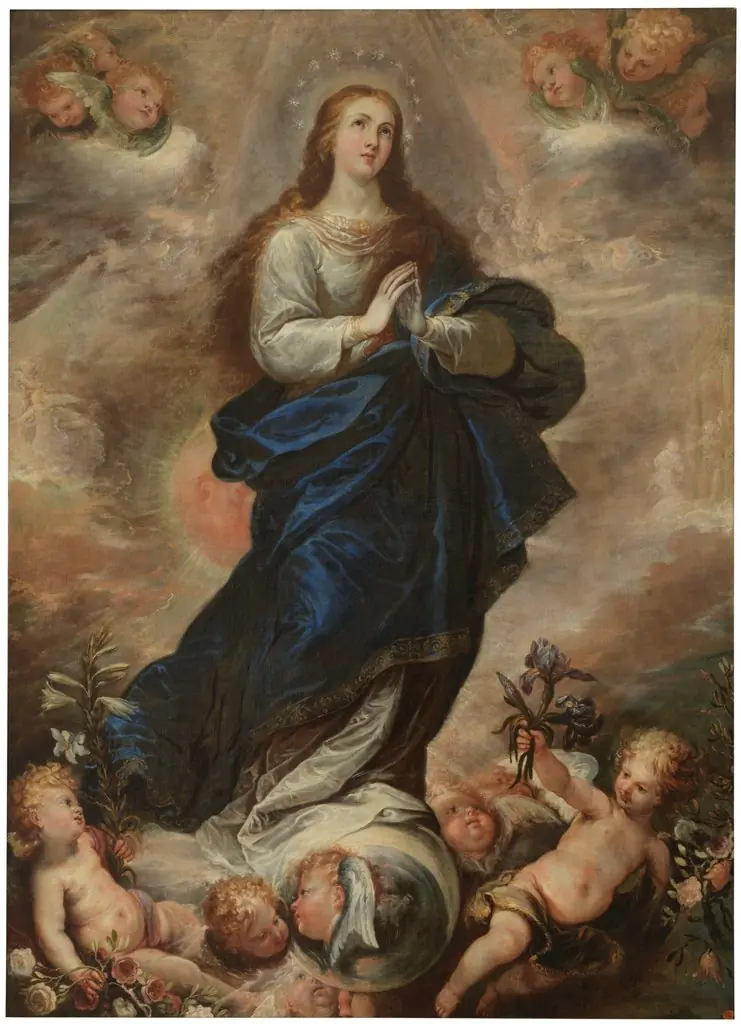 La Purísima Concepción
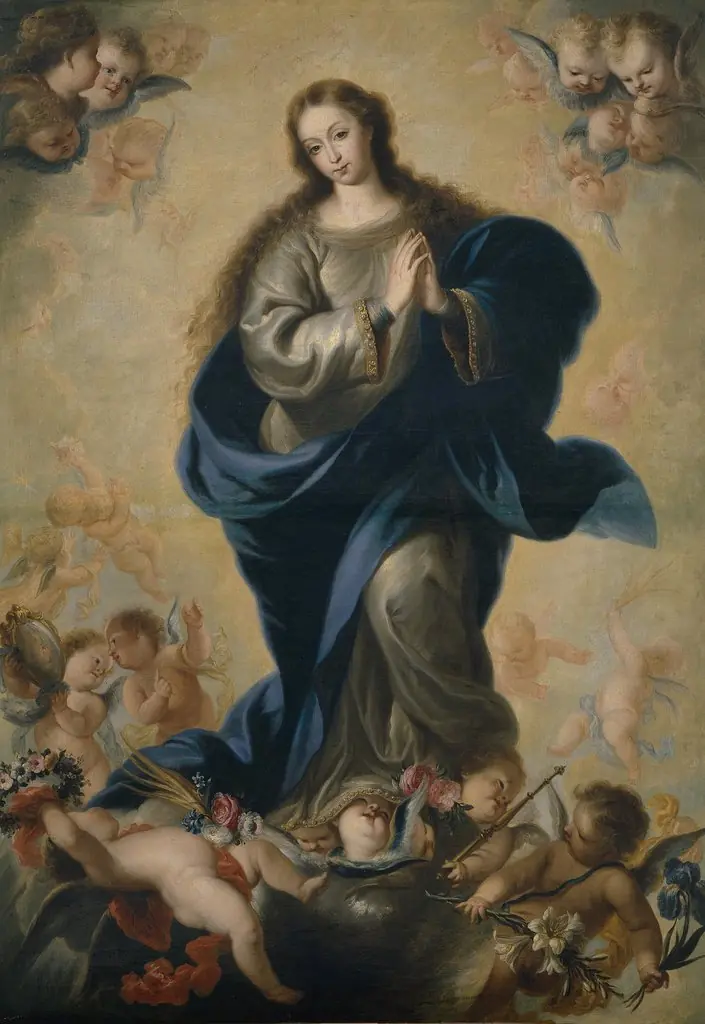 The Immaculate Conception
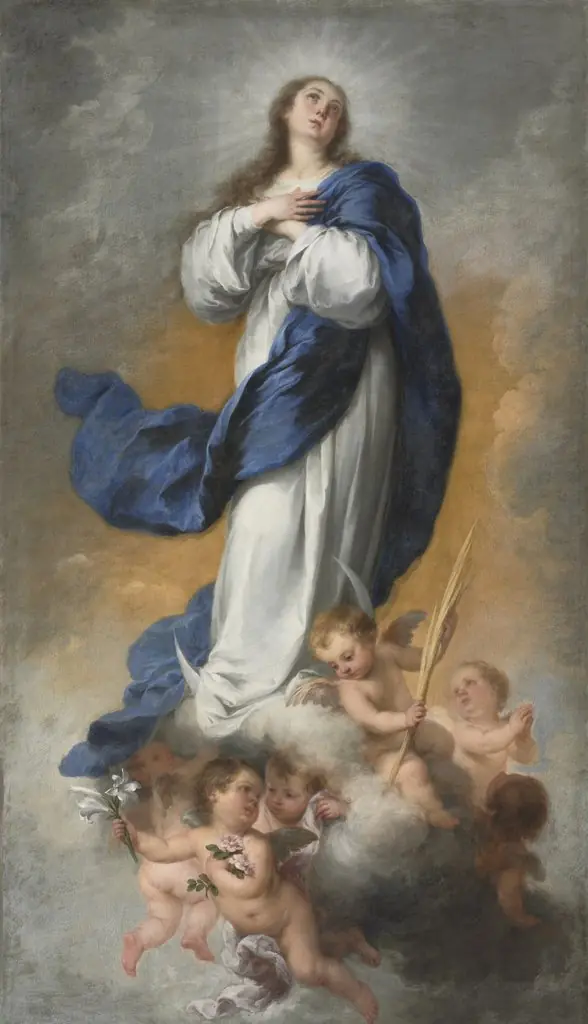 The Immaculate Conception
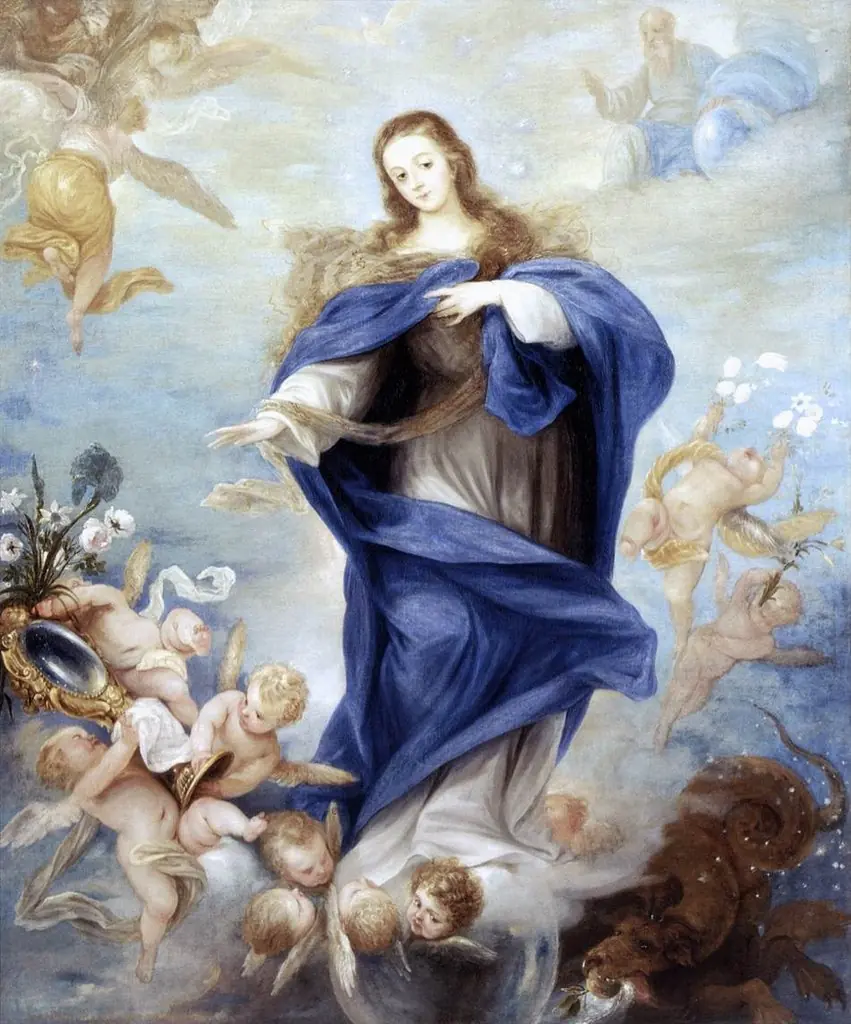 The Immaculate Conception
- The Apparition of the Virgin