Artwork
Susanna Fourment and Her Daughter
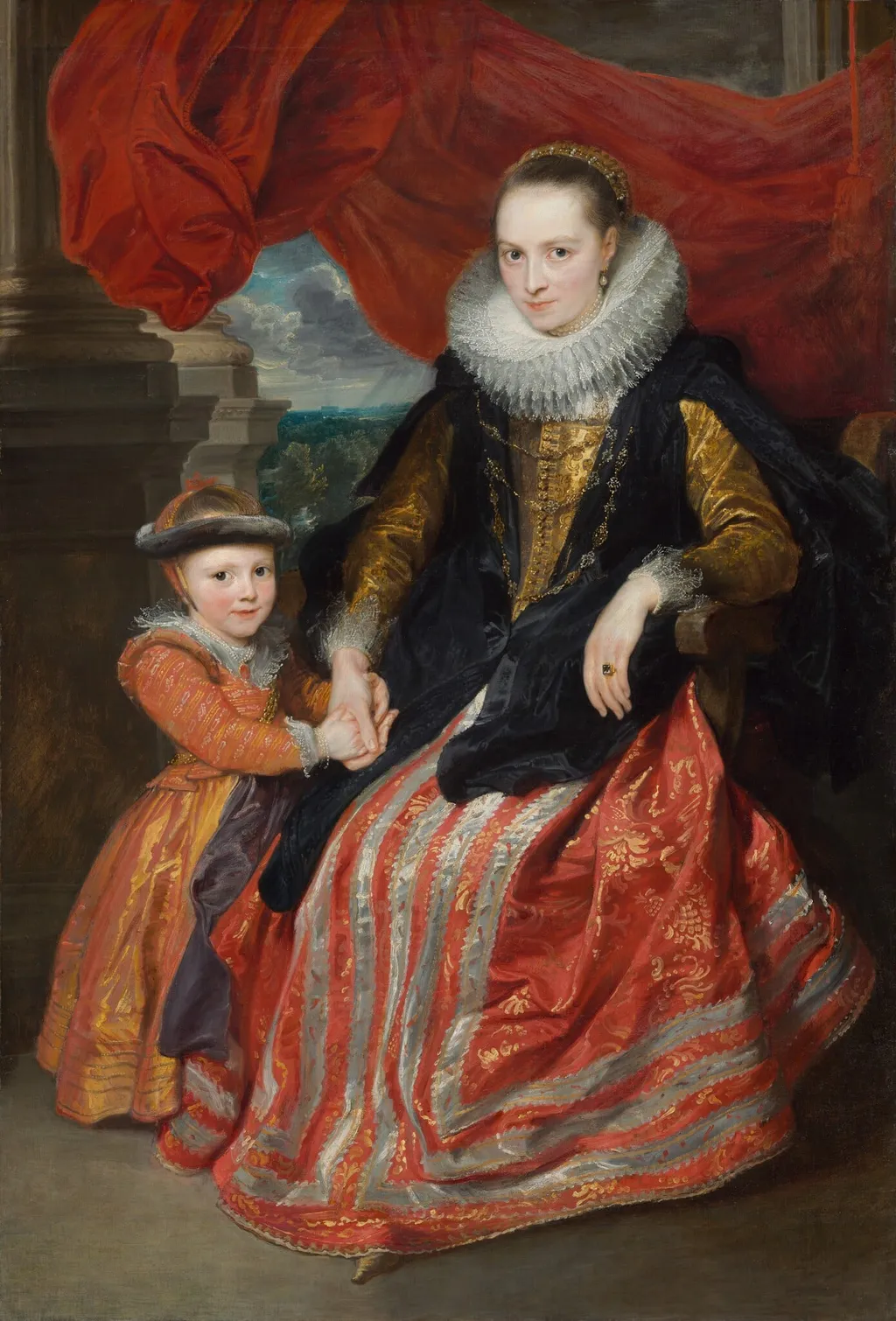
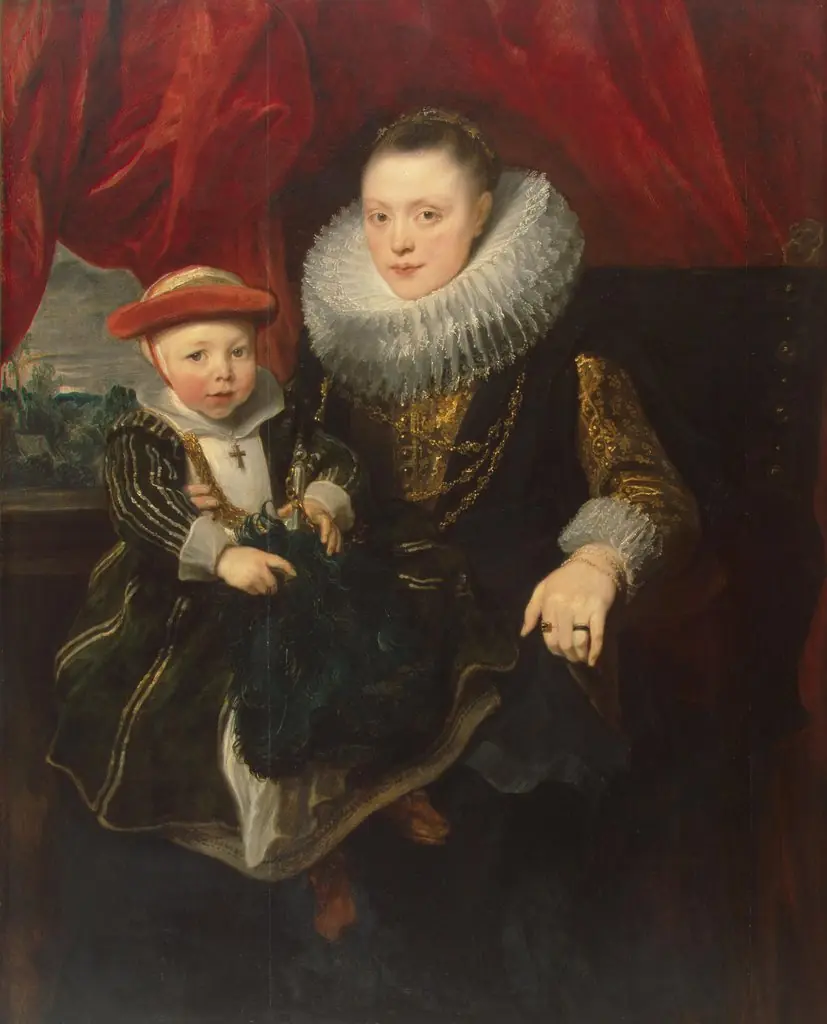
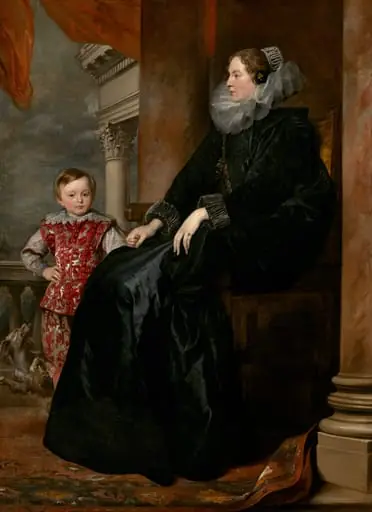
Susanna Fourment and Her Daughter is an oil painting by the Baroque artist Anthony van Dyck. It dates from 1621 and is held in the collection of the Hermitage Museum.
About this work
A woman in a dark dress holds a small girl by the hand, her face glowing softly against the shadows while the child's pink dress reads like a patch of light. Van Dyck painted it in 1621, at twenty-two; the sitter, Susanna Fourment, was his sister-in-law, and the warm light on her face has the ease of a quiet conversation.
Subject & Meaning
The painting depicts Susanna Fourment, a figure from Antwerp’s cultural milieu, accompanied by her young daughter.
The painting depicts Susanna Fourment, a figure from Antwerp’s cultural milieu, accompanied by her young daughter. Van Dyck portrays the two in close proximity, emphasizing maternal bonds through gentle gestures and shared gaze. The child’s presence introduces themes of lineage and nurturing, while the mother’s composed demeanor reflects ideals of virtue and familial duty common in portraiture of the period.
The work’s restrained elegance aligns with van Dyck’s mature style, where psychological intimacy and social status are conveyed through refined composition and understated symbolism.
Technique & Style
Executed in 1621, this portrait by Sir Anthony van Dyck is an oil painting on canvas. The work measures 172 cm in height and 117 cm in width, presenting a full-length depiction of the sitter. As a formal portrait, the composition utilizes the fluidity of oil paint to render the textures of fabric and flesh, characteristic of the artist's early style.
The physical support is a woven canvas, which has carried the work through its history from private European collections to the Imperial Hermitage and finally to the National Gallery of Art. While specific details regarding current surface condition or technical handling are not explicitly detailed in the available records, the medium and dimensions establish the work's substantial presence within the genre of seventeenth-century portraiture.
History & Provenance
Susanna Fourment and Her Daughter was painted in 1621 by Anthony van Dyck as an oil-on-canvas portrait of Susanna Fourment. The work’s early ownership is uncertain, but it is recorded as probably belonging to Anna Theresia van Halen before her Antwerp sale on 19 August 1749. It then passed to Gaillard de Gagny, whose estate sold it in Paris on 29 March 1762; Jean‑Henri Eberts acquired it for Margravine Caroline Louise of Baden, who sold it in Amsterdam on 6 March 1769.
The painting entered the collection of Étienne‑François, duc de Choiseul, and was sold from his Paris residence in April 1772. Prince Alexander M. Golitzyn purchased it for Empress Catherine II of Russia for the Imperial Hermitage. In March 1930 it was bought (misattributed to Rubens) by Andrew W. Mellon through Matthiesen Gallery, Colnaghi, and Knoedler; Mellon deeded it to the A.W. Mellon Trust in 1932, and it was gifted to the National Gallery of Art in 1937.
The painting is held by the National Gallery of Art in Washington, D.C., as part of the Andrew W. Mellon Collection. Its provenance traces from a probable early owner, Anna Theresia van Halen, through successive 18th-century sales in Antwerp (1749), Paris (1762, acquired by Jean-Henri Eberts for Markgräfin Karoline Luise von Baden), Amsterdam (1769), and again in Paris (1772, from the collection of the duc de Choiseul). It was subsequently purchased by Prince Alexander M. Golitzyn for Empress Catherine II and entered the Imperial Hermitage Gallery in Saint Petersburg.
In March 1930, the work was bought through Matthiesen Gallery, Colnaghi, and Knoedler from the Hermitage, then attributed to Rubens, by Andrew W. Mellon. It was deeded on 30 March 1932 to The A.W. Mellon Educational and Charitable Trust in Pittsburgh and given to the NGA in 1937.
Legacy
After remaining in private European collections for over two centuries, Susanna Fourment and Her Daughter entered the Imperial Hermitage in Saint Petersburg under Catherine II. In 1930 the work was acquired by Andrew W. Mellon, who at the time believed it to be by Peter Paul Rubens, and two years later it was transferred to the Mellon Trust. Mellon’s gift of the painting to the National Gallery of Art in 1937 secured its place in a major public collection, where it remains today as part of the Andrew W. Mellon collection.
Overview
Anthony van Dyck's "Susanna Fourment and Her Daughter" is an oil on canvas portrait from 1621. It depicts a woman in a dark garment gently holding the hand of a young girl. The woman's illuminated face emerges from a subdued background, while the child's bright pink dress creates a distinct visual accent. The composition emphasizes the tender connection between the two figures.
Context
This portrait was completed in 1621, when Anthony van Dyck was only twenty-two years old. Executed early in his career, it demonstrates the developing skill and sensitivity that would characterize his later work as a prominent portraitist. The painting reflects his early mastery of oil techniques and his ability to infuse personal connection into his commissions.
Own this work as a print
Artist & collection
Artist
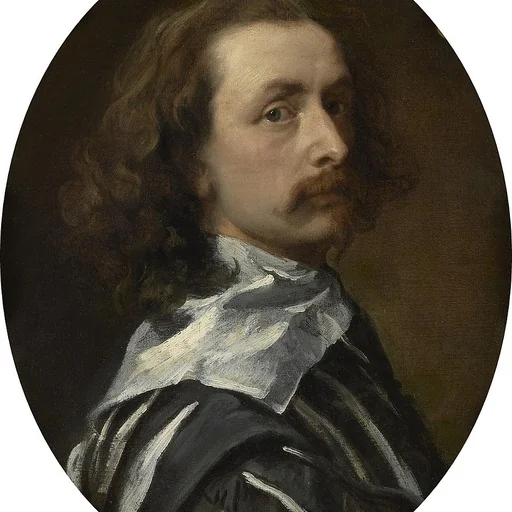
Sir Anthony van Dyck (; Dutch: Antoon van Dijck; 22 March 1599 – 9 December 1641) was a Flemish Baroque artist, who became the leading court painter in England after success in the Spanish Netherlands and Italy.

- Mother and child
 Portrait of a Young Woman with a Child
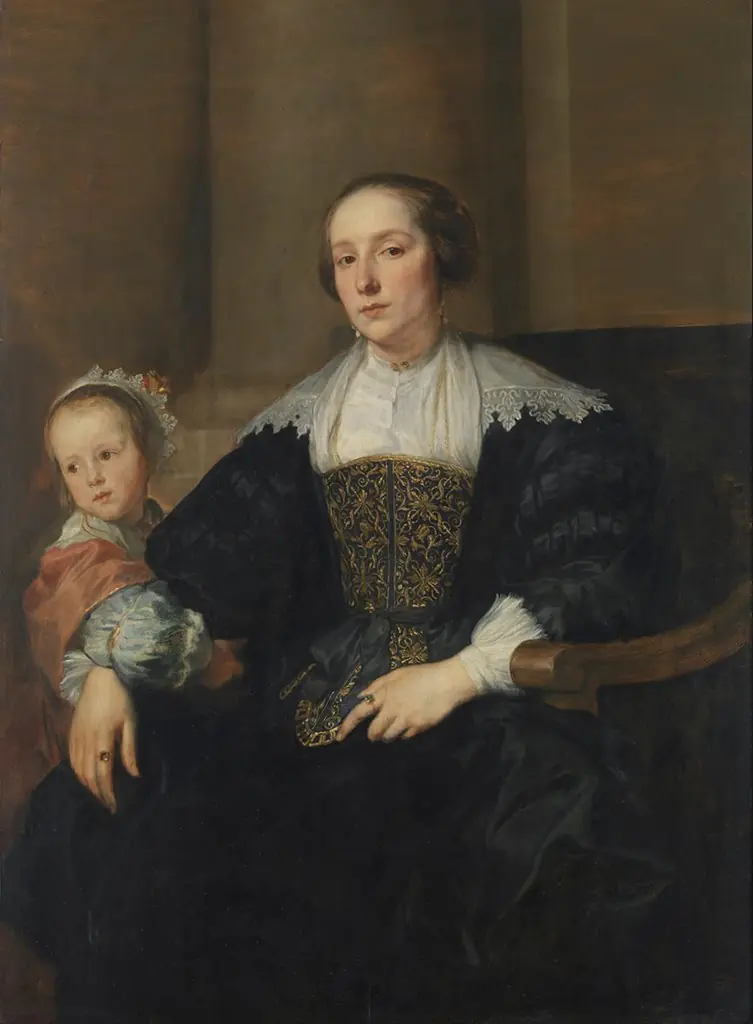 Portrait of Anna van Thielen, wife of the painter Theodoor Rombouts with their daughter
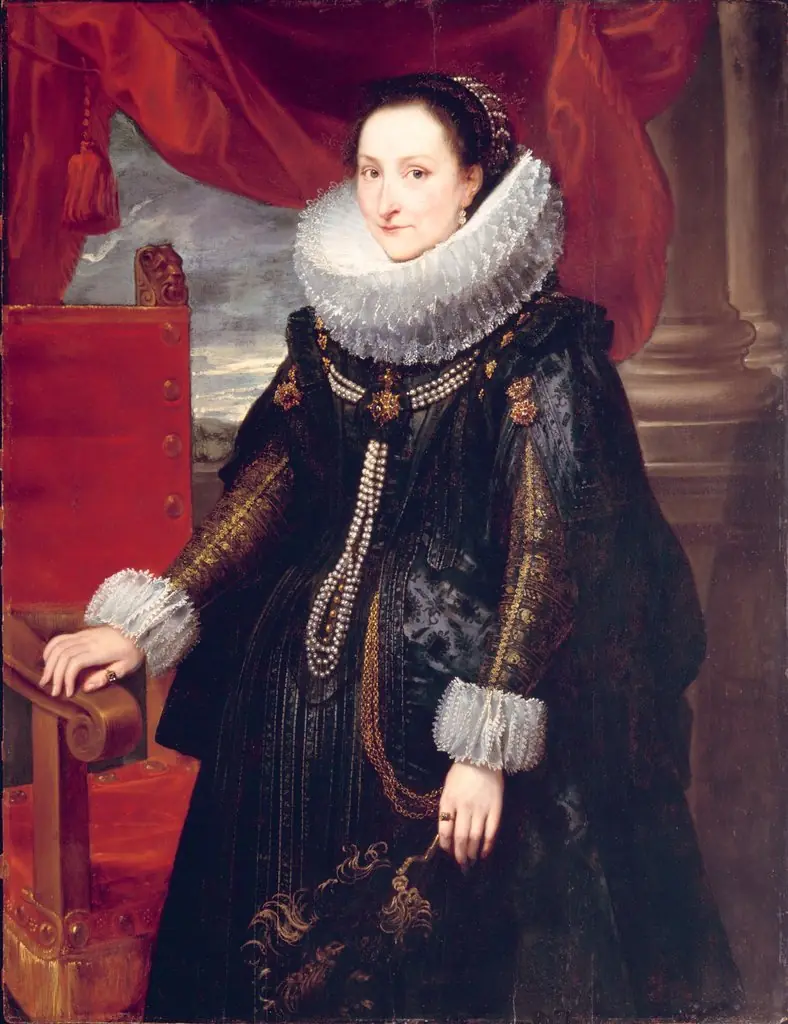 Portrait of a Woman
 Portrait of an unknown lady with marriage glove
 Untitled
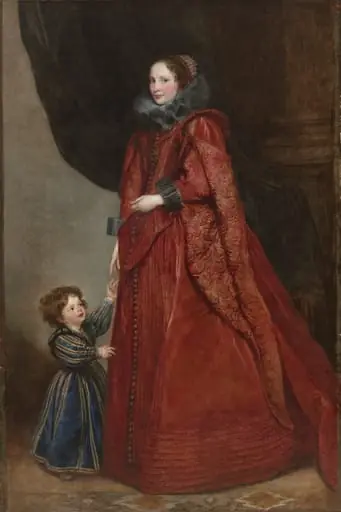 A Genoese Lady with Her Child
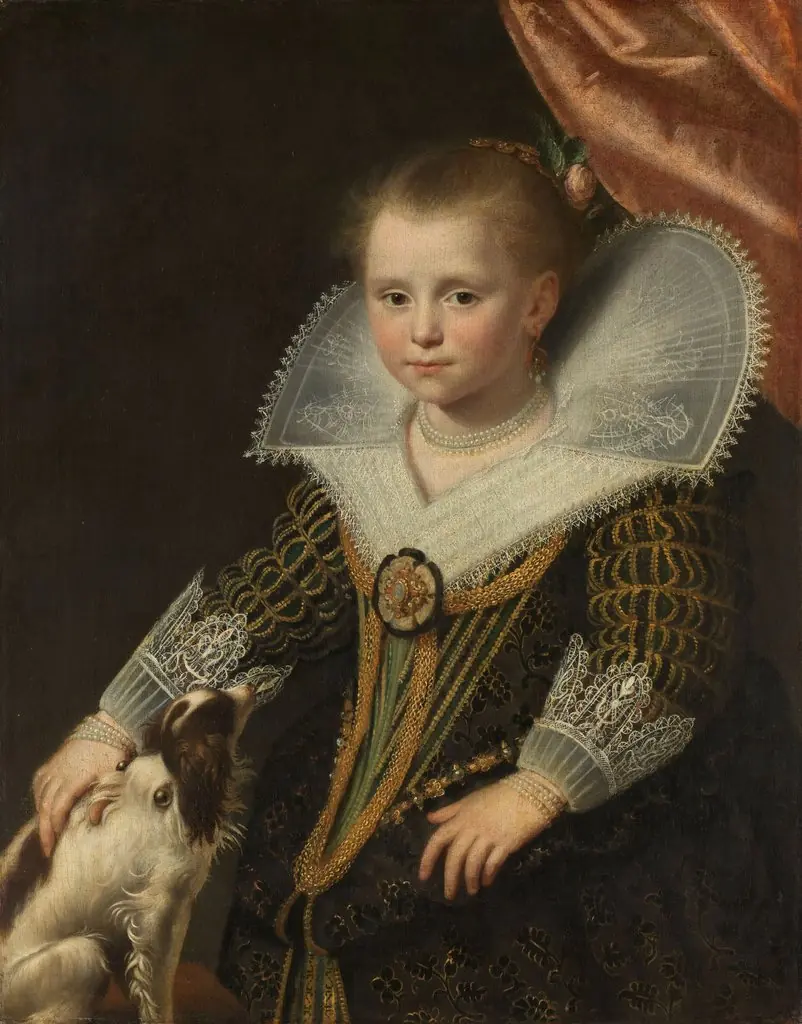 Portrait of a girl, known as 'The Little Princess'
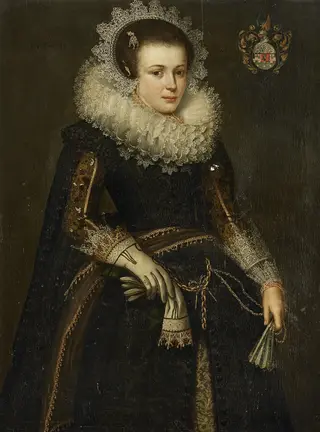 Portrait of Mertijntje van Ceters (1609-24)
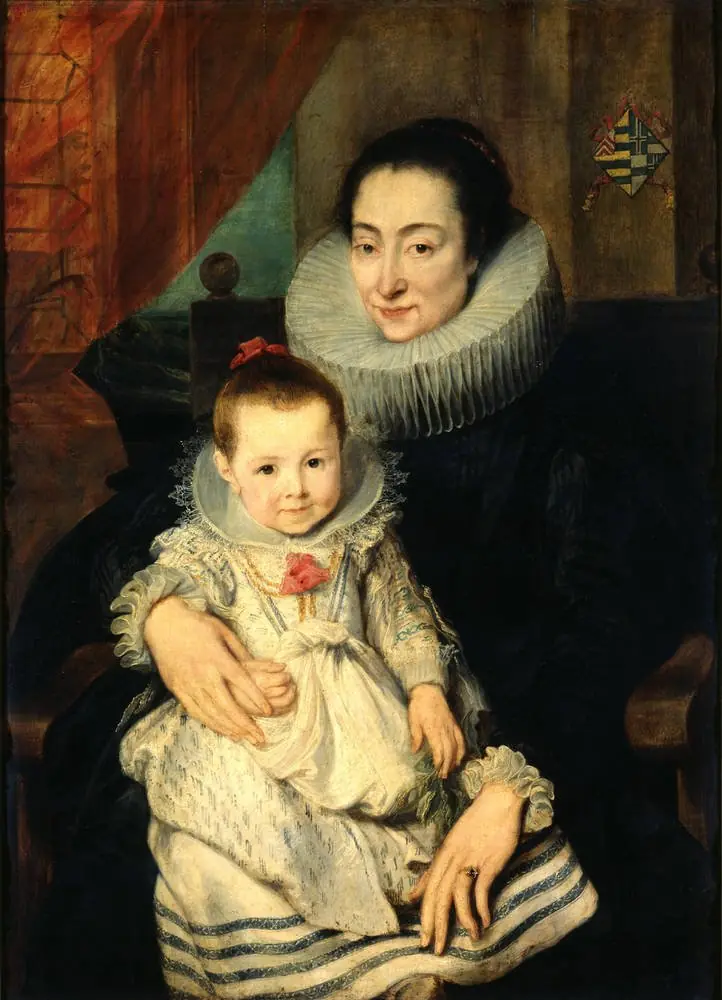 Marie Clarisse (?), wife of Jan Woverius, with their daughter
 A Genoese Noblewoman and Her Son