Artwork
Isabella Brant
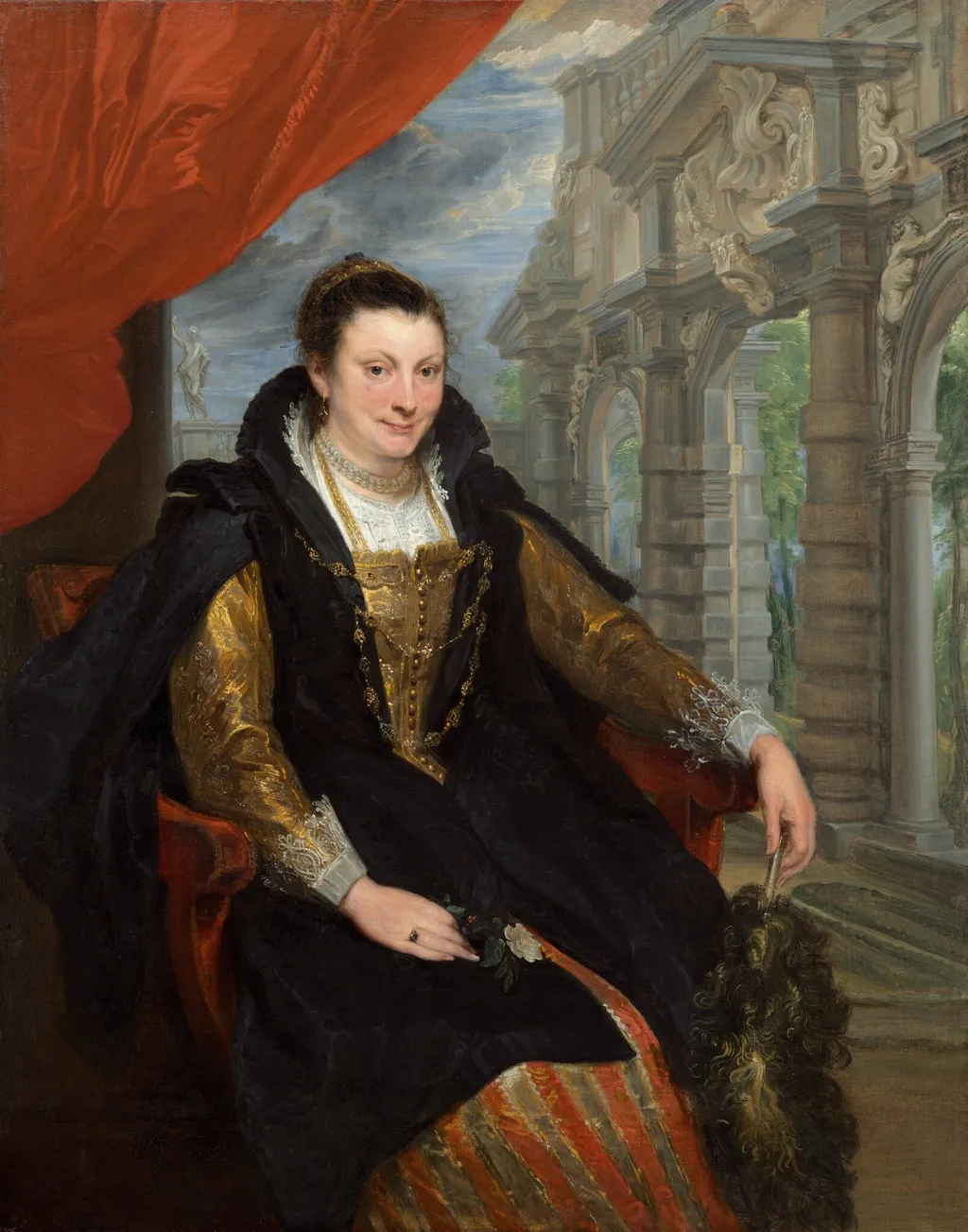
Isabella Brant is an oil painting by the Baroque artist Anthony van Dyck. It dates from 1621 and is held in the collection of the Andrew W. Mellon collection.
About this work
Just before leaving Antwerp for Italy in October 1621, Anthony van Dyck presented his mentor Peter Paul Rubens with a portrait of Rubens's wife, Isabella Brant.
Just before leaving Antwerp for Italy in October 1621, Anthony van Dyck presented his mentor Peter Paul Rubens with a portrait of Rubens's wife, Isabella Brant. She stands before the Italianate garden screen of Rubens's own mansion on the Wapper, dressed in red and gold with a jeweled chain across her chest, while Van Dyck shifts the statue of Minerva to hover behind her right shoulder. The painting measures 153 x 120 cm and is executed in oil on canvas.
Subject & Meaning
The painting depicts Isabella Brant, first wife of Peter Paul Rubens, seated before a red curtain and a chair, with the courtyard of Rubens's house (Rubenshuis) seen in the background, including a folly. Van Dyck, Rubens's assistant, likely executed this portrait as a gift before departing for Italy in 1621. The composition echoes Rubens's own portraits of his wife, notably the same hairstyle, and employs Rubensian elements such as the red drapery and warm palette, underscoring Van Dyck's apprenticeship and the master's influence.
The setting of Rubens's Baroque-style home reinforces Isabella's identity as Rubens's spouse and locates her within the couple's domestic sphere. Thus the work functions both as a personal memento and as a demonstration of Van Dyck's early mastery.
Technique & Style
The painting is executed in oil on canvas, measuring 153 × 120 cm. Van Dyck's handling shows the influence of his master Rubens: the brushwork, color palette, and costume all echo Rubens's contemporary portraits of his wife. A red curtain draped in the upper-left corner adds a Venetian-inspired theatricality. The background features the courtyard of Rubens's house, built in a Baroque style, anchoring the portrait in a specific, personal setting.
The work thus blends Flemish Baroque conventions with the emerging stylistic traits of van Dyck's early independent career.
History & Provenance
The portrait was painted in 1621 by Anthony van Dyck in Antwerp, during his period as Rubens's assistant. It has been speculated that van Dyck created this work as a gift for Rubens and his wife, Isabella Brant, prior to his departure for Italy. For a long time, the painting was erroneously attributed to Rubens himself.
The background depicts the courtyard of Rubens's house, built in a Baroque style of Rubens's own design. Its provenance begins with the Parisian collector Pierre Crozat (1665–1740). It passed through the Crozat family and was purchased in 1772 for Catherine II of Russia via Denis Diderot, entering the Imperial Hermitage Gallery.
In August 1930, it was sold by the Hermitage (then still attributed to Rubens) through intermediaries to Andrew W. Mellon. It was deeded to the A.W. Mellon Educational and Charitable Trust in 1932 and gifted to the National Gallery of Art, Washington, in 1937.
Context
The painting was long attributed to Peter Paul Rubens, reflecting its close stylistic resemblance to Rubens's own portraits of Isabella Brant, likely due to van Dyck's direct emulation of his master's technique and palette. Scholars now identify it as one of van Dyck's earliest works, painted in 1621 just before his departure for Italy. It reveals the young artist's adoption of Rubens's Venetian-inspired motifs, such as the red curtain and background view of the Rubenshuis courtyard, while also anticipating his later success as a leading portraitist at the court of Charles I of England.
The portrait thus occupies a pivotal position as a transitional piece, demonstrating van Dyck's maturation under Rubens's influence and his subsequent development of an independent style.
Overview
This oil on canvas portrait, painted by Anthony van Dyck in 1621, depicts Isabella Brant, the first wife of his mentor, Peter Paul Rubens. Created just before Van Dyck's departure for Italy, the work served as a gesture of gratitude to Rubens. The painting captures Brant standing before the distinctive Italianate garden screen of her husband's Antwerp residence, a structure Rubens himself had designed. The artwork measures 153 by 120 centimeters.
Own this work as a print
Artist & collection
Artist
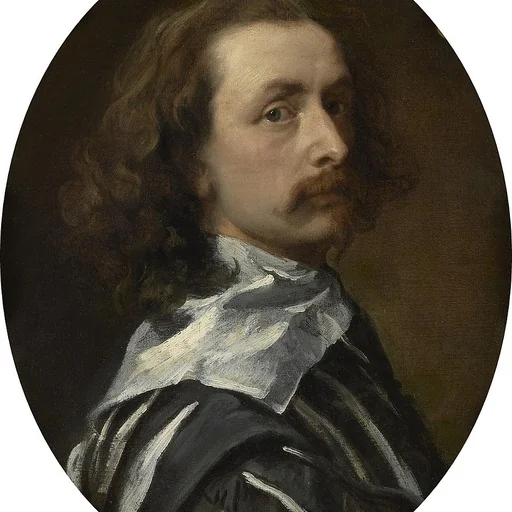
Sir Anthony van Dyck (; Dutch: Antoon van Dijck; 22 March 1599 – 9 December 1641) was a Flemish Baroque artist, who became the leading court painter in England after success in the Spanish Netherlands and Italy.
 Portrait of Anna Wake
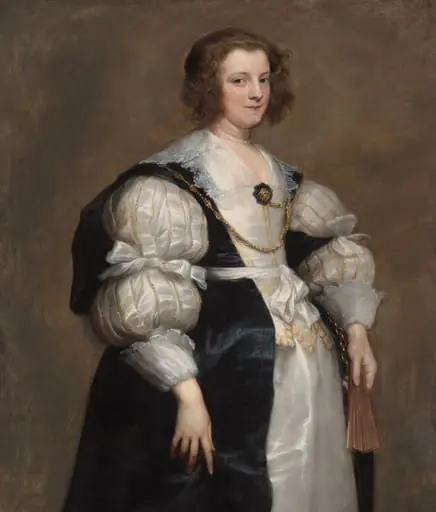 Lady with a Fan
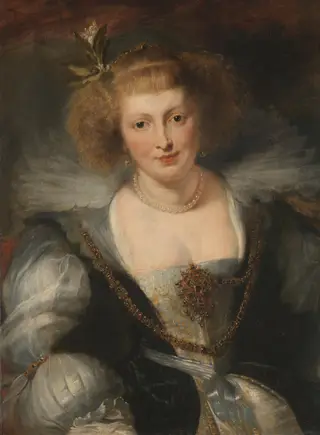 Untitled
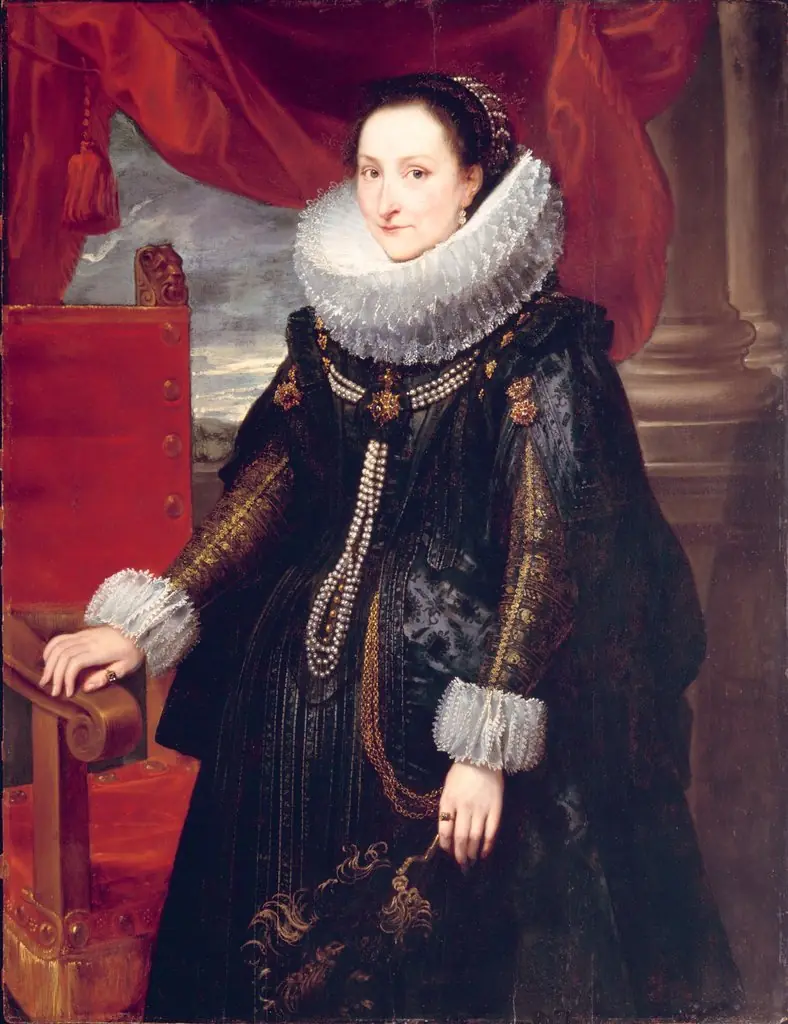 Portrait of a Woman
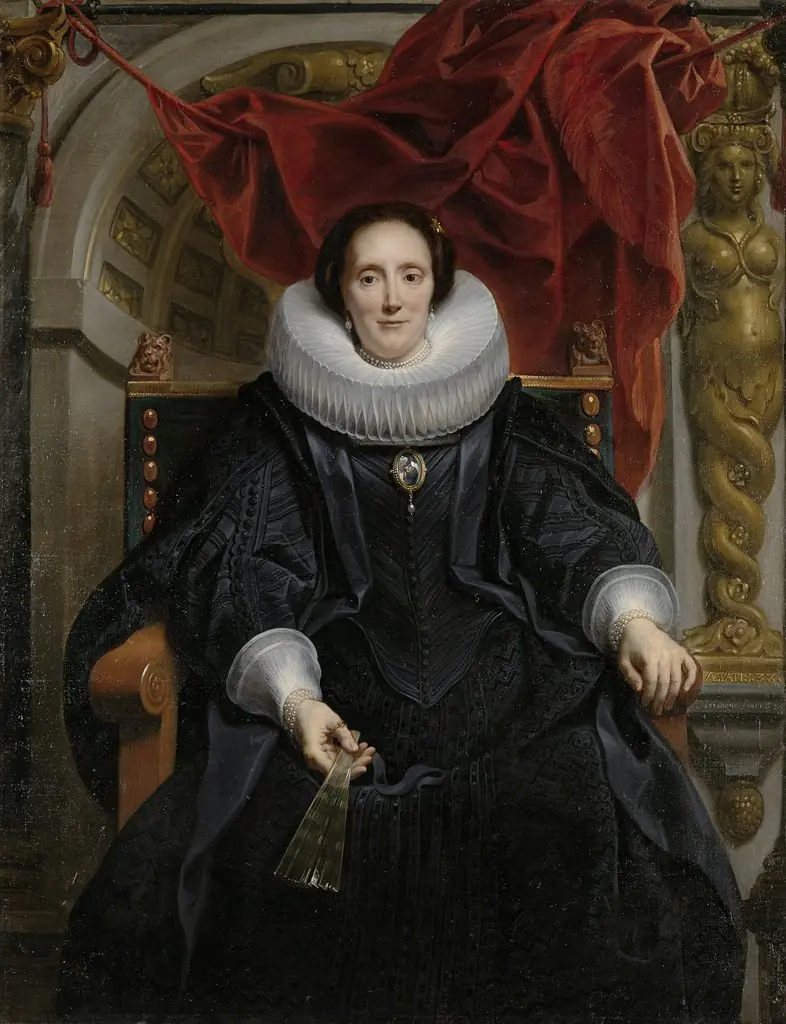 Portrait of Catharina Behaghel (1597-1666), wife of Rogier Le Witer
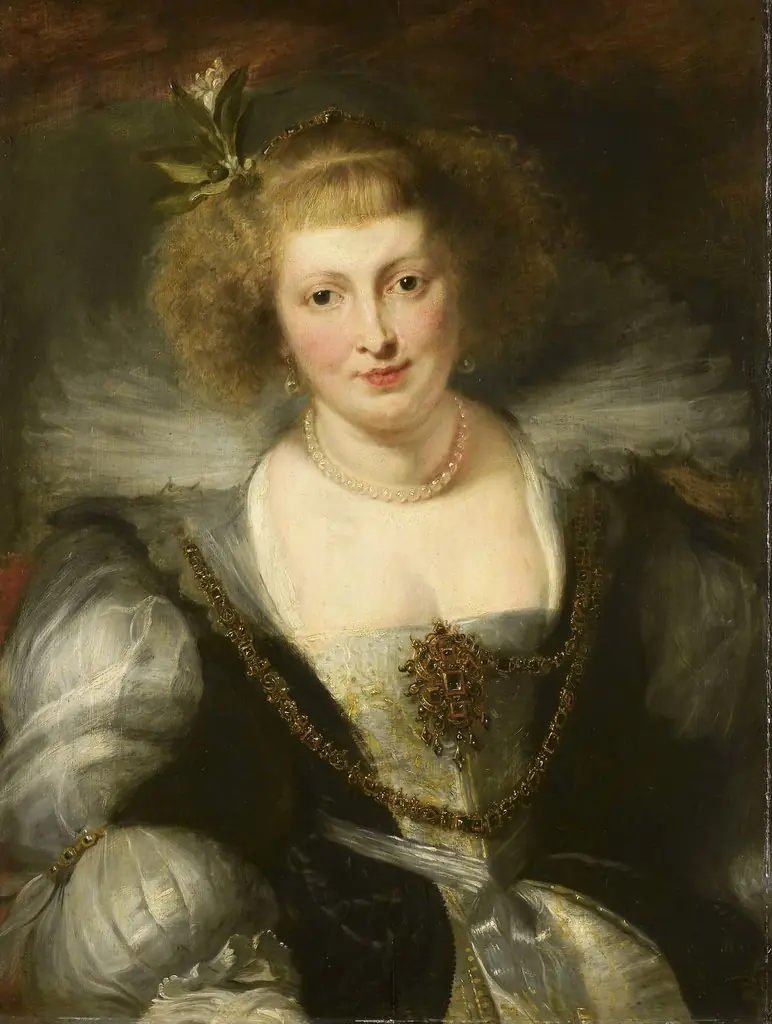 Helena Fourment (1614-73). The artist's second wife
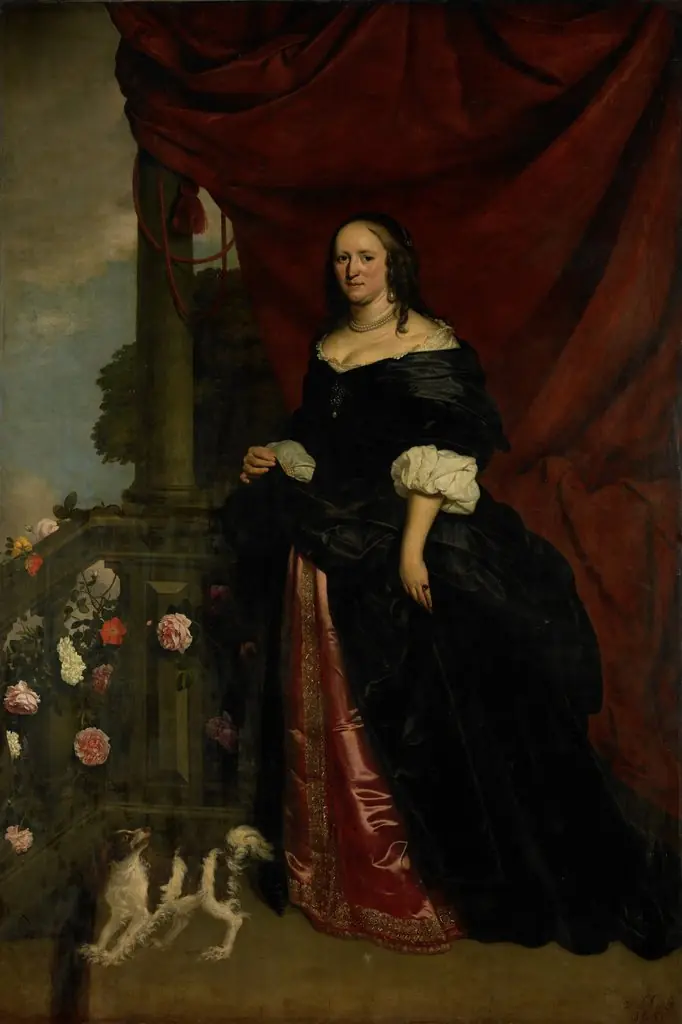 Portrait of a woman, probably Sophia Anna van Pipenpoy (c. 1618-70), Countess of Schellart
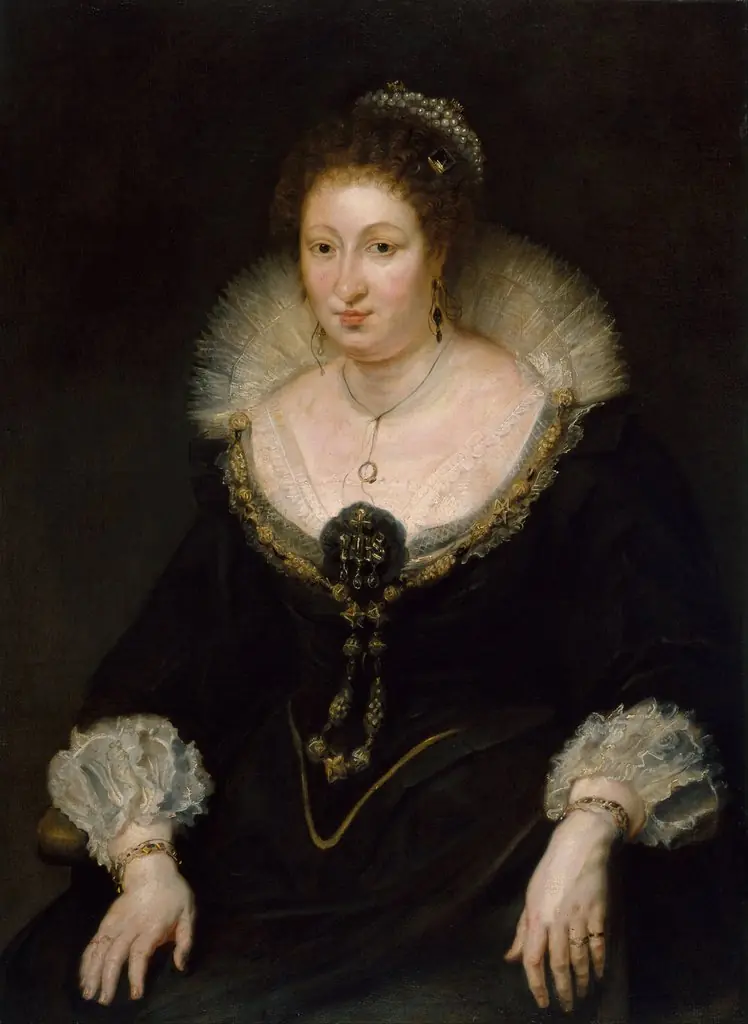 Lady Alethea Talbot, Countess of Arundel
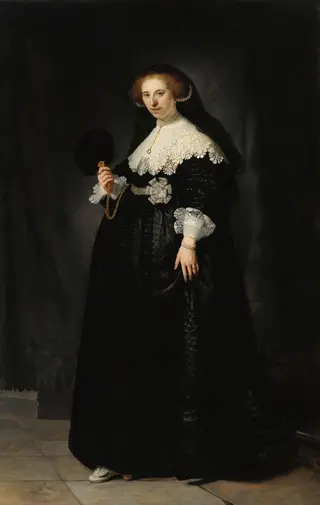 Portrait of Oopjen Coppit
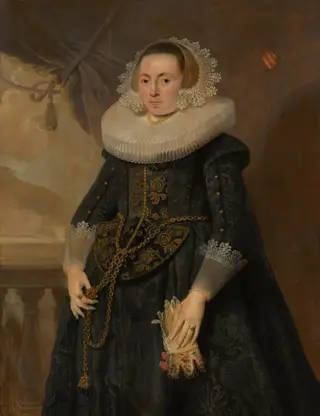 Portrait of an unknown lady with marriage glove