Artwork
Frieze of Dancers
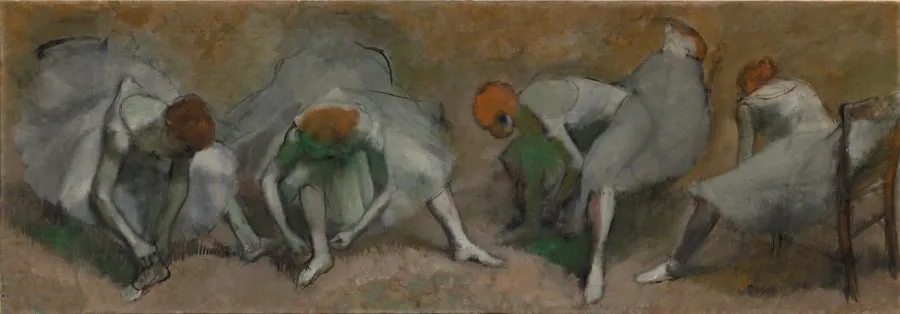
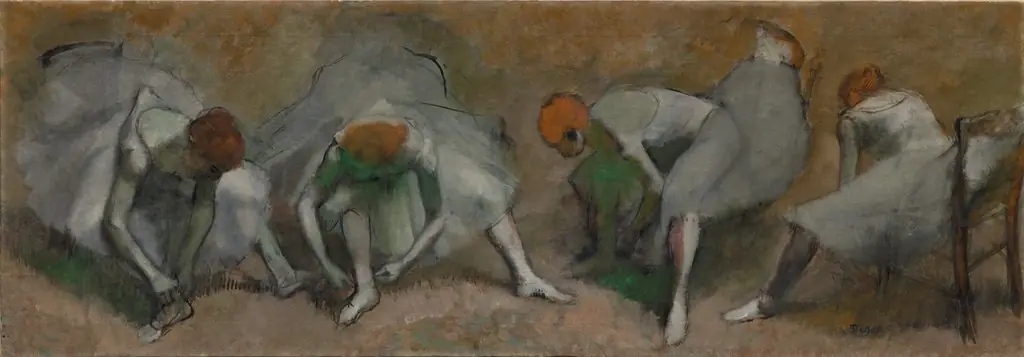
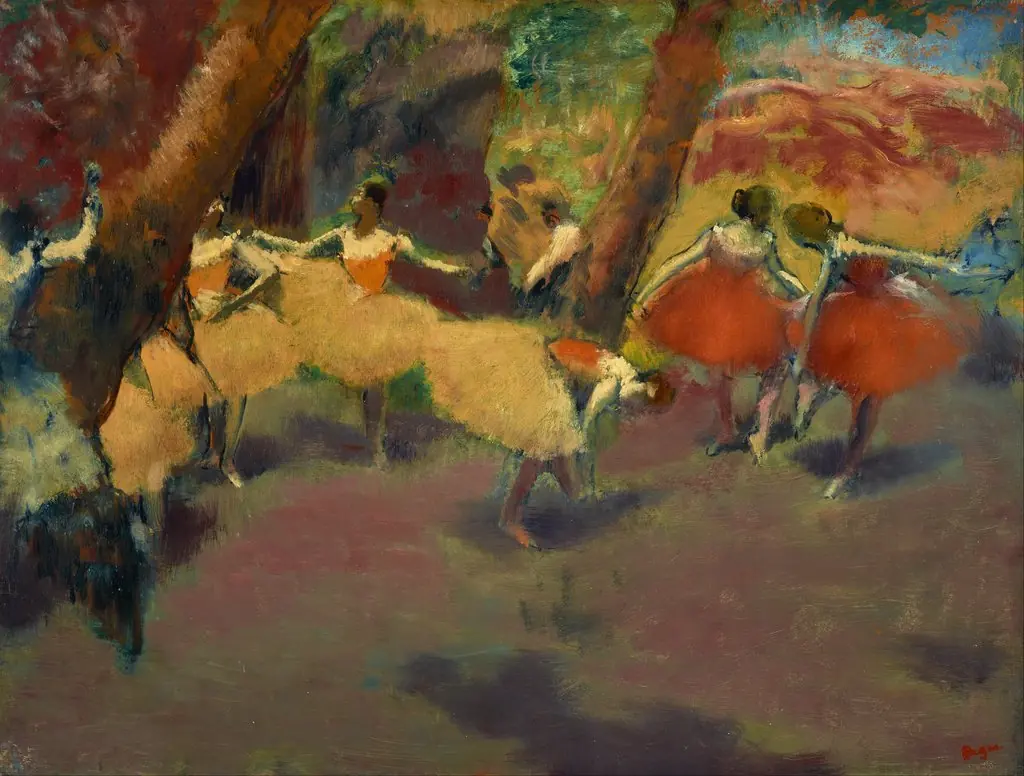
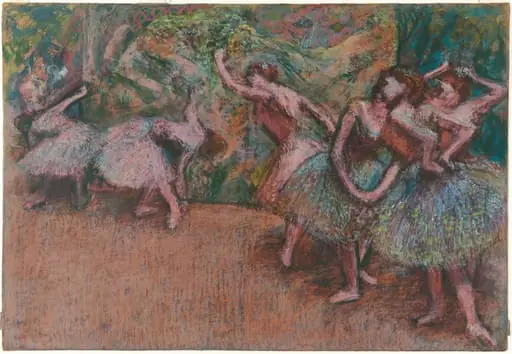
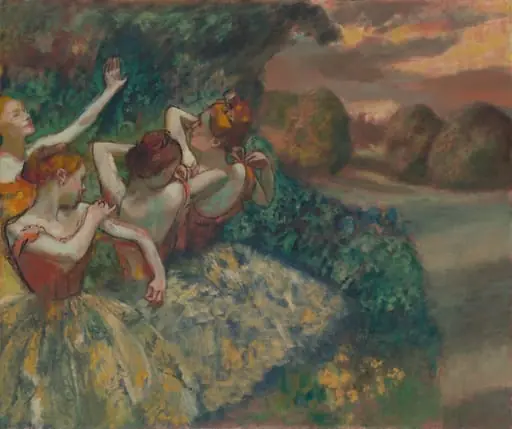
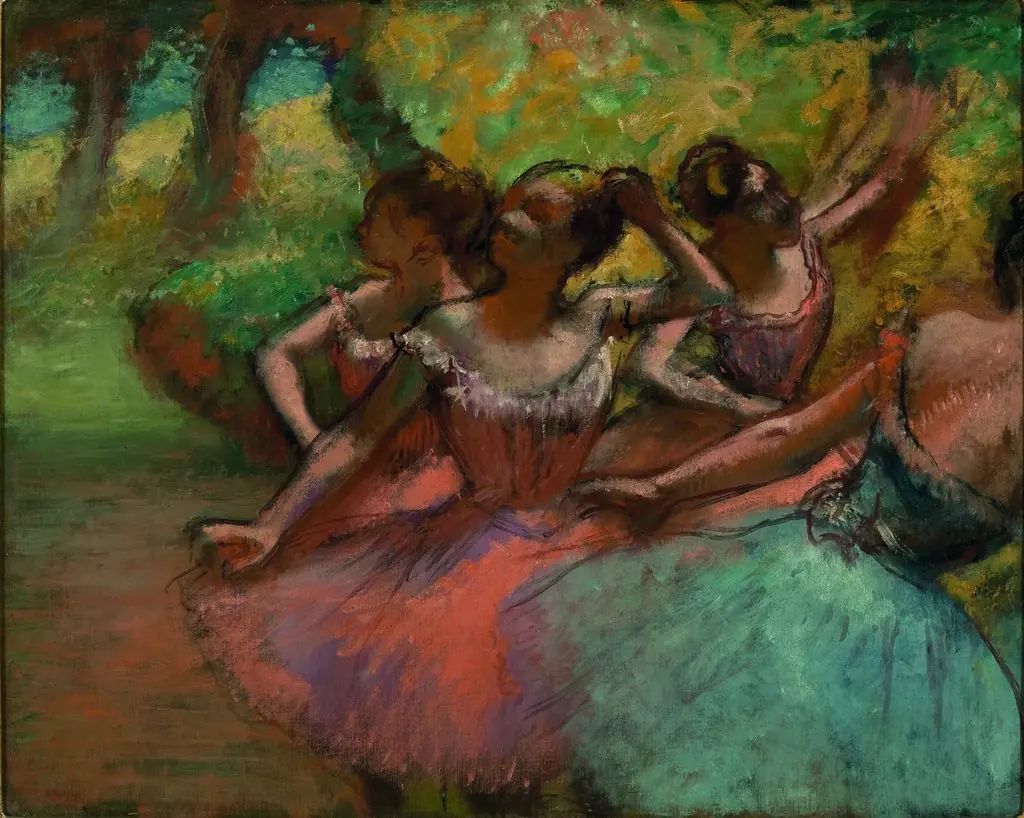
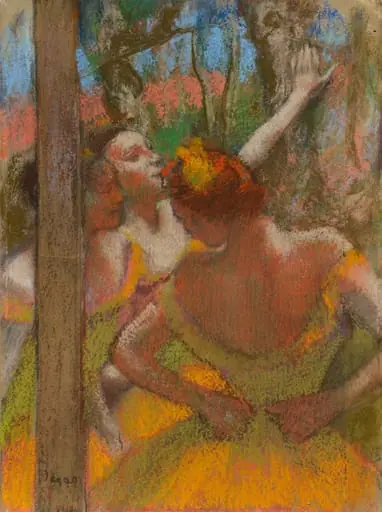
Frieze of Dancers is an unspecified painting by the Impressionist artist Edgar Degas. It dates from 1895 and is held in the collection of the Cleveland Museum of Art.
- Accession no.
- 1946.83
- Credit line
- Gift of the Hanna Fund
About this work
Overview
Edgar Degas’s large canvas, titled Frieze of Dancers, presents a single ballerina rendered four times in succession, each figure captured from a slightly altered angle. The composition stretches across a six‑foot width, arranging the poses side by side as if they were consecutive frames of a motion study, while the background remains an indistinct wash of pink and gray.
Subject & Meaning
The work isolates the dancer’s movement, emphasizing the fluid transition between balance, twist, and extension. By repeating the figure, Degas invites viewers to contemplate the passage of time within a static image, suggesting a visual narrative of performance rather than a single decorative pose.
Technique & Style
Degas applied pigment in a spontaneous manner, allowing colors to run and drip across the surface. He further manipulated the medium with his thumb, smearing areas to create soft edges. This gestural handling, unusual for a work of such scale, blurs the line between finished painting and sketch, reinforcing the sense of immediacy.
Context
Created in the late 19th century, the piece reflects Degas’s interest in contemporary photographic experiments, particularly the sequential motion studies of Eadweard Muybridge. The juxtaposition of multiple viewpoints anticipates later explorations of time and movement in visual art, marking a departure from traditional single‑perspective representation.
History & Provenance
The canvas was exhibited shortly after its completion, drawing attention for its unconventional size and method. While initially surprising to Degas’s peers, the work entered a private collection before being acquired by a major museum, where it remains a reference point for studies of kinetic representation in painting.
Artist & collection

Artist
Born Hilaire-Germain-Edgar De Gas on 19 July 1834 in Paris, Edgar Degas came from an affluent banking family with aristocratic roots and spent his childhood among the cultivated circles of the French capital.