Artwork
Farm in the Province of North Holland
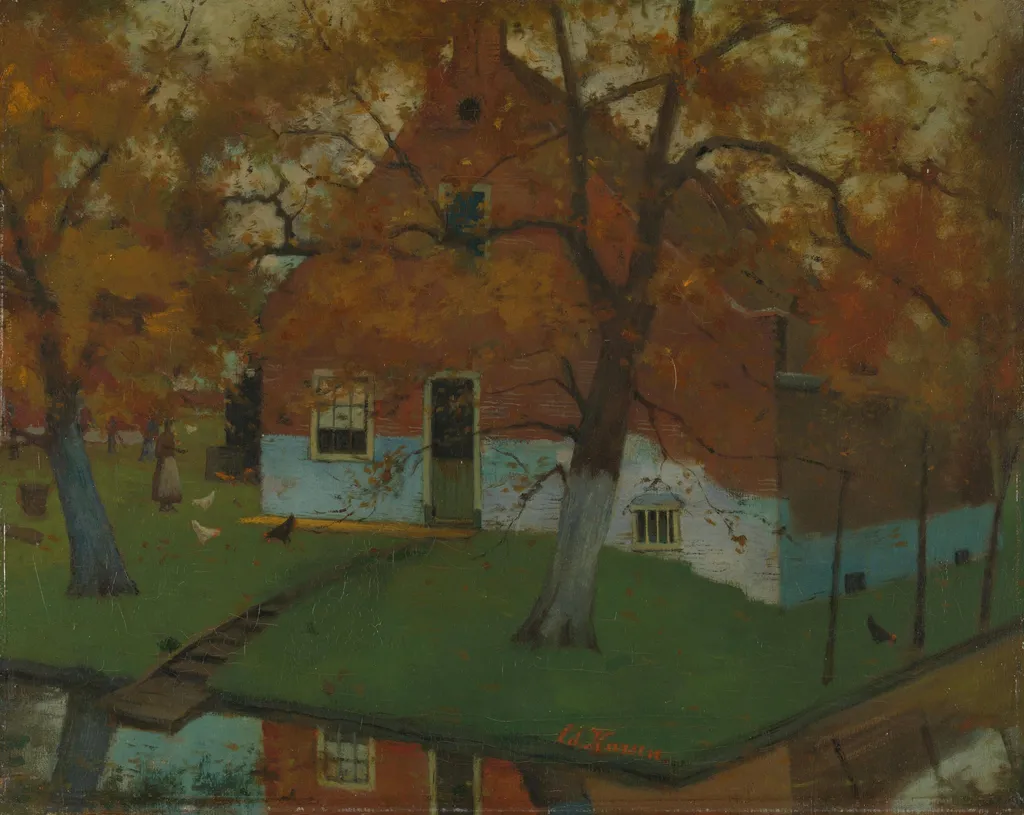
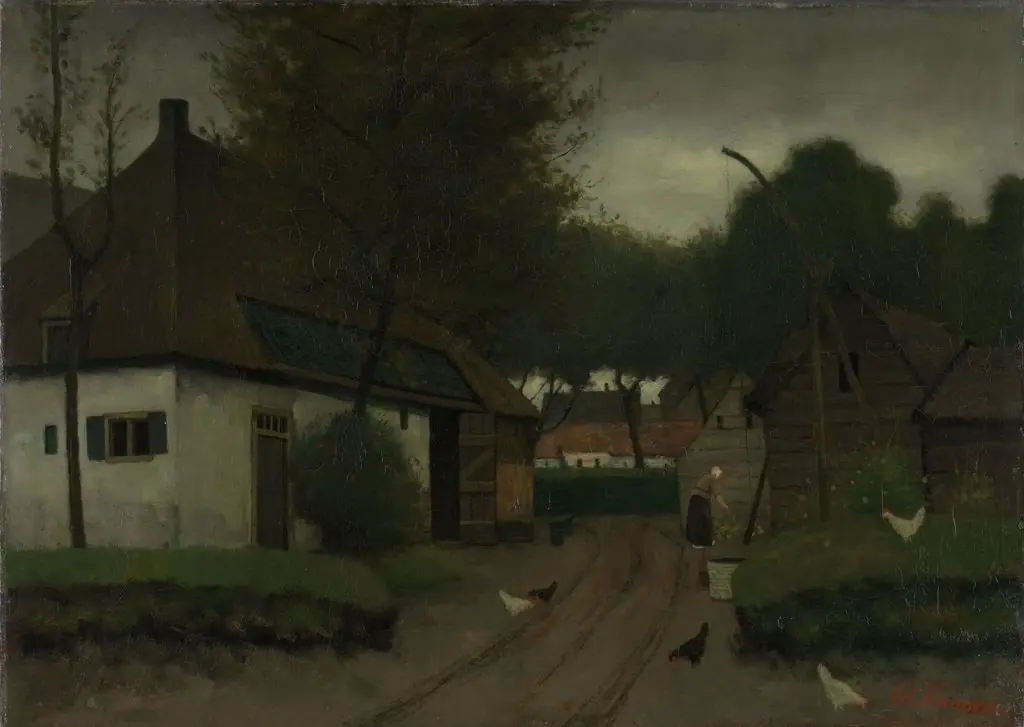
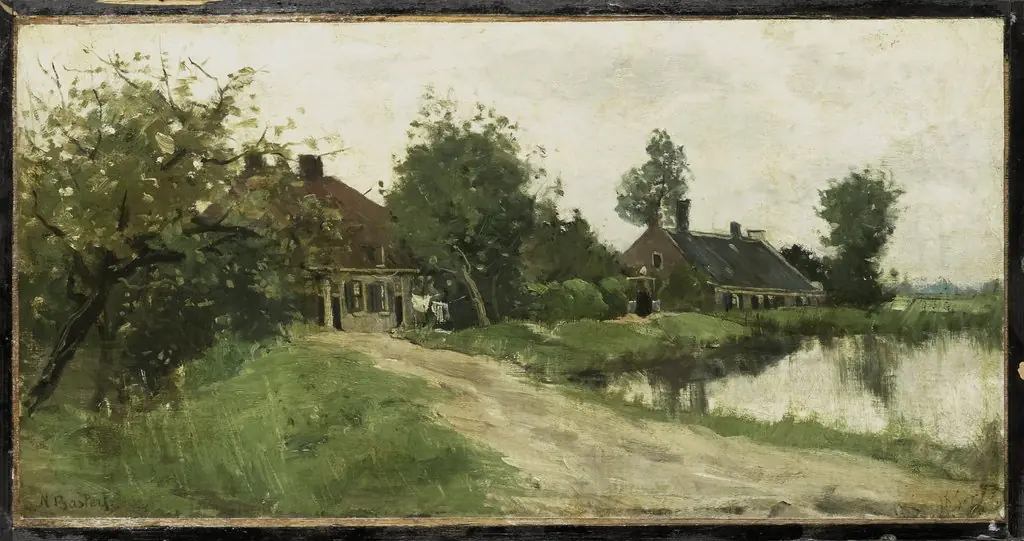
Farm in the Province of North Holland is an unspecified painting by the Impressionist artist Eduard Karsen. It dates from 1890 and is held in the collection of the Rijksmuseum. This anonymous 17th-century painting depicts a rural farmhouse in North Holland, flanked by water channels on two sides.
About this work
Overview
The scene lacks a known artist’s signature, lending it the intimate, unposed quality of a private moment preserved on canvas.
This anonymous 17th-century painting depicts a rural farmhouse in North Holland, flanked by water channels on two sides. The composition is grounded in quiet observation, with no dramatic action or idealized elements. Two large trees frame the foreground, while a woman tends to poultry near the entrance.
The scene lacks a known artist’s signature, lending it the intimate, unposed quality of a private moment preserved on canvas.
Subject & Meaning
The painting captures a routine agricultural life: a woman scattering grain for chickens, a daily act of sustenance. The presence of ditches suggests the region’s engineered landscape, where water management shaped farming. There is no narrative climax, only the rhythm of labor and the stillness of domestic routine. The scene’s value lies in its unembellished authenticity, reflecting the quiet dignity of rural existence.
Technique & Style
The brushwork is restrained and observational, favoring soft tonal transitions over sharp definition. Light is diffused, creating a hazy, atmospheric quality that softens edges and unifies the scene. Colors are muted, earthy browns, pale greens, and grayish blues, reinforcing the sense of a moment caught in natural light. The composition avoids theatricality, relying on balance and spatial clarity to guide the viewer’s eye.
History & Provenance
The painting’s origin remains undocumented; no artist’s name, date, or early ownership record survives. It likely belonged to a local collector or farmer’s family, given its unpretentious subject. Its survival suggests it was valued for its familiarity rather than its artistic prestige.
Today, it resides in a public collection, where its anonymity invites reflection on the countless unnamed artisans of the Dutch Golden Age.
Context
In 17th-century Holland, rural life was increasingly depicted in art as urban prosperity grew. Paintings like this one responded to a public interest in authentic, non-idealized landscapes. Unlike grand historical or religious scenes, this work reflects the rising cultural value placed on everyday experience, particularly in the agrarian heartland of North Holland, where land reclamation and farming defined community life.
Legacy
Though unsigned and uncelebrated in its time, the painting endures as a quiet testament to the ordinary. It contributes to a broader tradition of Dutch genre painting that honored daily labor over spectacle. Its preservation in institutional collections underscores a modern appreciation for art that records life as it was lived, not as it was imagined.
Own this work as a print
Artist & collection
Artist
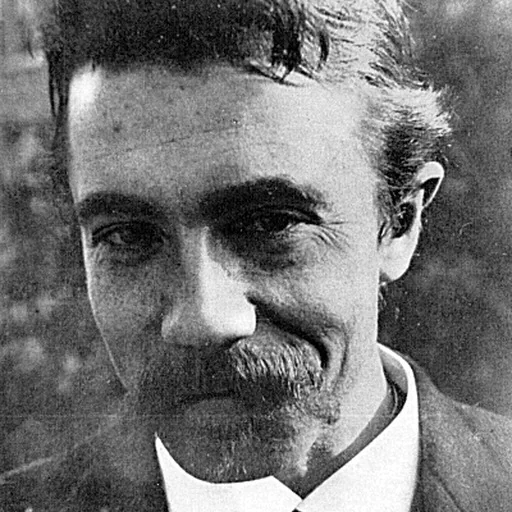
Johann Eduard Karsen (10 March 1860, Amsterdam - 31 October 1941, Amsterdam) was a Dutch Post-Impressionist painter, known for his moody scenes featuring villages and farmhouses; usually containing a solitary figure.