Artwork
Plauenscher Grund at Dresden
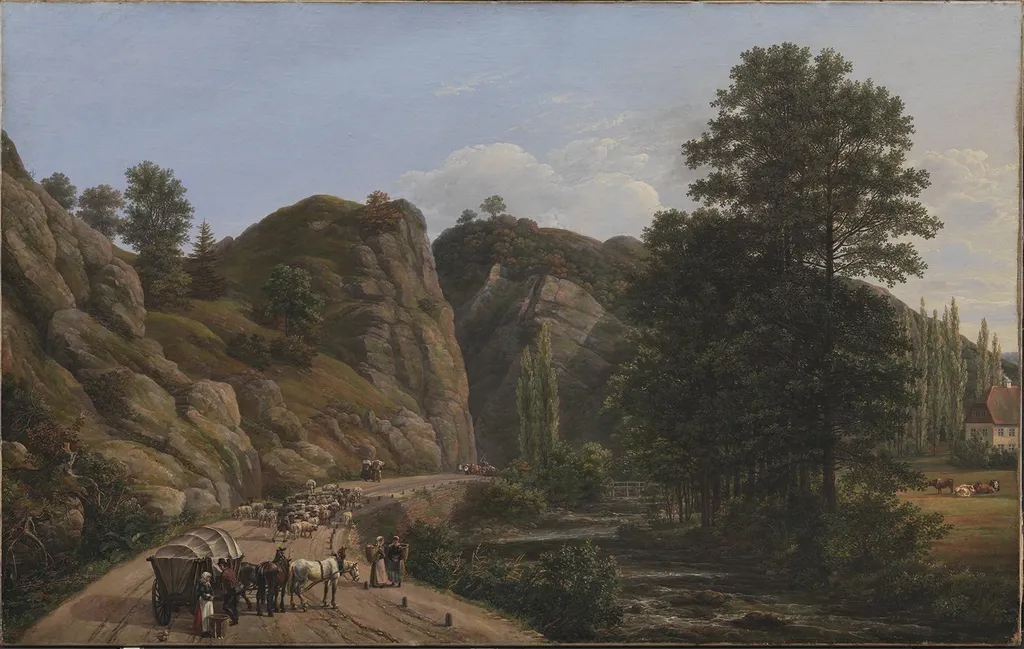
Plauenscher Grund at Dresden is an oil painting by the German Romanticist artist Johan Christian Dahl. It dates from 1818 and is held in the collection of the Statens Museum for Kunst.
About this work
Overview
Plauenscher Grund at Dresden is an oil-on-canvas landscape painting by the Norwegian Romantic artist Johan Christian Dahl, dated 1818.
Plauenscher Grund at Dresden is an oil-on-canvas landscape painting by the Norwegian Romantic artist Johan Christian Dahl, dated 1818. Measuring 77.5 by 122.7 centimetres, the work is held in the collection of the Statens Museum for Kunst (National Gallery of Denmark) in Copenhagen. Painted during the year Dahl first arrived in Dresden, the picture captures the rocky valley of the Plauenscher Grund, a narrow gorge of the Weißeritz river on the outskirts of the Saxon capital. The painting exemplifies Dahl's early engagement with German scenery and marks a pivotal moment in his career, when he transitioned from his training in Copenhagen to the artistic milieu of Dresden, where he would spend the remainder of his life and emerge as one of the leading landscape painters of the Romantic era.
Subject & Meaning
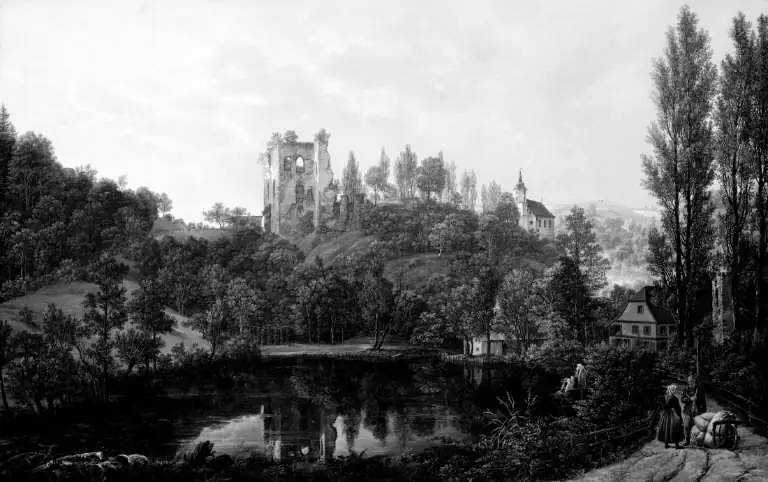
The painting depicts a wide valley view of the Plauenscher Grund, a landscape unit that forms a narrow section of the Weißeritz river valley connecting the Elbe basin with the Ore Mountains foreland. In the foreground, a dirt road winds through the rocky terrain, where a covered wagon drawn by four horses has halted, attended by two figures with a small child nearby. Two women carrying baskets on their heads proceed along the road, while further back a flock of sheep, additional figures, and a distant carriage move toward a rocky pass. To the right, a stream flows beside the road, bordered by dense trees, with a prominent tall tree dominating the middle ground. Beyond the water, a white house with a red roof sits in a clearing where cattle graze, framed by steep rocky hills patched with green vegetation. The pale blue sky with soft white clouds suggests a clear day. The scene presents an image of rural activity and transit through a dramatic natural setting, reflecting the Romantic interest in the encounter between human presence and untamed landscape. The composition guides the viewer's eye from foreground activity through the valley toward distant hills, embodying the Romantic ideal of the wanderer's journey through nature.
Technique & Style
Dahl executed Plauenscher Grund at Dresden in oil paint on canvas, employing a smooth and detailed brushwork that renders foliage, rock textures, and figures with careful precision. The palette consists of earthy browns and greens, with muted blues and grays in the rocks and sky. Light falls evenly across the scene, creating a calm, clear-day atmosphere rather than the dramatic storm effects he would later pursue. The composition uses the winding road as a natural device to create perspectival depth, leading the viewer from the immediate foreground through the valley toward the distant pass. This handling demonstrates Dahl's academic training in Copenhagen under Christian August Lorentzen, combined with an emerging sensitivity to topographical specificity and atmospheric conditions that would define his mature work. The even lighting and detailed naturalism distinguish this early Dresden picture from the more turbulent cloud studies and nocturnal scenes of his later career, while still showing his fundamental commitment to direct observationSuffix observation of nature.
History & Provenance
Dahl painted Plauenscher Grund at Dresden in 1818, the same year he completed his studies at the Academy of Fine Arts in Copenhagen and embarked on a Grand Tour that brought him to Dresden that autumn. The work entered the collection of the Statens Museum for Kunst in Copenhagen, where it remains today. The painting has been exhibited in significant Dahl retrospectives, including Dahl and Friedrich. Romantic Landscapes and the jubilee exhibition Johan Christian Dahl 1788-1857 in 1988, as well as J.C. Dahl's verk: Minneutstilling Nasjonalgalleriet 100 år in collaboration with Kunstnernes Hus. These exhibitions positioned the work within the broader context of Dahl's oeuvre and his dialogue with German Romanticism.
Context
The year 1818 was transformative for Dahl. After completing his studies in Copenhagen, he traveled through Germany and arrived in Dresden, where he formed a close friendship with Caspar David Friedrich that would shape both artists' careers. From 1823, they shared a house at An der Elbe 33 with views over the Elbe. Together with Friedrich and Carl Gustav Carus, Dahl became one of the most important Dresden artists of the epoch, exerting formative influence on German Romantic painting. The Plauenscher Grund itself held particular significance as one of the varied landscapes around Dahl's adoptive hometown that he repeatedly depicted. The valley had only become accessible by carriage in the mid-eighteenth century, and by around 1800 its scenic beauty had become known, attracting numerous artists and even poets such as Wilhelm Müller, who was celebrated as the 'singer of the Plauenscher Grund.' The wild romantic character that attracted these artists would later be systematically destroyed by quarrying and industrial development from the mid-nineteenth century onward, making Dahl's painted record historically precious. Dahl's move to Dresden in 1818 initiated his permanent engagement with Saxon and later Norwegian subjects, and his role as a bridge between Nordic and German landscape traditions. He became a member of the art academies of Copenhagen (1827), Stockholm (1832), and Berlin (1834), and his influence extended to pupils including Ernst Ferdinand Oehme, Thomas Fearnley, and Peder Balke.
Legacy
Plauenscher Grund at Dresden stands as a significant document of Dahl's formative encounter with the Saxon landscape and the beginning of his lifelong engagement with the scenery around Dresden. The painting represents an early contribution to the visual culture of the Plauenscher Grund, a valley that would attract artistic attention throughout the Romantic period before its character was irrevocably altered by industrialization. As part of the collection at the Statens Museum for Kunst, the work contributes to the institutional understanding of Dahl's development and his position within European Romantic landscape painting. The 1988 jubilee exhibitions that included this painting helped consolidate scholarly appreciation of Dahl's achievement on the centenary of his death, affirming his status alongside Friedrich and Carus as a defining figure of Dresden Romanticism. The work also holds value as a topographical record: the valley Dahl depicted has since been so transformed by quarrying and construction that its pre-industrial appearance survives primarily in artistic representations such as this one. Dahl's broader legacy includes his instrumental role in establishing the National Gallery in Oslo (1842), his efforts to preserve Norwegian cultural heritage including the relocation of the Stave Church of Wang to Silesia, and his posthumous recognition as Norway's preeminent landscape painter of the Romantic era.
Artist & collection
Artist
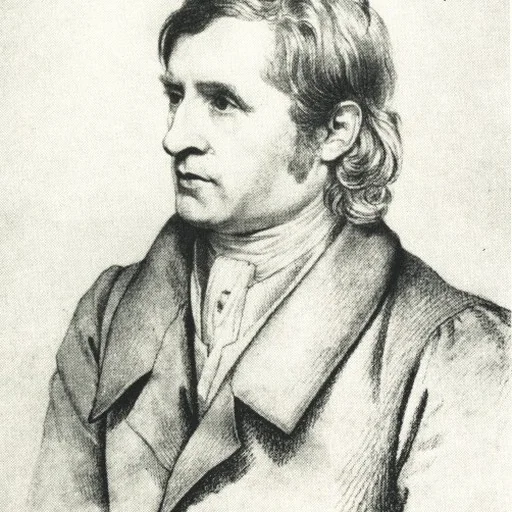
Johan Christian Claussen Dahl (24 February 1788 – 14 October 1857), often known as J.

 Landscape with cattle herders
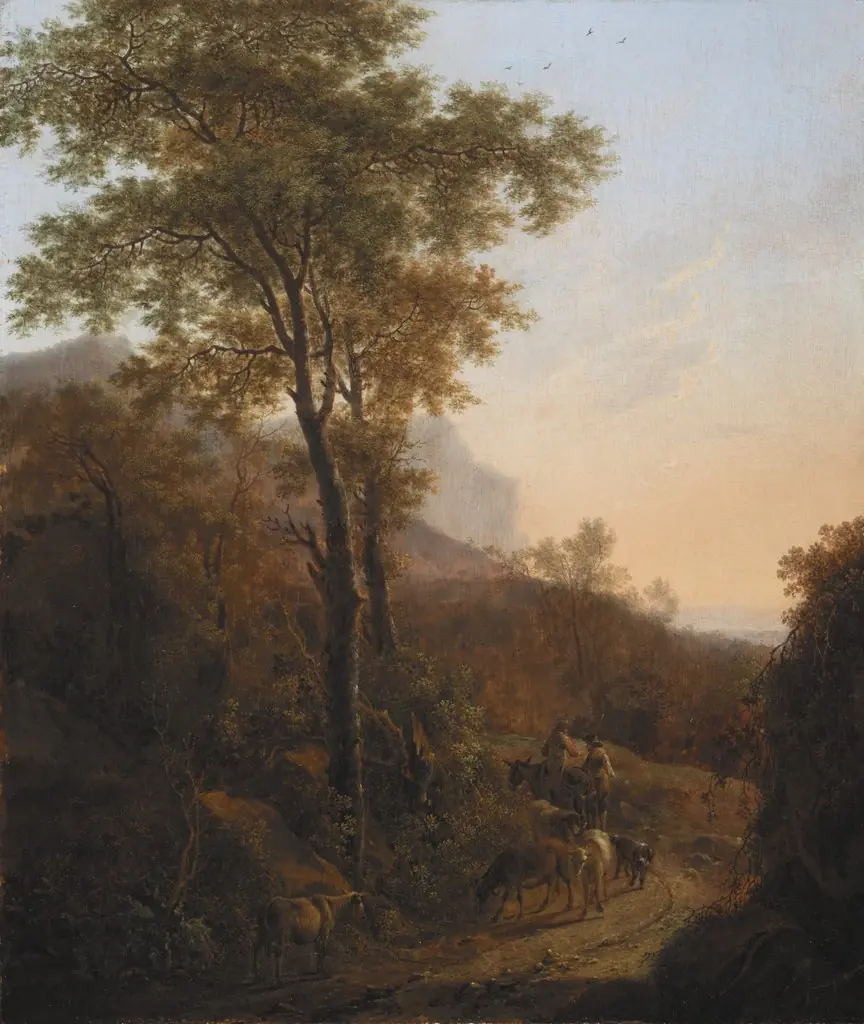 Italian Landscape
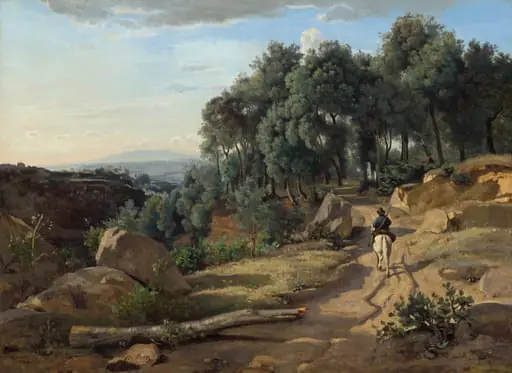 A View near Volterra
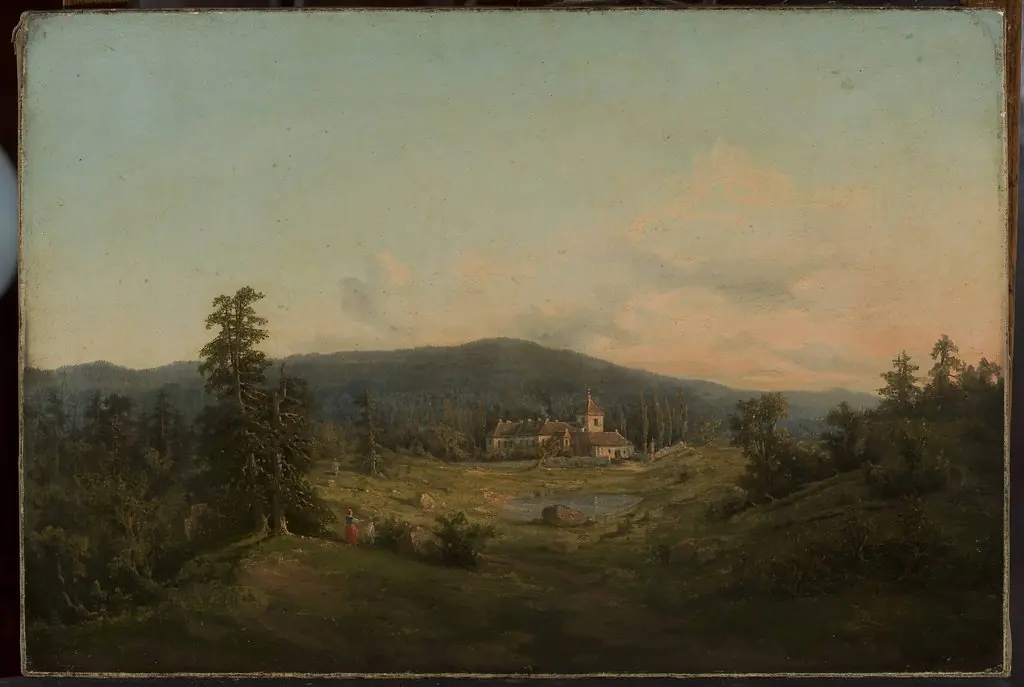 Mountain landscape with church and monastery
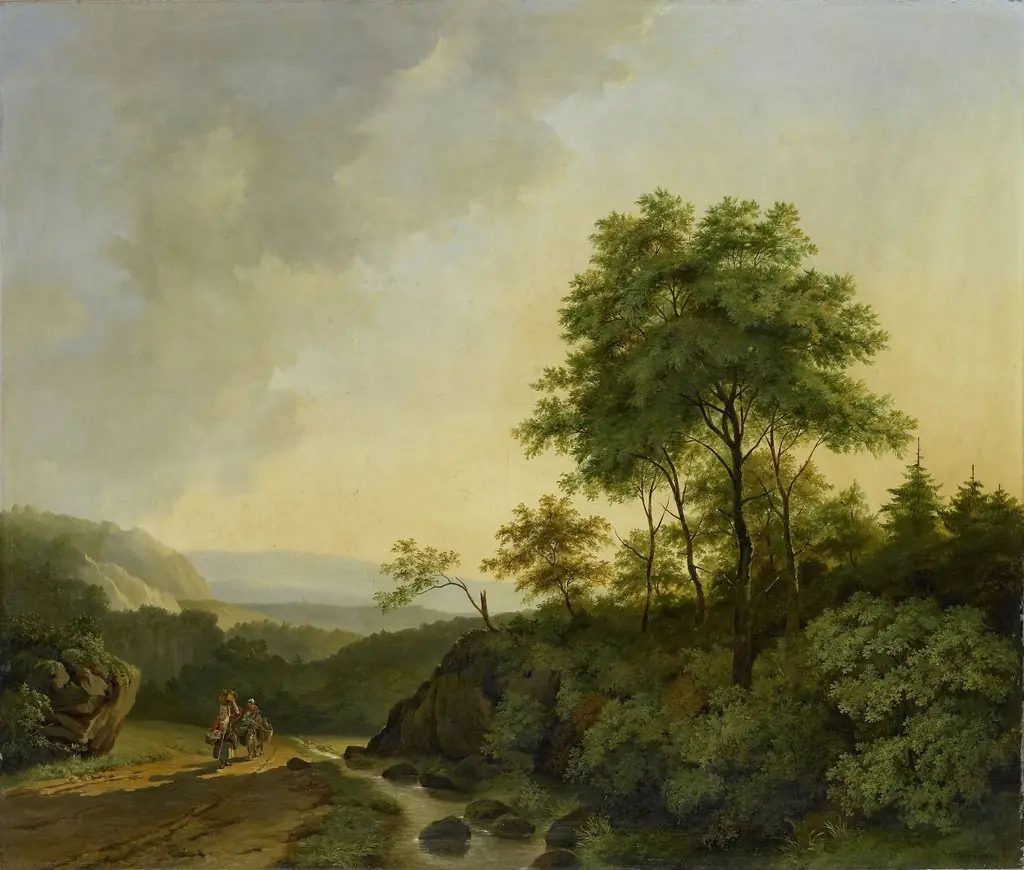 View in the Harz Mountains
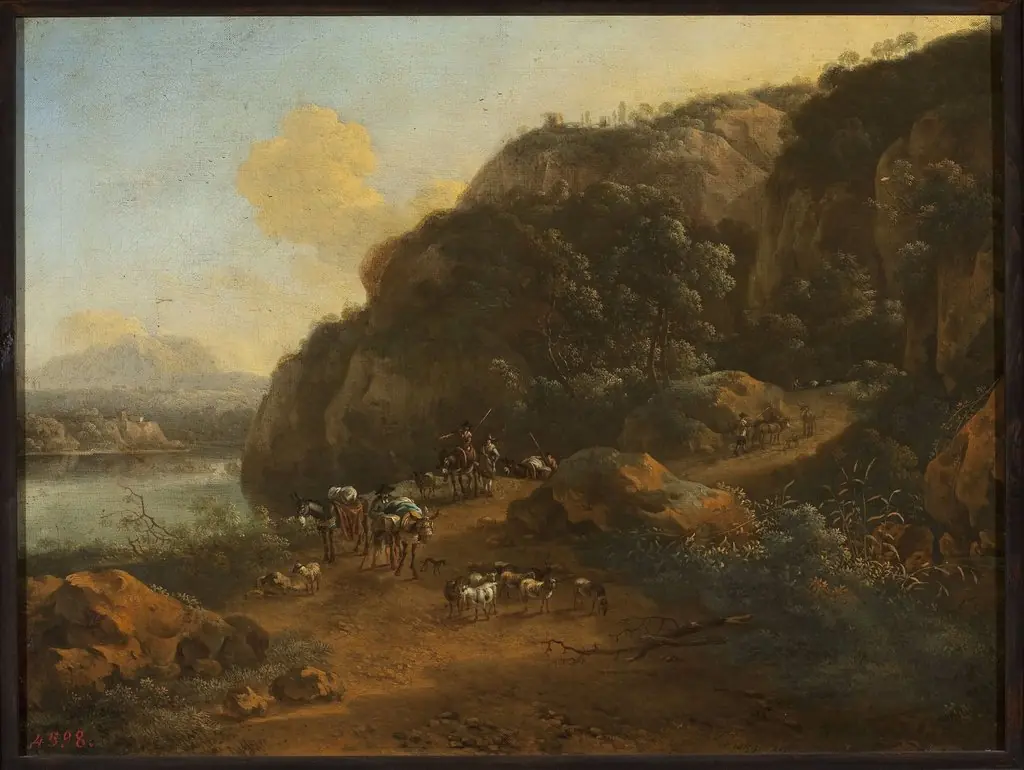 Mountain landscape with travellers
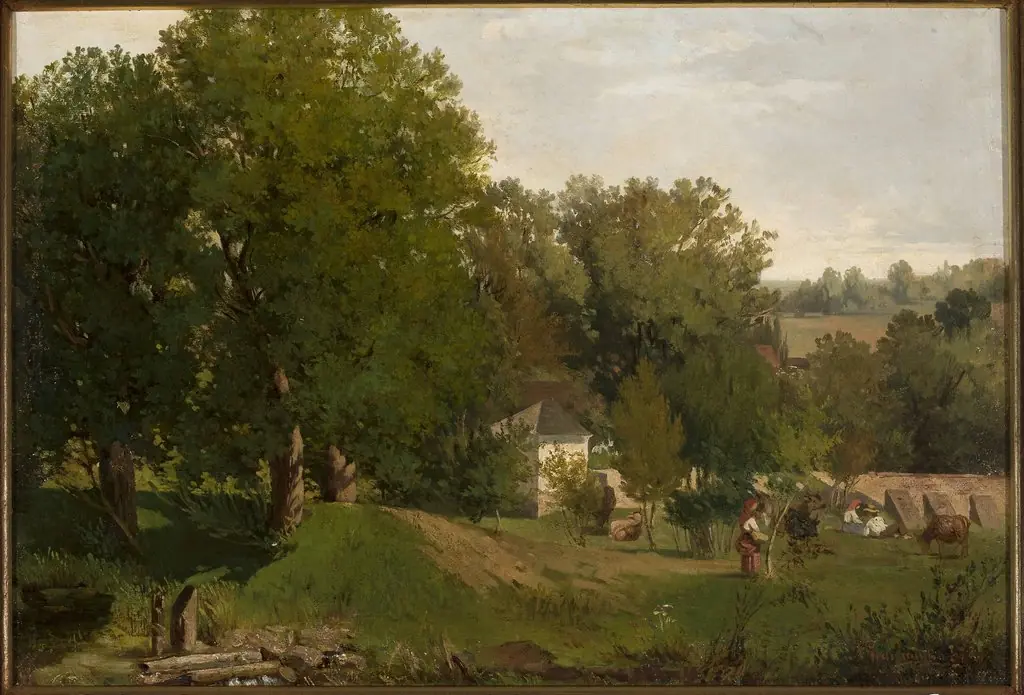 View from Kalwaria Zebrzydowska
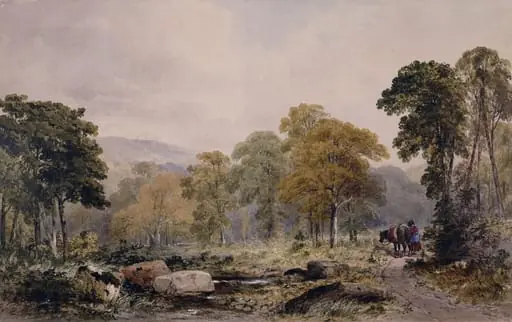 A Wood near Cheltenham
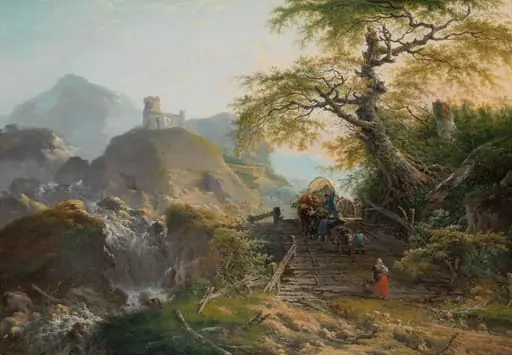 Berglandschap bij Düsseldorf
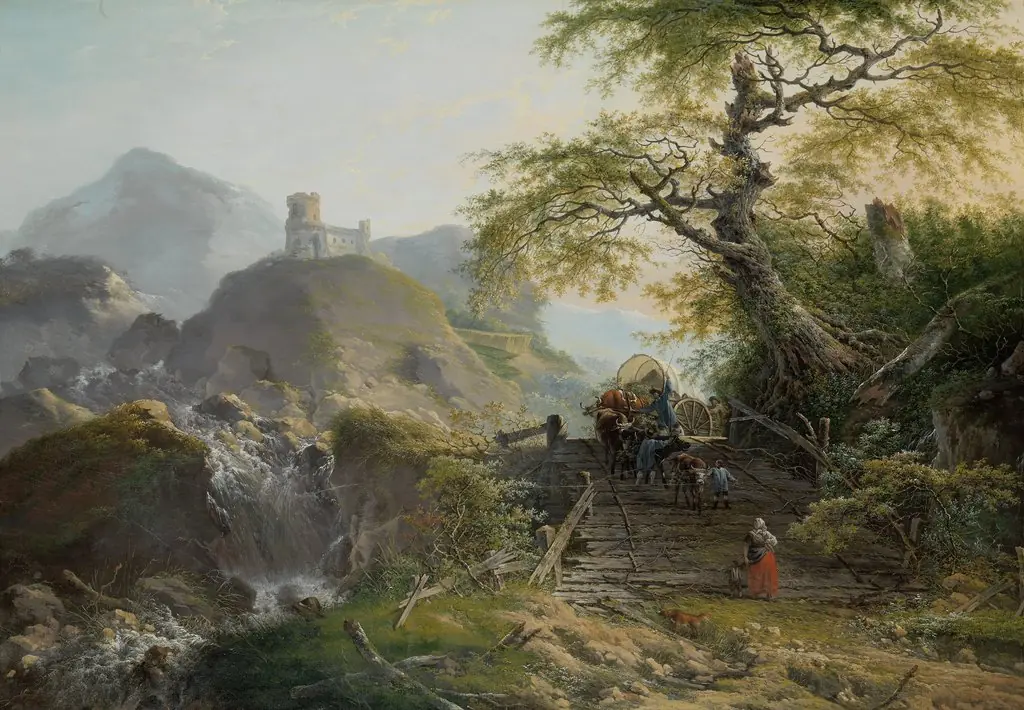 Mountainous Landscape near Düsseldorf
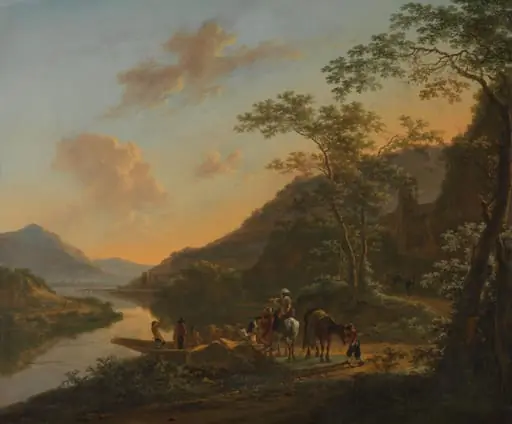 Italiaans landschap met overzetveer
- Plauenscher Grund at Dresden