Artwork
Portrait of a Woman
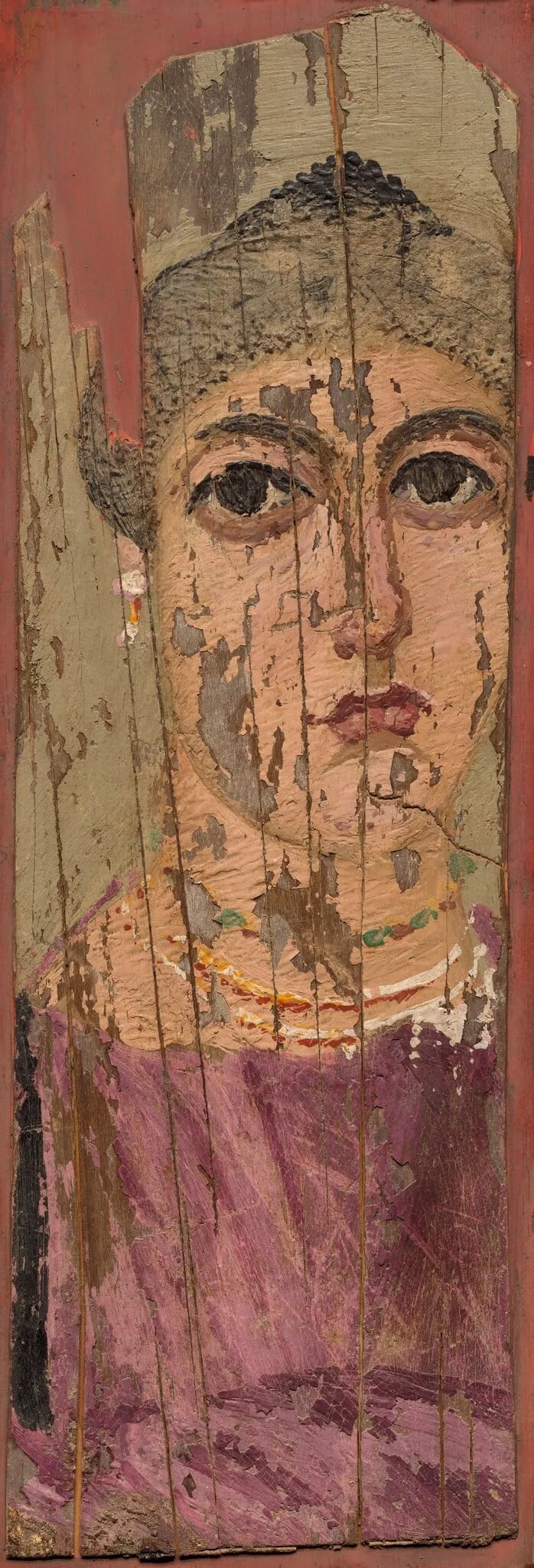
Portrait of a Woman is an encaustic painting. It dates from 150 and is held in the collection of the National Gallery of Art.
About this work
Subject & Meaning
While the specific identity of the woman remains unidentified in the provided sources, the artwork stands as a historical record of portraiture from that era.
The work depicts a woman, serving as a straightforward portrait from 2nd-century Egypt. As a genre painting, its primary subject is the female figure, presented without additional narrative context or complex iconographic elements in the available records. The piece functions as a representation of an individual from the period, capturing her likeness through the encaustic medium on wood.
While the specific identity of the woman remains unidentified in the provided sources, the artwork stands as a historical record of portraiture from that era. The focus remains strictly on the depiction of the woman herself, with no further symbolic meaning or allegorical significance documented in the current information.
Technique & Style
Created in the 2nd century by an anonymous Egyptian artist, this portrait is executed in the encaustic technique, utilizing pigmented wax applied to a wooden support. The work measures 34.6 centimeters in height and 11.5 centimeters in width, presenting a narrow, vertical format typical of Fayum mummy portraits. The medium of encaustic allows for a distinct handling of the wax, which was likely applied while hot to achieve a smooth, luminous surface that preserves fine details.
Stylistically, the painting functions as a realistic portrait of a woman, capturing her likeness with direct gaze and individualized features. The survival of the work in good condition reflects the durability of the encaustic medium and the stable wooden panel, characteristics that have allowed the colors and forms to remain vibrant for nearly two millennia.
History & Provenance
Created in the 2nd century by an Egyptian artist, this encaustic-on-wood portrait depicts a woman. Its modern history begins in the European art market, likely in Paris, before being acquired by Louis Einstein (1877–1967). Einstein held the work in his collection until 1956, when he gifted it to the National Gallery of Art in Washington, D.C., where it remains part of the permanent collection.
The painting Portrait of a Woman, an Egyptian work of the second century executed in encaustic on wood, is held by the National Gallery of Art in Washington, D.C., where it appears in the museum’s collection. Its provenance moves from the Paris art market to collector Louis Einstein, who gifted the work to the gallery in 1956. The piece is classified as a portrait and is recorded with dimensions of 34.6 cm by 11.5 cm.
Overview
This painting, titled Portrait of a Woman, is rendered in encaustic on a wooden panel. It presents a focused depiction of a woman's face, characterized by a serene demeanor. The artist's choice to center the subject against an unadorned background emphasizes her features and expression, making her the sole focal point of the composition.
Artist & collection

- Funerary Portrait of a Woman
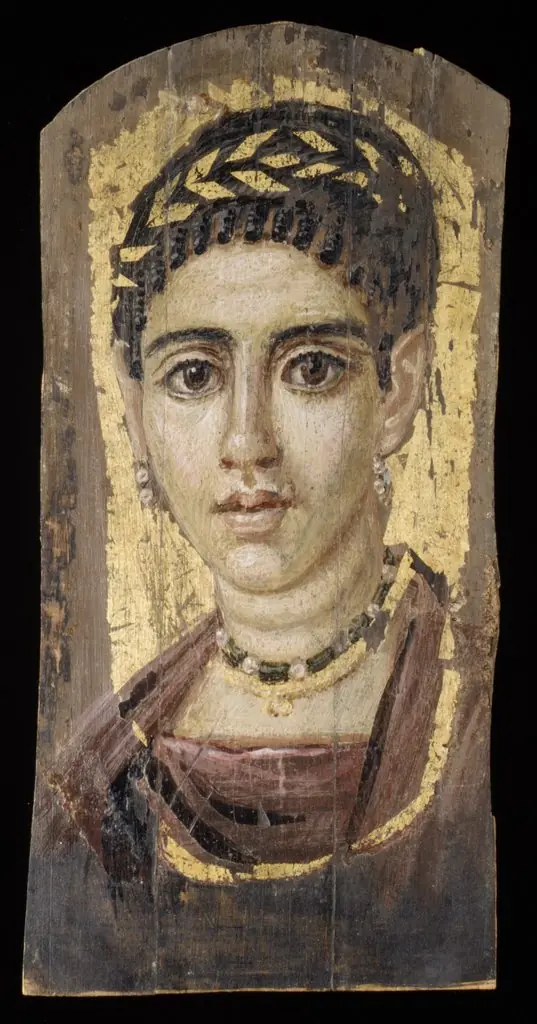 Portrait of a young woman with a gilded wreath
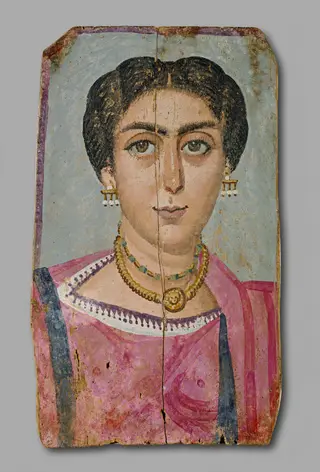 Mummy Portrait - Woman with Necklace
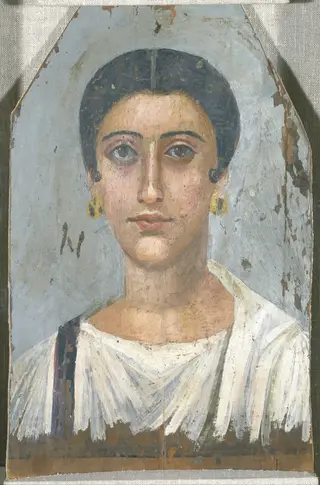 Portrait of a Noblewoman
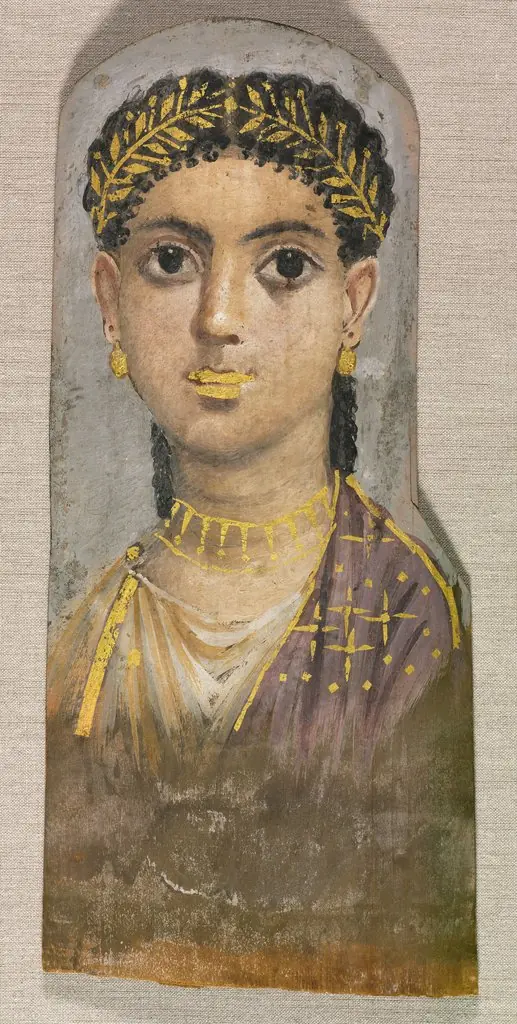 Funerary Portrait of a Young Girl
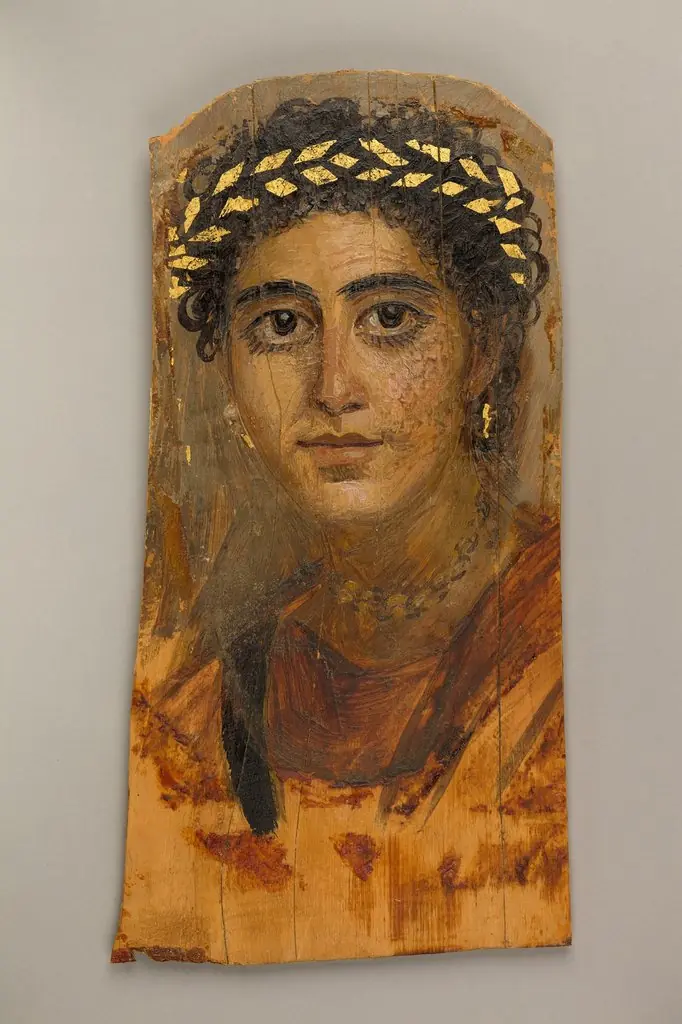 Portrait of a young woman in red
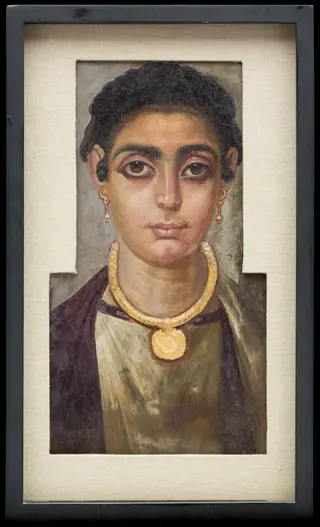 Head of a Woman
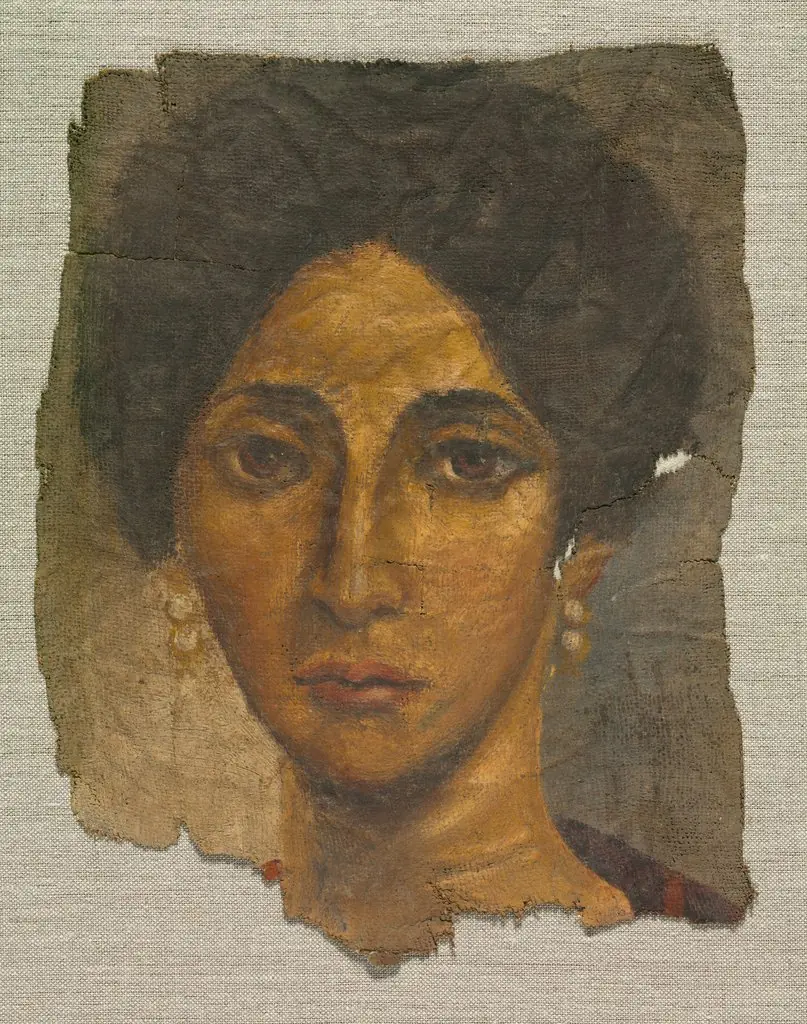 Funerary Portrait of a Woman
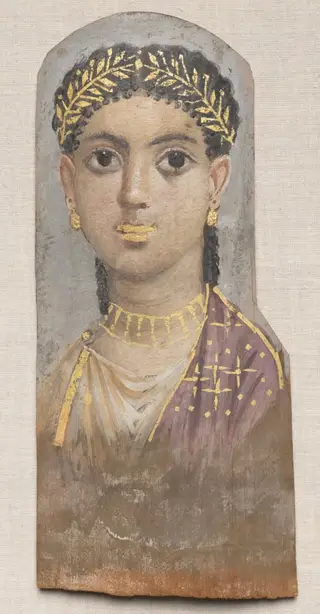 Funerary Portrait of a Young Girl
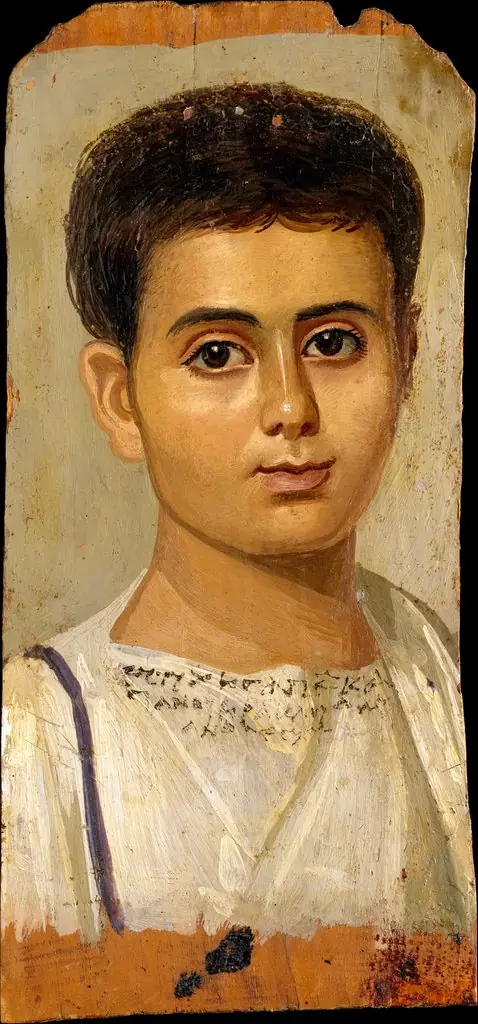 Portrait of the Boy Eutyches
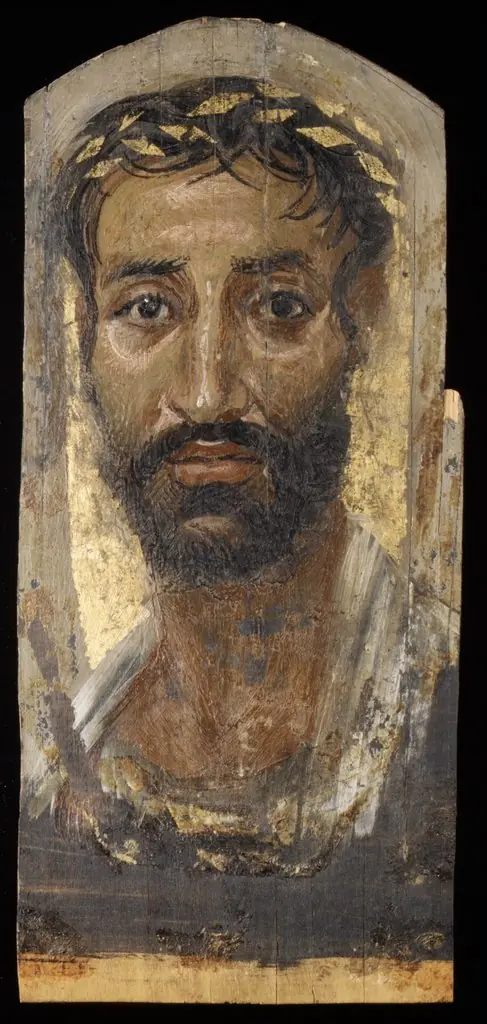 Portrait of a thin-faced man
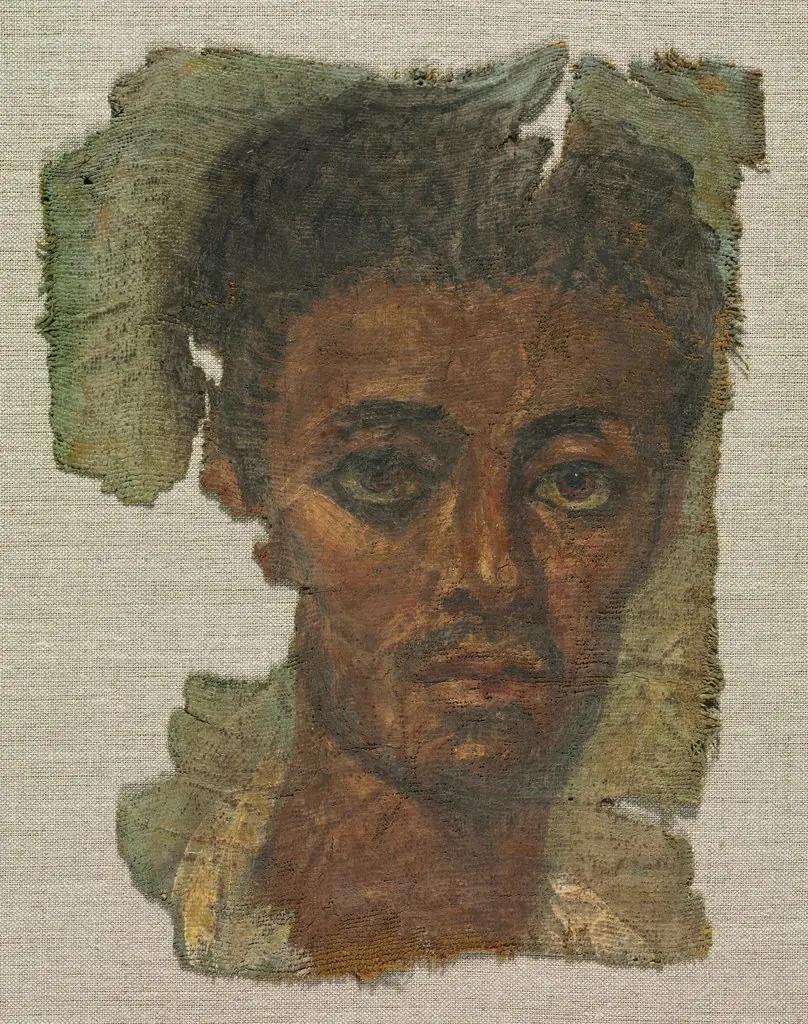 Funerary Panel of a Man