Artwork
永樂保全筆 「陶造」|Making Ceramics
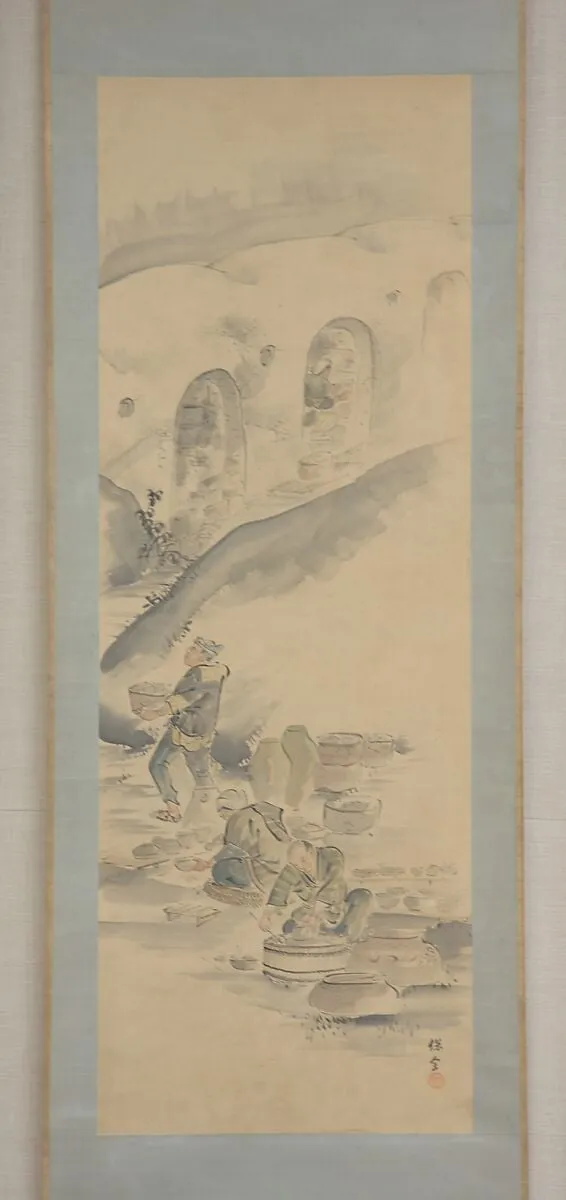
永樂保全筆 「陶造」|Making Ceramics is an ink painting by the Nihonga artist Eiraku Hozen. It dates from 1827 and is held in the collection of the Metropolitan Museum of Art.
About this work
Subject & Meaning
The imagery avoids complex allegorical symbolism, instead grounding its meaning in the direct observation of manual labor and the artisan's role in society.
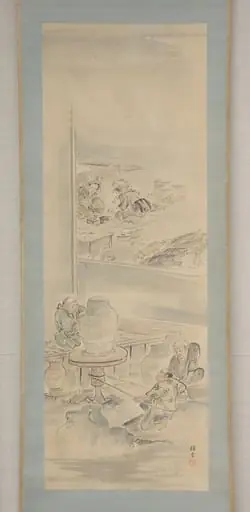
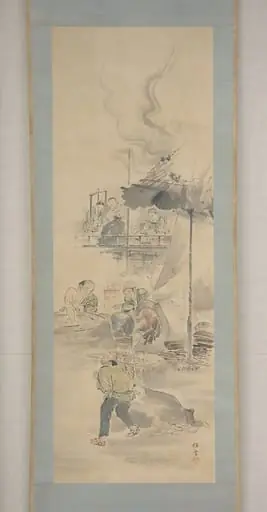
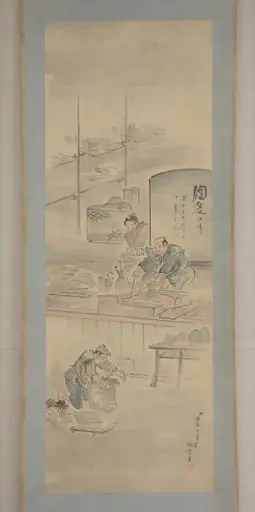
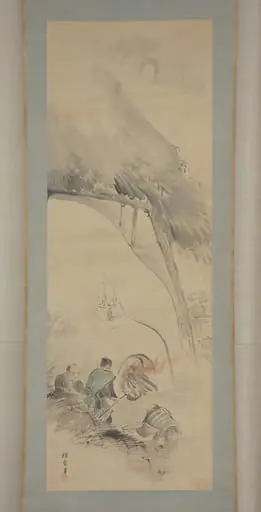
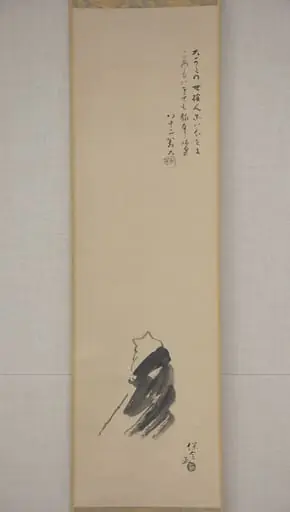
Created in 1827 by Eiraku Hozen, this hanging scroll depicts a genre scene focused on the subject of a man engaged in work. The iconography is straightforward, illustrating the specific activity of making ceramics as indicated by the title. The composition utilizes ink and color on paper to represent the figure within a labor setting, emphasizing the act of creation itself.
As a genre painting, the work functions as a visual record of craftsmanship, representing the dignity and process of ceramic production in early nineteenth-century Japan. The imagery avoids complex allegorical symbolism, instead grounding its meaning in the direct observation of manual labor and the artisan's role in society.
Technique & Style
The work is a hanging scroll executed in ink and color on paper, dating to 1827 by Eiraku Hozen. As a genre-scene painting, it portrays a man engaged in ceramic work, rendered with delicate brushwork and subtle washes typical of Edo-period painting. The scroll format allows the composition to unfold vertically, emphasizing the figure's activity within a modest spatial setting.
While the sources describe the medium, support, and subject matter, they do not provide details on the painting's handling, conservation condition, or specific technical nuances beyond the ink-and-color application.
History & Provenance
Created in 1827 by the Japanese artist Eiraku Hozen, the hanging scroll titled 'Making Ceramics' was executed in ink and color on paper and depicts a genre scene of a man engaged in labor. The specific circumstances of its original commission and intermediate ownership are not recorded in the available sources. The work is held in the collection of the Metropolitan Museum of Art, New York, under accession number 18.77.4. No exhibition history is documented in the sources consulted.
Legacy
The hanging scroll by Eiraku Hozen, titled 永樂保全筆 「陶造」|Making Ceramics, was created in 1827 in Japan and is classified as a Japanese genre painting depicting a man engaged in ceramic work. Executed in ink and color on paper, the piece belongs to the genre-scene tradition. Its inclusion in the Metropolitan Museum of Art's collection, recorded under accession number 18.77.4, reflects its continued relevance in scholarship on early nineteenth-century Japanese art.
The work's presence in a major museum underscores its standing as an example of ceramic-themed imagery in East Asian visual culture.
Overview
Created in 1827 by the Japanese artist Eiraku Hozen, 'Making Ceramics' is a hanging scroll executed in ink and color on paper. The work depicts a genre scene set within a pottery workshop, focusing on the labor-intensive process of ceramic production rather than the finished wares. The composition features two men engaged in distinct stages of creation: one figure shapes clay on a potter's wheel while the other tends to a kiln.
This depiction offers a rare glimpse into the industrial reality of Kyoto's ceramic trade during the late Edo period. While Hozen, a member of the renowned Eiraku family of potters, is often associated with the decoration of vessels featuring floral or dragon motifs, this painting diverges from such conventions by centering on the artisans themselves. The work documents the physical mechanics of the craft, capturing the dynamic interaction between the workers and their tools.
By portraying the unglamorous, active phase of manufacturing, the scroll serves as an important historical record of the division of labor and the environment of the workshop, distinguishing it from contemporary works that typically idealized the final aesthetic product.
Context
Eiraku Hozen, active in Kyoto, diverged from the prevailing artistic trends of his time with this piece. Kyoto ceramics were typically adorned with elaborate designs such as flowers or dragons, focusing on the aesthetic appeal of the final product. Hozen's decision to depict working figures in a pottery studio, rather than the decorative output, reflects an interest in genre scenes and the realities of craft production, offering a unique perspective on the era's artistic landscape.
Artist & collection