Artwork
松村呉春筆 山樵漁夫図屏風|Woodcutters and Fishermen
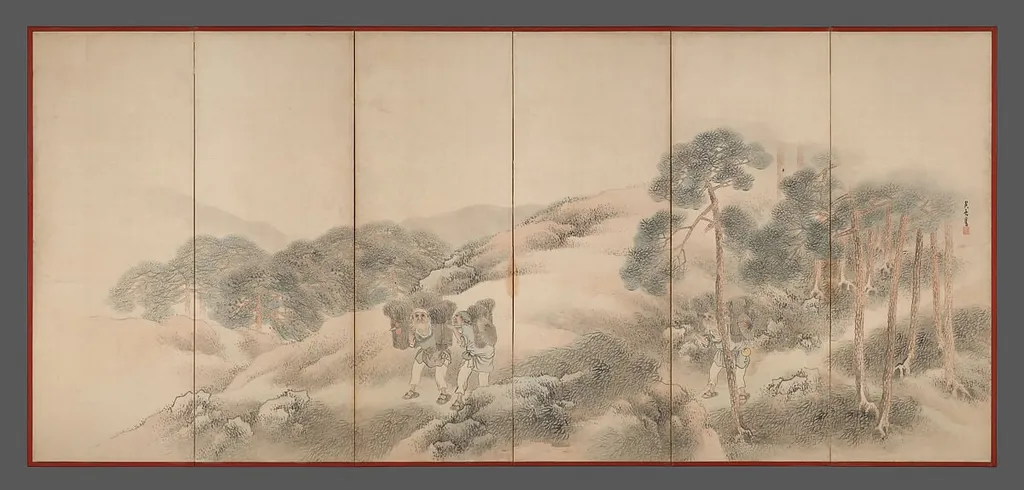
松村呉春筆 山樵漁夫図屏風|Woodcutters and Fishermen is an ink painting by the Baroque artist Matsumura Goshun. It dates from 1792 and is held in the collection of the Metropolitan Museum of Art.
About this work
Overview
The screens present a harmonious integration of human activity within a vast natural world, avoiding dramatic narrative in favor of quiet contemplation.
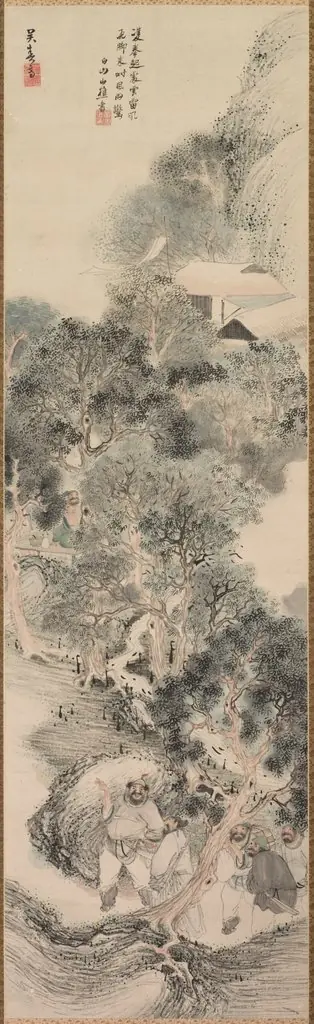
Created in 1792, 'Woodcutters and Fishermen' is a pair of six-panel folding screens by Matsumura Goshun, a pivotal figure who bridged the Maruyama-Shijo and Nanga schools. The work depicts a rustic landscape where two figures traverse a mountainous terrain; one carries a bundle of wood, embodying the 'woodcutter' archetype, while the setting implies the presence of a fisherman nearby, adhering to the traditional pairing of these laborers in East Asian art. Executed in ink and color on paper, the composition utilizes a muted palette dominated by earthy browns and grays to evoke a serene, atmospheric depth.
Goshun employs bold, expressive brushstrokes that balance the detailed observation of nature characteristic of the Maruyama style with the calligraphic freedom of literati painting. The screens present a harmonious integration of human activity within a vast natural world, avoiding dramatic narrative in favor of quiet contemplation. This piece exemplifies Goshun's mature style, demonstrating his ability to synthesize different artistic traditions into a cohesive visual language that celebrates the simplicity of rural life.
The work stands as a significant example of late 18th-century Japanese screen painting, reflecting the era's appreciation for the four seasons and the virtues of hermitic existence.
Subject & Meaning
The screens present two men burdened with bundles of wood as they traverse a forested slope. Their movement through the trees suggests a narrative of daily toil and the relationship between humans and the natural environment. The juxtaposition of woodcutters with the surrounding landscape underscores themes of labor within the broader context of nature.
Technique & Style
Goshun employs a restrained palette dominated by browns and grays, allowing subtle tonal variations to convey atmosphere. Brushwork is decisive and expressive, imparting a sense of motion to the figures and foliage. Careful modulation of light and shadow creates depth, while the ink outlines retain a calligraphic quality characteristic of late‑Edo painting.
History & Provenance
The screens were produced in the late eighteenth century, a period when folding screens served both decorative and functional purposes in Japanese interiors. After changing hands in private collections, they entered the Metropolitan Museum of Art, where they remain on view as representative examples of Matsumura Goshun’s landscape oeuvre.
Artist & collection


- Winter and Spring Landscape
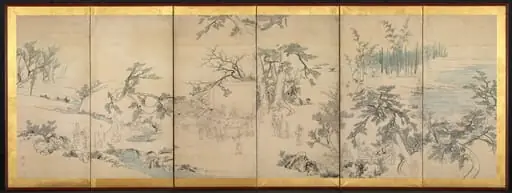 Literary Gathering in the Orchid Pavilion
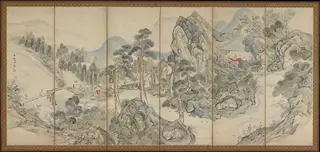 池大雅筆 蘭亭曲水図屏風 秋社図屏風|Orchid Pavilion Gathering; Autumn Harvest Festival
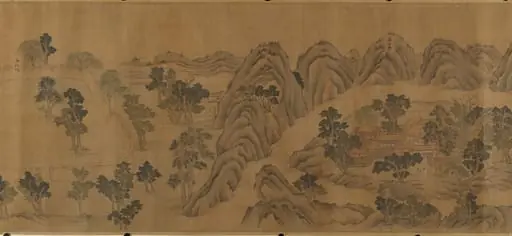 明 佚名 郭忠恕 僞款 輞川圖 卷|Wangchuan Villa
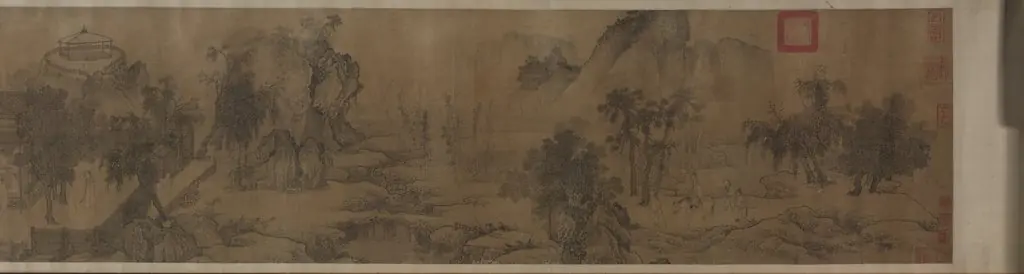 Tao Yuanming's Return Home
 Depiction of the Day of Spring Offering to the Gods
 Streams and Mountains without End
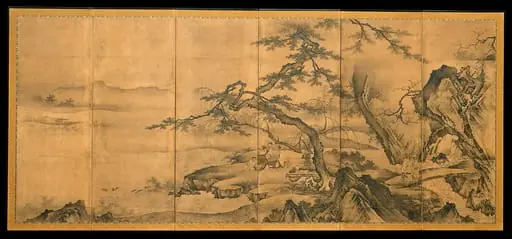 琴棋書画図屏風|The Four Accomplishments
 Autumn Mist in the Countryside
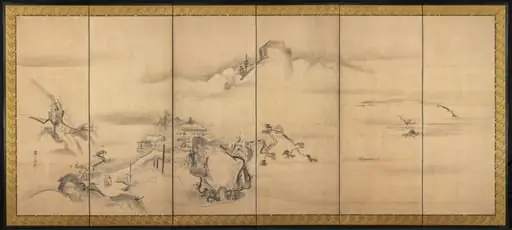 Eight Views of the Xiao and Xiang Rivers
 Untitled
 明 文嘉 為項元汴作山水圖 軸|Landscape dedicated to Xiang Yuanbian