Artwork
Mater dolorosa
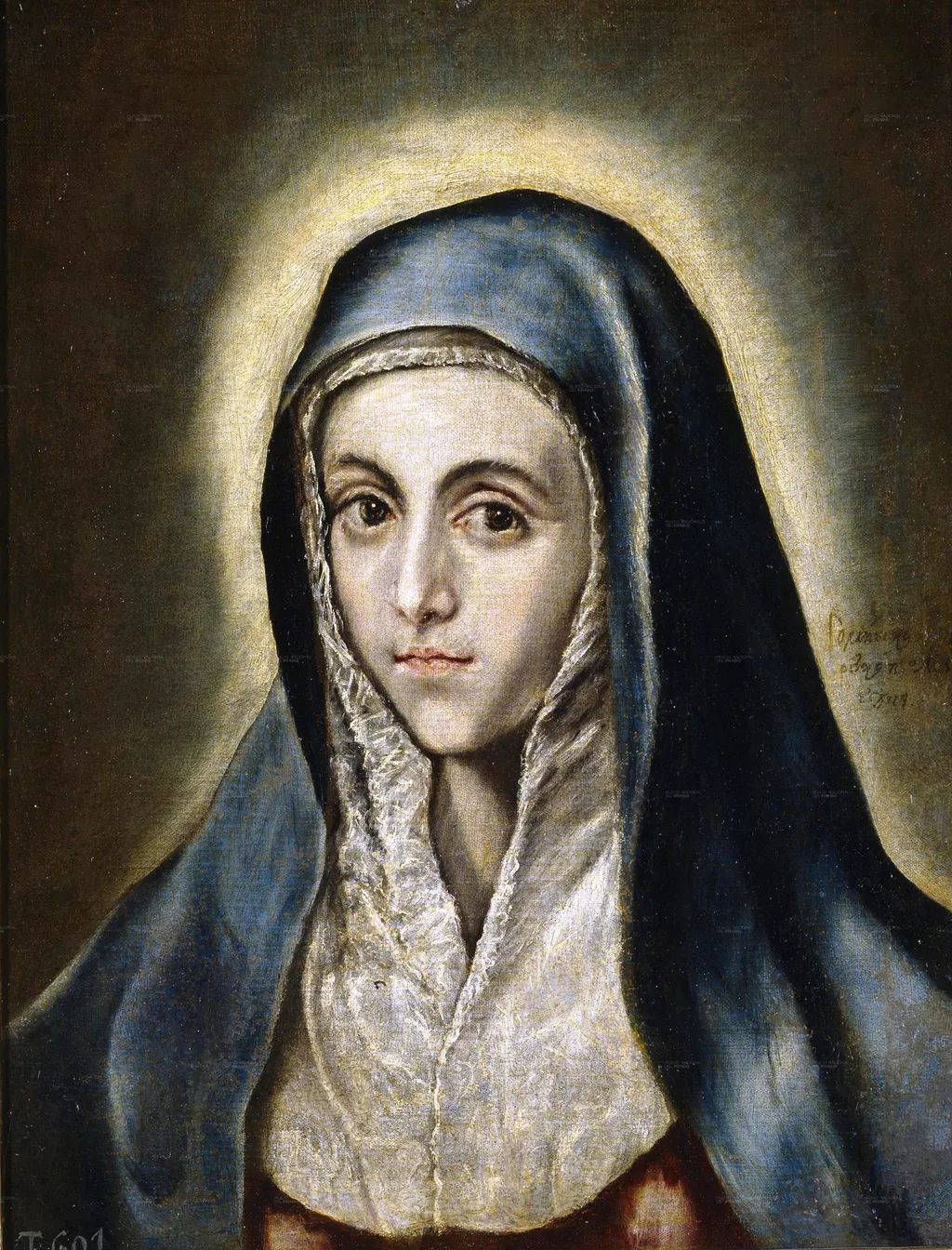
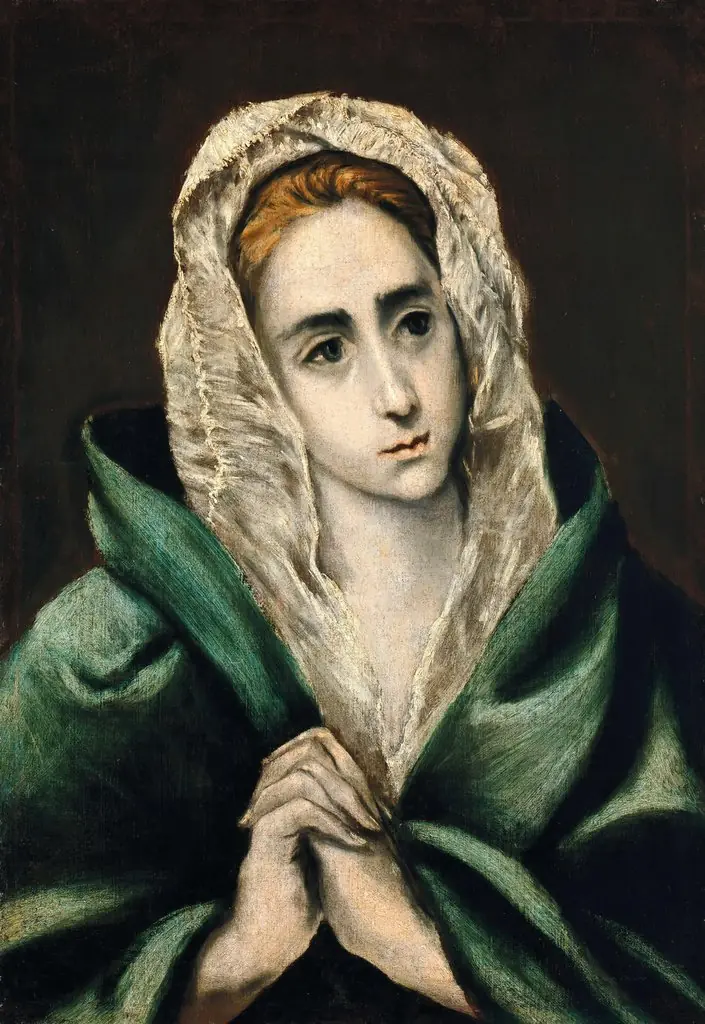
Mater dolorosa is an oil painting by the Mannerist artist El Greco. It dates from 1598 and is held in the collection of the Museo del Prado.
About this work
Subject & Meaning
The Mater dolorosa depicts the Virgin Mary as Our Lady of Sorrows, a subject rooted in Catholic devotional imagery that emphasizes her grief at the Crucifixion.
The Mater dolorosa depicts the Virgin Mary as Our Lady of Sorrows, a subject rooted in Catholic devotional imagery that emphasizes her grief at the Crucifixion. El Greco’s composition shows Mary half-length, draped in a red tunic beneath a blue mantle, her gaze directed toward the viewer with a melancholic expression. A luminous halo encircles her head, underscoring her sacred identity and reinforcing the work’s spiritual resonance during the Counter-Reformation.
The artist accentuates her sorrowful visage with delicate features, thin chin and large, dark eyes, a signature of his portraiture. The iconography aligns with established representations of the Virgin’s seven sorrows, evoking themes of compassion and maternal loss.
Technique & Style
The Mater dolorosa is executed in oil paint on a canvas support. The Madrid version measures 52 cm in height by 41 cm in width. Stylistically, the work adheres to Mannerism and the visual language of the Counter-Reformation, featuring a melancholic face, a slender chin, and large black eyes characteristic of the artist's portrait technique.
The Virgin is depicted wearing a red tunic with her head covered by a blue mantle. A luminous halo surrounds her head, a device employed by the artist to enhance the figure's volume and emphasize its sacred nature. The painting bears a signature retouched in Greek cursive script on the right side.
Harold Wethey cataloged this specific version as slightly inferior in quality to the Strasbourg counterpart, noting that while the drapery around the face is painted with lightness, the blue tunic and grayish background are executed with great solidity.
History & Provenance
The painting known as Mater dolorosa or Virgin Mary by El Greco is dated to the period between 1595 and 1600, with specific references pointing to 1597 as the year of execution. It is an oil on canvas work currently housed in the Museo del Prado in Madrid, where it holds the catalog number P000829. Harold Wethey, in his raisonné, classifies this specific version as Type I and considers it an autograph work, though he notes its quality is slightly inferior to a nearly identical version located in the Musée des Beaux-Arts of Strasbourg.
The Prado canvas features a signature retouched with Greek cursive letters on the right side, reading Doménikos Theotokópoulos epoíei. While the Strasbourg version measures 83 x 37 cm, the Madrid painting is smaller, measuring 52 x 41 cm.
The painting Mater dolorosa by El Greco is held in the collection of the Museo del Prado in Madrid, Spain. It is registered in the museum's catalog under the number P000829. The work, an oil on canvas measuring 52 x 41 cm, is dated to the period between 1595 and 1600.
Scholarly analysis identifies this version as slightly inferior in quality to a similar composition located in the Musée des Beaux-Arts in Strasbourg. While the Prado holds this specific iteration, the existence of multiple versions with differing dimensions highlights the artist's exploration of this devotional subject during the late sixteenth century.
Context
Mater dolorosa, painted by El Greco around 1595–1600, exemplifies Counter‑Reformation devotional imagery within his Mannerist oeuvre. The canvas, measuring 52 × 41 cm, was executed in oil on linen and is housed in the Museo del Prado, Madrid. Scholars classify it as a secondary version of the subject, noting its more restrained composition compared with the larger Strasbourg replica.
Contemporary analysis highlights the red tunic, blue mantle, and luminous halo that accentuate the Virgin’s sorrowful expression, a motif tied to the era’s emphasis on emotional piety. Harold Wethey’s cataloguing distinguishes two autograph types, designating the Prado version as type‑I and assessing its quality as slightly inferior to the Strasbourg counterpart.
Legacy
El Greco's Mater dolorosa, painted circa 1595, belongs to the Museo del Prado in Madrid and has attracted sustained scholarly interest. Analyses emphasize its devotional intensity, the luminous halo, and a melancholic expression that typify Counter‑Reformation imagery. Art historians such as Wethey identify it as a replica of a higher‑quality version in Strasbourg, noting subtle differences in technique and composition.
Its appearance in major museum catalogues and encyclopedic entries confirms its recognized place in the study of El Greco's religious works.
Overview
El Greco's Mater dolorosa, painted in oil on canvas in 1597, depicts the Virgin Mary in her sorrowful aspect. This work is currently housed in the Museo del Prado in Madrid. The composition focuses on the Virgin's face and shoulders, rendered with a dramatic interplay of light and shadow, characteristic of the artist's approach to spiritual subjects.
Own this work as a print
Artist & collection
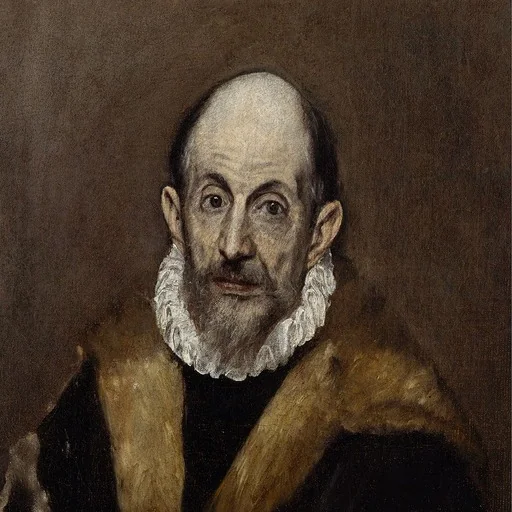
Artist
Doménikos Theotokópoulos was born in 1541 in Candia (modern Heraklion), the capital of Venetian-ruled Crete, where he was trained in the post-Byzantine tradition of icon painting.