Artwork
The Flight into Egypt
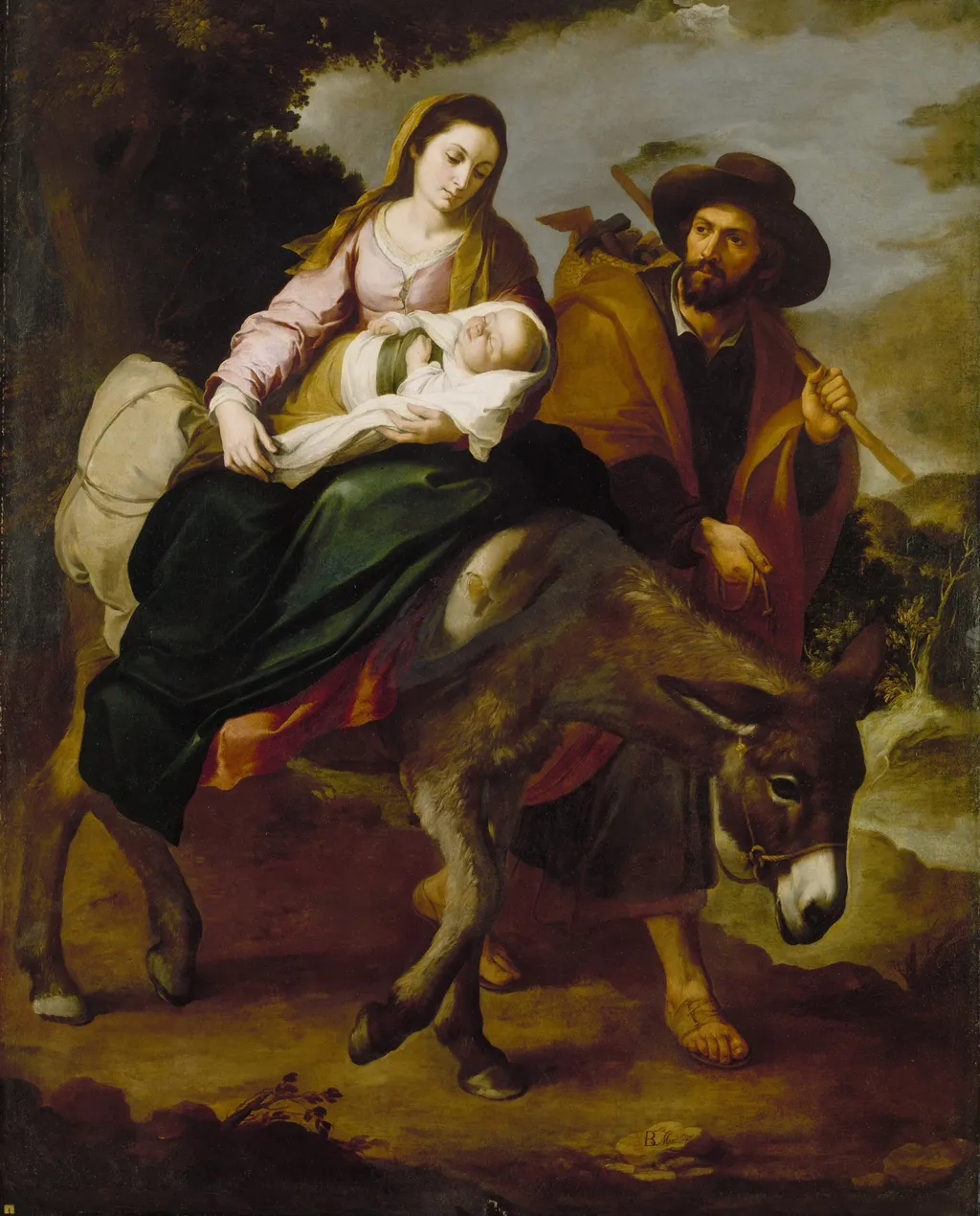
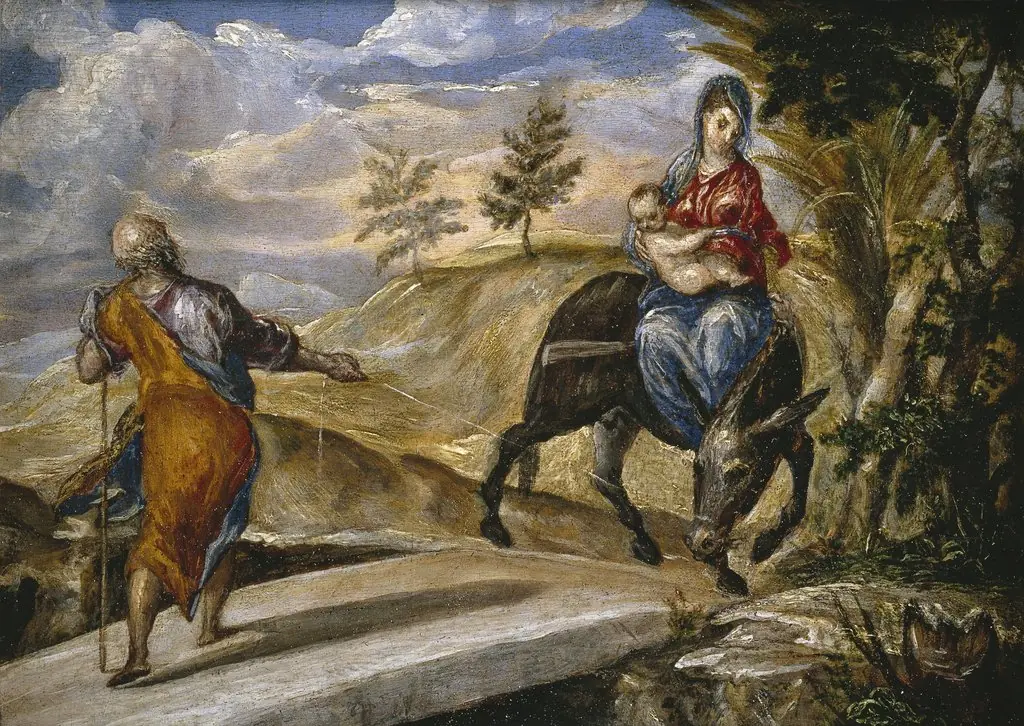
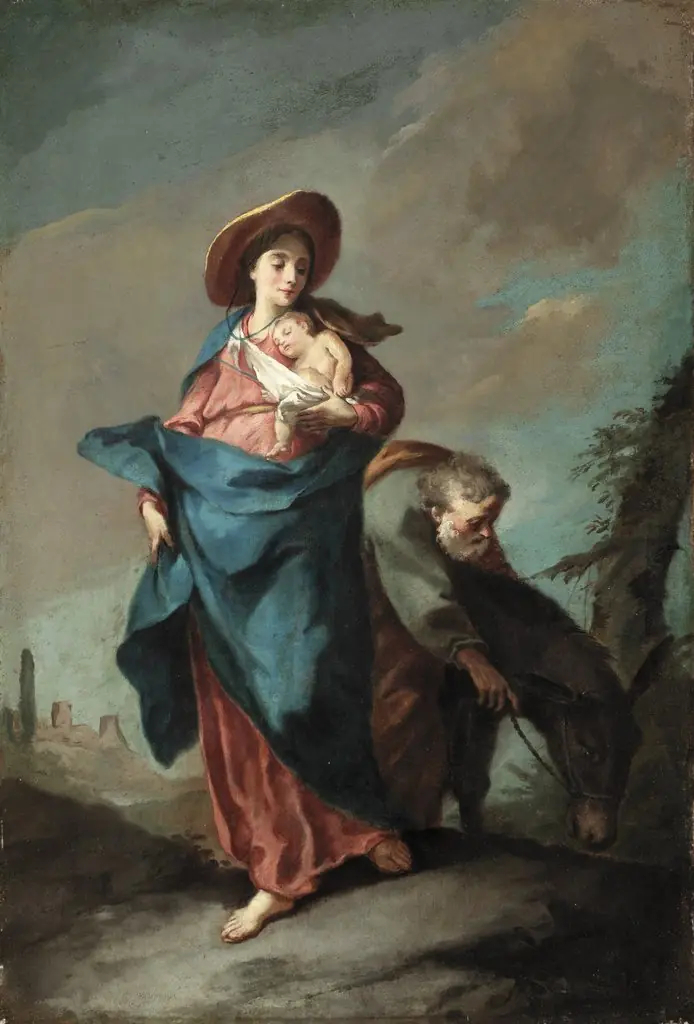
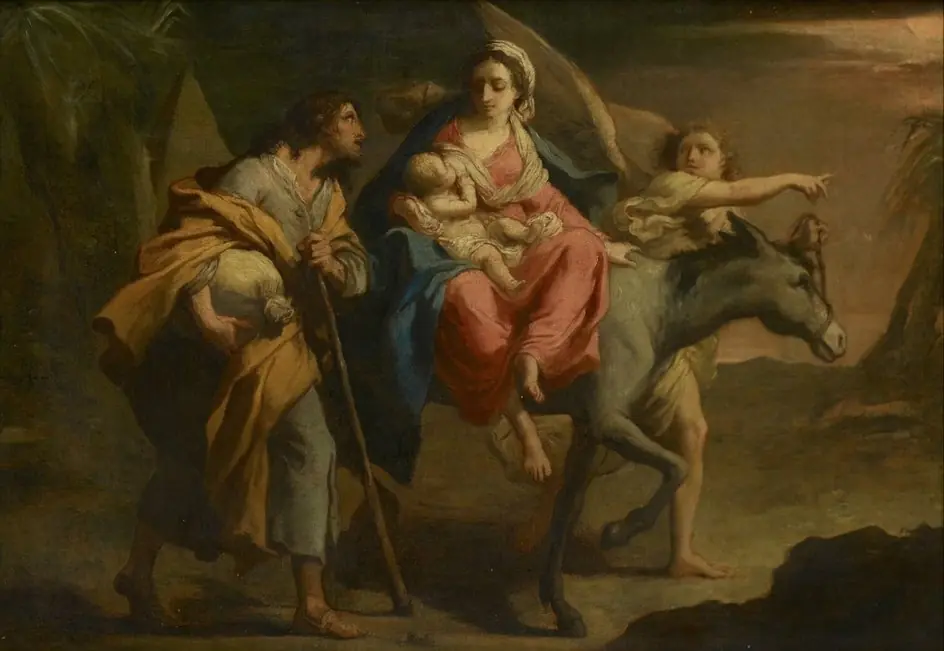
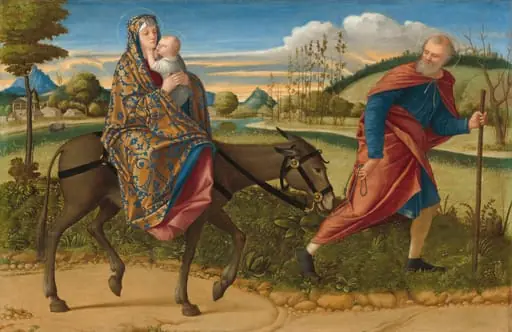
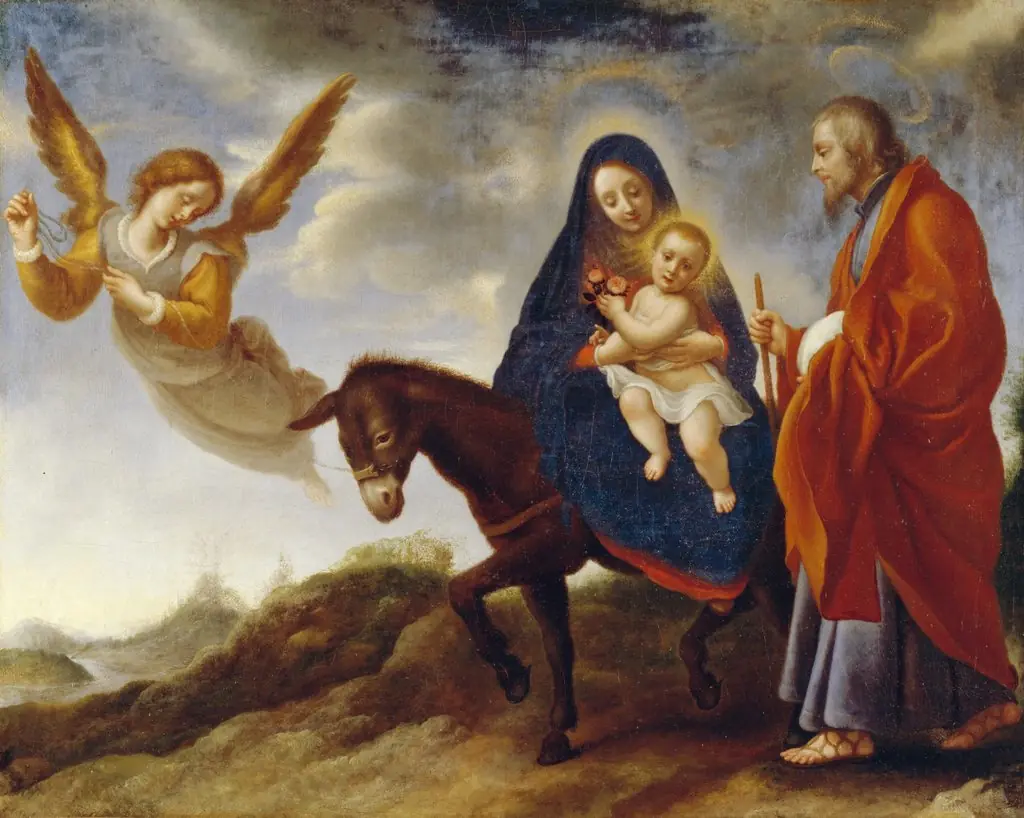
The Flight into Egypt is an oil painting by the Baroque artist Bartolomé Esteban Murillo. It dates from 1647 and is held in the collection of the Detroit Institute of Arts.
About this work
Subject & Meaning
Rendered with a sense of fleeting movement, the scene functions as a visual snapshot that conveys the underlying anxiety of their urgent departure.
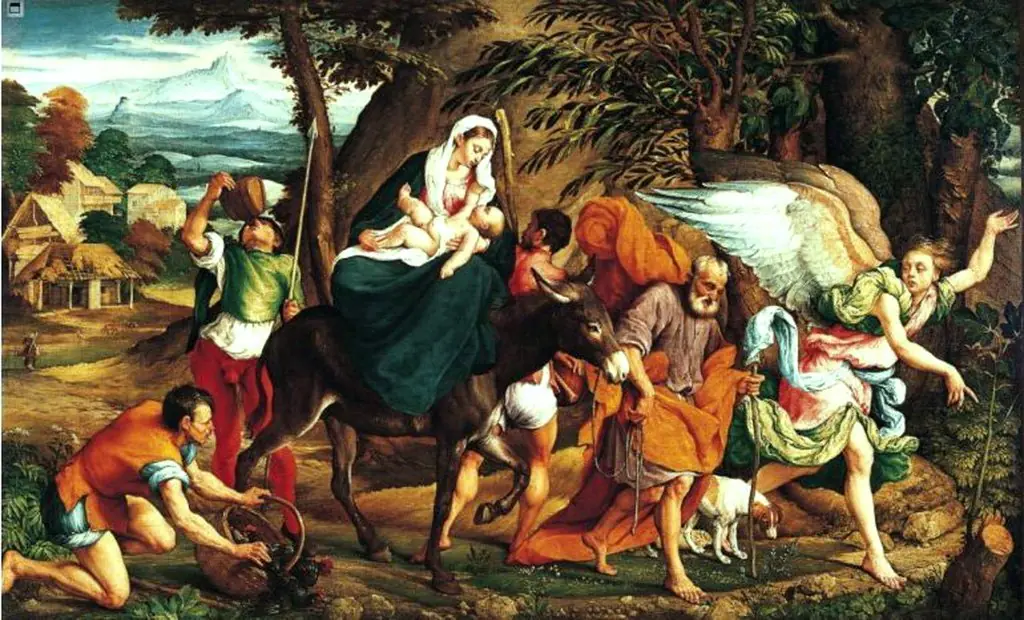
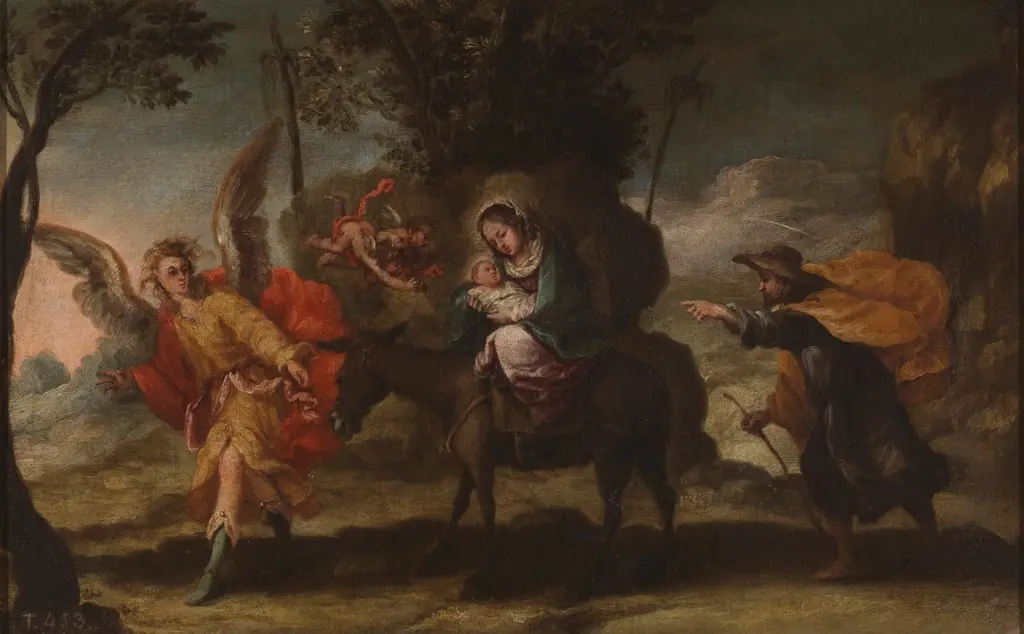
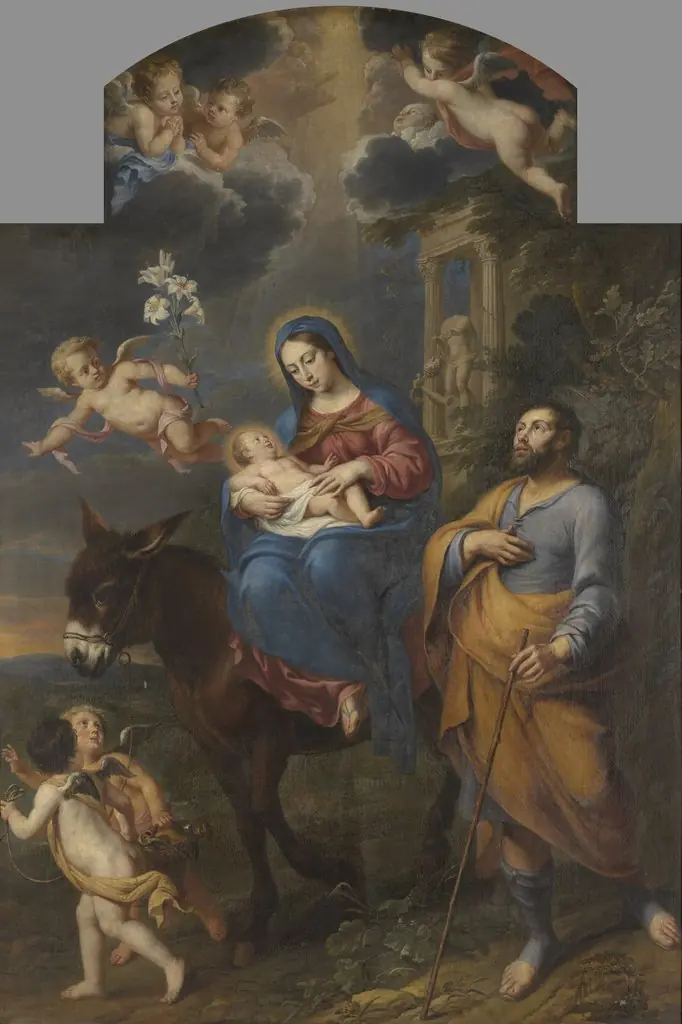
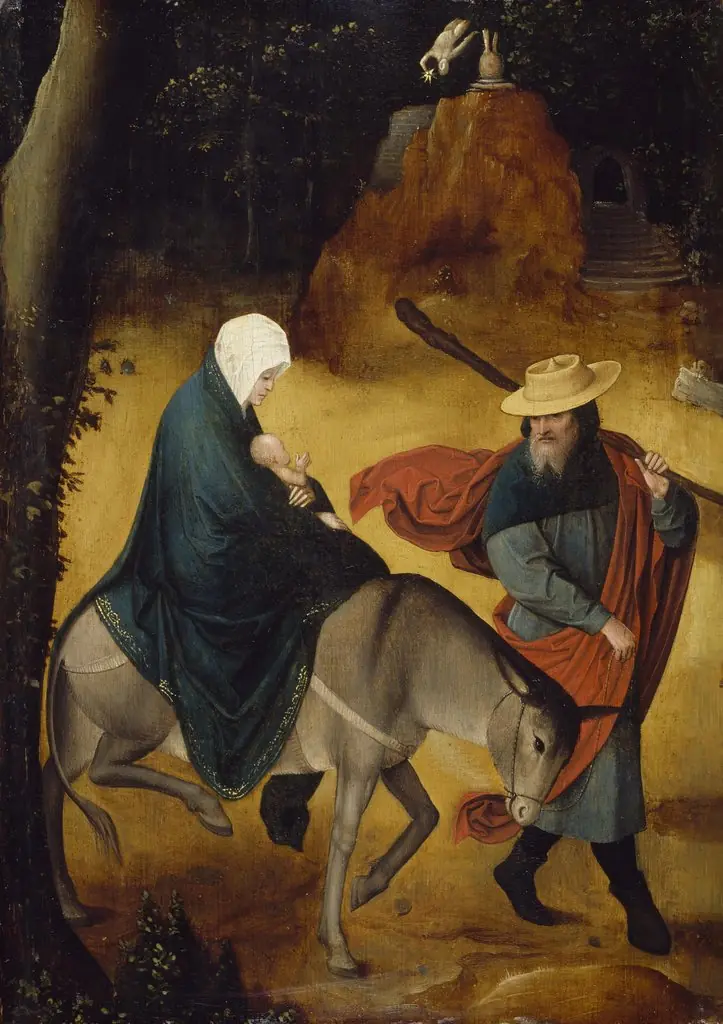
This painting illustrates the biblical narrative of the Holy Family's escape to Egypt, a subject that became a prevalent motif in Christian iconography from the fourteenth century onward. The composition captures Joseph leading a donkey upon which Mary sits sidesaddle, cradling the sleeping Christ Child in her arms. Rendered with a sense of fleeting movement, the scene functions as a visual snapshot that conveys the underlying anxiety of their urgent departure. Murillo approaches these divine figures with a distinctive popular realism, grounding the sacred event in human emotion and immediacy rather than distant idealization.
Technique & Style
The painting is executed in oil on canvas, a typical support for Murillo’s works. It belongs to the Baroque movement, characterized by a vertical format that emphasizes the narrative journey. The composition shows the Holy Family in flight: Joseph leads the donkey while Mary sits astride it, holding the sleeping Christ Child. The subject was a popular devotional motif from the fourteenth century onward, and Murillo’s rendering captures both the piety of the scene and subtle signs of the family’s anguish during their escape.
History & Provenance
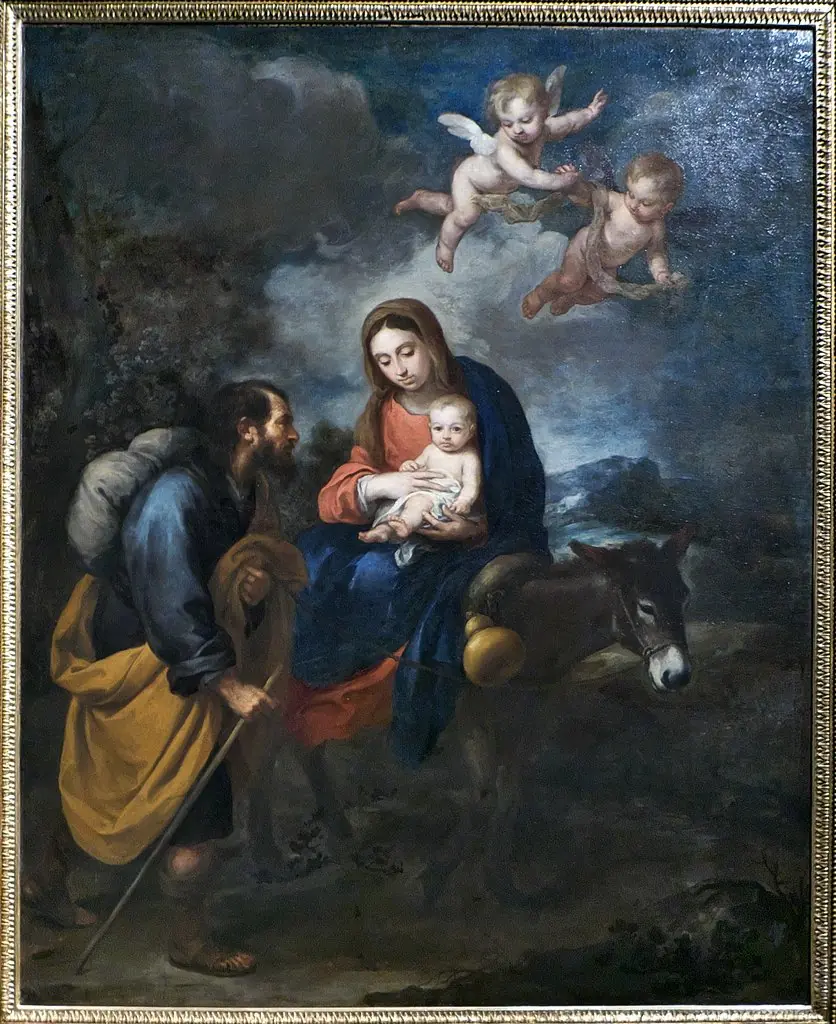
The Flight into Egypt is an oil on canvas by Bartolomé Esteban Murillo dated 1647, with some sources placing its execution between 1647 and 1650. No original commission is documented in the available records. The painting first appears in the written record in the collection of Sir William Chapman in London. It subsequently passed through other British private collections before being sold at Christie's in London in 1945. The buyer was Maurice Harris, who took the work to New York and later in the decade donated it to the Detroit Institute of Arts, where it has been held since 1948. Diego Angulo's Catálogo crítico notes that a closely related, slightly larger version of the composition, dated 1645-1650, was painted for La Merced Calzada church in Seville and remained there until it was looted in 1810 by Marshal Soult; that variant is now in the Palazzo Bianco in Genoa.
Context
Created between 1647 and 1650, this work exemplifies Murillo's approach to religious subjects through a popular lens, capturing the Holy Family's journey with a sense of fleeting movement and underlying anxiety. Scholars note that the artist produced multiple treatments of this biblical episode, including a later version in Budapest and a similar, slightly larger composition in Genoa that was originally intended for a Seville church before being looted in 1810.
The Detroit painting's trajectory through British collections prior to its 1945 sale and subsequent donation to an American museum highlights the international dispersal of Murillo's oeuvre. Art historical analysis places this piece within the broader Baroque tradition while distinguishing it through the artist's unique characterization of divine figures, a style that complements his related depiction of the Rest on the Flight into Egypt.
Own this work as a print
Artist & collection
Artist
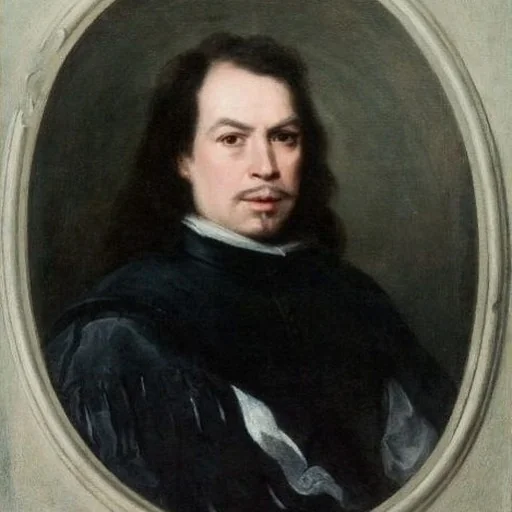
Bartolomé Esteban Murillo ( mure-IL-oh, m(y)uu-REE-oh, Spanish:; late December 1617, baptised 1 January 1618 – 3 April 1682) was a Spanish Baroque painter.