Artwork
William Cecill, First Baron Burghley
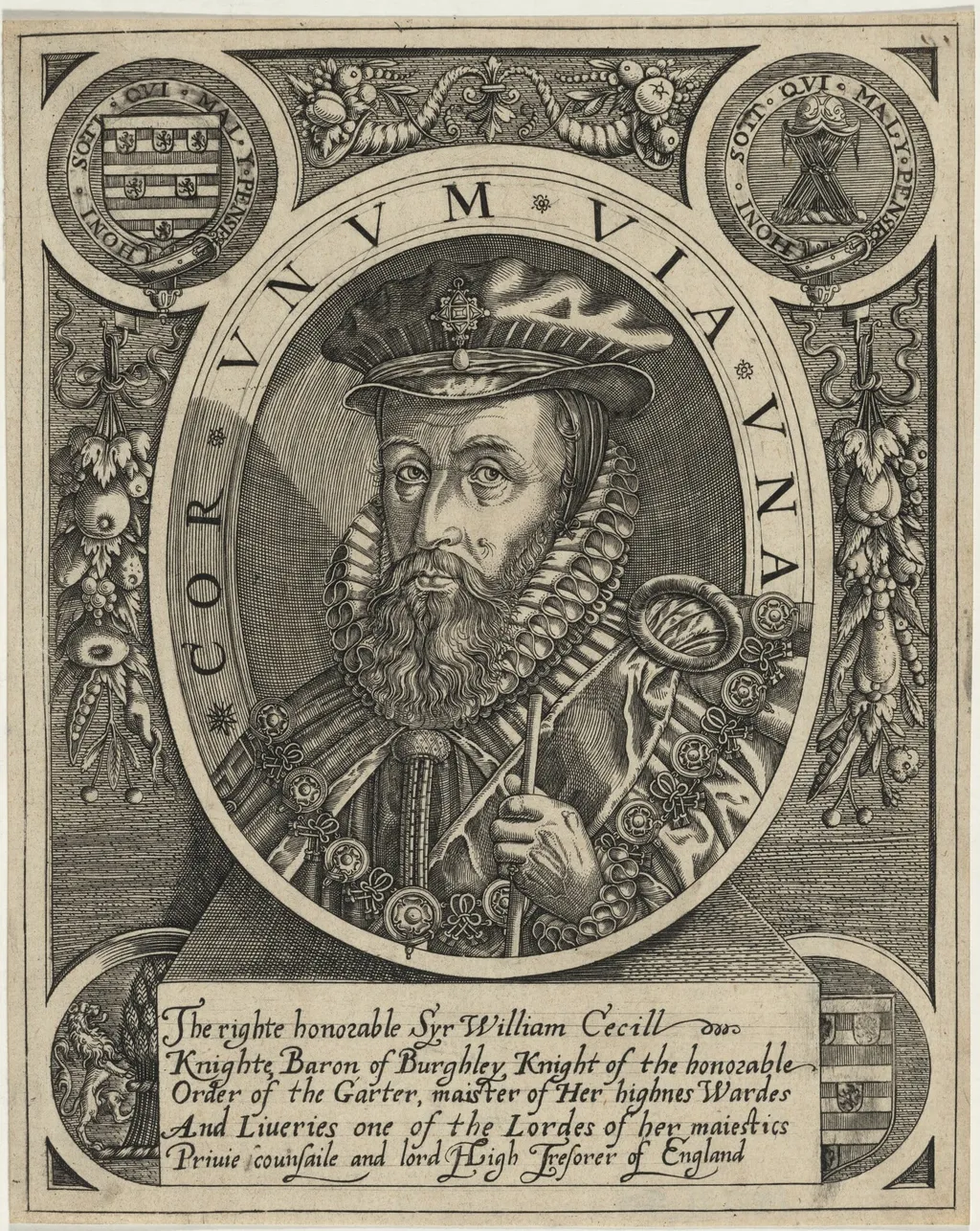
William Cecill, First Baron Burghley is an ink print by the Renaissance artist Renold Elstrack. It dates from 1598 and is held in the collection of the National Gallery of Art.
About this work
Overview
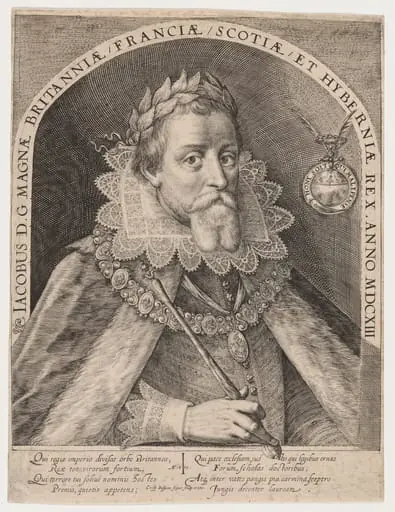
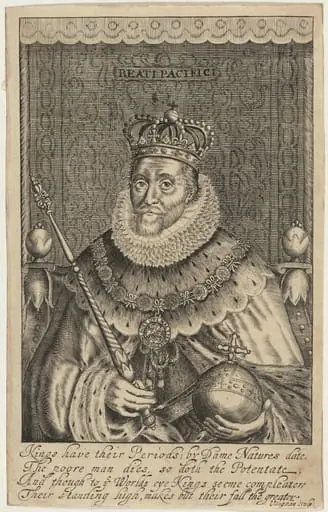
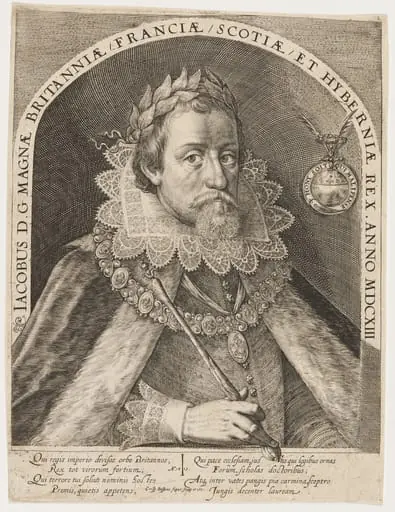
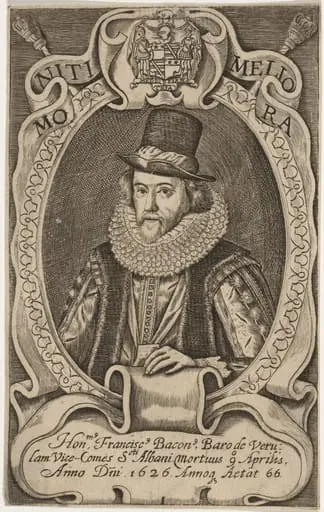
Executed in black and white, the image shows the statesman with a full beard, elaborate collar, a rolled document in one hand and a staff supporting the other.
Renold Elstrack’s 1598 engraving presents William Cecil, First Baron Burghley, in a formal portrait. Executed in black and white, the image shows the statesman with a full beard, elaborate collar, a rolled document in one hand and a staff supporting the other. A decorative wreath bearing the initials “M.V.L.” crowns his head, while a densely populated border frames the figure with heraldic and botanical motifs.
Subject & Meaning
The portrait emphasizes Cecil’s political stature, identifying him as Lord High Treasurer of England and enumerating his other official titles beneath his likeness. The rolled paper suggests his role in state correspondence and financial administration, while the staff may allude to authority. The initials in the wreath likely reference a personal motto or family emblem, reinforcing his noble identity.
Technique & Style
Elstrack employed copperplate engraving, incising fine lines into metal to achieve delicate shading and intricate detail. The technique allows for precise rendering of textures such as the fabric of the collar, the curls of the beard, and the complex border filled with coats of arms, floral designs, and geometric forms. The monochrome palette relies on line density to suggest depth and volume.
History & Provenance
Created in 1598, the print was produced shortly after Cecil’s death in 1598, serving as a commemorative image for contemporaries. Copies would have circulated among court circles and patrons, reflecting the practice of disseminating portrait engravings to reinforce the memory of prominent officials. The original plate’s whereabouts are unrecorded, but the work survives in several museum collections.
Context
The engraving belongs to the late Tudor–early Stuart period, when portrait prints functioned as both documentary records and symbols of political power. Elstrack, a noted Dutch engraver active in England, contributed to a growing market for printed likenesses that could be reproduced and distributed beyond the confines of painted portraiture.
Legacy
Elstrack’s portrait of Burghley exemplifies early modern English printmaking, illustrating how engraving served to memorialize high-ranking officials. The work’s detailed border and heraldic elements influenced subsequent portrait prints, establishing visual conventions for representing status and office in printed media.
Own this work as a print
Artist & collection