Artwork
The Contemplator
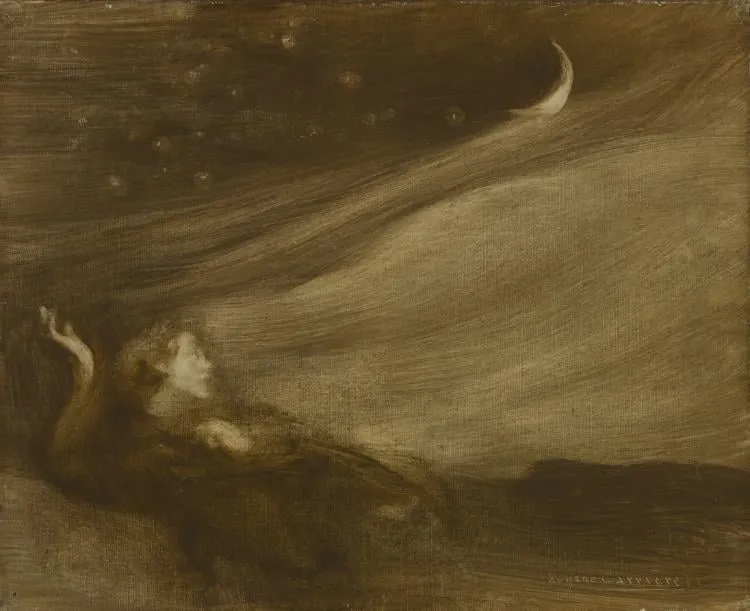
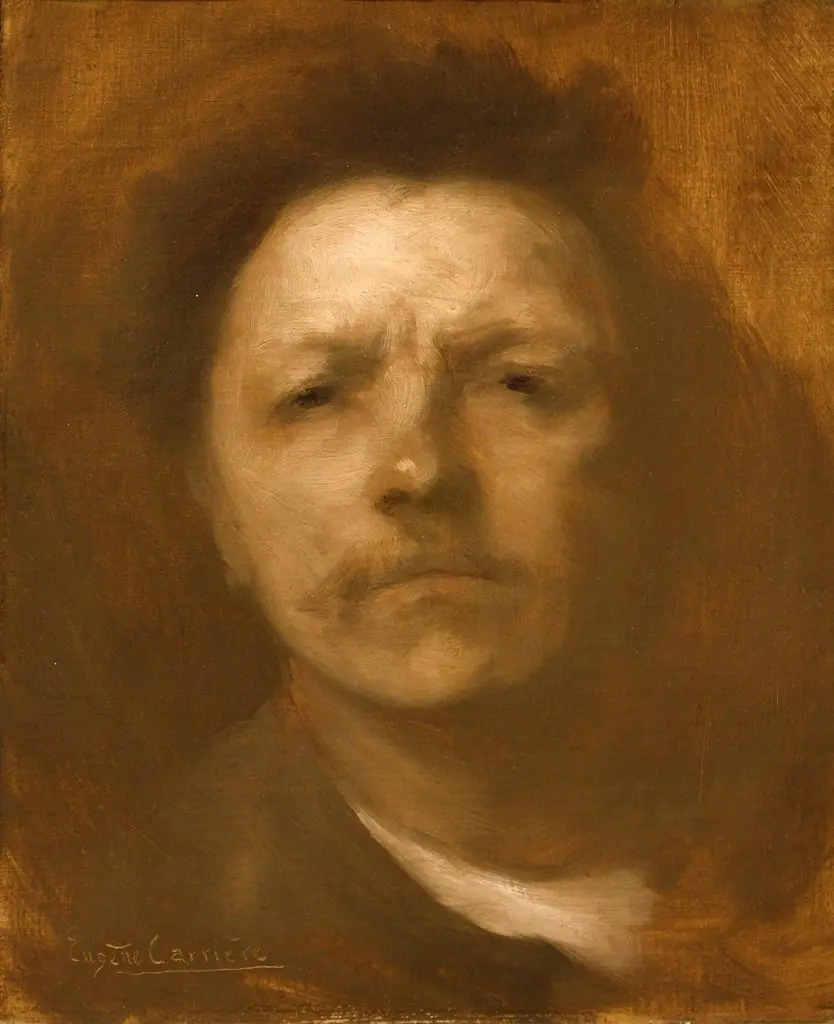
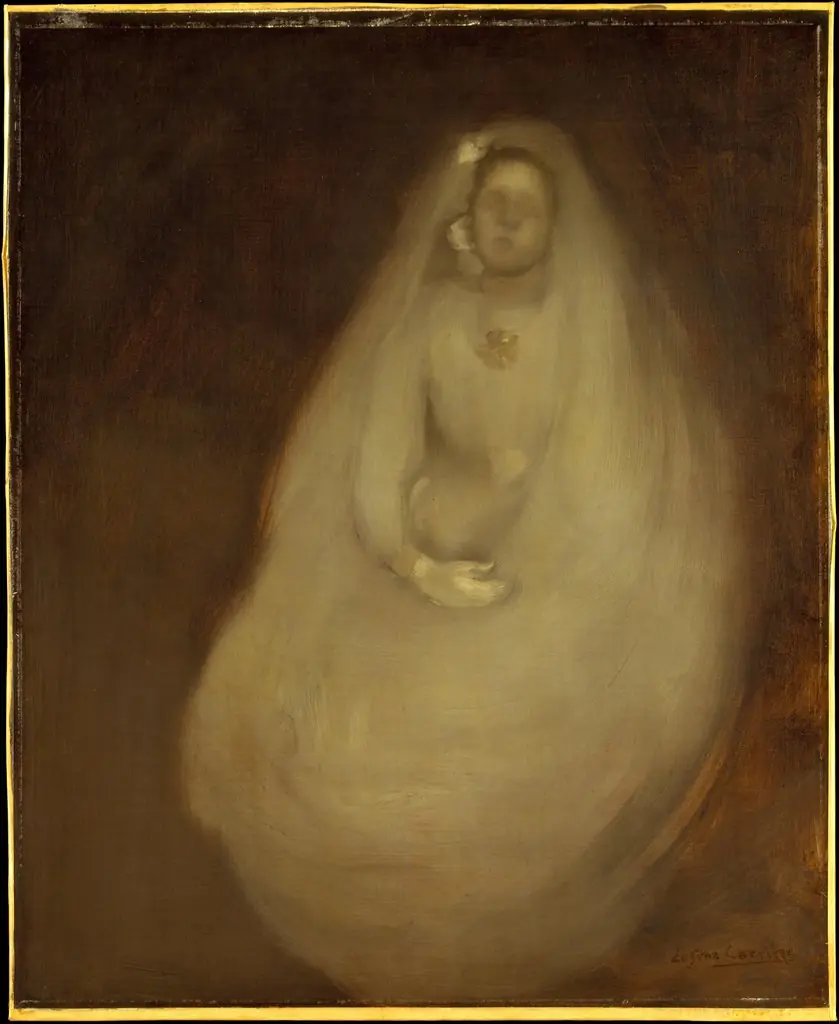
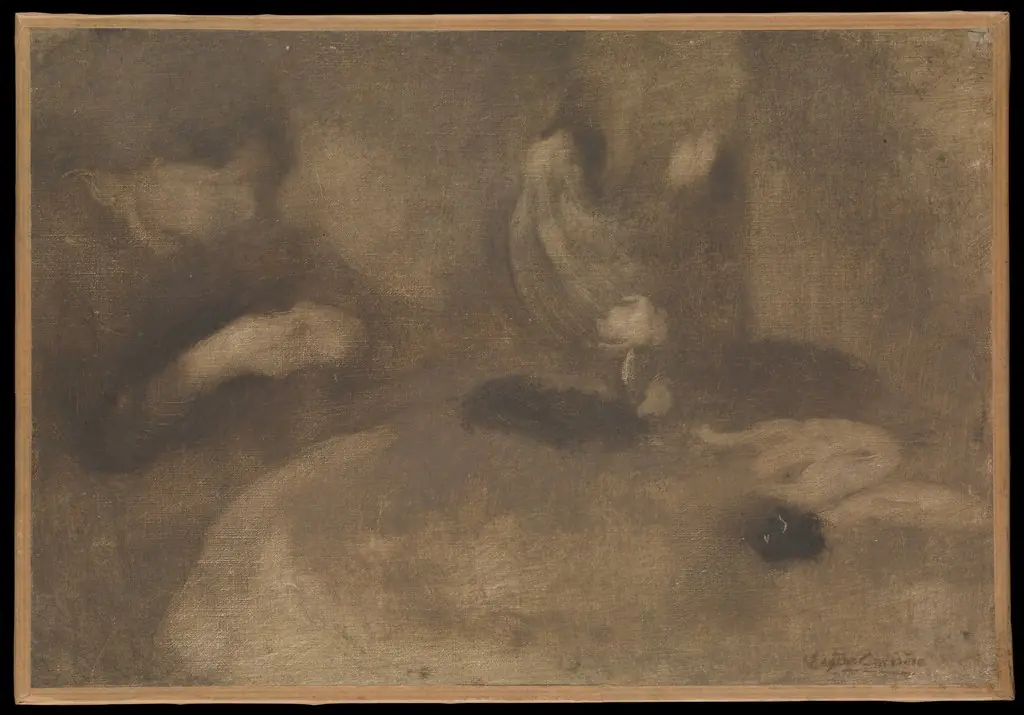
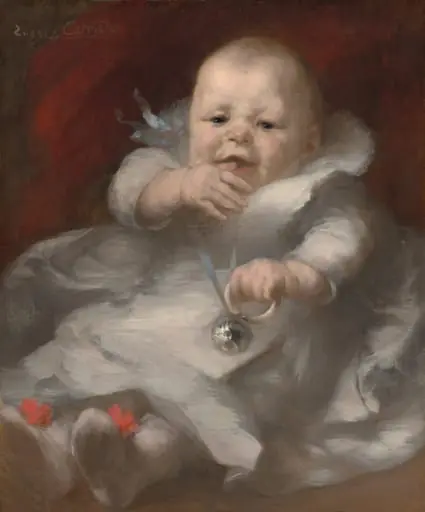
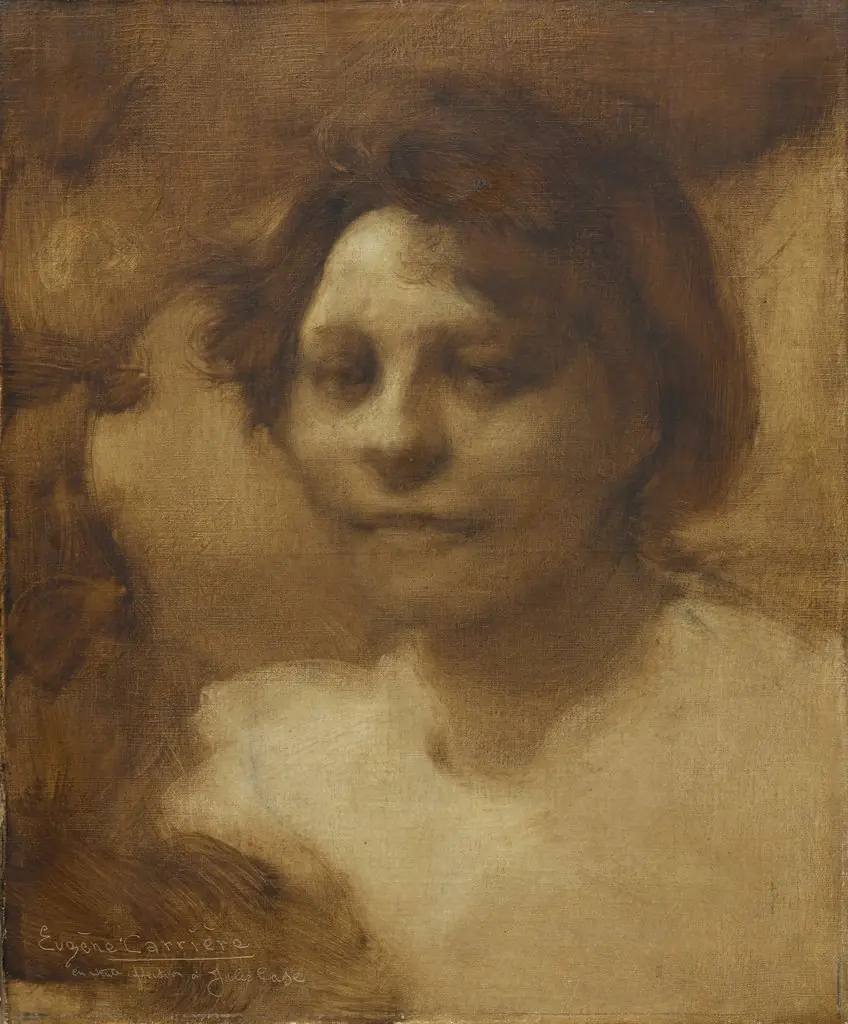
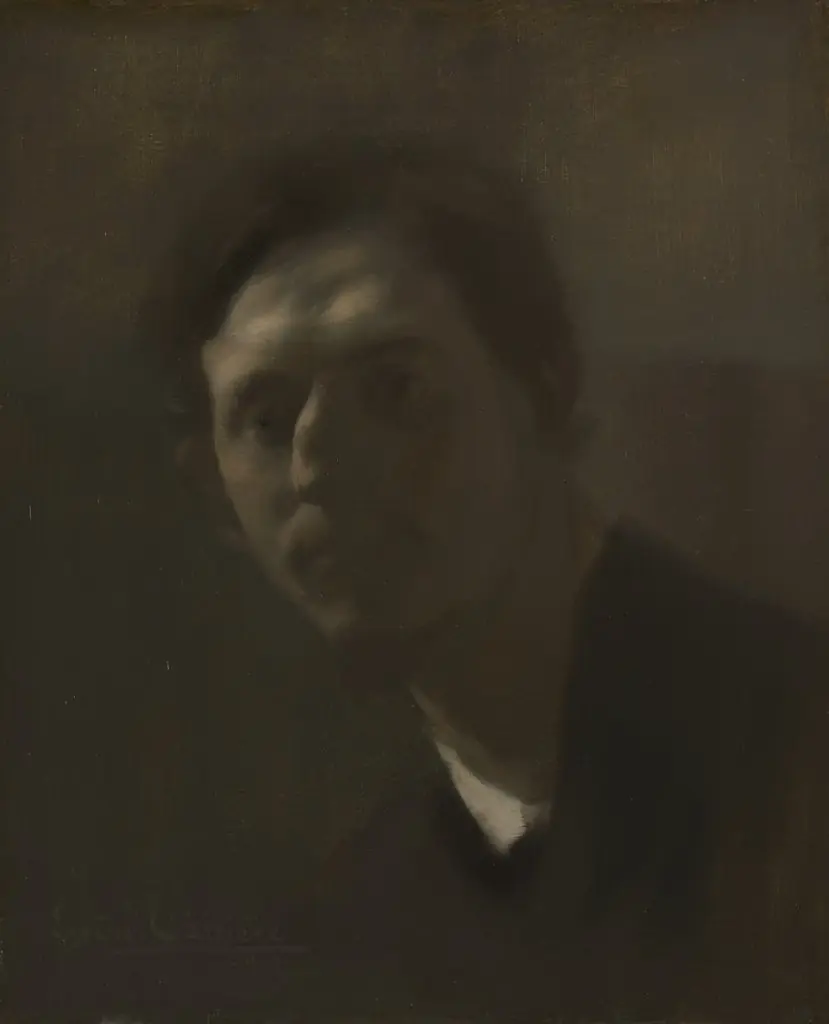
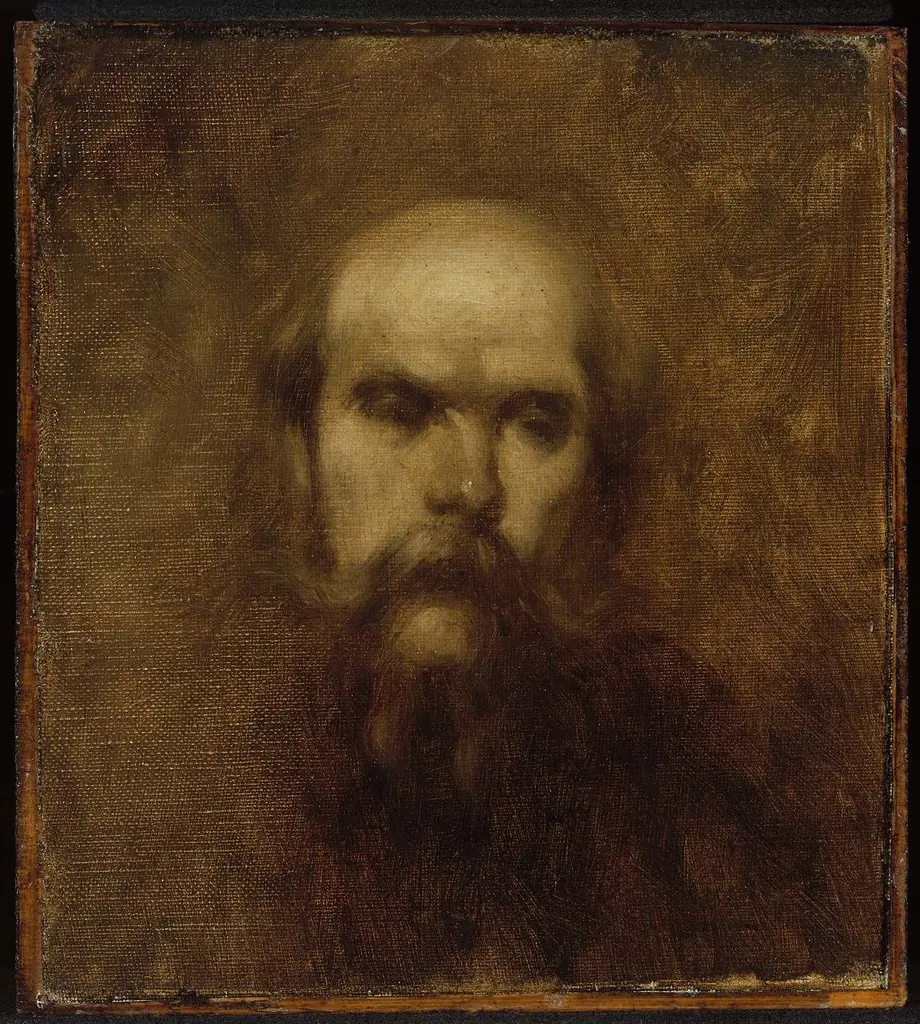
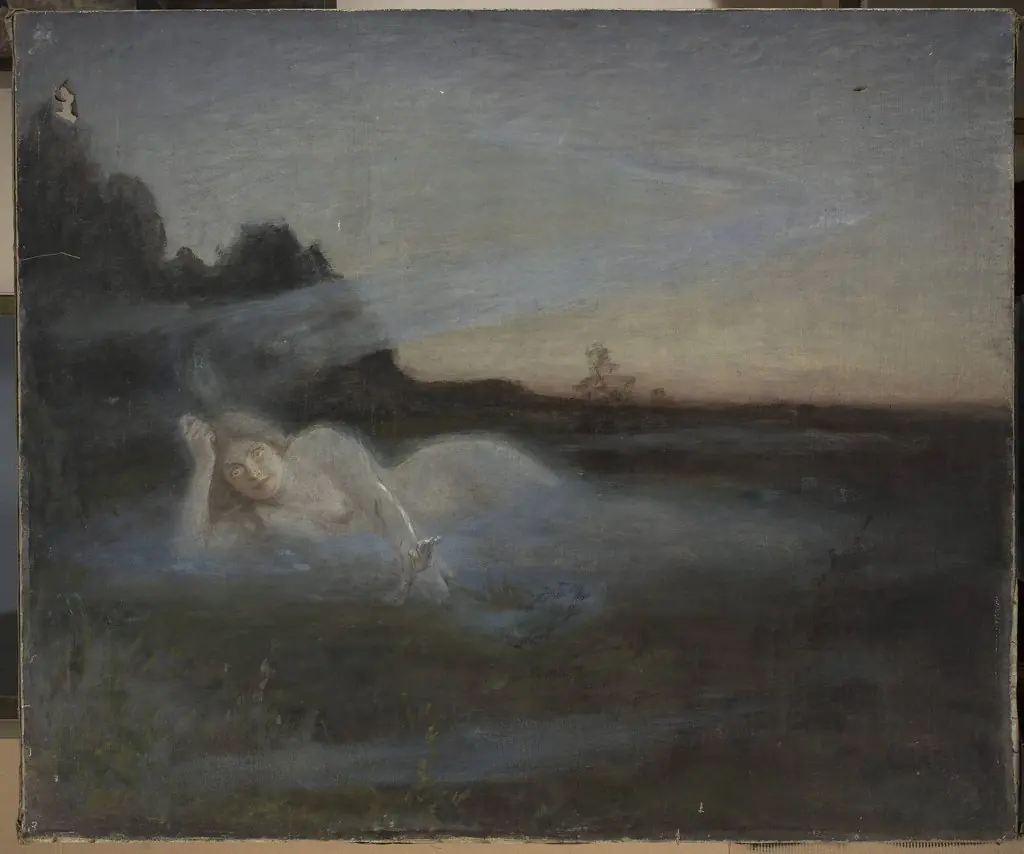
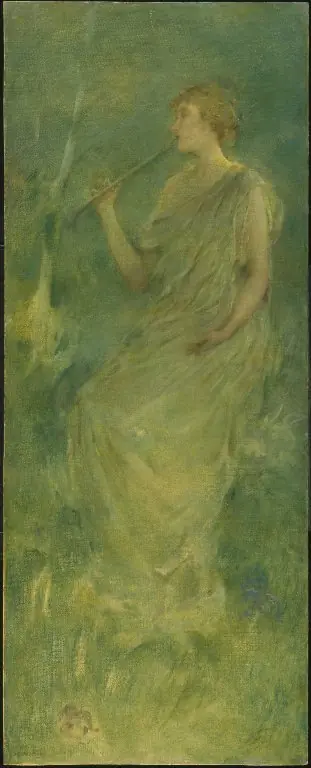
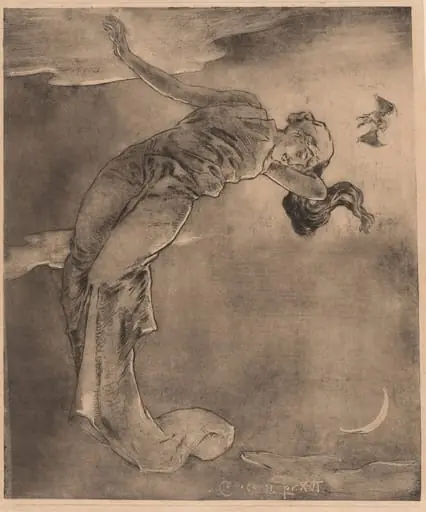
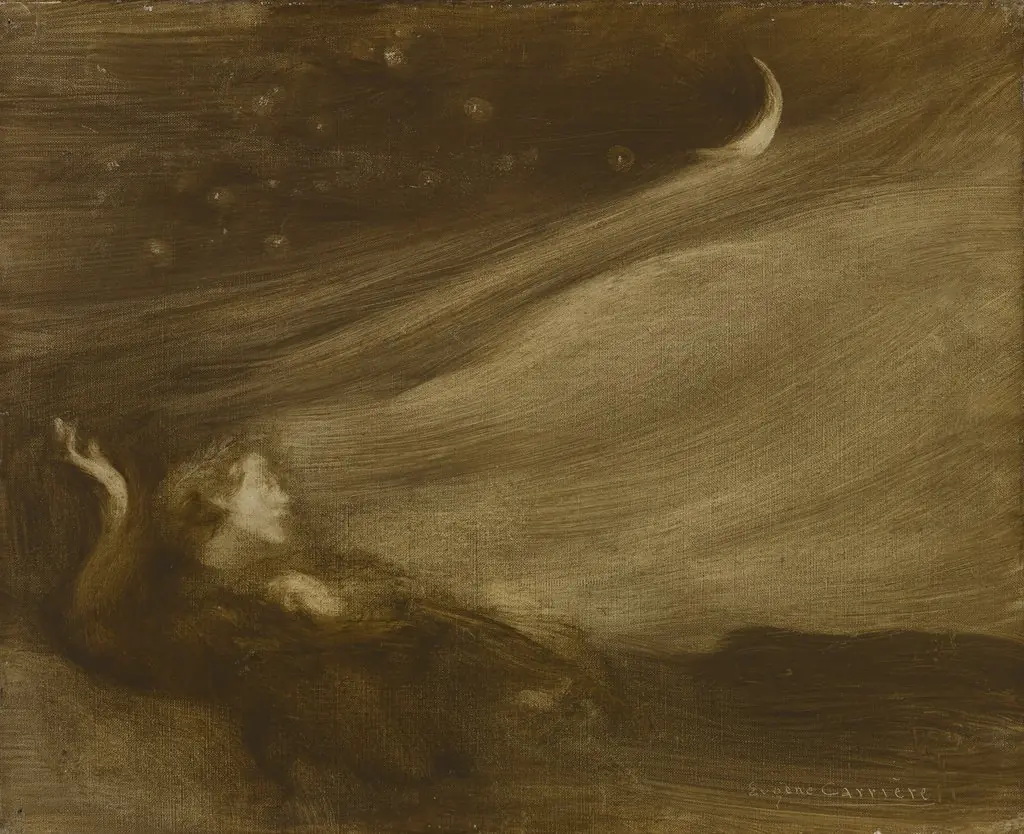
The Contemplator is an unspecified painting by the Symbolist artist Eugène Carrière. It dates from 1901 and is held in the collection of the Cleveland Museum of Art.
- Accession no.
- 1946.283
- Credit line
- In memory of Ralph King, gift of Mrs. Ralph King; Ralph T. Woods, Charles G. King; and Frances King Schafer
About this work
Overview
The Contemplator, a canvas by Léon-Carrière, was produced as part of a series of five works marking the hundred‑year anniversary of Victor Hugo’s birth. It visualises the poet in Hugo’s poem “Boaz Sleeping,” showing a figure reclined beneath a hazy night sky, his hand over his chest and the other extended toward a slender crescent moon.
Subject & Meaning
The reclining figure represents the contemplative poet, gazing upward as if caught between waking and dreaming. The gesture toward the moon alludes to contemporary beliefs that lunar light could both spark artistic inspiration and awaken melancholy, suggesting a tension between creative fervor and the darker moods that sometimes accompany it.
Technique & Style
Carrière employs a softened modeling of forms, reminiscent of the sfumato technique, where edges dissolve into one another and the palette merges into muted blues and grays. This approach creates an atmospheric veil, allowing the stars and moon to appear as distant, fleeting thoughts surrounding the central figure.
History & Provenance
Commissioned for the centennial celebrations of Hugo’s birth in 1902, the painting was exhibited alongside four companion pieces that together illustrated scenes from the poet’s work. After the exhibition, it entered a private collection before being acquired by the Musée des Beaux‑Arts in 1958, where it remains on view.
Context
The early twentieth century saw a resurgence of interest in Romantic literature and its visual interpretation. Carrière’s series reflects this trend, translating Hugo’s lyrical themes into visual form and engaging with contemporary ideas about the moon’s psychological impact on artists.
Artist & collection

Artist
Eugène Anatole Carrière was a French Symbolist artist of the fin-de-siècle period.