Artwork
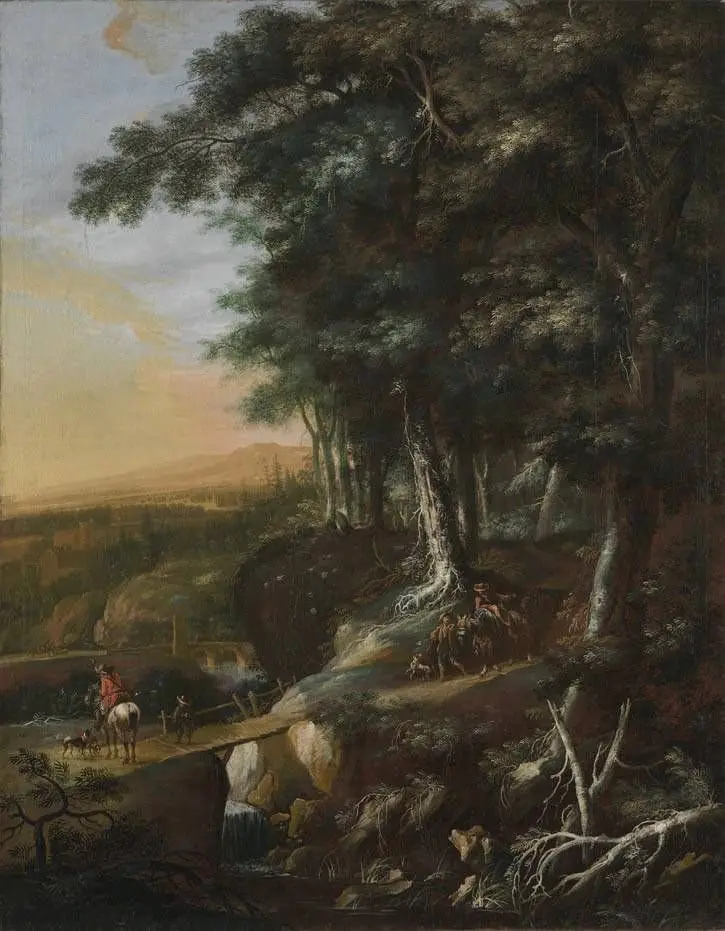
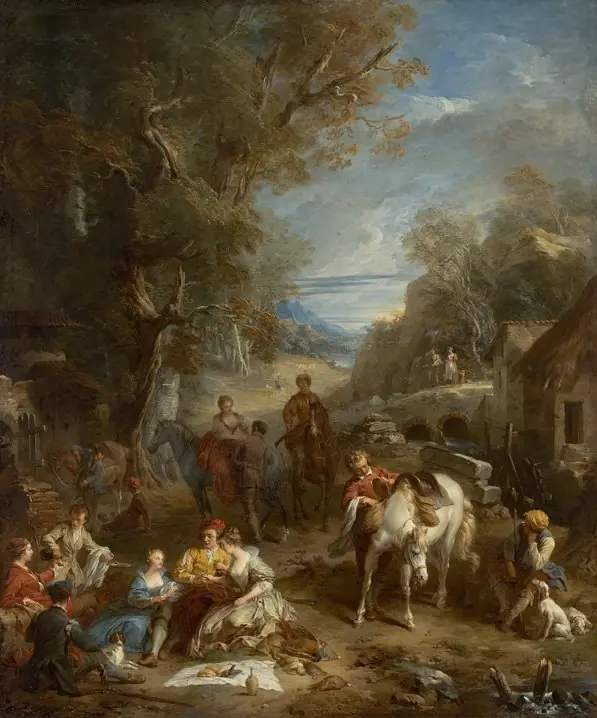
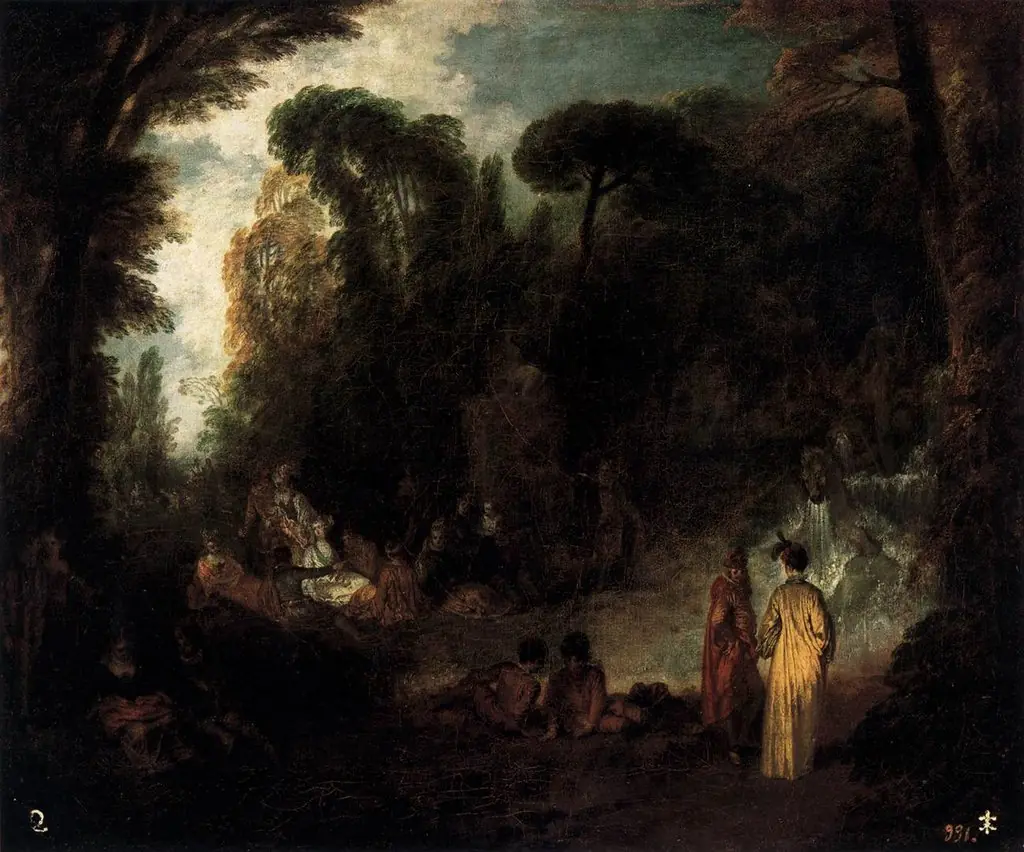
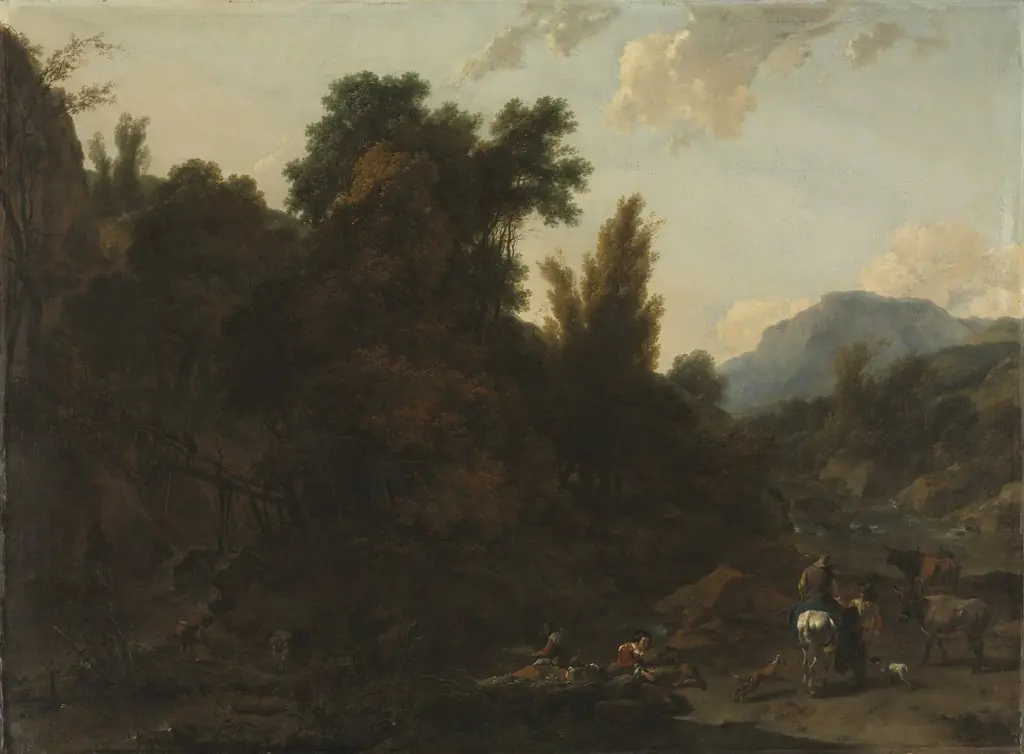
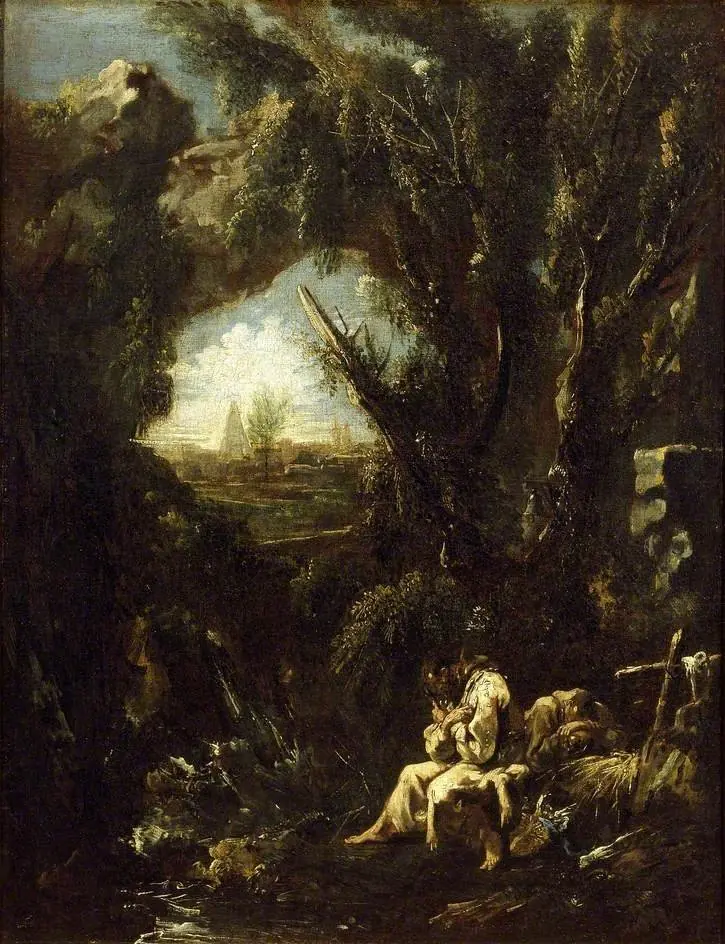
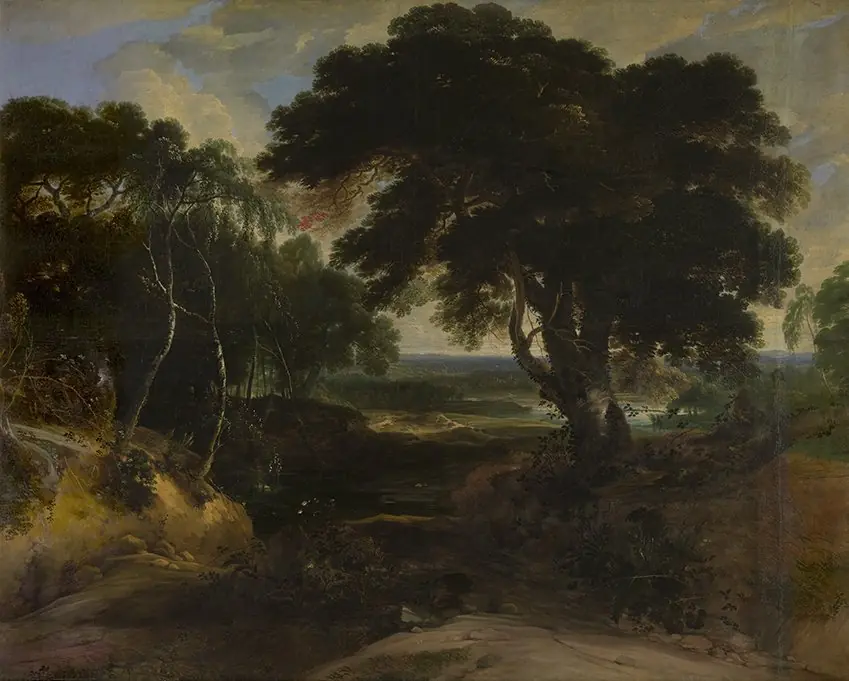
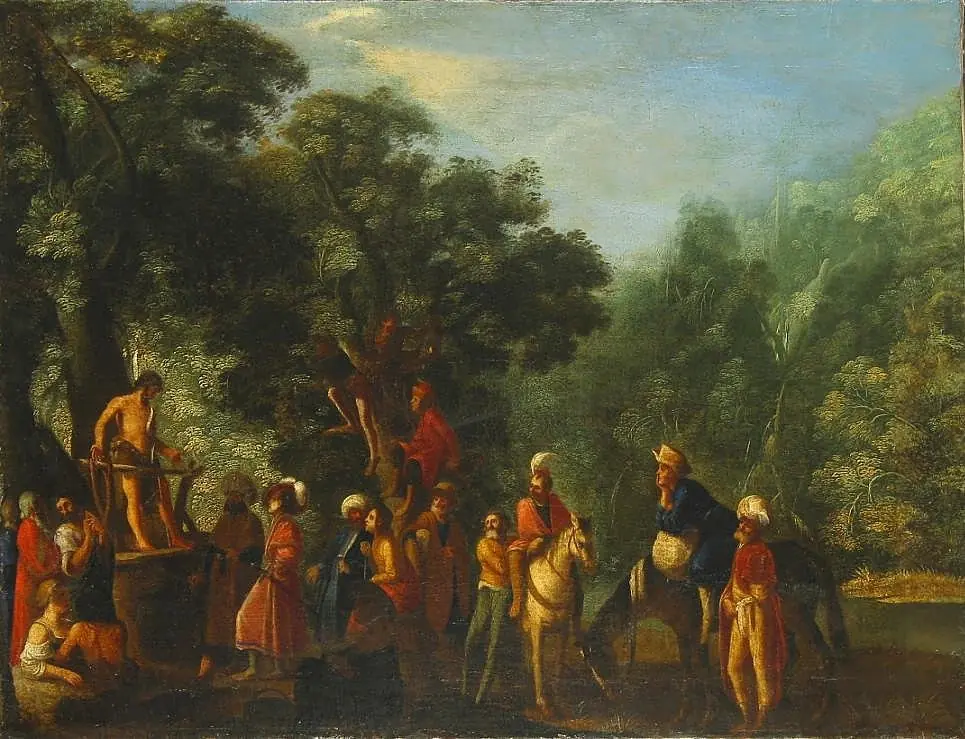
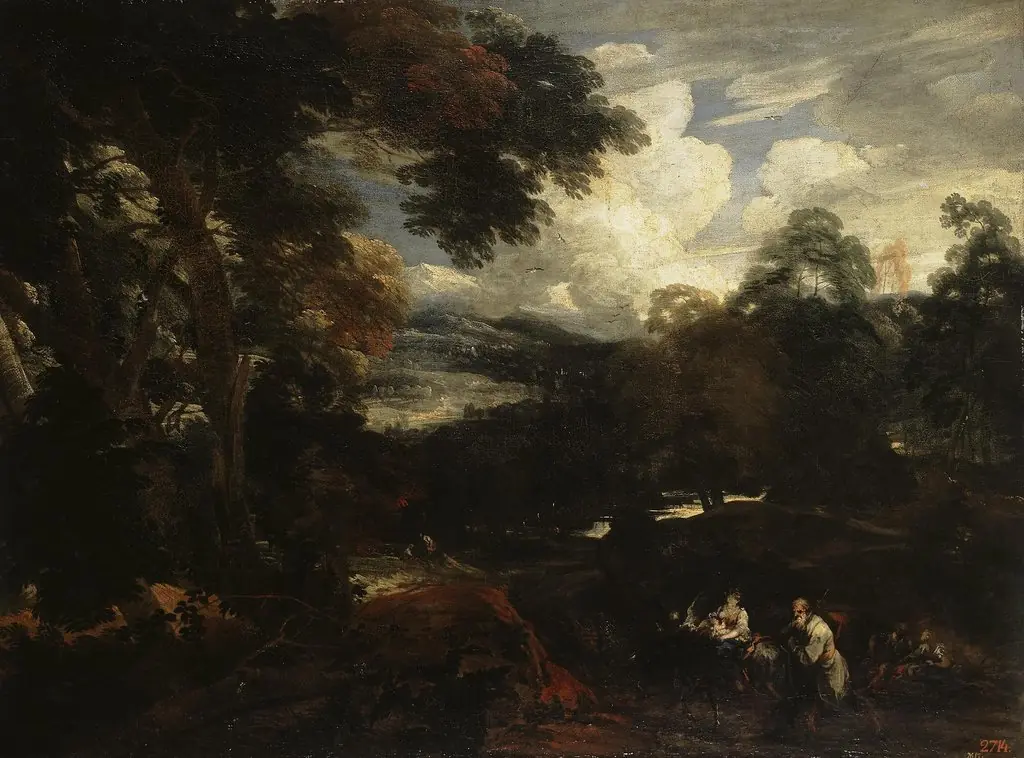
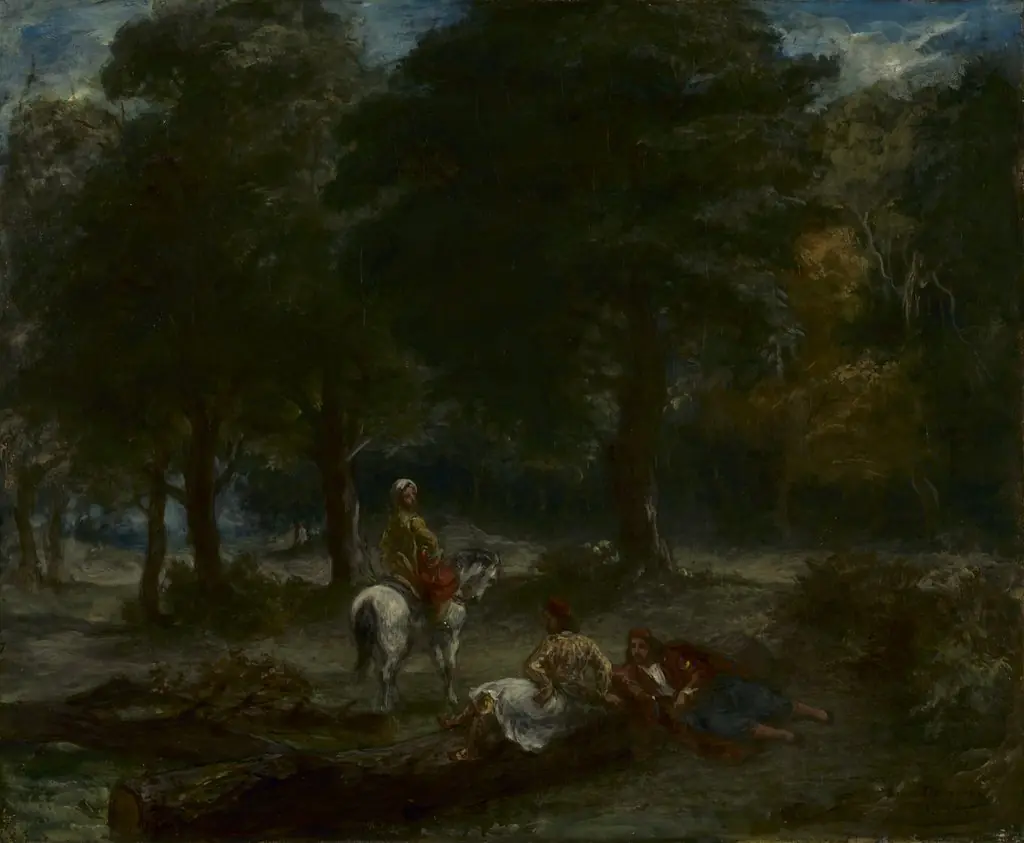
Greek Cavalry Men Resting in Forest
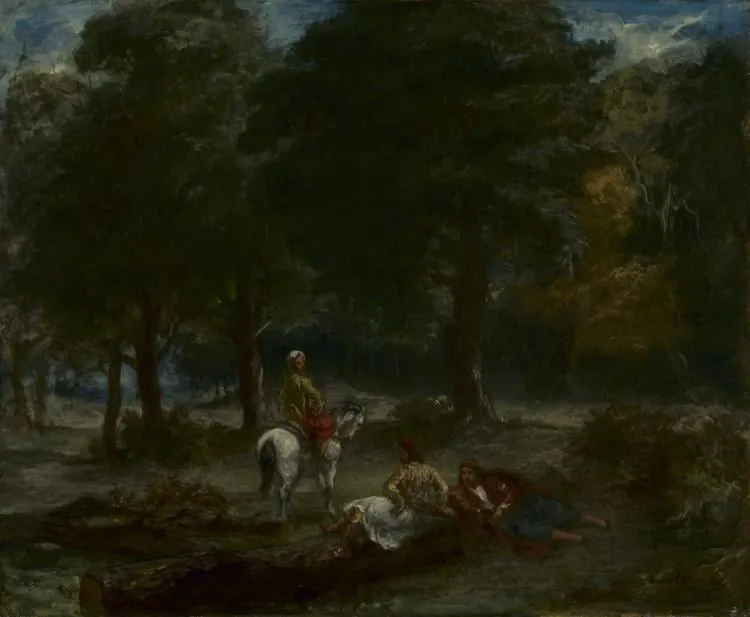
Greek Cavalry Men Resting in Forest is an unspecified painting by the Impressionist artist Eugène Delacroix. It dates from 1858 and is held in the collection of the Cleveland Museum of Art.
- Accession no.
- 1916.1032
- Credit line
- Gift of Mr. and Mrs. J. H. Wade
About this work
Overview
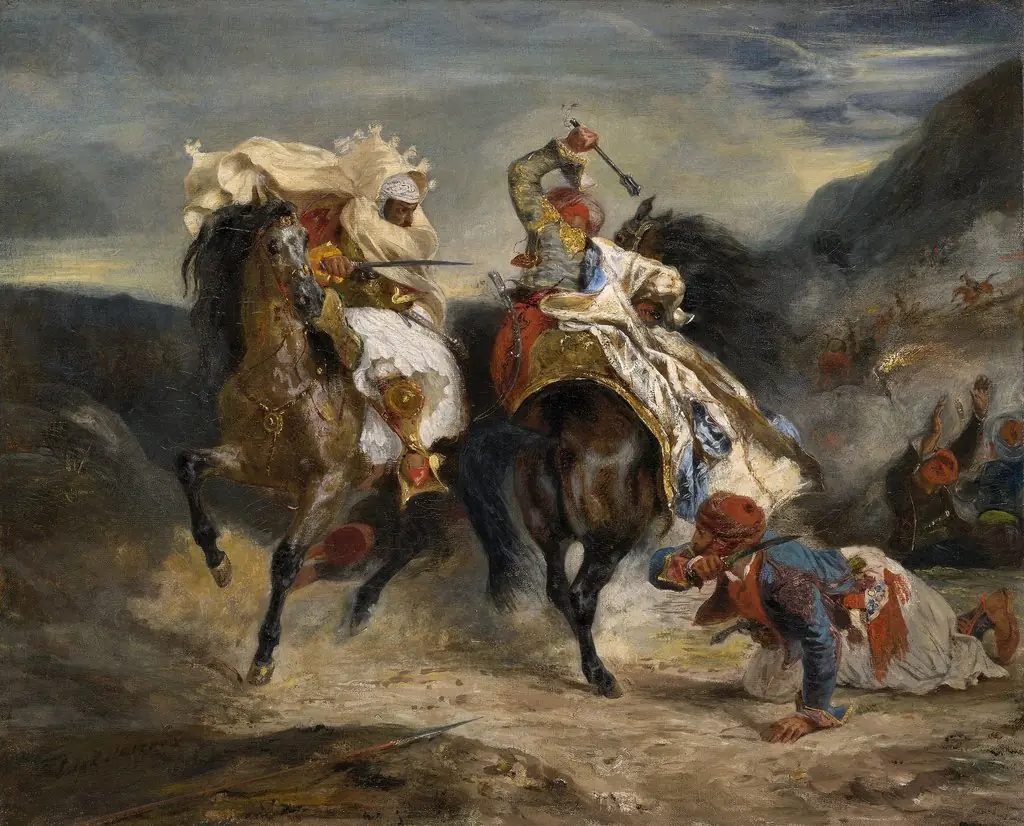
Painted by Eugène Delacroix, this work depicts Greek cavalry soldiers at rest in a forested landscape. Though created years after the Greek War of Independence, it reflects the enduring European fascination with the conflict. Delacroix, never having witnessed the war, constructed the scene from secondhand accounts and imagination, capturing a fleeting moment of stillness amid prolonged struggle.
Subject & Meaning
The soldiers, weary yet alert, embody the human cost of revolution. Their presence in a quiet woodland suggests a pause between violence, evoking themes of endurance and resilience. Delacroix framed the Greeks not as distant foreigners but as symbols of liberty, aligning their cause with Romantic ideals of national self-determination and moral courage.
Technique & Style
Delacroix employed loose, energetic brushwork to animate the foliage and suggest movement in the air, contrasting the stillness of the figures. He used impasto to build texture in uniforms and terrain, enhancing tactile realism. The vivid hues of the soldiers’ attire stand out against the muted greens and browns of the forest, heightening emotional tension without overt drama.
History & Provenance
Created in the 1830s, the painting emerged during a period of heightened European sympathy for Greek independence. Delacroix drew on contemporary accounts, prints, and literature rather than firsthand experience. The work was part of a broader cultural response in France, where the Greek struggle was mythologized as a continuation of revolutionary values from 1789.
Context
French artists and intellectuals viewed the Greek uprising through the lens of their own revolutionary past, interpreting it as a defense of Enlightenment ideals against Ottoman rule. This sentiment was reinforced by literary figures like Byron and visual artists who sought to elevate the conflict into a universal narrative of freedom and sacrifice.
Legacy
The painting exemplifies Delacroix’s role in shifting historical painting toward emotional immediacy over academic precision. Its emphasis on atmosphere, psychological nuance, and painterly freedom influenced later generations, contributing to the evolution of modern approaches to narrative and landscape in 19th-century art.
Artist & collection
Artist
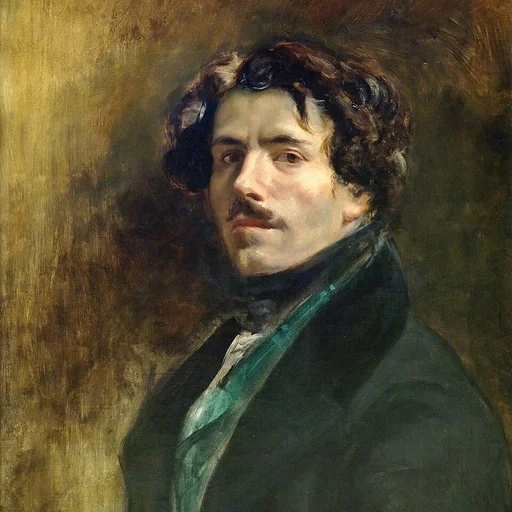
Ferdinand Victor Eugène Delacroix ( DEL-ə-krwah, -KRWAH; French:; 26 April 1798 – 13 August 1863) was a French Romantic artist who was regarded as the leader of the French Romantic school.