Artwork
The beach
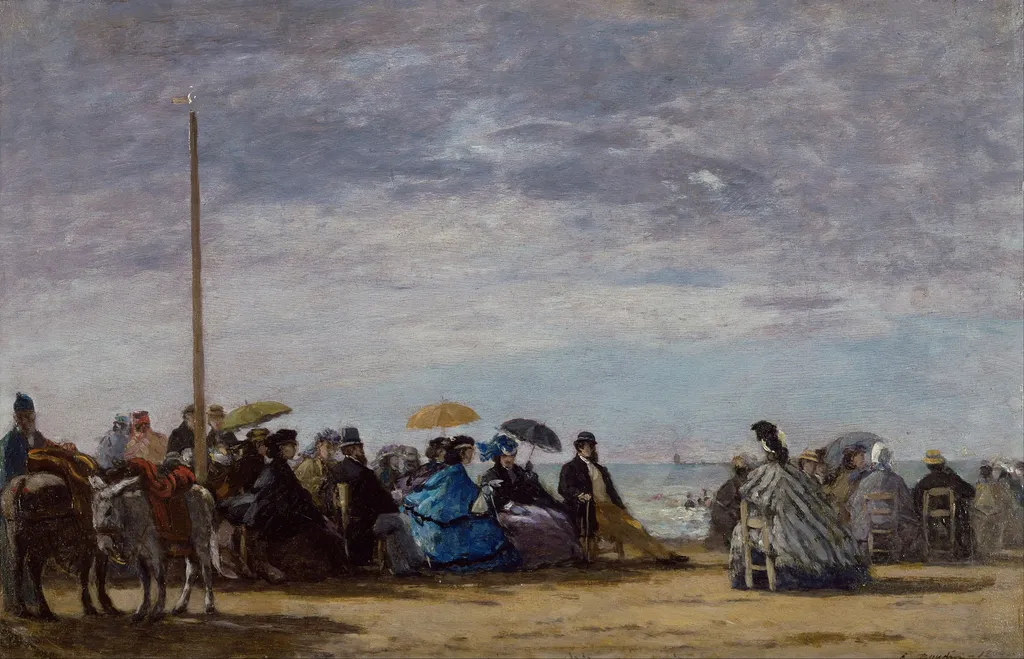
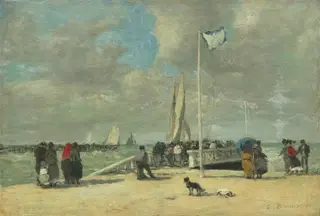
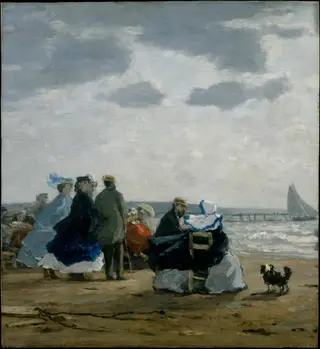
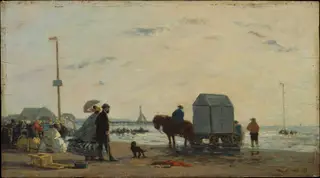
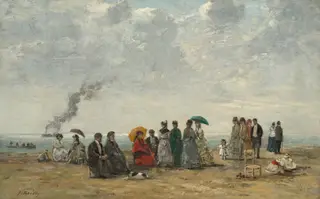
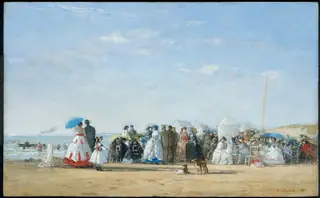
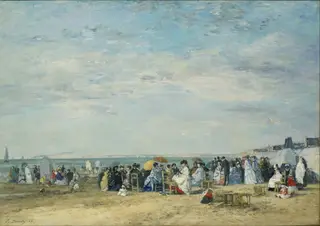
The beach is an oil painting by the Impressionist artist Eugène Louis Boudin. It dates from 1864 and is held in the collection of the Art Gallery of New South Wales.
About this work
Overview
This work exemplifies his early engagement with the visual language that would later influence the Impressionists, emphasizing atmosphere over narrative.
Eugène Louis Boudin painted The Beach in 1864 using oil on canvas, capturing a quiet coastal scene in northern France. Known for his dedication to painting en plein air, Boudin focused on the transient qualities of light and weather along the Normandy shore. This work exemplifies his early engagement with the visual language that would later influence the Impressionists, emphasizing atmosphere over narrative.
Subject & Meaning
The painting depicts a modest seaside gathering of 19th-century visitors, men in hats, women in long dresses, some sheltering under umbrellas, engaged in leisurely strolls or quiet rest. There is no dramatic event, only the rhythm of daily life by the water. Boudin’s focus on ordinary people in a natural setting reflects a shift toward modern life as worthy subject matter, grounded in observation rather than idealization.
Technique & Style
Boudin employed loose, responsive brushwork to render shifting cloud cover and the soft glow of diffused daylight. Cool grays and muted blues dominate the sky, contrasting with warmer ochres and browns of the wet sand. Subtle variations in tone suggest depth and volume without heavy modeling, anticipating Impressionist approaches to light. The brushstrokes remain visible, preserving the immediacy of the moment observed.
History & Provenance
Painted in 1864, The Beach entered the collection of the Art Gallery of New South Wales in the 20th century, following its circulation among private and institutional collectors in Europe. Boudin’s reputation as a precursor to Impressionism grew after critical endorsements from figures like Baudelaire and Corot, who recognized his truthful depiction of skies and coastal ambiance. The painting’s journey reflects broader interest in French landscape painting beyond academic traditions.
Context
In the mid-19th century, coastal resorts like Trouville and Deauville became accessible to the middle class, transforming beaches into social spaces. Boudin, among the first to paint these scenes directly from nature, documented this cultural shift. His work stood apart from historical or mythological subjects favored by the Salon, instead valuing direct experience of light, weather, and human activity in the open air.
Legacy
Boudin’s emphasis on atmospheric effects and everyday coastal life influenced younger artists, notably Monet, who credited him as a formative guide. The Beach exemplifies a quiet revolution in painting: the elevation of transient moments and natural light as central concerns. Though not overtly radical, his approach laid groundwork for the Impressionist movement’s departure from studio conventions.
Own this work as a print
Artist & collection

Artist
Eugène Louis Boudin (French: ; 12 July 1824 – 8 August 1898) was one of the first French landscape painters to paint outdoors.