Artwork
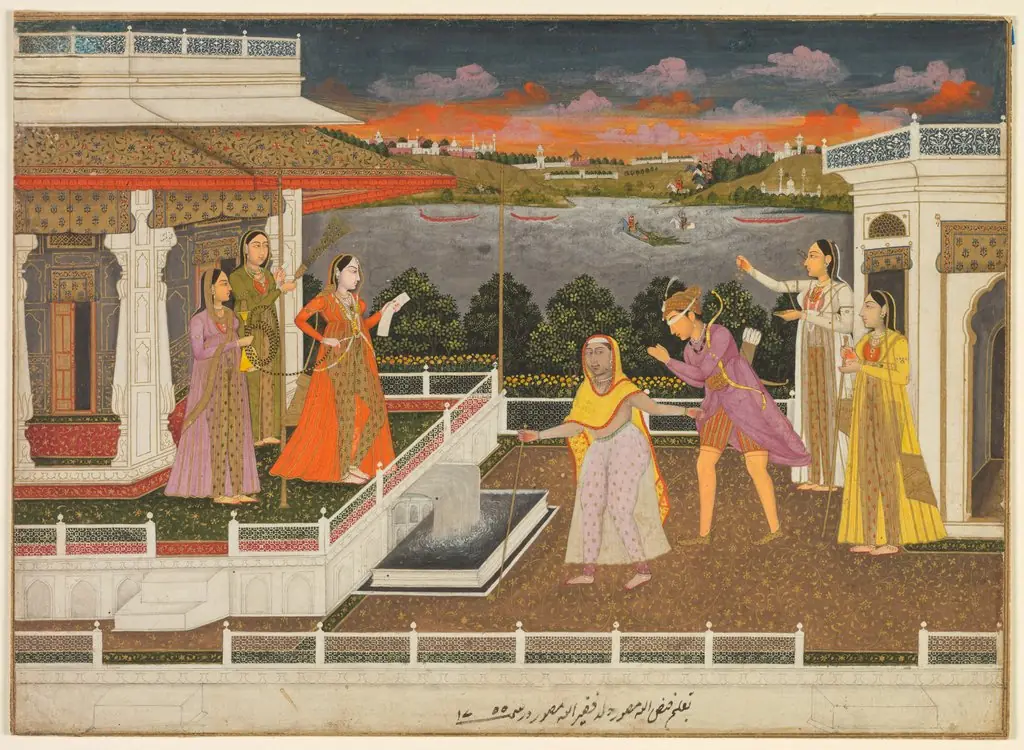
A blindfolded suitor is brought before a princess (recto)
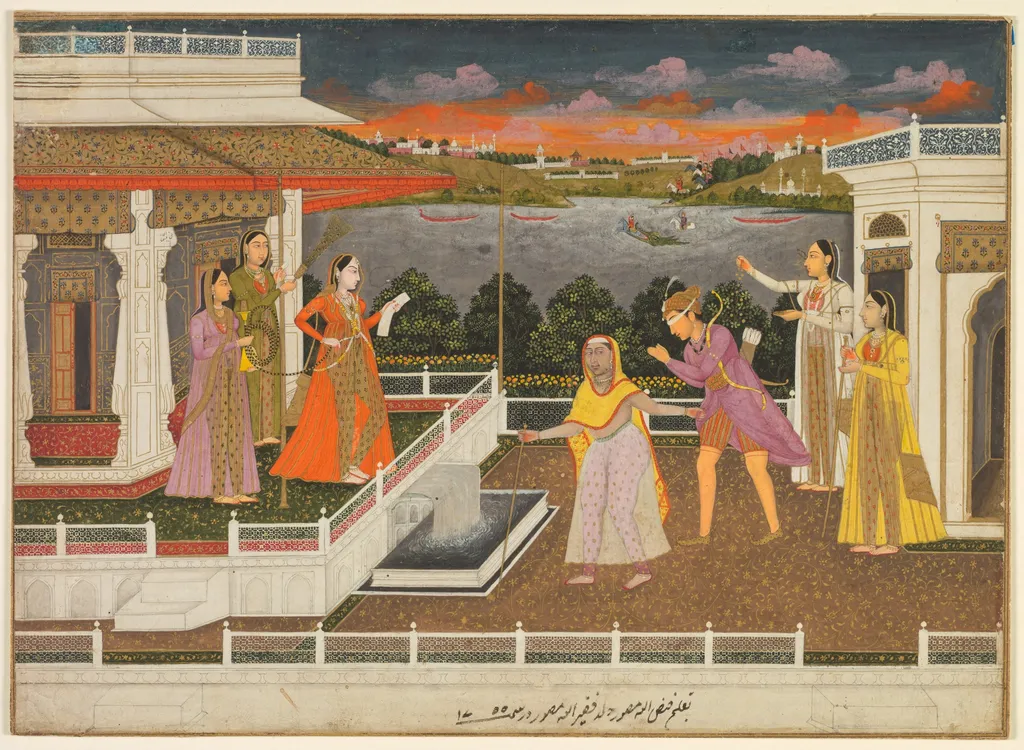
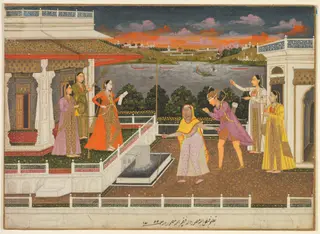
A blindfolded suitor is brought before a princess (recto) is an unspecified painting by the Rococo painting artist Fayzullah. It dates from 1755 and is held in the collection of the Cleveland Museum of Art. Created in 1755 by the artist Faizullah, this oil painting portrays a ceremonial encounter in an elaborate garden setting.
About this work
Technique & Style
The painting is executed in opaque water-based pigments applied in fine, layered washes typical of late Mughal-era manuscript and album practices, with delicate modeling of faces and drapery achieved through subtle tonal shifts rather than heavy impasto.
The support is paper, cut to the dimensions of a standard album leaf and mounted onto a secondary sheet, consistent with the album format used for intimate courtly scenes. Handling shows a controlled, linear precision in delineating the blindfold and architectural backdrop, while the princess’s figure is rendered with softer, blended washes to suggest volume and refinement. The palette is restrained, relying on earthy ochres, muted greens, and restrained reds, with minimal use of gold, reflecting the restrained aesthetic favored in mid-eighteenth-century Delhi workshops.
History & Provenance
Created by the Indian artist Faizullah, this painting dates to 1755. Faizullah was active in the region roughly between 1730 and 1765. The work is currently held in the collection of the Cleveland Museum of Art in Cleveland, where it is cataloged under the accession number 2013.343.a. The specific date of inception is recorded as January 1, 1755.
Context
The painting was created by the Indian artist Faizullah in 1755 and is currently held in the collection of the Cleveland Museum of Art.
The painting was created by the Indian artist Faizullah in 1755 and is currently held in the collection of the Cleveland Museum of Art. It depicts a blindfolded suitor presented to a princess, a subject drawn from Mughal-era artistic traditions. Scholarly attention to this work remains limited, with minimal critical reception recorded in accessible literature, though its inclusion in institutional catalogues suggests recognition of its historical and stylistic significance within 18th-century Indian painting.
Overview
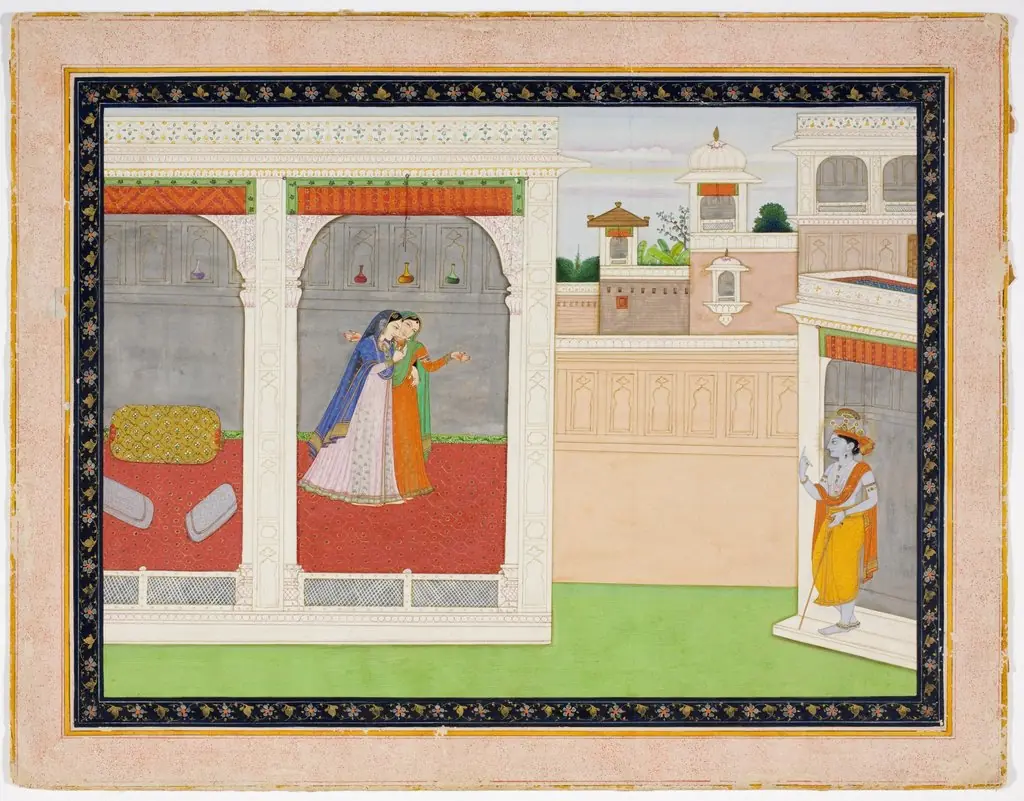
Created in 1755 by the artist Faizullah, this oil painting portrays a ceremonial encounter in an elaborate garden setting. A blindfolded male figure is escorted by a woman toward a princess who watches from a balcony, surrounded by attendants. The work is part of the collection of the Cleveland Museum of Art.
Subject & Meaning
The composition suggests a ritual of courtly selection or testing, where the suitor, deprived of sight, must rely on other senses or judgment. The presence of the princess on a raised platform emphasizes her authority, while the guiding woman may symbolize mediation between the royal sphere and the aspirant.
Own this work as a print
Artist & collection

 The Month of Phalguna (February-March), from a manuscript of the Barahmasa ("Twelve Months")
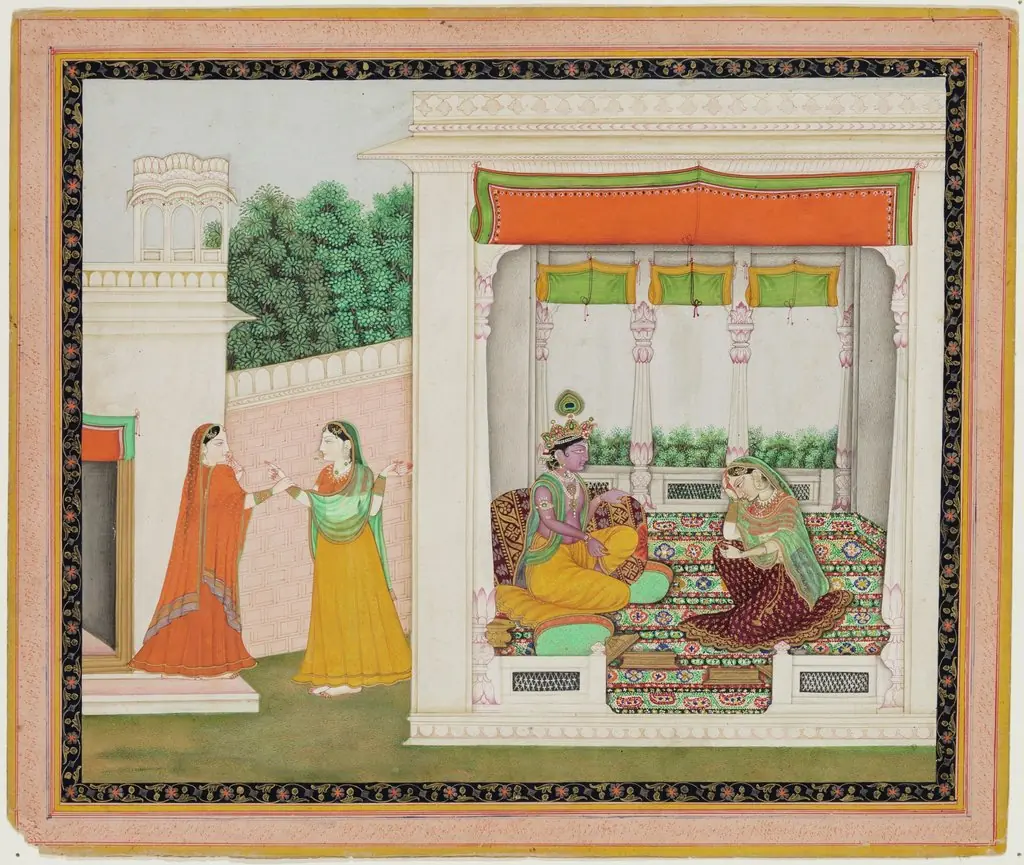 Story of Krishna and Radha
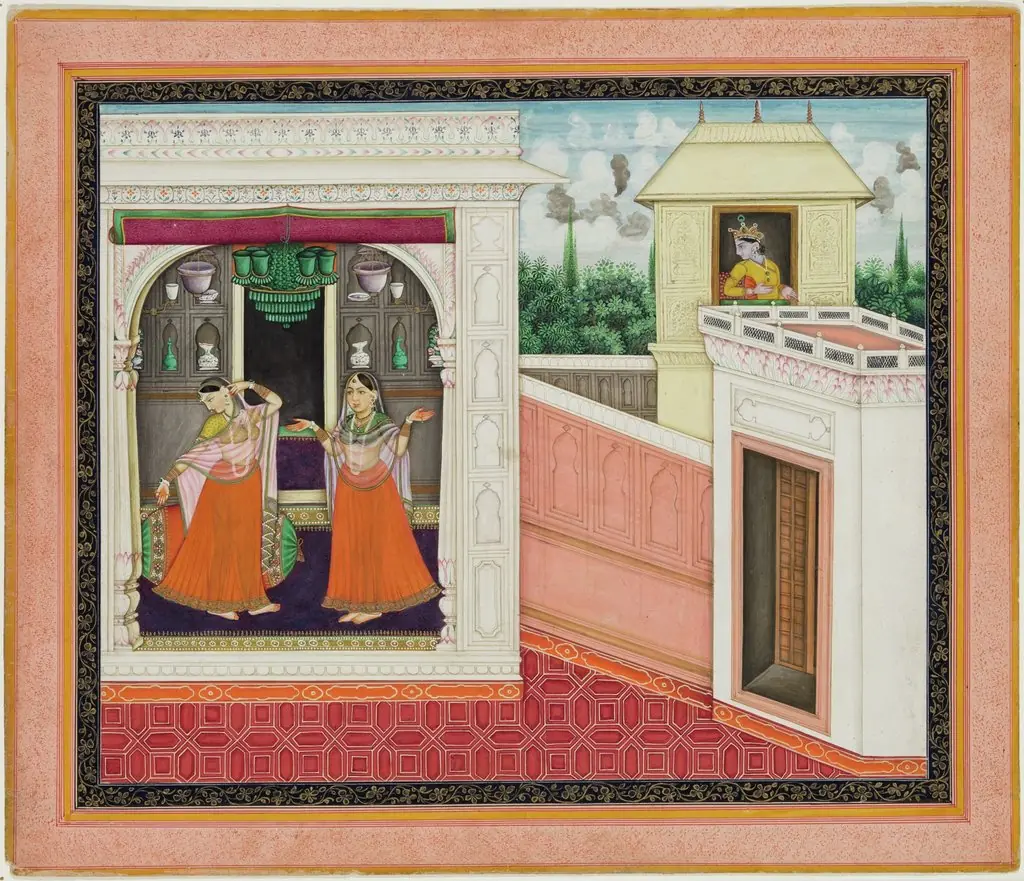 Story of Krishna and Radha
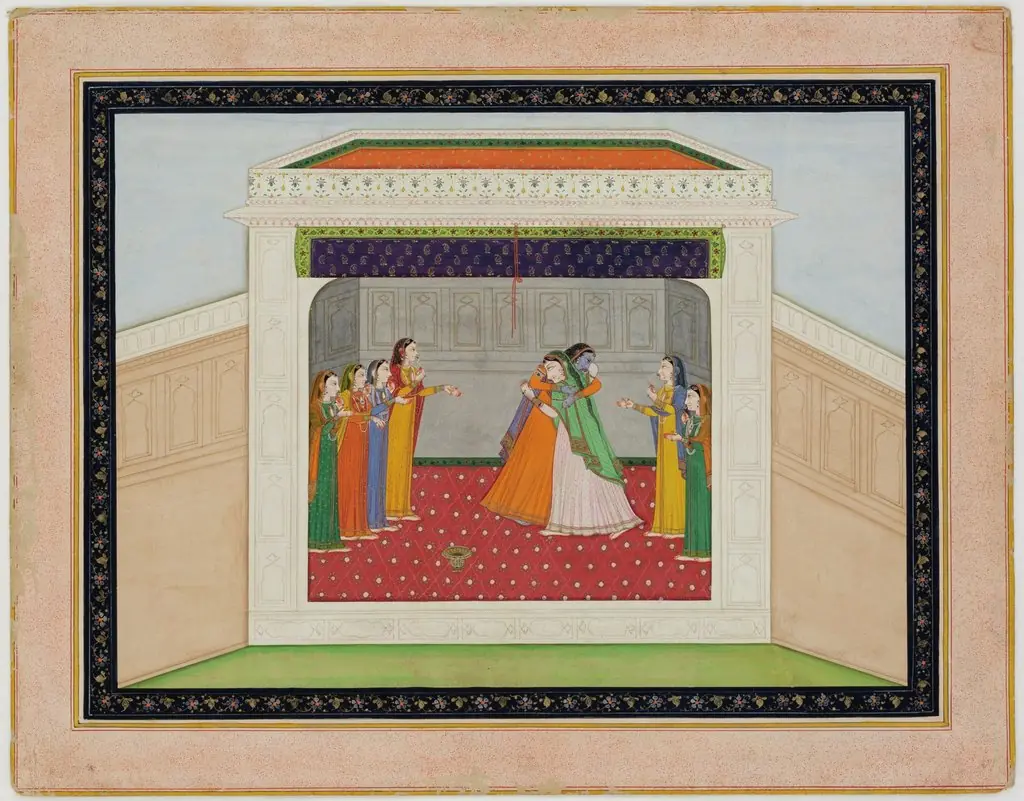 Story of Krishna and Radha
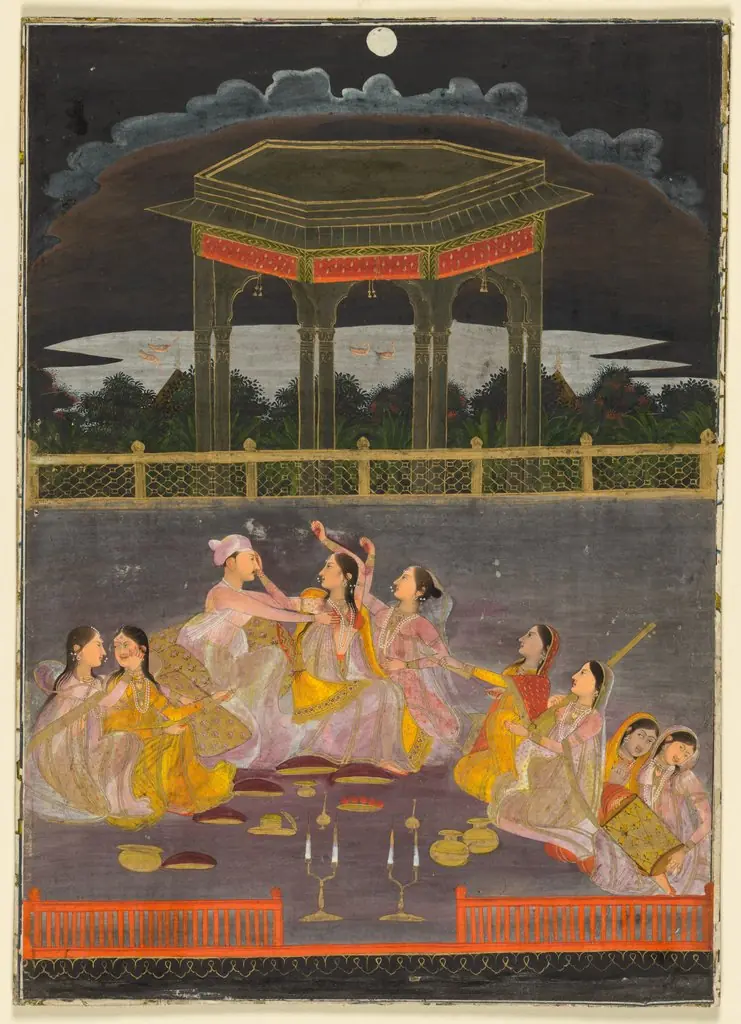 A prince celebrating Holi with palace women on a terrace at night (recto); calligraphy of a quatrain (verso)
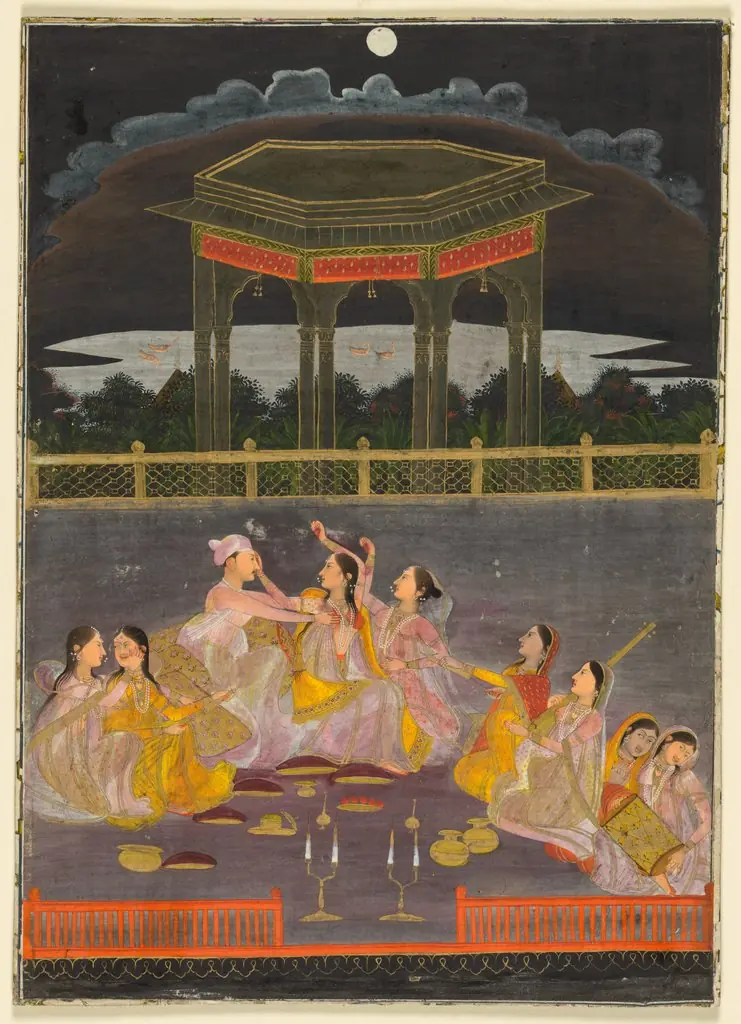 A prince celebrating Holi with palace women on a terrace at night (recto)
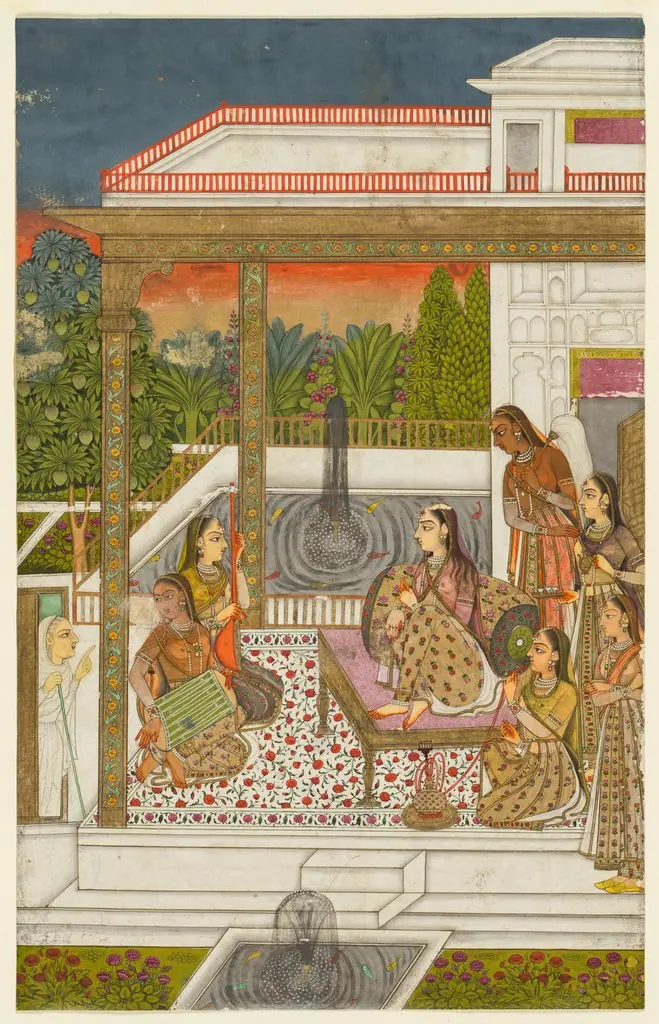 A princess with attendants on a terrace
 Krishna and Radha: Court Scene