Artwork
Woman with a Book
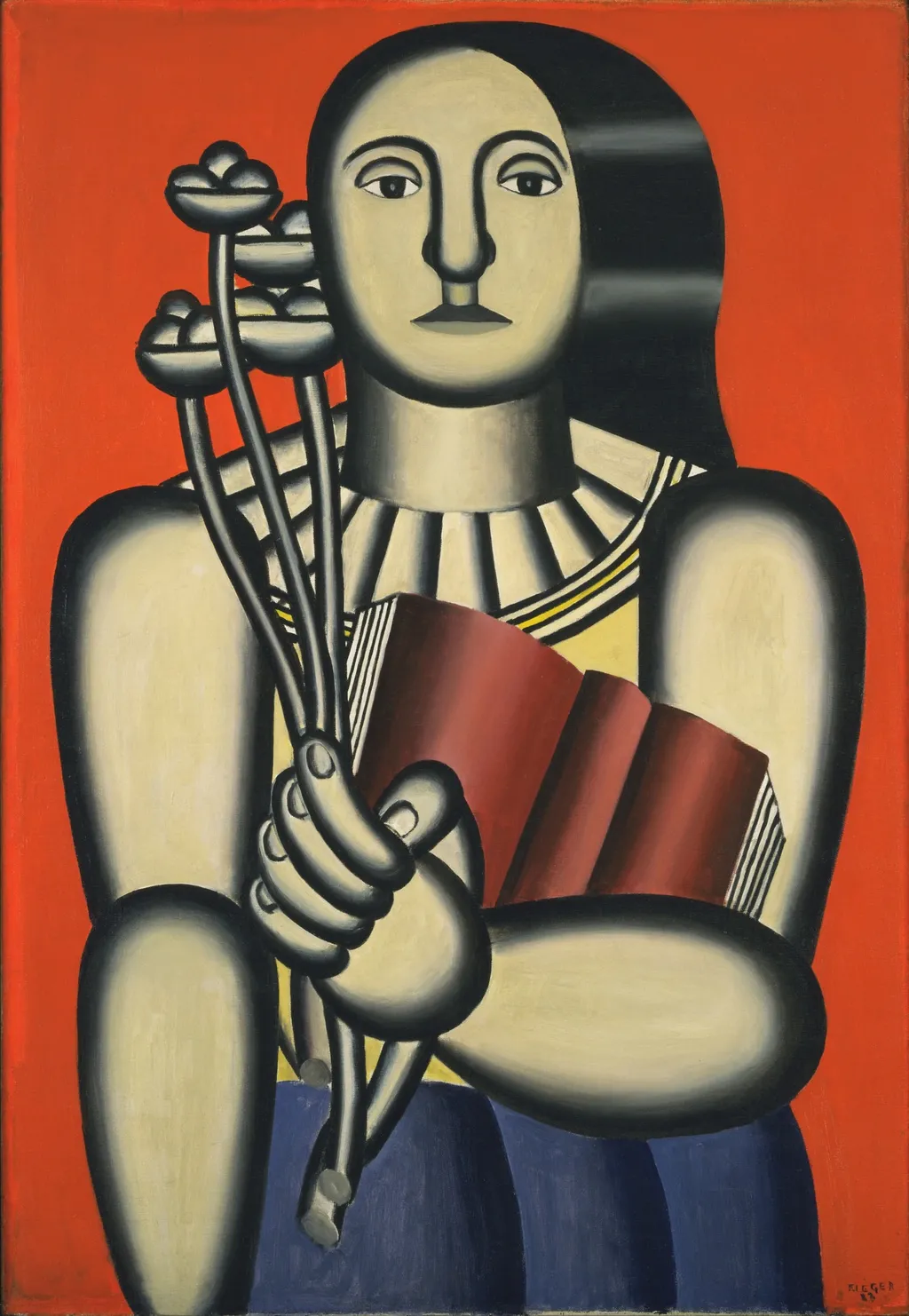
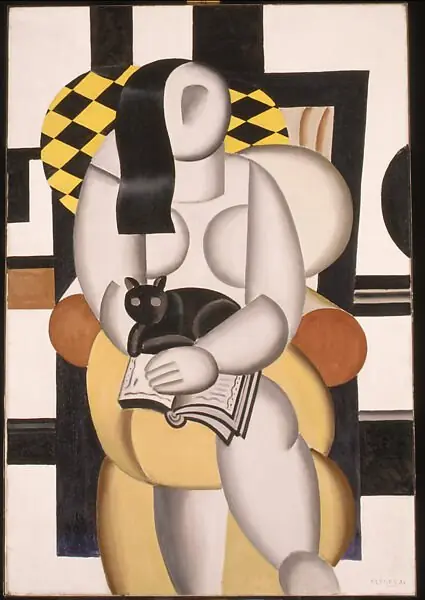
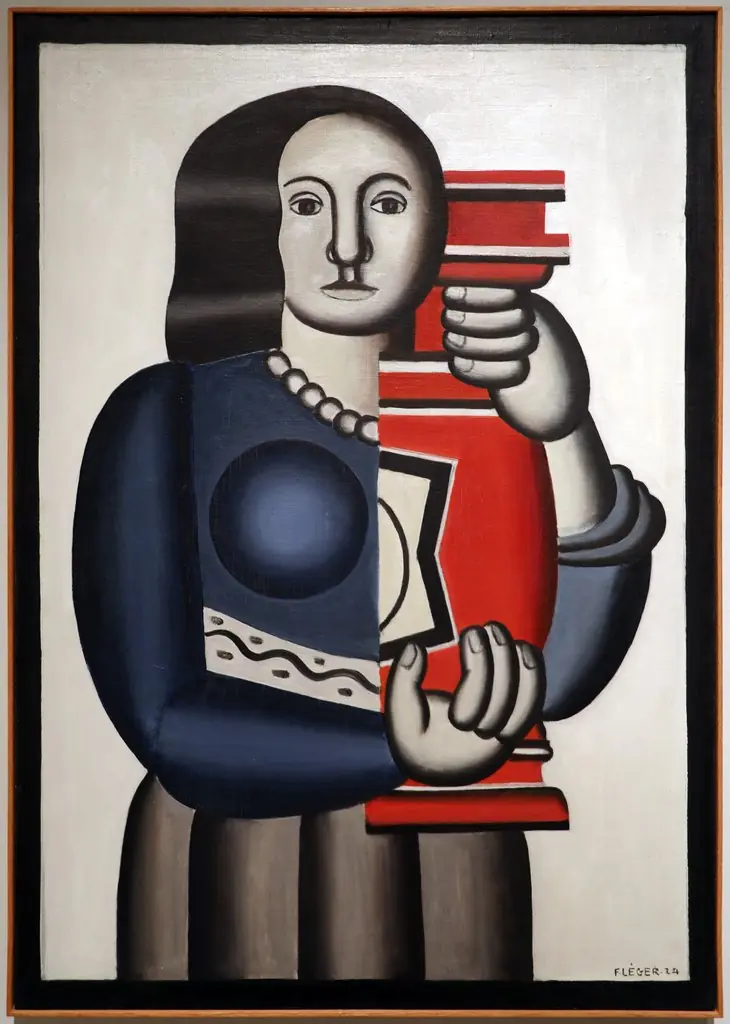
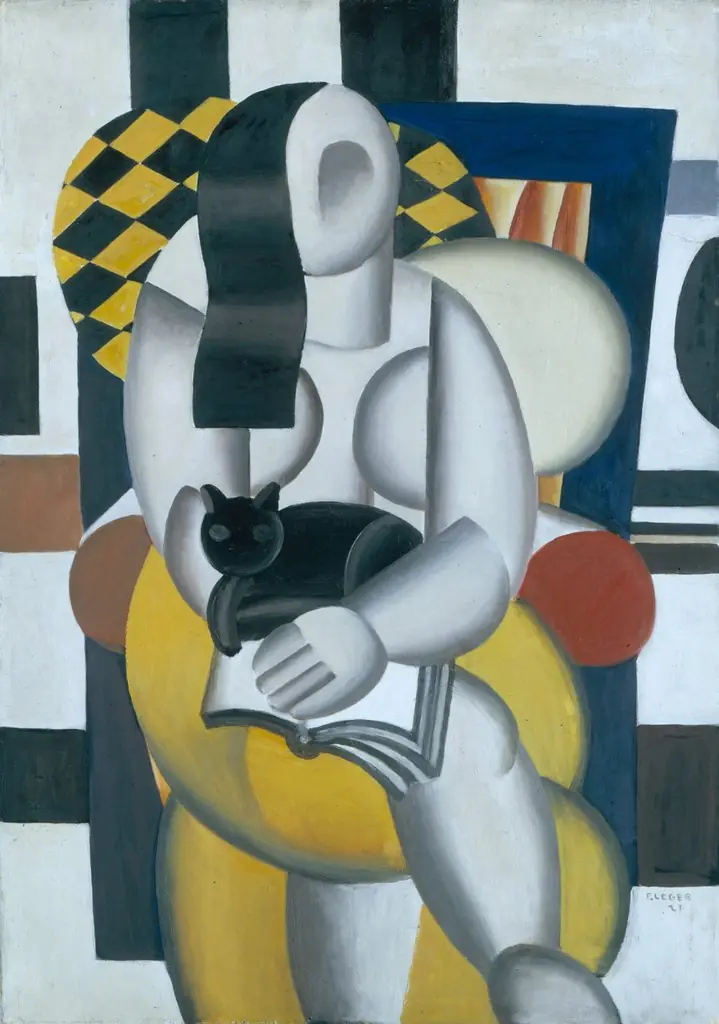
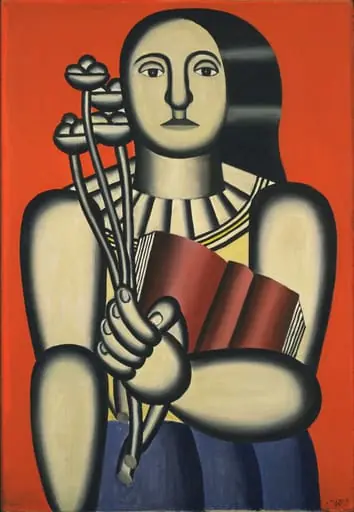
Woman with a Book is an oil painting by the Cubism Synthetic artist Fernand Léger. It dates from 1923 and is held in the collection of the Museum of Modern Art.
About this work
Overview
Léger’s use of vivid color and sharp contours reflects his interest in modern industrial aesthetics and the visual language of mechanical precision.
Woman with a Book is a 1923 oil painting by Fernand Léger, part of the Museum of Modern Art’s collection. It presents a stylized female figure engaged in a quiet, domestic moment, holding a book and a flower. The composition emphasizes structure over naturalism, reducing the body to angular forms and flat planes.
Léger’s use of vivid color and sharp contours reflects his interest in modern industrial aesthetics and the visual language of mechanical precision.
Subject & Meaning
The figure, a woman with dark hair and a neutral expression, embodies a quiet introspection. The book and flower suggest intellectual and emotional life, yet their presence is rendered without sentimentality. Léger avoids narrative drama, instead treating the subject as a composed element within a larger system of form and color.
The stillness of her gaze and the geometric simplification of her body reflect a broader modernist tendency to depersonalize the individual in favor of structural harmony.
Technique & Style
Léger employs bold, black outlines to define the figure’s limbs and clothing, creating a sense of solidity and rhythm. The yellow top, blue trousers, and red background form a stark chromatic contrast, enhancing the painting’s visual dynamism. Forms are reduced to cylinders, cones, and flat planes, echoing machine-age aesthetics.
Brushwork is deliberate and even, with no visible texture, emphasizing the artificial, constructed nature of the image rather than naturalistic representation.
History & Provenance
Painted in 1923, the work emerged during Léger’s postwar period of refining his mechanized figurative style. It entered the Museum of Modern Art’s collection in 1937, among the earliest acquisitions that established the museum’s commitment to modern European art. Its inclusion in MoMA’s inaugural exhibitions helped cement Léger’s reputation in the United States as a key figure in the development of modernist painting.
Context
Created in the aftermath of World War I, the painting reflects Léger’s fascination with the integration of human form into a mechanized world. His work responded to the rise of industrial design, advertising, and urban life, rejecting traditional academic painting in favor of clarity and abstraction. Woman with a Book aligns with contemporaneous movements like Purism and Constructivism, which sought order and functionality in art amid societal transformation.
Legacy
The painting exemplifies Léger’s enduring influence on 20th-century visual culture, particularly in how everyday subjects were reimagined through geometric abstraction. Its formal clarity and color-driven composition inspired later generations of designers and artists working in graphic arts, film, and architecture. Though not widely reproduced, it remains a touchstone for understanding the intersection of modernism, gender, and mechanical aesthetics in interwar European art.
Own this work as a print
Artist & collection
Artist
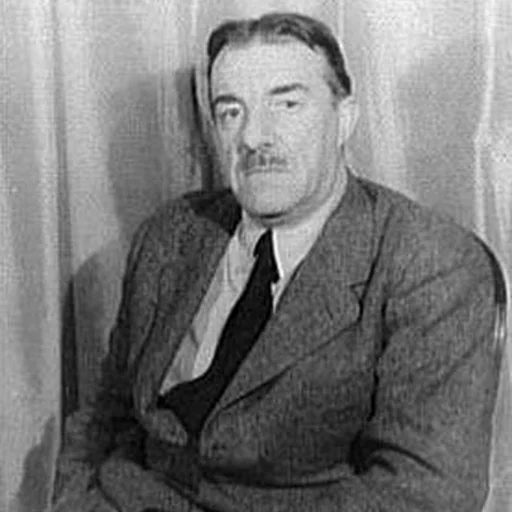
Joseph Fernand Henri Léger was a French painter, sculptor, and filmmaker. In his early works he created a personal form of cubism which he gradually modified into a more figurative, populist style. His boldly simplified…